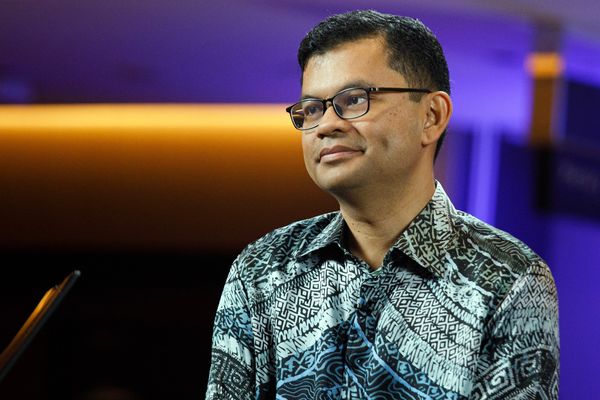
Hong Kong's top trade negotiator has warned that a collapse of next month's World Trade Organisation talks would be a disaster for small countries and the global trading system.
"If we were to have two failed ministerials in a row, the whole multilateral system would lose its credibility and that would be disastrous for the world because the world is mainly composed of small members," John Tsang told reporters.
For his part, the EU trade commissioner, Peter Mandelson, ruled out any chances of a deal next month and said there was no guarantee of an agreement by the end of next year.
The Doha round started in 2001 with development as its centrepiece. The negotiations were supposed to benefit developing countries by granting them greater access to the markets of rich countries, especially in agriculture.
But four years on, there has been little progress and negotiators are scaling back expectations for next month's talks in Hong Kong. The Hong Kong ministerial meeting was supposed to produce a detailed blueprint for trade liberalisation, but the 148 WTO members will have to confine themselves to stock taking.
Notwithstanding the warnings of disaster, a bit of perspective is in order.
The previous trade talks, the Uruguay round, which started in 1986, took took seven and a half years to finish, almost twice as long as the original schedule.
By the end, 123 countries were taking part. It covered almost all trade, from toothbrushes to pleasure boats, from banking to telecommunications, from the genes of wild rice to Aids. It was the largest trade negotiation ever, and most probably the largest negotiation of any kind in history.
The Doha round is even more ambitious and involves 148 countries. From the Uruguay precedent, negotiators appear to have set themselves a hopelessly unrealistic timetable. While trade campaigners say a failure in Hong Kong would mark a setback, they believe the current deal on the table is unacceptable to poor countries.
For ActionAid, the rich countries have only themselves to blame as they have not learned anything from previous failures in Seattle and Cancun. Tim Rice, a trade policy analyst at the charity, believes the EU is the villain of the piece for insisting that developing countries open up their markets for non-farm products and services inexchange for cuts in farm subsidies. India has described such demands as a non-starter.
"What the rich countries are asking for are much more ambitious in scope than before," Rice said. "The talks should go at the pace most suitable for the poorest countries, but the industrialised countries are demanding far too much and far too fast. The multilateral trading system did not collapse after Cancun."
Given the length of the Uruguay round, the negotiators of the present trade talks can expect a few more years of hard bargaining.