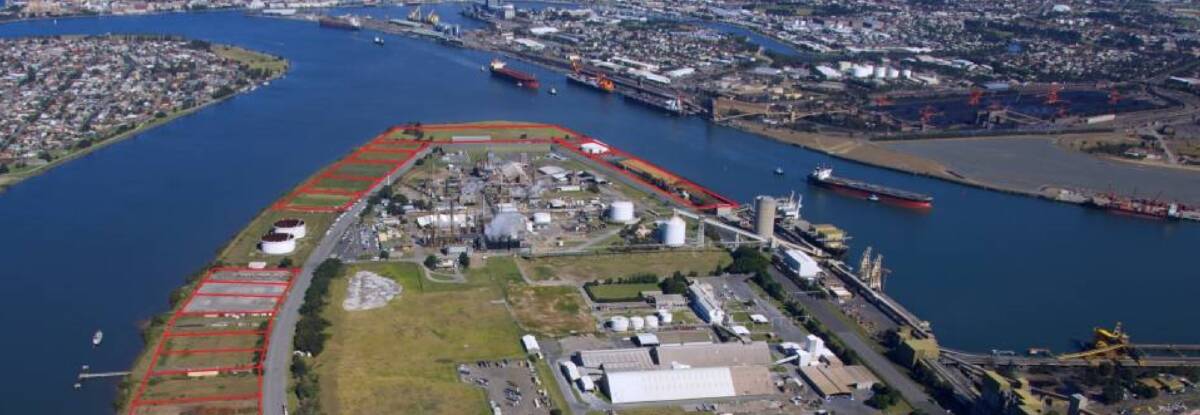
A second Lower Hunter desalination plant, based in Newcastle harbour, remains an option to improve the Lower Hunter's water security.
Hunter Water confirmed on Wednesday that, while it has not committed to constructing the plant, 'a number of sites' on Walsh Point are under active investigation as potential locations.
While the state government is the largest landowner on Kooragang Island, the Port of Newcastle has a 99-year-lease on a significant section of the area.
If a desalination plant was to be built on land presently under lease, it is likely that the state government could be forced to compensate the Port of Newcastle.
A Newcastle desalination plant, along with recycled water schemes, new dams, an expanded Belmont desalination plant, stormwater harvesting, groundwater and increased water conservation are among a suite of potential water options that are being investigated as part of a review of the Lower Hunter Water Security Plan (LHWSP).
The Department of Planning, Infrastructure and the Environment is presently assessing an application for a desalination plant at Belmont that would be capable of producing up to 30 million litres of drinking water a day.
The plant, a drought response measure, would only be built if Lower Hunter water storages reached critical levels.
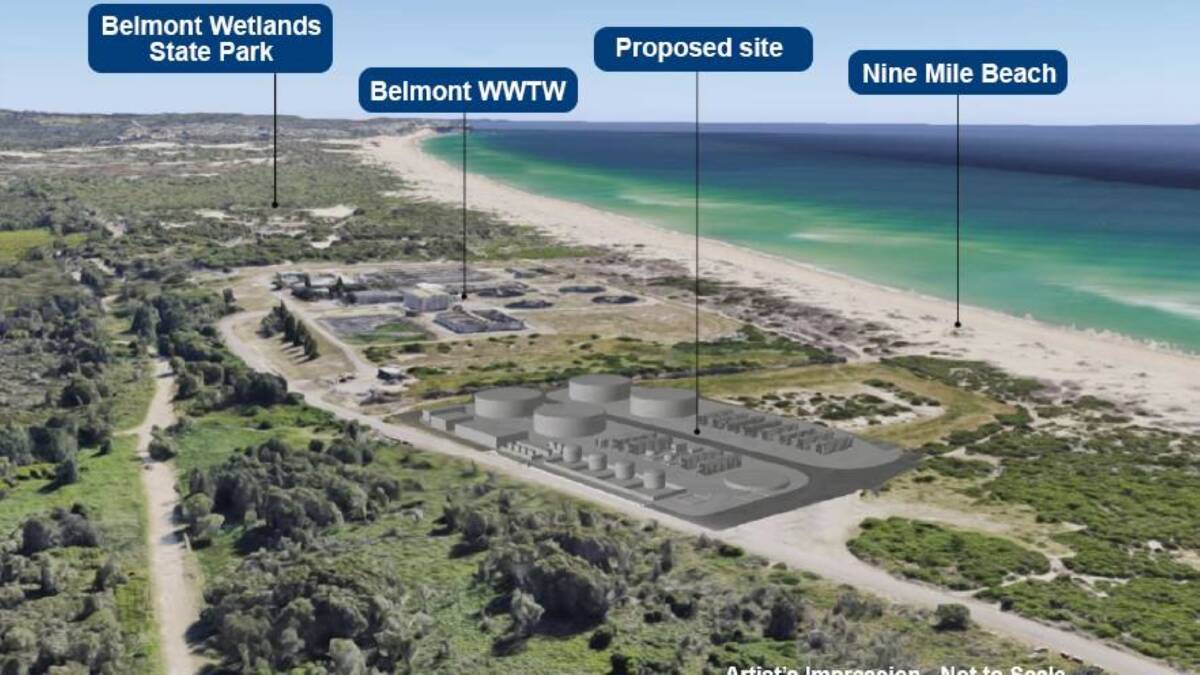
A Hunter Water spokesman said no decision had been made on the capacity of a potential Newcastle harbour-based desalination plant.
"We're exploring a potential site for a desalination plant at Belmont and Walsh Point at the eastern end of Kooragang Island. Desalination is being considered at a range of sizes and as both an ongoing baseload water supply option and a drought response measure," he said.
"Hunter Water is actively exploring all supply and demand options as part of a comprehensive review of the LHWSP. Our goal is to ensure we have a suitable balance to deliver a resilient and sustainable water system, both now and for future generations."
The main advantage of desalination is its ability to provide a reliable source of water that is not dependent on rainfall.
Drawbacks include high upfront costs related to membrane treatment and power infrastructure. Ongoing operational costs are also relatively high due to high energy use. High energy use also results in greenhouse gas emissions, if sourced from fossil fuels.
A draft of the revised Lower Hunter Water Security Plan is due to be released mid-year.
"Hunter Water has developed a range of preliminary portfolios as part of the LHWSP review. These include a number of water demand and supply options. Desalination is one of the supply options being investigated. No decisions have been made about the options to be proposed as part of the revised plan," the spokesman said.
Hunter Water will release the results of community and business feedback gained during the review process in March.
For faster access to the latest Newcastle news download our NEWCASTLE HERALD APP and sign up for breaking news, sport and what's on sent directly to your email.