Harassment complaints related to video-conferencing, as well as problems involving misunderstandings caused by email exchanges without face-to-face meetings have been on the rise as teleworking has spread due to the coronavirus pandemic.
While companies are urged to create a proper environment for teleworking, employees must also give due consideration to each other.
"There have been more and more inquiries related to emails, chats and video conferences since around March, when teleworking started being recommended," said Haruhisa Fujiyama of Impression Learning Co., an educational training company in Tokyo, which specializes in harassment prevention.
The inquiries were largely attributed to harassment related to video-conferencing. Among them, one inquiry was from a woman who attended a work-related video conference and felt uncomfortable after her male superior told her, "Your curtains are cute." There was another complaint from a different woman that a man associated with her work saw her at her home through the computer monitor and wordlessly smiled at her.
Some software programs have functions to hide the background or allow users to communicate only by voice, but many people are not used to teleworking as they have been hastily asked to work from home after a state of emergency was declared.
"From the viewpoint of risk management, it is essential for teleworkers to actively learn about such software functions and organize their rooms in a way that items unrelated to work are not shown in videos, among other steps," Fujiyama said.
One of the most common complaints received from the subordinate side is about their superiors frequently asking their subordinates on the phone to teach them how to use video-conferencing software, even without trying to learn, themselves. One subordinate consulted with the company regarding whether such an act could be considered as harassment by superiors as they are taking advantage of their position, and the subordinate's work is interrupted every time they have to answer their superior's questions.
There was also a complaint that it has become difficult for the person to understand what is happening at their workplace as employees were all working from different places. The person also complained that only certain people were invited to important video conferences and online drinking sessions.
"As the coronavirus outbreak has increased communication via videoconferencing systems, both superiors and subordinates have yet to fully understand what constitutes harassment," Fujiyama said. "Because teleworking has been introduced in a time of emergency, I encourage everyone to think about how to work comfortably with each other."
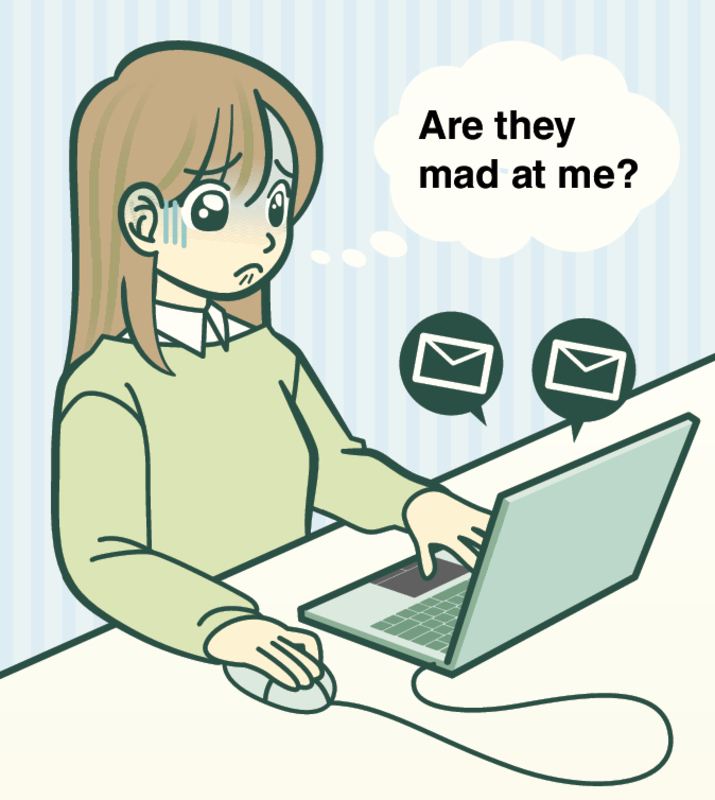
Some people have expressed concern that it is difficult to understand people's tones when they communicate only through texts, such as emails.
"People who can't express their feelings to their opponents with facial expressions or voice need to communicate with them more carefully," Fujiyama said.
For example, if a superior writes, "You almost got there," or "Let's make up for it next time," when pointing out a mistake to a subordinate, the subordinate might view the comments in a negative light given this unstable situation.
"If you feel like you can't adequately express your feelings only by texting, please consider calling them," Fujiyama said.
In late March, Recruit Management Solutions Co., a human resources development company in Tokyo, conducted a survey on about 2,700 people aged 22 to 59 who work for companies with 300 or more employees regarding their teleworking situation. Asked about the skills needed in the future, 79% of respondents said "writing information or requests in an easy-to-understand way." However, only 43% of those surveyed said they are capable of doing this.
"When there is a change in the way people work, including a shift to teleworking, the labor and management sides should discuss and prepare for the new working environment, such as by creating rules. However, I believe teleworking was quickly introduced at quite a few workplaces in response to the coronavirus outbreak," said Fumio Mitani, a certified social insurance and labor consultant.
"It's easy to get into trouble as preparations were not made sufficiently, but it's important for colleagues to first give consideration to each other. I hope this change in the working environment will be used as an opportunity to consider again what constitutes harassment," Mitani said.
Read more from The Japan News at https://japannews.yomiuri.co.jp/