'Haptic baton' offers new hope for blind musicians
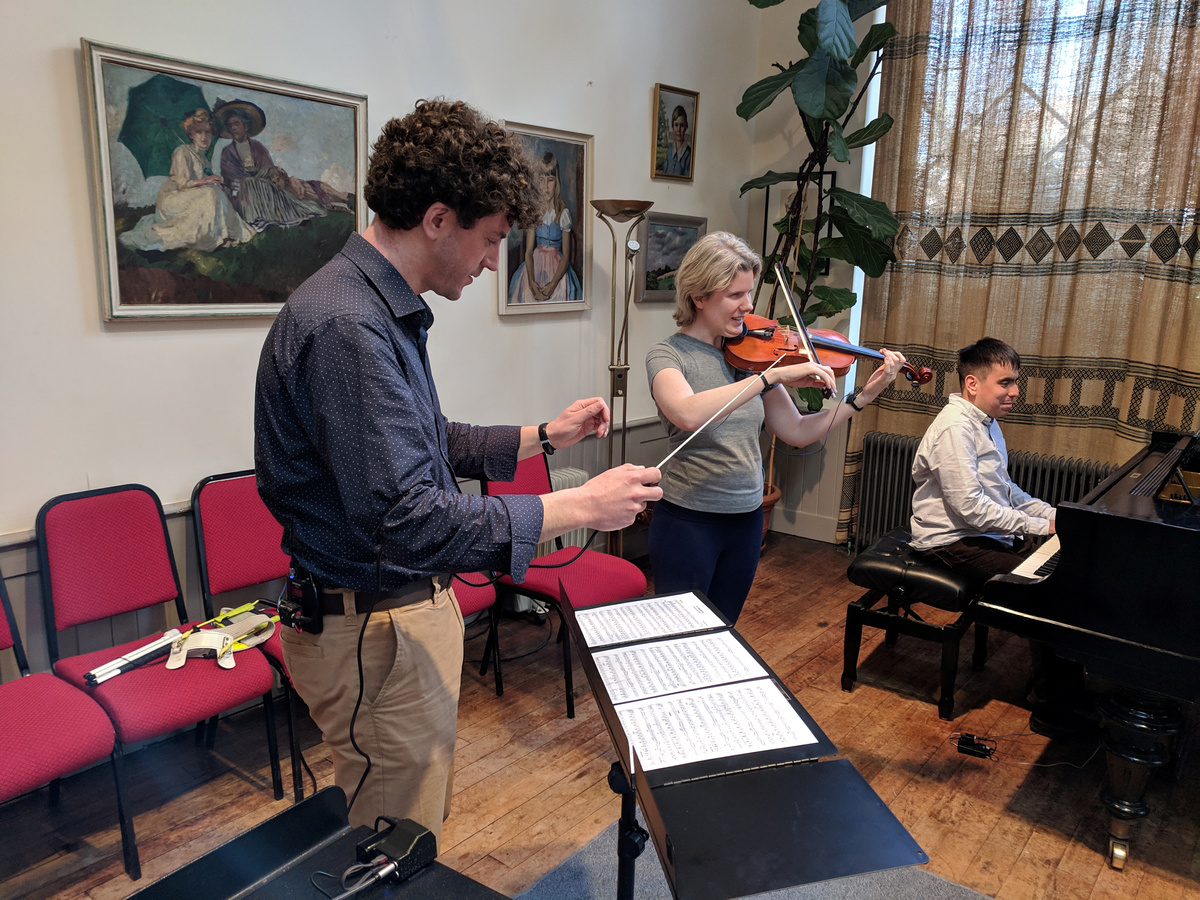
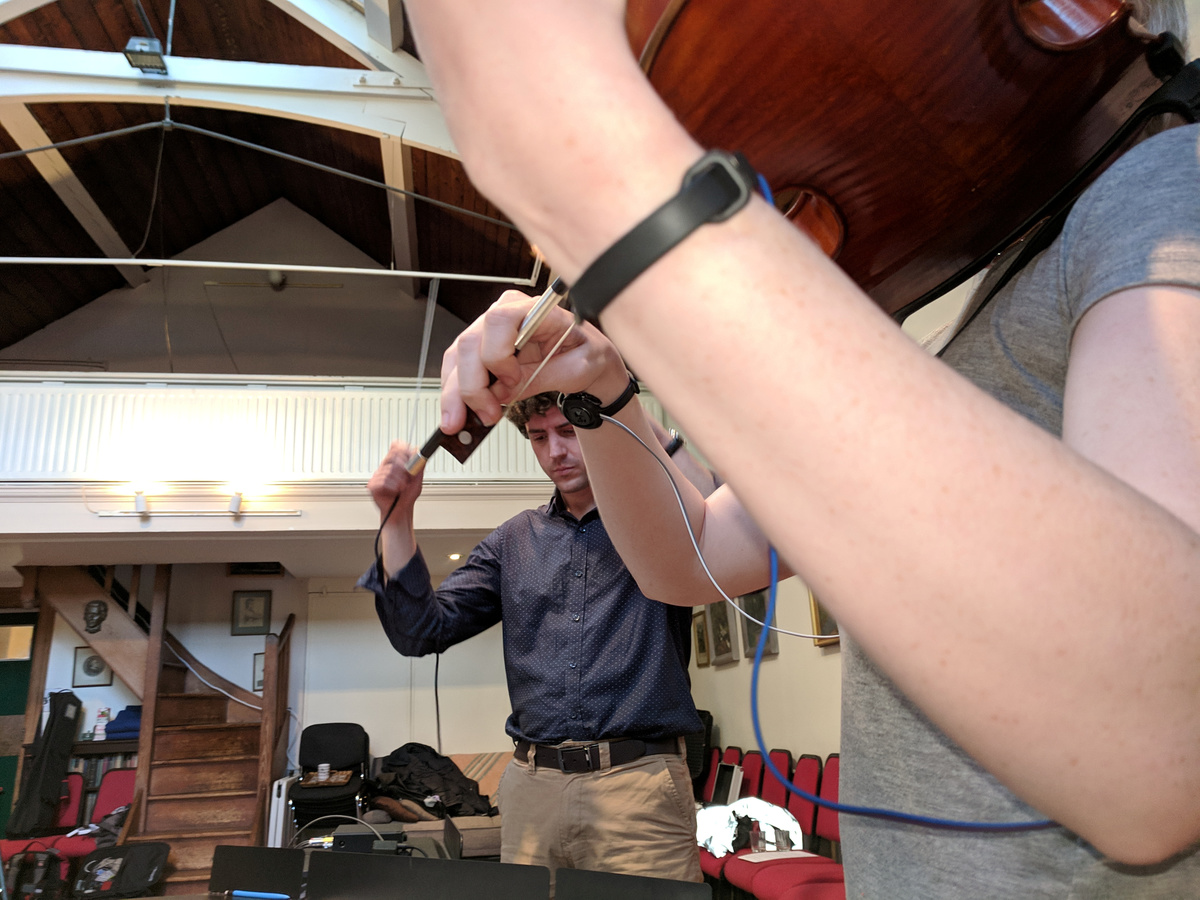
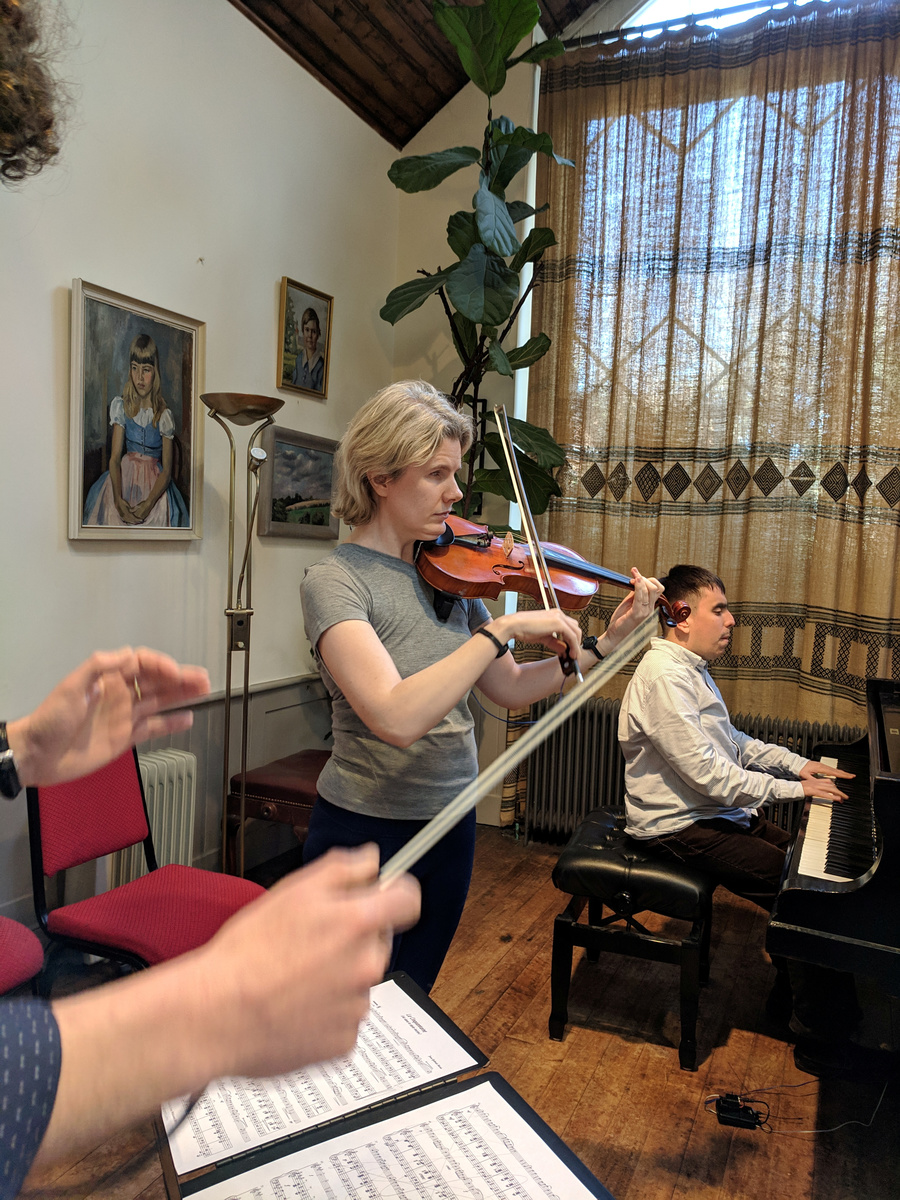
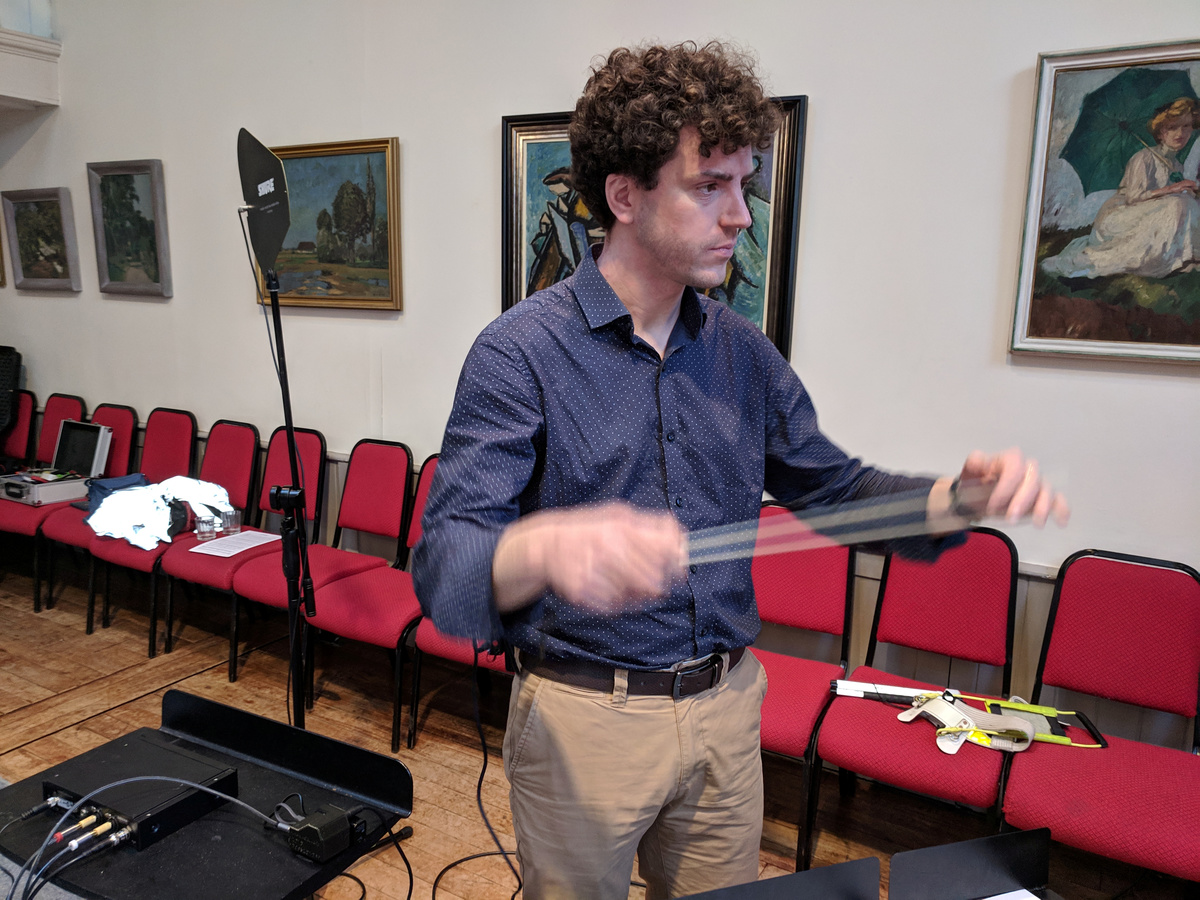
FILE PHOTO: Conductor Ewan Campbell uses a specially developed baton which opens up the orchestra to blind musicians, transmitting its movements to vibrating bands worn on violinist Abie Baker's wrist and pianist Kevin Satizbal's ankle in a studio in London, Britain February 21, 2019. REUTERS/Stuart McDill
LONDON (Reuters) - A conductor's baton has been created that allows the visually-impaired to follow its movements, opening up the potential for blind people to join more orchestras.
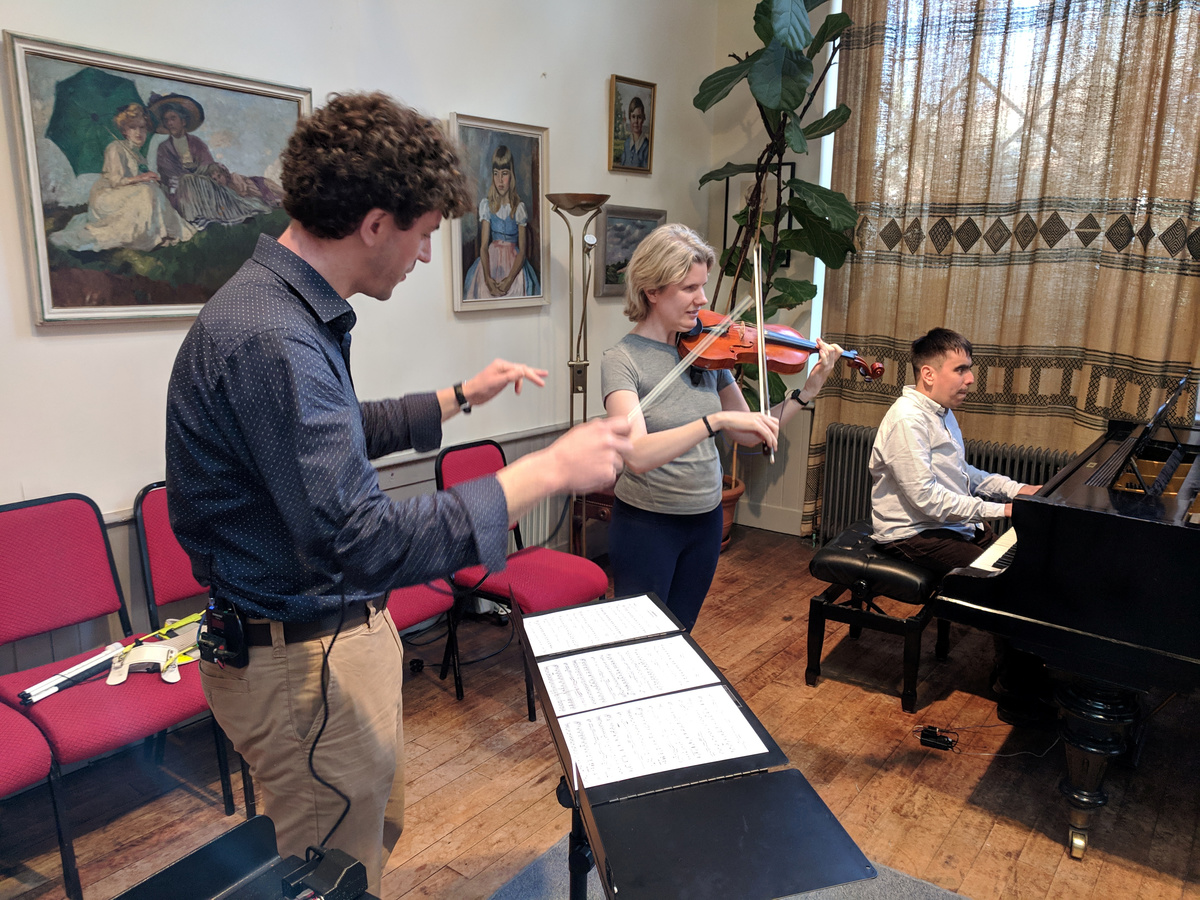
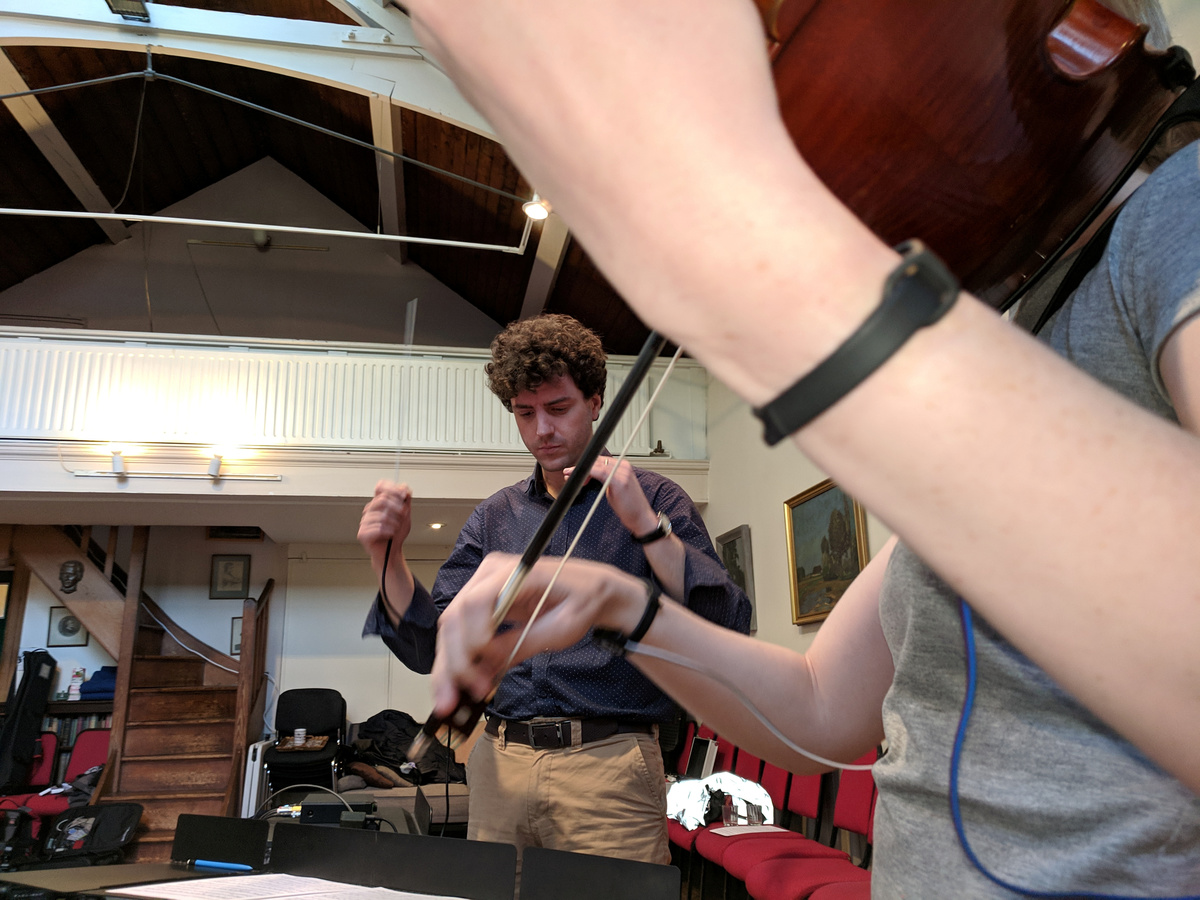
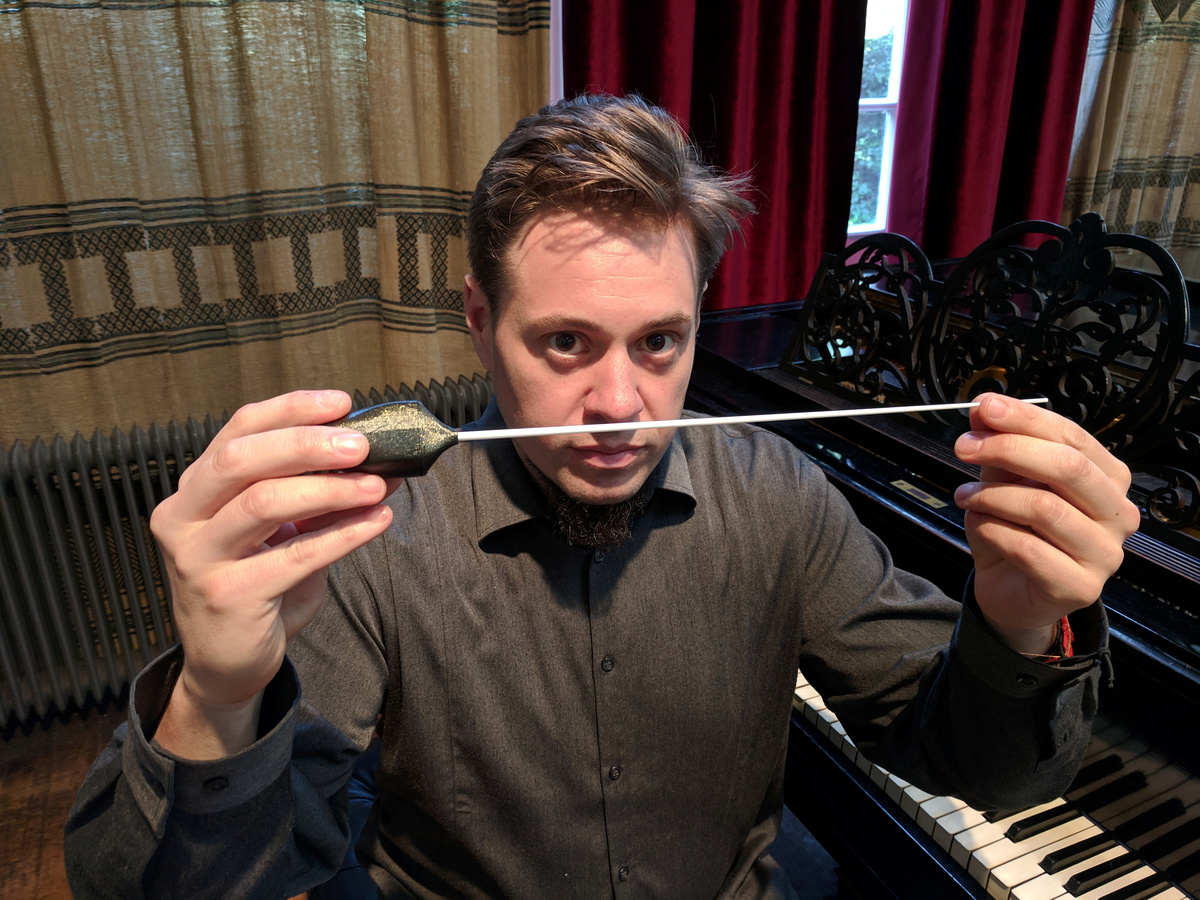
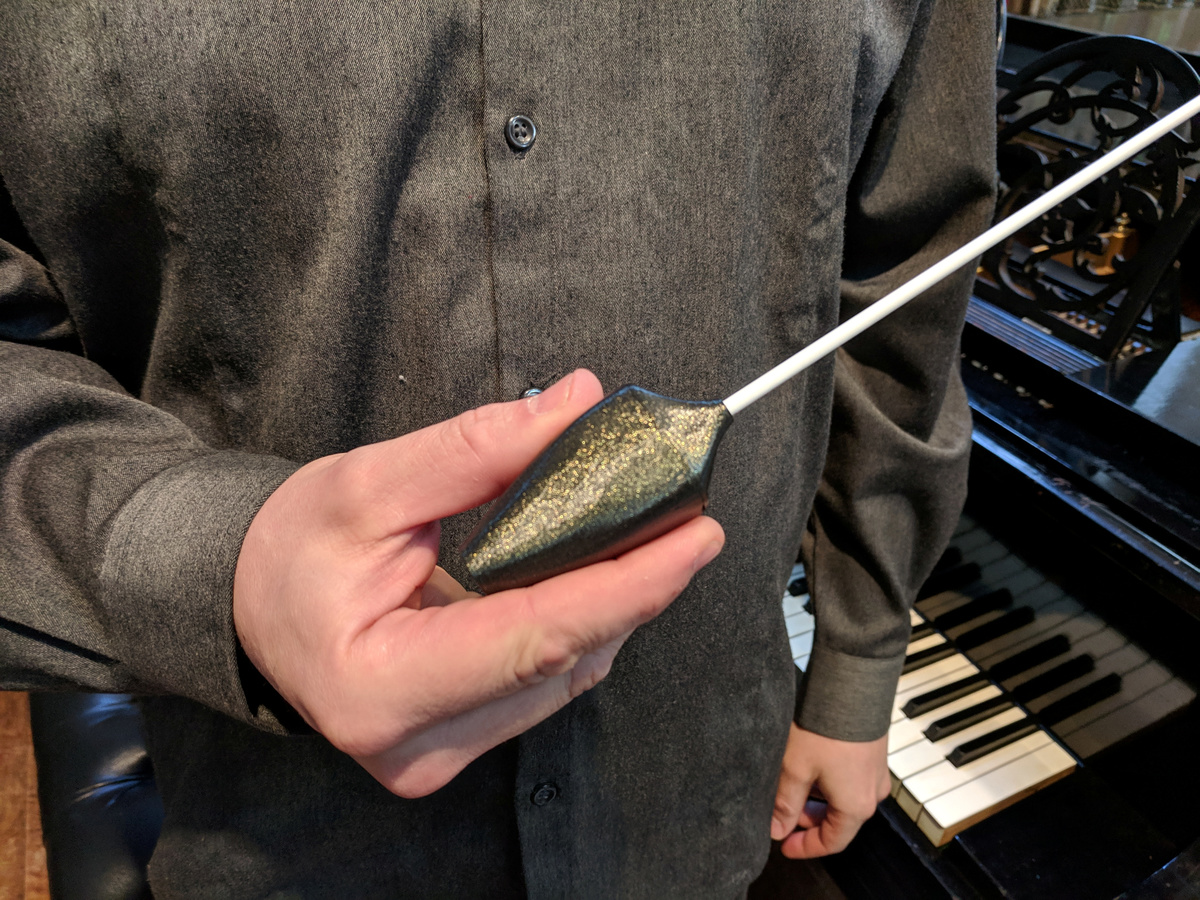
The 'Haptic Baton' contains sensors that pick up even slight motions. These are then transmitted via radio signals to vibrating devices attached to musicians' wrists or ankles.
They vibrate and buzz in different ways to indicate to the player the pace and dynamics the conductor wants.
FILE PHOTO: Conductor Ewan Campbell uses a specially developed baton which opens up the orchestra to blind musicians, transmitting its movements to vibrating bands worn on violinist Abie Baker's wrist and pianist Kevin Satizbal's ankle in a studio in London, Britain February 21, 2019. REUTERS/Stuart McDill
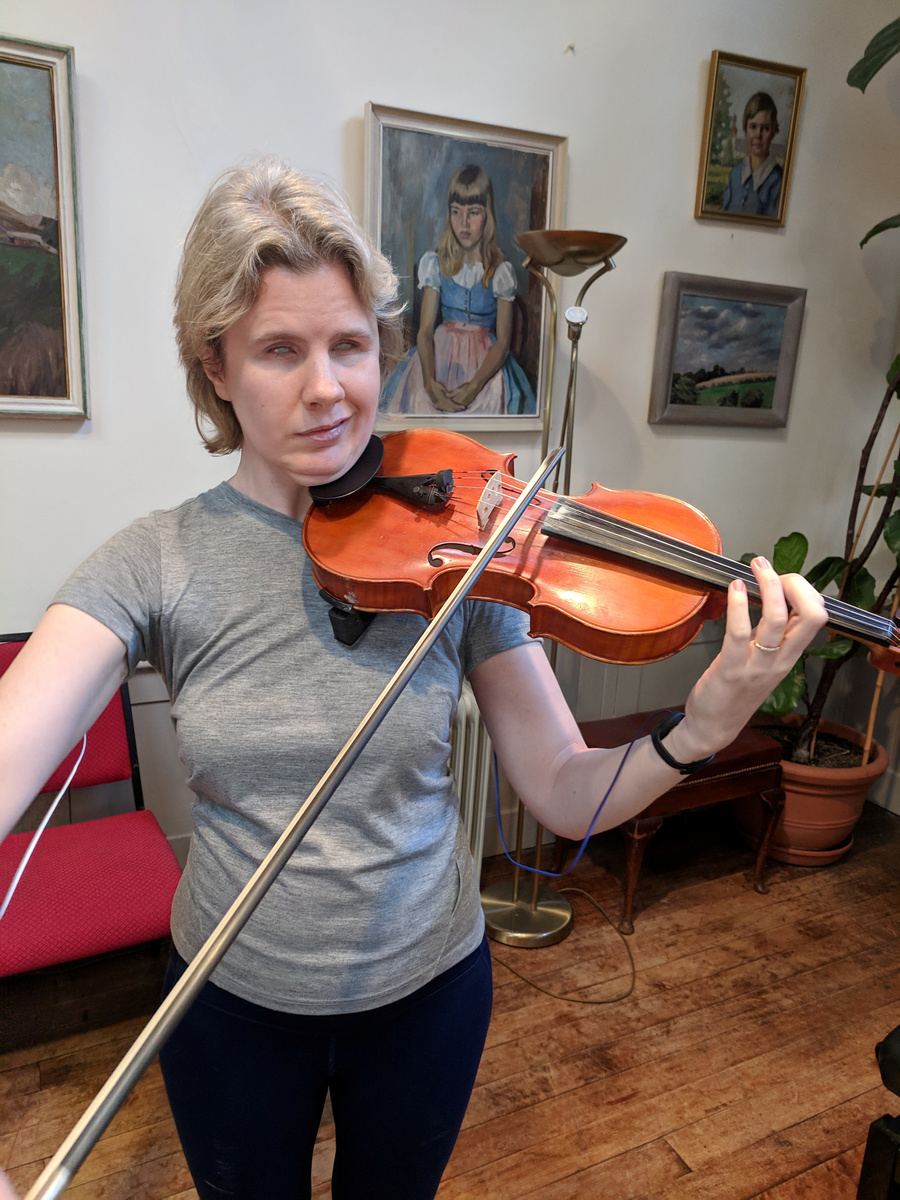
Violinist Abie Baker, who went blind as a child due to a cataract operation, said she was confident that with the device she could start playing her instrument at the same time as others.
"In the past we've been reliant on hearing sounds around us. So I've been playing in a violin section and I've been reliant on hearing the other musicians putting up their instruments and then guessing roughly when to come in," she told Reuters.
"So this is brilliant because there's no need to count in or anything. I can literally just feel a buzz or two and then know to come in and I can come in confidently knowing that it's right, which is amazing," she added.
FILE PHOTO: Violinist Abie Baker wears a wristband receiving the movements from conductor Ewan CampbellÕs specially developed baton, turning the instructions into vibrations and in turn opening up the orchestra to blind musicians, in a studio in London, Britain February 21, 2019. REUTERS/Stuart McDill
When playing as a soloist, blind pianist Kevin Satizabal said he has previously had to sit close to the conductor and listen for their breathing to know when to begin.
"But if you're in a big orchestra and you're miles from the conductor, that's going to be really, really difficult information to pick up and this technology essentially plugs you into the conductor's movements, which is really exciting," he said.
"Orchestras won't have any excuse not to hire visually impaired musicians because the technology's right there allowing them to be an integral part," he added.
A blind violinist Abie Baker wears a wristband receiving the movements from a specially developed baton which turns them into vibrations and in turn opens up the orchestra to blind musicians, in a studio in London, Britain February 21, 2019. REUTERS/Stuart McDill
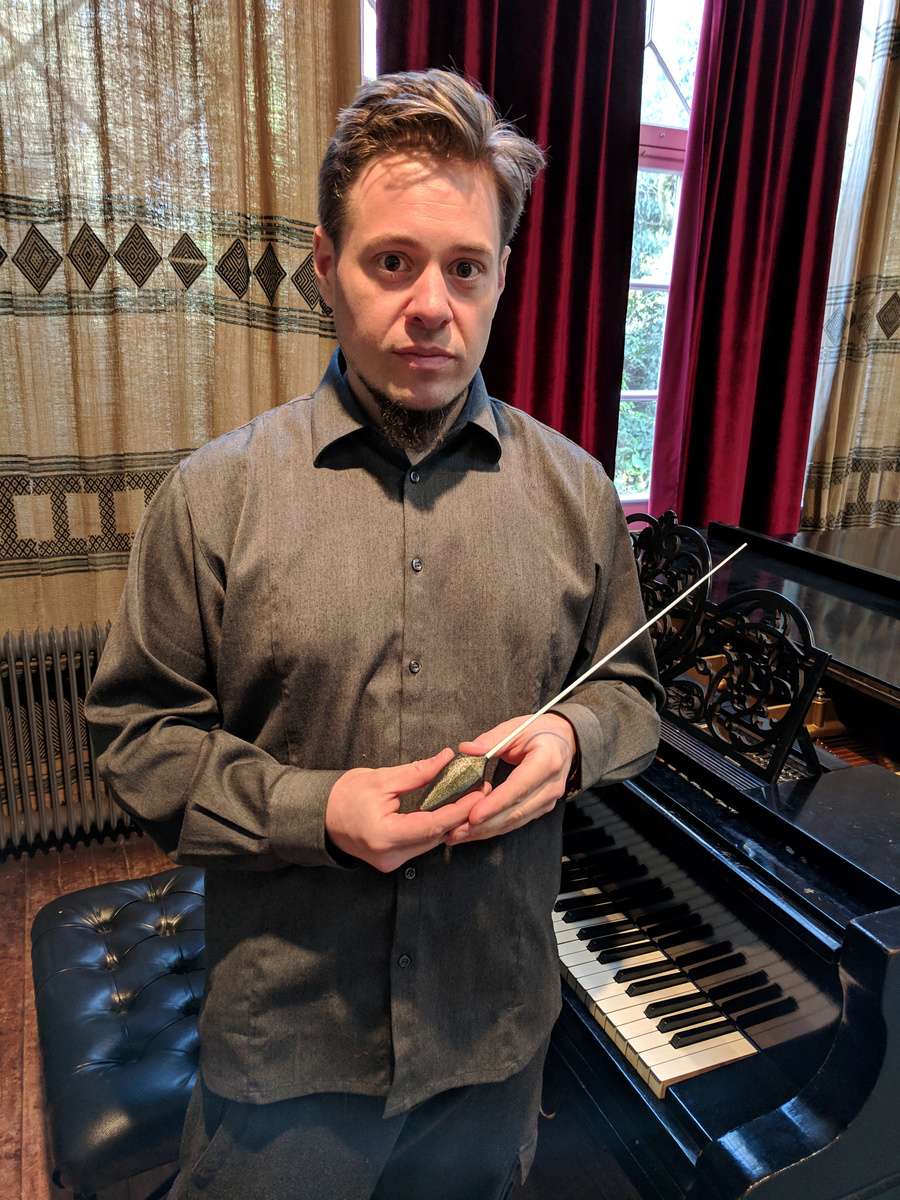
The Human Instruments device was developed by designer Vahakn Matossian. He was inspired by the 'Beat Buzz' baton which was created by his father, composer Rolf Gehlhaar, in 2017.
The 'Haptic Baton' is a prototype being tested with musicians, including the The Paraorchestra and Friends. Its development is ongoing but Matossian hopes it will be available to rent or buy in 2020.
Conductor Ewan Campbell uses a specially developed baton which opens up the orchestra to blind musicians, transmitting its movements to vibrating bands worn on violinist Abie Baker's wrist and pianist Kevin Satizbal's ankle in a studio in London, Britain February 21, 2019. REUTERS/Stuart McDill
(The refiled story adds reporting, writing credits)
(Reporting by Stuart McDill; Writing by George Sargent; Editing by Gareth Jones)
Conductor Ewan Campbell uses a specially developed baton which opens up the orchestra to blind musicians, transmitting its movements to vibrating bands worn on violinist Abie Baker's wrist and pianist Kevin Satizbal's ankle in a studio in London, Britain February 21, 2019. REUTERS/Stuart McDillConductor Ewan Campbell uses a specially developed baton which opens up the orchestra to blind musicians, allowing them to follow vibrations, in a studio in London, Britain February 21, 2019. REUTERS/Stuart McDillVahakn Matossian poses for the camera holding his haptic baton which allows blind people to follow a conductor in an orchestra, in a studio in London, Britain February 21, 2019. The baton's movements are transmitted to vibrating bands worn on the blind musician's ankle or wrist. REUTERS/Stuart McDillVahakn Matossian poses for the camera holding his haptic baton which allows blind people to follow a conductor in an orchestra, in a studio in London, Britain February 21, 2019. The baton's movements are transmitted to vibrating bands worn on the blind musician's ankle or wrist. REUTERS/Stuart McDillVahakn Matossian poses for the camera holding his haptic baton which allows blind people to follow a conductor in an orchestra, in a studio in London, Britain February 21, 2019. The baton's movements are transmitted to vibrating bands worn on the blind musician's ankle or wrist. REUTERS/Stuart McDill
Sign up to read this article
Read news from 100’s of titles, curated specifically for you.