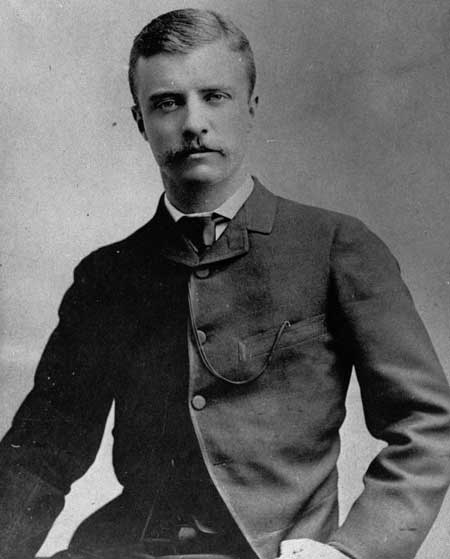
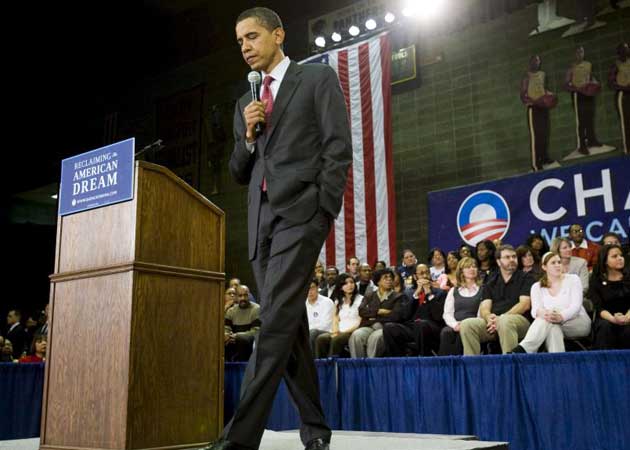
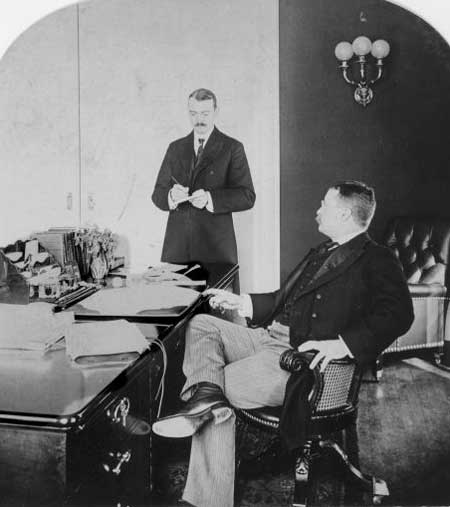
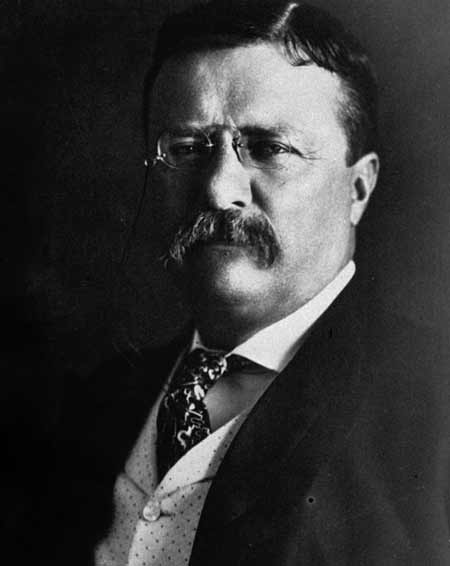
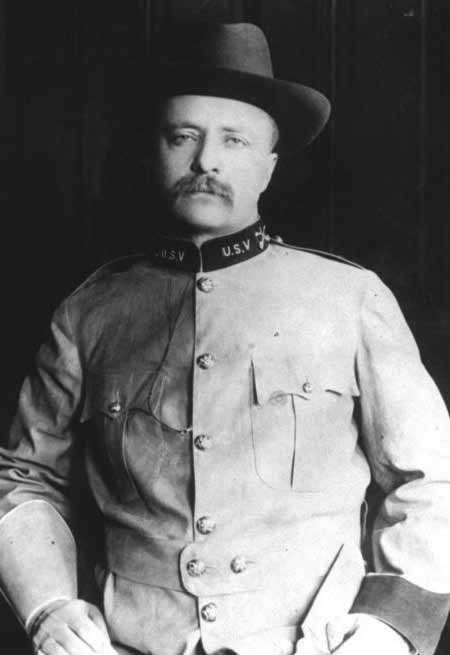
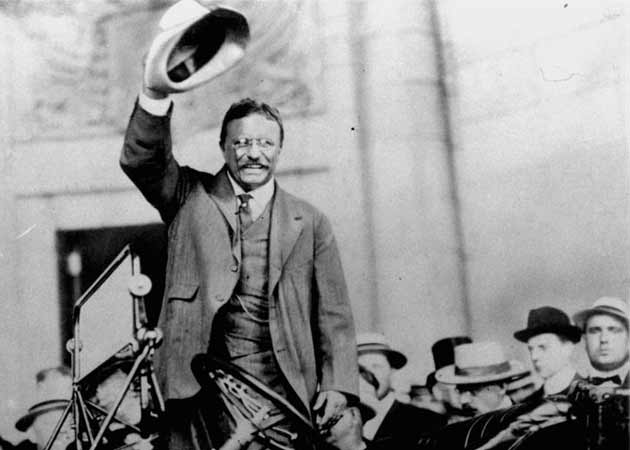
Theodore Roosevelt (not to be confused with his younger fifth cousin F.D.R. of the New Deal) was born on 27 Oct 1858, making this year his sesquicentennial. He’s still in vogue: John McCain has been invoking his name several times a day, as when, endorsing Sarah Palin’s comment that the US should go into Pakistan if necessary in the hunt for terrorists, he remarked “She shares my view that we’ll do whatever is necessary... Teddy Roosevelt, speak softly and carry a big stick...” [sic].Photograph: APOn the other side, Obama in 2007 spoke favourably of Roosevelt’s work to restrict the power of the monopolistic corporations or trusts (and it’s been suggested FDR’s New Deal was a development of Theodore’s Square Deal). Like Whitman, Roosevelt embraces contradictions and contains multitudes, and he’s still – like Lincoln – a useful figure to have on your side.Photograph: APRoosevelt was the original all-American president, a dude from the East, an asthmatic and weedy child from a rich old New York family, a Harvard-educated dandy who bulked up into a jock by dint of physical exercise, went out West and turned himself into a cowboy, and in due course made himself a military hero by winning San Juan Hill in Cuba with his Rough Riders (in the Spanish-American War of 1898, which as a politician he had done his best to start).Photograph: AP
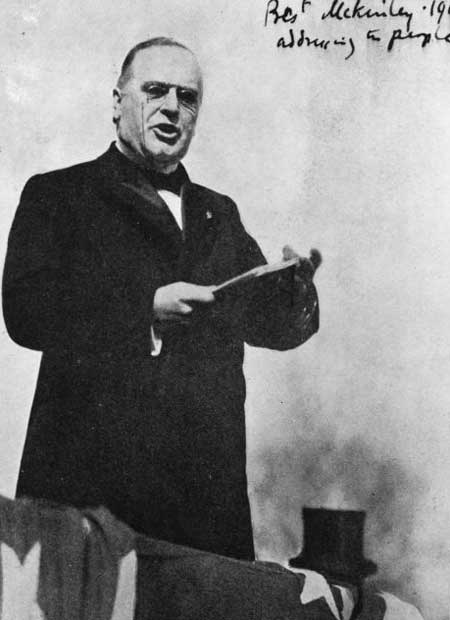
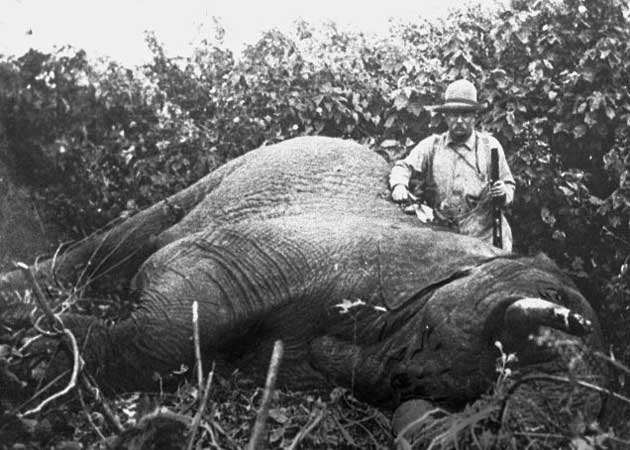
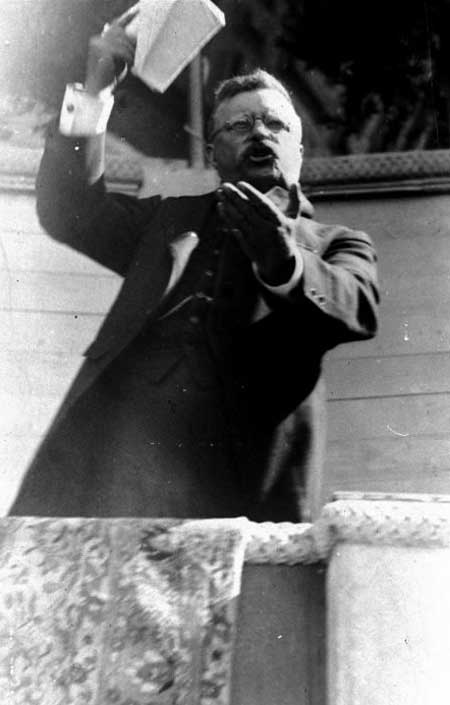
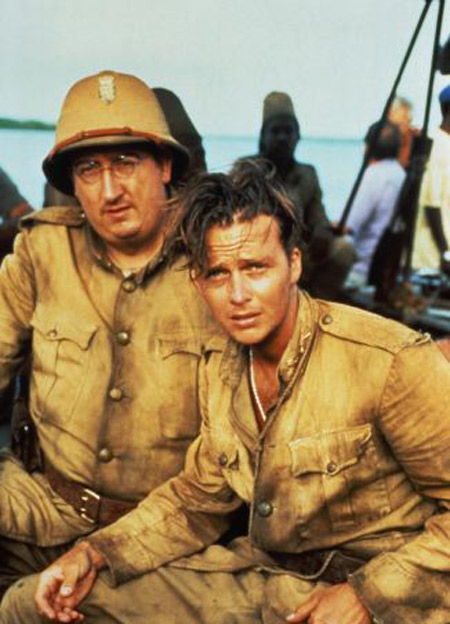
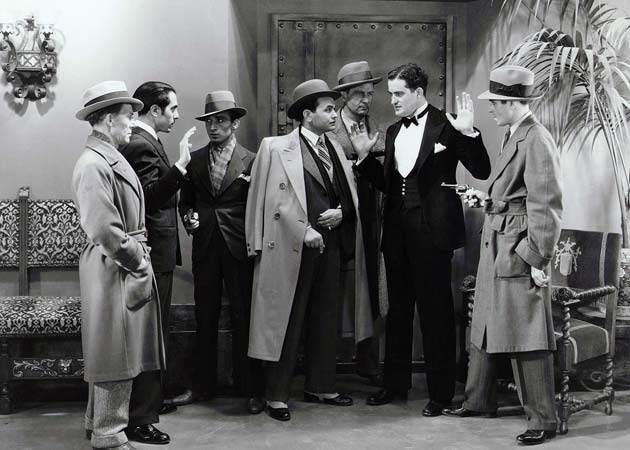
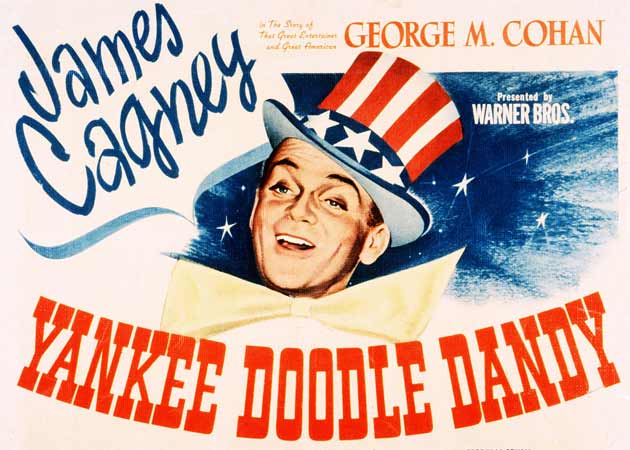
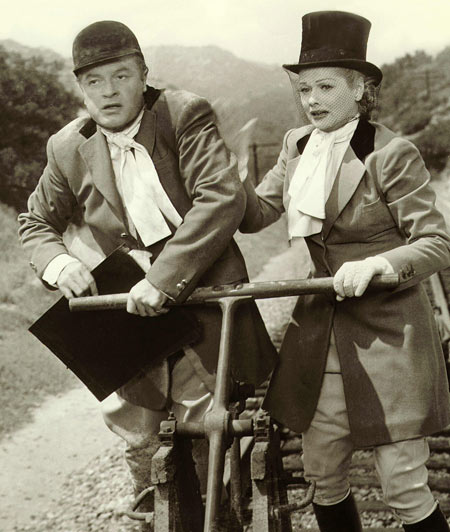
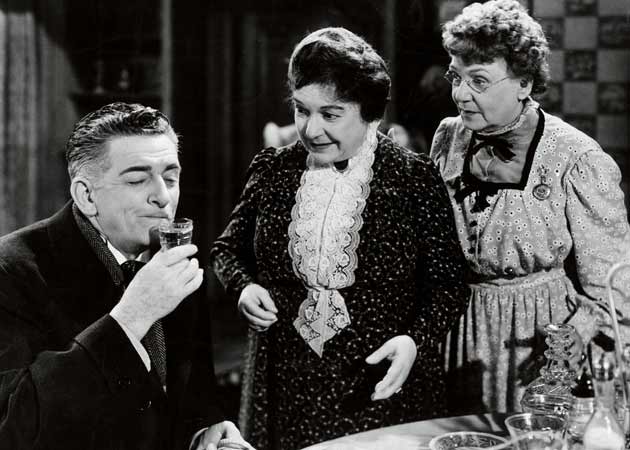
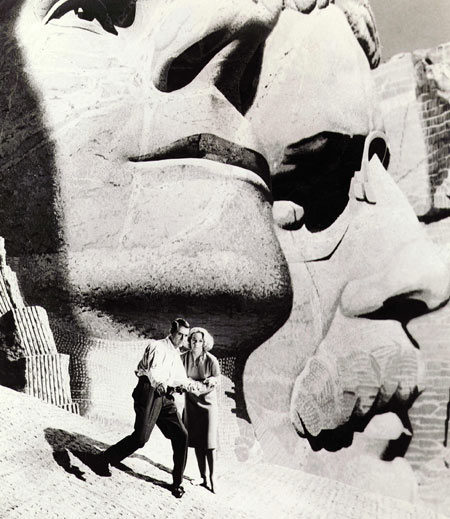
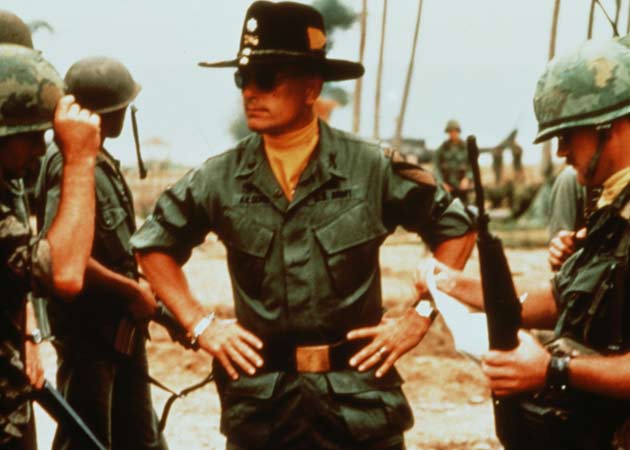
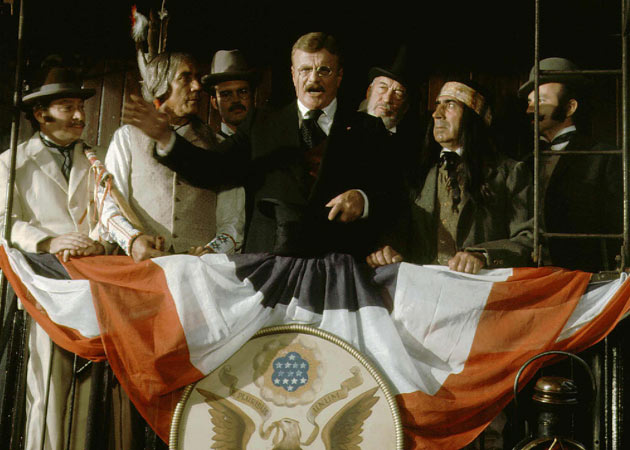
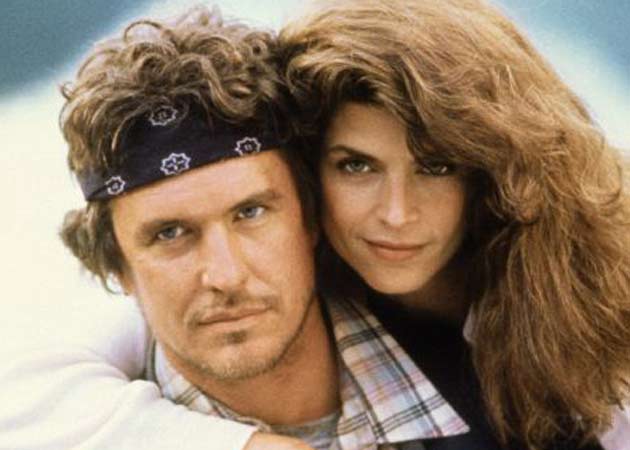
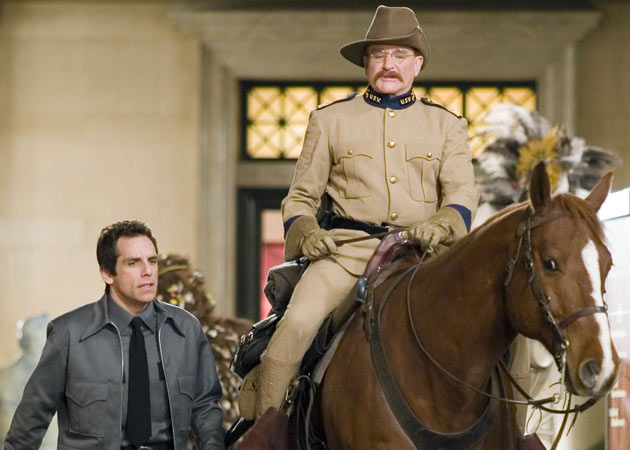
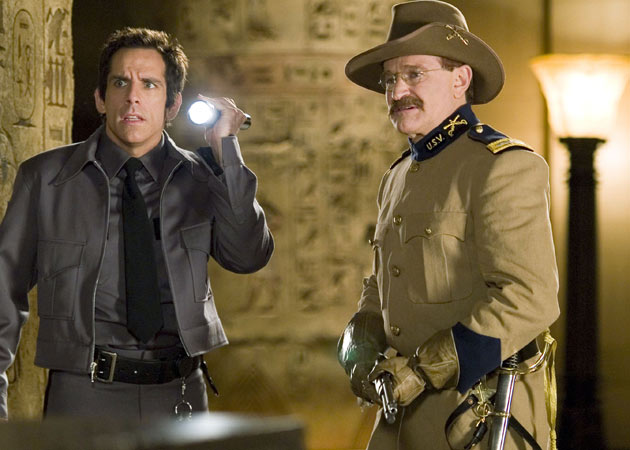
This made him electable, despite his privileged origins and educational background. Still, he only landed in the White House because William McKinley was assassinated. A larger-than-life character in innumerable ways, he disliked being called “Teddy”, but was stuck with the name after reporters spread a false story about his sparing a baby bear while hunting.Photograph: GettyIn fact, he was a cartoonist’s favourite in his lifetime – his pince-nez, bristling moustache, fierce toothy grin, and barrel shape, not to mention his astonishing energy, his remarkable recall of detail, his predilection for shooting things, for his capacity for making long pugnacious speeches and his proneness to catchphrases (“Bully!”; “Deee-lighted!”; “Speak softly and carry a big stick”).Photograph: APHe shot birds, deer, buffalos, grizzlies, Spaniards, lions, gazelles and elephants; he was the first President to invite a black man (Booker T. Washington) to dine in the White House; he built the Panama Canal; he won the Novel Peace Prize (startling for one so belligerent); he was shot on the way to a speech in 1912 but went ahead and spoke for an hour with a bullet in his chest. He was fierce and funny and he played these cards to great advantage, inspiring affection as well as ambivalence.Photograph: APHe’s also, in effect, the first real movie president. Roosevelt rose to national prominence in the 1890s as the cinematograph got going, and there are newsreels (watchable at the Library of Congress website) of his doings, including images of him and his Rough Riders on horseback (a specially recruited all-American regiment composed of rootin-tootin cowboys and Ivy League polo players) as they drilled before invading Cuba in 1898. Photograph: APOther newsreels show him making speeches (silently), or striding up and waggling his finger aggressively at the camera, or “impulsively” deciding – despite his great bulk and the flimsiness of the craft – to take a flight on an early biplane in 1910. Photograph: APRoosevelt, an uncannily astute politician, was very aware of cinema as a tool of publicity and propaganda – though it could become a threat, as in the odd, rather sinister case of the “Kinetoscope fakes” of 1904, where a blackface vaudeville comedian had himself filmed pretending to be a drunken Booker T. Washington, who was then helped by a passing Theodore Roosevelt (another actor) into his carriage and given a cigar and a hug. The Secret Service was called in and destroyed the films.Photograph: APRoosevelt died in 1919 – in which year he was played by an actor in the first biopic about him, The Fighting Roosevelts. Since then he has been a minor character in many films, including Walter Hill’s Geronimo (1993) and The Young Indiana Jones Chronicles (1992).Photograph: KobalAnd some actors have played him more than once – Sidney Blackmer was Roosevelt in six movies between 1937 and 1948, including Teddy, The Rough Rider (1940), an Oscar-winning patriotic short which rattles through the high points of Roosevelt’s career at ludicrous speed (“Roosevelt, you’re a national hero!”) and ends by anticipating the excesses of McCarthy and HUAC: “There can be no compromise in the fight for Americanism… to combat and destroy all subversive influences here.”Photograph: KobalA striking series of Hollywood musicals, comedies and Westerns in the 40s and 50s not only went back to the Roosevelt era, they introduced Teddy as an actual character: the pince-nez, toothy grin and emphatic manner remained highly recognizable. He’s there in Michael Curtiz’s great Yankee Doodle Dandy (1942); at the end of William Wellman’s Buffalo Bill (1944), calling out “Great performance! Bully! Bully!”, for instance; in Take Me to the Ball Game (1949) with Frank Sinatra.Photograph: KobalOr in the weird Bob Hope/Lucille Ball vehicle Fancy Pants (1950), where he deviates from his itinerary to come and meet Hope’s imposter, am American actor masquerading as an English Earl. The Teddy of these movies is mostly a cuddly, informal, democratic buffoon with a wise twinkle.Photograph: KobalIn Frank Capra’s black comedy Arsenic and Old Lace (1944), with Cary Grant, there’s rather more edge: the lunatic brother (John Alexander) of the sweet little old homicidal sisters thinks he’s Teddy Roosevelt, and his encyclopaedic knowledge of Roosevelt’s biography makes this subplot of the movie a witty history lesson. Every time he goes upstairs in the Brooklyn house, this “Teddy” draws his sabre and yells “CHARGE!” as if storming San Juan Hill in Cuba.Photograph: KobalWhen the old dears have found another murderee, “Teddy” dons safari outfit and pith helmet and digs the holes for the corpses in the cellar as if excavating the Panama Canal. When he’s finally committed, he treats it as the end of his Presidency: “Now I go on my hunting trip to Africa!” His benign megalomania and blindness to the reality around him seem to pick up on the occasional suggestions during the real TR’s career that he was touched with madness.Photograph: KobalThe 26th President makes an appearance of a kind, as a feature of the American landscape, and as intrinsically funny and fierce, in another Cary Grant film, North by Northwest (1959), in the shape of his great stone phiz at Mount Rushmore. Grant remarks as he and Eva Marie Saint clamber vertiginously across the Presidential cliff-faces, “I don’t like the way Teddy Roosevelt is looking at me.”Photograph: KobalBut for a less incidental Roosevelt, and for a serious film-maker obsessed with him, we turn to the eccentric John Milius, who wrote the script for Apocalypse Now, and who confesses that “I’m just totally fascinated with Teddy Roosevelt. I think he was the greatest American president, and the most symbolic.” Milius has made two parts of an unofficial Teddy Roosevelt trilogy – the first a wonderfully entertaining adventure Milius himself called “a very Kiplingesque movie”.Photograph: KobalIn The Wind and the Lion of 1975, loosely based on the Perdicaris Affair of 1904, an Arab brigand (Sean Connery) kidnaps an American citizen (Candice Bergen; the original victim was a male Greek banker) and TR goes in for gunboat diplomacy and the big stick in a major way. Brian Keith is terrific as Teddy Roosevelt, recreating his emblematic pose with the globe – a symbol of America’s plans for world domination.Photograph: Kobal Then in 1997 Milius made a three-hour TV movie called The Rough Riders about the Cuban campaign, with Tom Berenger as Roosevelt, an intelligent elegiac epic of American militarism. It seems unlikely now, for various reasons, that Milius will get to do “the third film, which has young Teddy Roosevelt when he spends his time in the Dakotas.”Photograph: AllstarTR’s stock – and the way in which he figures as ‘the most symbolic’ of American Presidents – has been raised recently not only by the regularity with which he was (selectively) invoked by gung-ho Republicans around George W. Bush (the now relegated Karl Rove was indeed something of a Roosevelt scholar), but by the fantastic allegorical encounters in Shawn Levy’s family comedy Night At The Museum (2006).Photograph: KobalThere Robin Williams plays a waxwork of TR, who was a patron of the New York Museum of Natural History where the film is set. Endorsed as ‘a great visionary’, he represents in the film a much-needed lesson in masculinity for weedy, defeatist modern American males, defective fathers like failed inventor Larry (Ben Stiller). “Take my hand, son” says Roosevelt – and pumps Stiller full of the American Dream: “Nothing is impossible: if it can be dreamed, it can be done”.Photograph: KobalUltimately, though, this prophet of self-reliance is only an image, and issues his challenge to ordinary heroism: “I’m made of wax, Larry – what are you made of?” We haven’t seen the last of Roosevelt’s movie career. David Fincher’s new film, The Curious Case of Benjamin Button features the Pres. More substantially, the first volume of Edmund Morris’s The Rise of Theodore Roosevelt has been optioned by Leonardo DiCaprio, with Martin Scorsese’s name attached as director.Photograph: PRThe environmentalist DiCaprio seems likely to have been drawn by another of Roosevelt’s characteristics – his reputation as a conservationist and founder of America’s National Parks – but one hopes that the actor could capture more of the complexity of Roosevelt than the cartoon or waxwork versions - immensely entertaining as they can be - of this indomitable 150-year-old.Photograph: Kobal
Sign up to read this article
Read news from 100’s of titles, curated specifically for you.