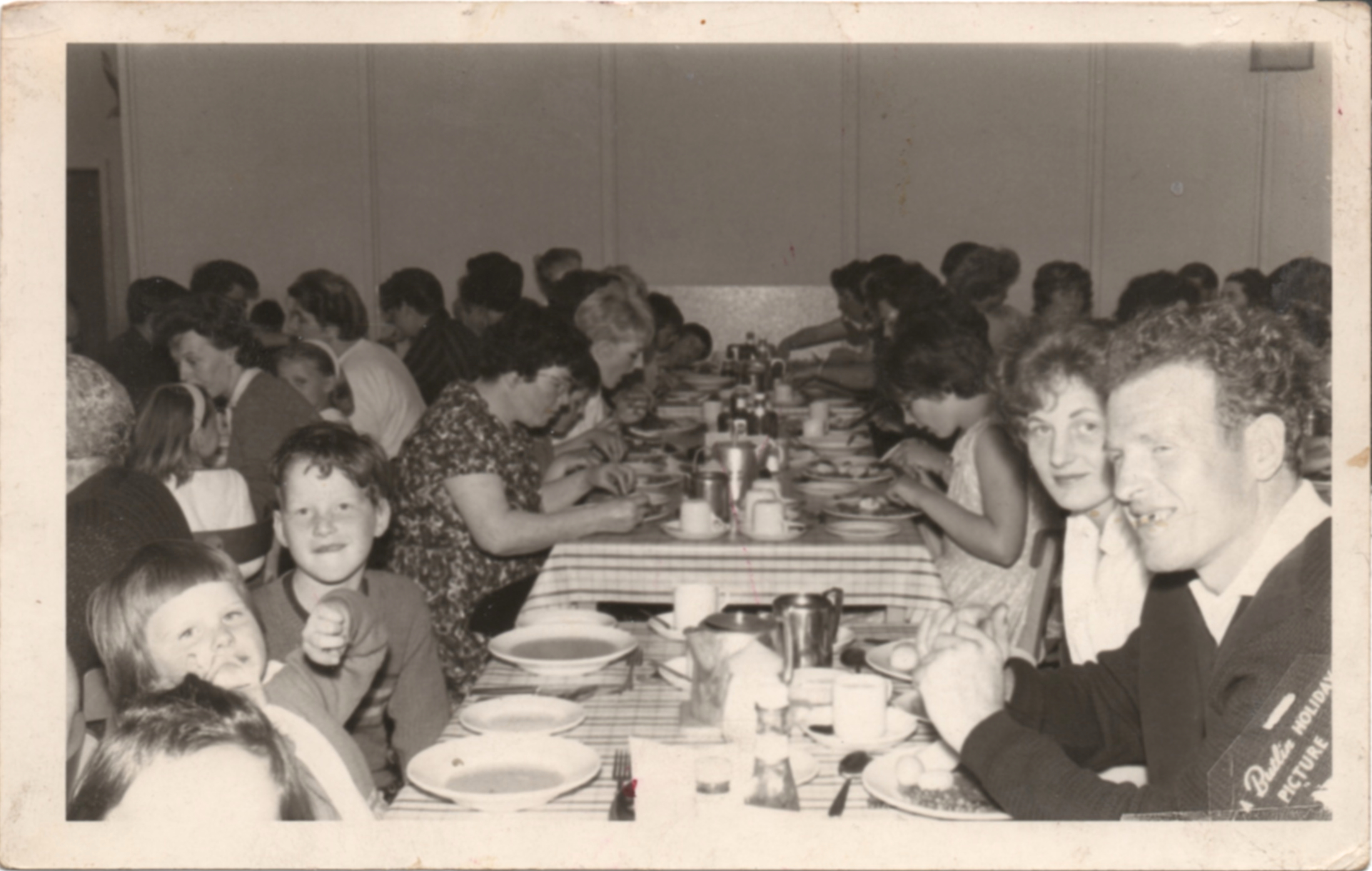
When the enterprising Billy Butlin saw the slogan “Our true intent is all for your delight” painted on a fairground organ, he had no idea it was a quotation from A Midsummer Night’s Dream – or so the story goes. Immortalised by John Hinde’s snaps of the Butlins holiday camps in the 1960s, the choice to revive the slogan in the run-up to its 80th anniversary today would seem like a no-brainer.
The company’s belated realisation that there’s capital in all that dazzling glamour has come after decades spent in pursuit of relentless modernity. The camps became “resorts”, the chalets became “apartments” and huge canopies were erected over the amusements. The likes of Papa John’s, Burger King and Pizza Hut moved in to demonstrate that uniforms and uniformity were no longer the order of the day.
Alas, even these valiant efforts couldn’t stop the haters. There was no shedding the image of organised fun, loudspeakers and captivity popularised by the 1980s sitcom Hi-de-Hi!. When the programme was updated for the reality TV age in 2005, it was clear the stereotype was stronger than ever. In Wakey Wakey Campers!, families accustomed to a week in Menorca were literally forced to take part in knobbly knees competitions, fuelled by a diet of cold, frigid fried eggs.
From countless Butlins holidays of my own in the 1990s, I knew this was just a shabby caricature. But I wasn’t surprised by the snobbish attitude to what was seen as a thoroughly working-class holiday. At school, I’d learned it was better not to mention my joyous excursions to Bognor Regis and the art deco Butlins Ocean hotel in Brighton.
Even then, my friends’ derision at the childish and cheesy entertainments didn’t ring true. My own memories were of joining in the adult ballroom classes to no objections, and of the three-course meals in the evenings. Yes, we’d make friends in the kids clubs, but the redcoats in charge never patronised us. And while the holiday camps were beginning to lose their definitive all-inclusive identity, the Butlins hotels – sold off in 1999 – were still palaces of retro grandeur.

In contrast to the parental anxiety that seemed to plague every other family holiday, at Butlins we’d be left to our own devices. The Butlins hotels in Cliftonville, near Margate, were connected by a network of underground corridors that made for the best games of tag and hide-and-seek of my childhood. As one of probably very few children to have gone on Butlins holidays and to Woodcraft Folk camps, the two have more in common than you’d think – except that there were fewer working-class kids in the Woodcraft Folk.
As I grew up, my peers’ outright laughter and sneering grew into reserved sympathy. “What did you do all day?” I was asked. “Wasn’t it just … boring?” My mum, who took us to Butlins after spending her childhood holidays there in the 1960s, has been hearing this all her life. Like me, what she treasures the most about her Butlins holidays is the freedom and respect afforded to children. “You were taken seriously,” she says. “It was like an Enid Blyton fantasy without the racism. People always ask ‘wasn’t it dreadful to be locked in?’ but that’s a complete misunderstanding. We felt sorry for everyone who was locked out.”
Indeed, when the first Butlins camp opened in Skegness 80 years ago today, Britain’s working class was largely locked out of any prospect of a holiday. The splendour of the camps’ design is sometimes dismissed as a paternalistic gesture to keep the masses in their place. But why should a decent aesthetic, the magic of luxury surroundings and the simple respect of a break from hard work be the preserve of the wealthy? The original Butlins’ message was one of unashamed escapism – and it never pretended to be anything else. Fittingly, the Brighton Ocean hotel is now a luxury apartment complex.
The company’s recent embrace of the past saw it join with Mumsnet to come up with a “21st century take on the traditional chalet self-catering holiday”. But this was never what Butlins was about. For my grandma, who combined housework with working in the “pan corner” of an Oldham cotton mill canteen, the real liberation of the annual trip to Pwllheli was not having to do the dishes.
The other slogan my mum remembers well from her trips was that there were “no strangers” at Butlins – “only friends you haven’t met yet”. To quote WB Yeats as well as Shakespeare suggests that Billy Butlin, a tax exile later in life, might have been more literary than legend makes out. But if his company truly wants to revive the magic of its roots, it must stop shying away from his collectivist utopianism.