"Life in the wild is often viewed as an earnest struggle to survive, but evidence is rapidly accumulating that animal life holds great potential for joy. Nature rewards behaviour that promotes success in animals because of its evolutionary advantages, but this underlying reason for the reward doesn't stop these successful behaviours themselves being enjoyable. Here, a mother grey-headed flying fox jousts playfully with her five-month old pup. Play is an important tool for developing physical strength, coordination, and social skills. But animals don't ponder evolutionary adaptation – like us, they play for fun" Photograph: Vivien Jones

"Animals share many of the same physiological and biochemical responses to sensory events. Pleasure and reward are generated by brain circuits that are largely similar in humans and in other vertebrates. Highly social and tactile, rats make excellent companions. This rat, named Delphiniums Blue for his colouration, enjoys receiving friendly tickles and tweaks from his human guardian. Studies by American scientists show that rats come running to be tickled, making ultrasonic chirps. Imaging studies show patterns of brain activity strikingly similar to our own when we are laughing" Photograph: Brandi Saxton
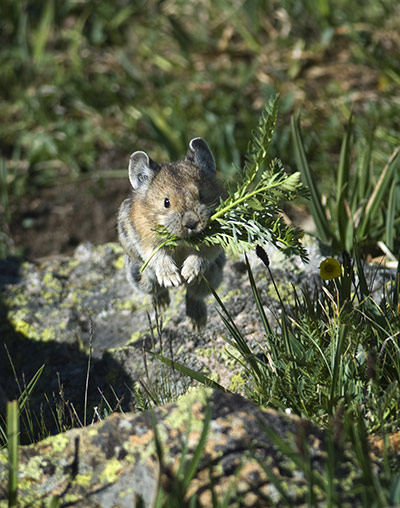
"Securing food is serious business, and foraging pikas must remain alert for danger. But important tasks are not joyless. Caged rodents and other animals prefer to forage than to feed from a food dish, and they develop psychological illnesses when deprived of opportunities to satisfy their desire to explore and forage" Photograph: Bill Meikle
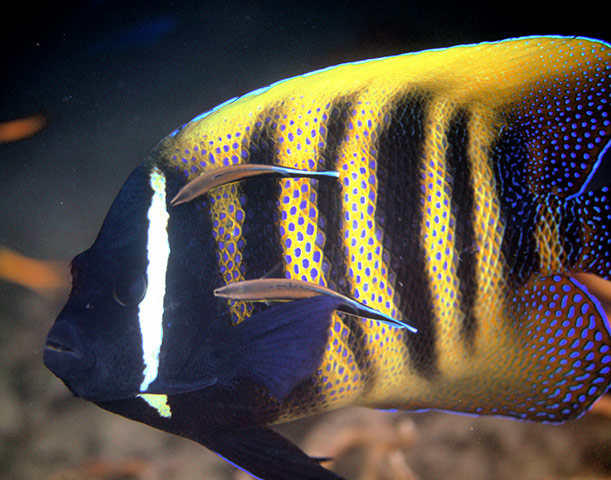
"One of nature's many mutualisms is demonstrated by cleaner fishes which pluck parasites and nibble algae and loose skin from client fishes. These relationships, built on trust and cemented by the rewards of touch and nourishment, have been well studied, but I've yet to see any specific mention of the word pleasure in any of the papers I've read. Here a team of two cleaner wrasses provide spa treatment to an angelfish. It's clearly in the angelfish's interests to get rid of parasites, but there's mounting evidence for a more immediate, complementary benefit for this behaviour: the tactile ministrations of the cleaner wrasses feel good" Photograph: Maxi Eckes

"Scientists generally frown upon the attribution of human characteristics to non-humans, but given the similarities in our physiology and biochemistry the rejection of shared characteristics of experience between humans and animals is the more risky assumption. There is nothing wrong with interpreting animals' behaviour in the light of our own experiences, provided we are judicious about it. It was a cool day when the photographer captured this squirrel enjoying the radiating warmth of bricks in the midday sun. The rodent has flattened his belly to maximize the pleasurable transfer of heat. Maintaining thermal homeostasis – a stable body temperature – is an important survival skill. So it feels good" Photograph: Mike Moss
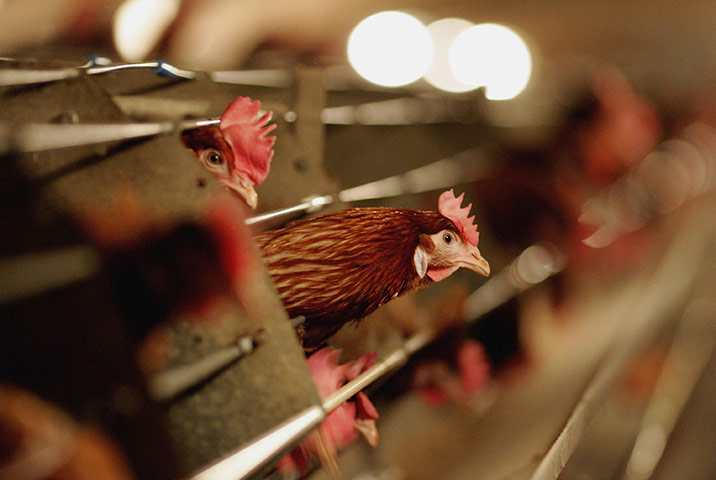
"Humankind's relationships are profoundly out of step with what we now know of their sensory and emotional lives – we are much more similar to cats, pigs and chickens than we once believed. We wield enormous power over animals, and have excluded them from our circle of moral concern throughout history. But the real arbiter of whether or not a being deserves respect and compassion is sentience – the capacity to feel. All animals – whether free or domesticated – deserve the opportunity to pursue their pleasures. Their capacity for feeling good requires that we behave with more compassion" Photograph: Jamie McDonald/Getty Images Europe
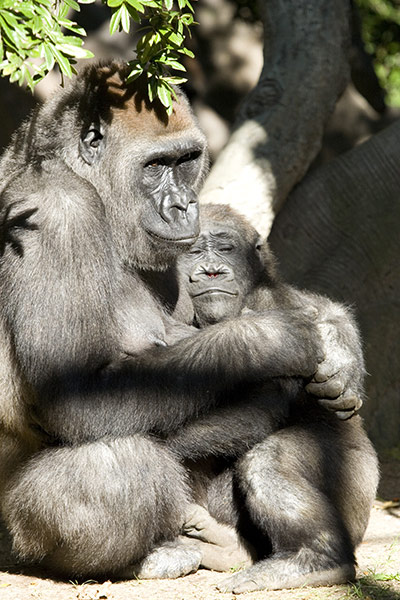
"It's difficult, if not impossible, to prove the existence of feelings of love in other humans, let alone animals, and some are unwilling to accept the idea that animals can experience complex feelings such as affection, so biologists have largely ignored the possibility. But anatomical and biochemical similarities between humans and non-humans indicate that animals too can feel love, as well as benefit from the survival advantages offered by attachments between individuals. Four-year-old lowland gorilla Zola is cradled by his mother, twelve-year-old Tuti, demonstrating the emotional security and comfort provided by familial love in one of our closest living relatives" Photograph: Vicki Puluso




.jpg?w=600)