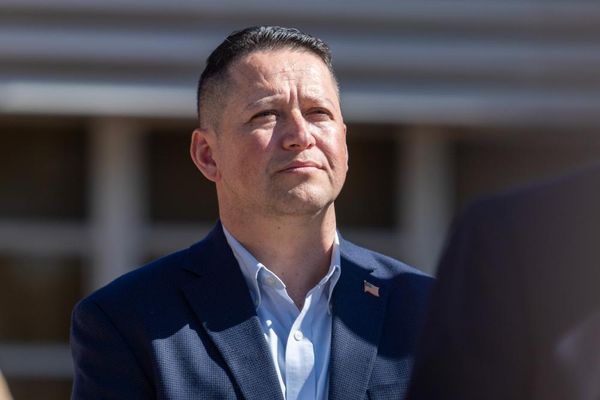
Sarah Hanson-Young has raised the prospect that the Greens could block the Turnbull government’s schools package because even regular yearly increases may be more generous than the Gonski 2.0 plan.
At a Christian schools policy forum in Canberra on Tuesday, the Greens’ education spokeswoman criticised both the former Labor government’s “unlegislated promises” and the Turnbull plan as “bastardisations” of David Gonski’s needs-based funding vision.
It comes as new education department data suggests the Catholic school system is redistributing funds away from needier schools that stand to gain under the Turnbull government plan.
Hanson-Young said government policy “does reduce overall funding to education across all sectors compared with Labor’s unlegislated promises”.
“It does provide a smaller amount – a reduction – to what has been legislated,” she said. “I don’t think in 2017, when we are weighing up priorities of government spending, that we should be looking for savings in our education budget.”
The Gonski 2.0 plan increases federal spending on education by $2bn over four years (or $18bn over 10) based on current funding levels. Labor has complained that amounts to a cut of $22bn over 10 years compared with needs-based funding agreements with the states.
Asked at a media conference afterwards which of the two plans she preferred, Hanson-Young noted there were in fact three pathways: the existing Australian Education Act legislation, the Gillard government’s agreements with the states and the Turnbull government’s plan.
Hanson-Young said the Greens would not finalise their position before a Senate inquiry into Gonski 2.0 but added “a lot of analysis needs to be done around what happens in the event the current law stands”.
“I’m not interested in seeing less money going to the public school system.”
The Australian Education Act grants 4.7% funding growth to schools that are not yet at their resource standard, including all public schools. Those already above the standard receive 3% a year growth.
The $22bn Labor says will be cut from schools comprises extra money in needs-based funding agreements and this regular indexation in legislation.
Hanson-Young’s comments suggest the Greens are leaving open the option to block Gonski 2.0 because schools may be better off under the act. It follows positioning last week to reject Gonski 2.0 because it does not offer enough funding.
The Turnbull plan offers public schools an average annual increase in per student funding of 5.2% over four years. A state-by-state breakdown shows that Tasmanian and Northern Territory public schools could be better off under the 4.7% indexation because they are due to get 4% and 1.6% under Gonski 2.0.
Western Australia (7.3%), the Australian Capital Territory (5.9%) and South Australia (5.8%) would all get much higher levels under Gonski 2.0 than indexation. Public school funding in New South Wales, Queensland and Victoria is marginally higher under the Turnbull plan.
In Labor caucus on Tuesday, the party’s education spokeswoman and deputy leader, Tanya Plibersek, called Gonski 2.0 an “attack on public education” and said that, if the Greens support it, it would show “how moronic they are”.
The Australian Education Union’s president, Correna Haythorpe, said the union would “not be distracted by alternative policies that aim to prevent the full delivery of the current Gonski needs-based funding agreements to schools across our country”.
“The Greens, the Nick Xenophon Team and other crossbenchers are urged to block the Turnbull government’s bill, which will entrench chronic underfunding and disadvantage among some of our most vulnerable students,” she said.
According to the AEU, the Gonski 2.0 plan cuts $3.2bn worse off in 2018 and 2019 relative to needs-based funding agreements.
New education department data shows some Catholic schools in particular stand to benefit because the Catholic system gives its poorer schools less than the amount allocated to them by the federal government.
For example, the St Mary of the Cross MacKillop Catholic parish primary school, a low socioeconomic status school in Melbourne’s Epping North, received $1.86m in 2015, $1.49m less than its federal government allocation.
The National Catholic Education Commission acting executive director, Danielle Cronin, responded in a statement that it allocates funding to its schools based on “the needs of individual school communities”.
“Our education experts are better able to look at the needs of a community than a blunt instrument like a funding formula entered into a spreadsheet,” she said.
“Our colleagues know if there are particular needs that don’t show up in funding calculations. They know far better than the flawed SES [socioeconomic status] methodology what the real capacity of parents and families to pay fees is in an individual community.”
Cronin said the Catholic system’s redistribution “allows inclusive, low-fee Catholic schools to be present in communities all across the country and the minister’s attacks on system autonomy are putting that highly valued system under significant pressure”.
On Monday the education minister, Simon Birmingham, said he was encouraged that the Greens and other crossbench parties had, unlike Labor, kept an open mind to the possibility of passing the schools funding package.
At a doorstop on Tuesday he said when Catholic school principals and parents saw that the plan granted a $1.2bn increase to their schools over four years there was “no reason” to increase fees.