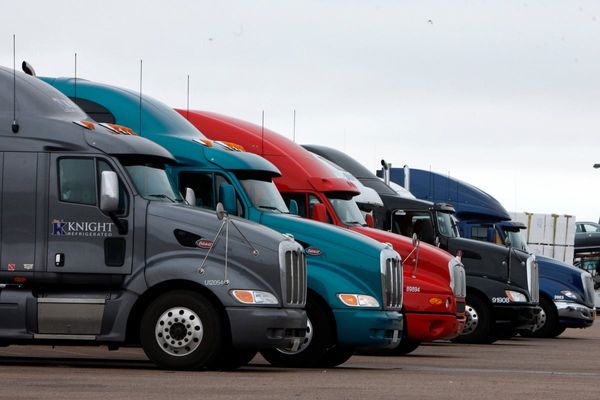
Sending an order into the unknown (well, a market abroad) may seem challenging at first. In the UK, you know which logistics service to use, but in other markets who’s going to see your precious cargo across different transport systems, ensuring that it isn’t damaged and doesn’t go astray? With a longer and more involved end-to-end journey, and a new customer relationship at stake, it’s important to have confidence in the handling of your products.
The nature of what you’re shipping, as well as the quantity, will have a bearing on your transport strategy. As well as being able to trust those carrying your products, you’ll need to make sure goods are packaged securely.
Shipments will also need to be adequately insured in case an issue does arise. Good communication and tracking facilities with the primary logistics partner will be equally important.
Welding equipment manufacturer Westermans International receives payment in advance for its shipments, but managing director Peter Westerman notes that many firms will work on payment against a letter of credit (i.e. goods paid for when they arrive). If goods are damaged on arrival, funds are likely to be withheld.
He warns others not to choose a service based on price alone. “Only use a reputable shipper, because in the long run the costs of loss or damage could outweigh the hassle of the claim. Worse still, you’ll have a disappointed customer who may never order from you again.”
Securing labelling correctly is equally important, so items don’t go astray. “If in doubt, ask the customer to check the shipping label as translation can often be wrong – even with something as simple as an address label,” Westerman says.
Dragons’ Den winner Magic Whiteboard, which provides a portable whiteboard on a roll, exports to 20 countries around the world, including the US and Australia. Managing director Neil Westwood believes traceability, control and continuity of service are key to having confidence that goods will arrive intact – because someone is always accountable. The company recently switched from a well-known UK parcel delivery company to UPS for all overseas deliveries.
“We have found they are more reliable for exporting to countries outside the European Union,” he says. “They track the parcels better and we have fewer issues at customs.”
Speed of delivery and shipping costs
Without proper planning, shipping products abroad can be slow or expensive, so again it’s important to consider the optimum service for your needs and those of your customers. How quickly do the items need to get there and, if there is a tight deadline, can any additional cost be built into the price? As well as managing client expectations, companies need to be realistic about what’s affordable and practical in the circumstances.
Westwood says: “You may have to offer lower delivery charges to overseas customers to gain the business, so that they are not a barrier to trade.” A good logistics partner will understand this, offering a range of transportation options at different price points. Look for suitable terms and conditions, and where possible specify tracking capabilities including proof of receipt.
Other tips to accelerate delivery without bumping up costs include securing preferential shipping status. RoBAT, which exports electrical testing equipment to Europe, China, the Far East and the US, has found that a ‘known shipper’ licence [pdf] can help speed up security checks. Its products were too large to be X-rayed at customs, so checks are now done on site in the UK, reducing shipping time.
Export regulations and customs clearance
Red tape is a necessary part of the export process, but again it needn’t be a barrier with proper planning. One of the first considerations is whether products are compliant with local health and safety standards or other legal requirements.
Regulations and certification standards exist to apply market and quality control of products. For a company like Accutronics, which makes batteries and chargers, this is an important consideration for any new market. Commercial and engineering support manager Gareth Hancox says: “In our sector there are more than 70 different certifications internationally, with very little crossover and often very different requirements. So it pays to consider your end markets while still in the initial design stages of product development. Building relationships with regulatory bodies is important.”
When it comes to getting your products to the customer, Matt Guffey, marketing director, UPS, UK, Ireland and Nordics, stresses the importance of getting export paperwork and shipping documentation right first time. He says: “Think about what licences you need. Regulations vary from country to country, but most have some controls on certain categories of goods leaving or entering their territories. If you’re planning on exporting one of these categories, then it’s probable that you’ll need to get an export licence and your customers are likely to need an import licence too.”
For market entry, a good shipping agent will advise on the documentation needed for each country, and correct product codes. Certificates of Origin are a necessity in some countries, and goods could be held up at local customs if these are not provided.
Westerman says: “Keep a copy of each document, and save an original Bill of Lading [a document issued by a carrier, detailing the shipment]. These are costly to reproduce and certain countries still require a hard copy. We have just had documents signed for in Kenya that immediately went missing. Luckily we managed to issue the three originals copies we held on file.”
External help
To help first-time exporters navigate the sometimes complex international landscape, UPS has created an Export Toolkit. Guffey explains: “The tool includes resources and expert advice on helping you to grow your business into global markets with success.”
Additional resources can be found from the British Chambers of Commerce and the UKTI. “One link I use is exportbritain.org.uk/international-directory, which provides concise information about each country,” says Karen Williams of Wax Lyrical, an exporter of home fragrances. “If you’re a Chambers member, you receive preferential rates for document preparation.” CDN Consular Services Limited, meanwhile, is a one-stop organisation providing all aspects of documentation required by exporters.
Within the EU the flow of business is much freer, of course. Ian Baxter, CEO and founder of Baxter Freight, says: “Being a member of the EU means the barriers to exporting in this massive market are very low. When trading with Norway or Switzerland on the other hand, exporters have to go through customs procedures which don’t exist in the single market – adding cost, complexity and a small time delay.”
Content on this page is paid for and produced to a brief agreed with UPS, sponsor of the Exporting to New Markets hub on the Small Business Network.