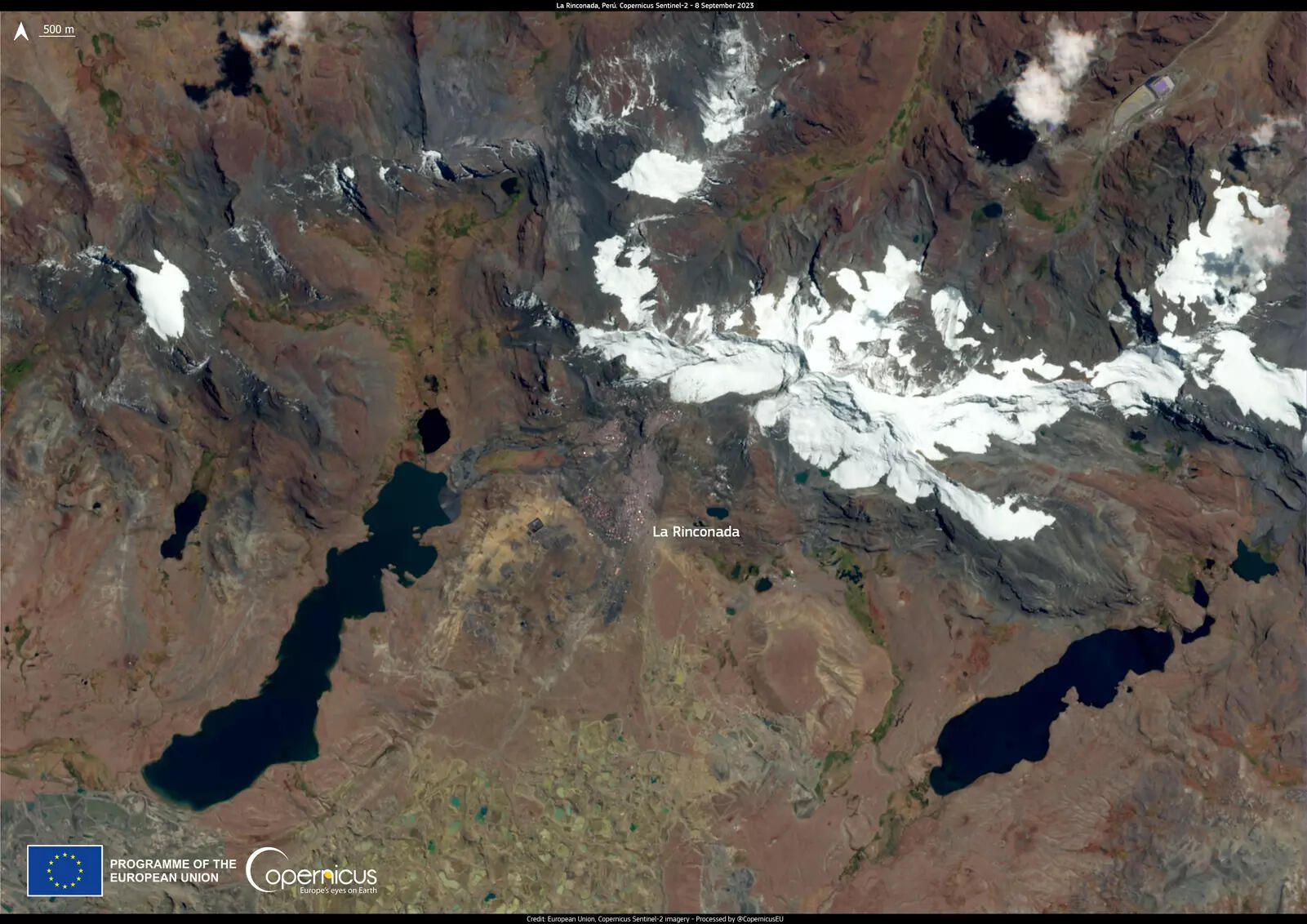
La Rinconada is a unique gold mining village high in the eastern Andes, on the edge of human endurance. It is acknowledged as the world's highest permanent community at an elevation of almost 5,000 meters above sea level. Here, almost 50,000 individuals lack access to basic amenities including sewage systems, running water, and structured garbage disposal. Gold is practically the only reason the town exists. Beneath a receding glacier, it clings to the slopes of Mount Ananea in southeast Peru. Here, extraction, cold, and altitude shape life. What started out as a makeshift camp has solidified into a permanent settlement, raising concerns about labour, health, and the lengths individuals will go to in order to survive economically in harsh conditions.
La Rinconada is the world’s highest permanent human settlement
La Rinconada is located approximately 650 km from the Bolivian border, on a steep mountainside beneath the glacier called locally as La Bella Durmiente. The thin air at this altitude contains roughly half of the oxygen present at sea level. Even a short walk might leave newcomers breathless. Temperatures frequently fall below freezing, and the ground is a mixture of rock, ice, and mining debris. Despite this, homes, shops, and informal roadways have gradually expanded across the slope.
The town grew without basic infrastructure
The settlement was never planned as a city. It began more than forty years ago as a mining outpost, and essential services were never installed. There is no formal sewage network, and clean water must be carried in. Garbage is commonly burnt or buried outside the town. Electricity only arrived in the early 2000s, long after the population had begun to rise.
Gold mining shapes work and daily life
Mining in La Rinconada follows an informal system known locally as cachorreo. Miners work for weeks without pay, often up to thirty days at a time. At the end of this period, they are allowed to take as much ore as they can carry. Any gold extracted from that ore is theirs. This system attracts workers willing to endure dangerous conditions for the chance of a rare but significant reward.
Rising gold prices drove rapid population growth
When global gold prices climbed in the early 2000s, La Rinconada expanded quickly. Between 2000 and 2009, its population reportedly grew by more than 200 percent. New arrivals came from across Peru, drawn by stories of opportunity. The growth outpaced any effort to improve housing or public services, leaving much of the town in a state of permanent improvisation.
Thin air creates serious health risks
Living at such altitudes is really hard for the body. Many people who live there develop chronic mountain sickness, a disease that is basically caused by oxygen deprivation over a long period of time. The signs are headaches, dizziness, and heart problems. The scientists roughly guess that one out of four locals of the town can be the victims of the disease. There is a scarcity of health facilities, and for the most severe cases, the patients have to be taken down for treatment in the valley.
A town that persists despite its conditions
La Rinconada continues to exist in tension with its environment. Gold keeps people here, even as the glacier above retreats and health risks remain unresolved. There is no clear plan for its future. For now, life goes on, thin air and all.