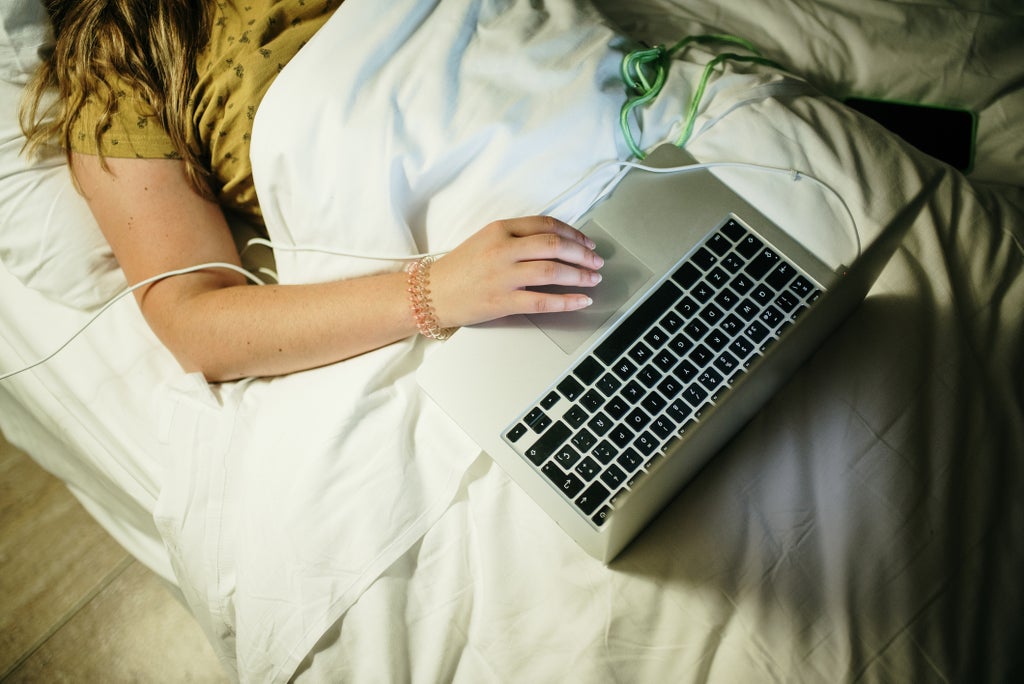
Many people engaged in virtual sex during the first lockdown, a new study has suggested.
According to a survey of more than 6,654 people conducted by UCL, the University of Glasgow and the National Centre of Social Research, more than half (53 per cent) of those aged 18 to 59 turned to some form of virtual sexual activity, such as sexting or watching pornography, during the first coronavirus lockdown that began in March 2020.
The research found that more men than women were viewing pornographic content, with 64 per cent of men saying they watched sexually explicit material compared to 21 per cent of women.
The study, which asked participants questions about their sexual behaviour during the first four months of lockdown, also found that people aged 18-24 were more likely to report a change when it came to their sexual activity.
Roughly 66 per cent of this age group said their sexual frequency declined during this period of time.
The research also found that more people were engaging in sexual activity after lockdown started, with 63 per cent of adults reporting having physical sex with someone.
The majority of these people, 76 per cent, were in cohabiting relationships and therefore would not necessarily have broken lockdown rules.
The study’s authors said the study was designed to represent the British population, but due to a lack of data on sexual activity before the pandemic started, they were restricted when it came to quantifying change.
Soazig Clifton, joint co-first author, told Sky News of the findings: “Young people were more likely to report having sex less often and being less satisfied with their sex lives than they had been before lockdown started.
“This is likely to be at least, in part, because young people are less likely to be living with partners and were unable to meet sexual partners when restrictions were in place.
“Time will tell whether these changes in sexual behaviour during the first lockdown translate into long-term shifts in behaviour, or whether there is a ‘rebound’ effect with people making up for lost time.”