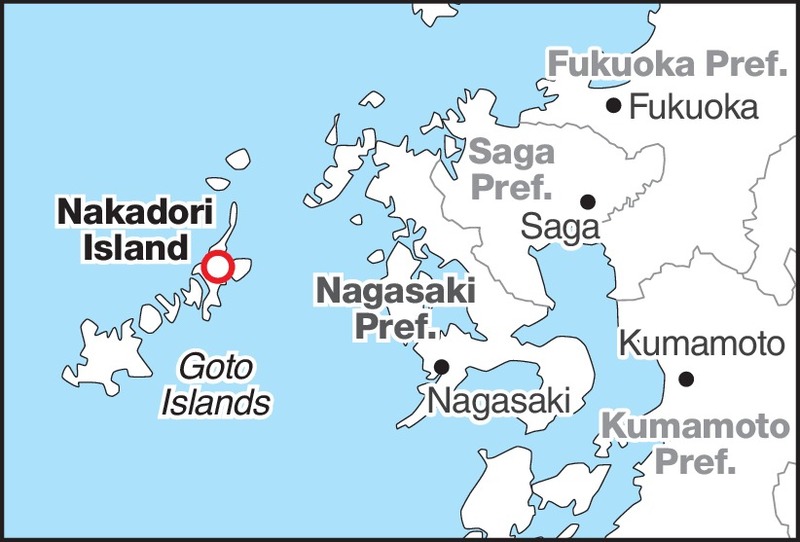
NAKADORIJIMA ISLAND, Nagasaki -- The Goto Islands in Nagasaki Prefecture boast a variety of fascinating food specialties, such as kibinago sashimi and seared Goto beef.
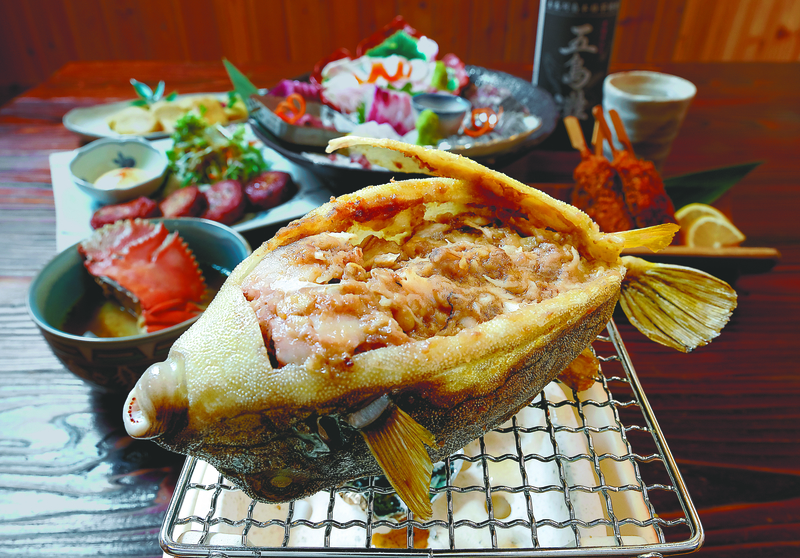
Among the delightful dishes that were served in front of me during my visit was grilled hakofugu boxfish. The fish is served whole, belly-up, with its open body stuffed with its meat mixed with miso.
Locally, both the dish and the fish are called kattoppo or kadoppo in the Kamigoto area, the northern part of the Goto Islands, of which Nakadorijima is the main island.
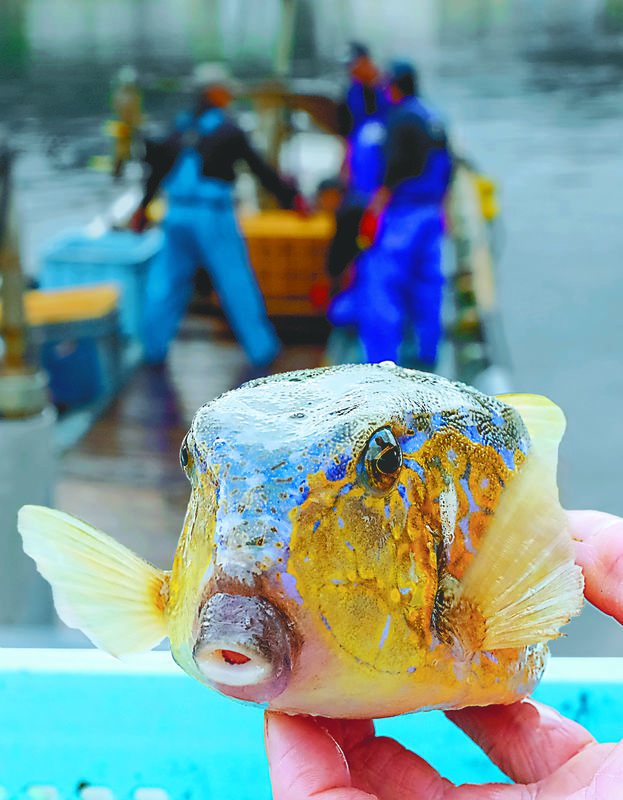
To make this dish, the meat of the boxfish is first removed from its hard trunk-shaped body. The edible flesh is then mixed with miso and put back in the body before the entire fish is grilled.
As boxfish caught in nets are not sold at market, it has developed as a local specialty, which is at its best from autumn through winter when the fish has more fat.
"The fish is also called boppo in our area," said Mitsuhiro Hara, owner of the Yoridokoro Mitsu restaurant, which is where I was served the distinctive dish. "The trunk-shaped bodies of boxfish have corners [or kado in Japanese]. That may be why they're called kadoppo."
An elderly customer said he used to catch boxfish in the sea to eat when he was a child. "I believe the dish has been enjoyed since the Edo period [1603-1867]," he said.
Kattoppo is served at Yoridokoro Mitsu and other local restaurants for about 1,500 yen. Despite its name, hakofugu does not have the same toxin found in fugu, or puffer fish. However, the fish sometimes secretes a toxic substance from its skin, which means the surface needs to be washed thoroughly before being cooked.
The dish was originally cooked by fishermen, and their wives started selling the dish they prepared to inns and restaurants. This is said to be how the dish became known as local cuisine.
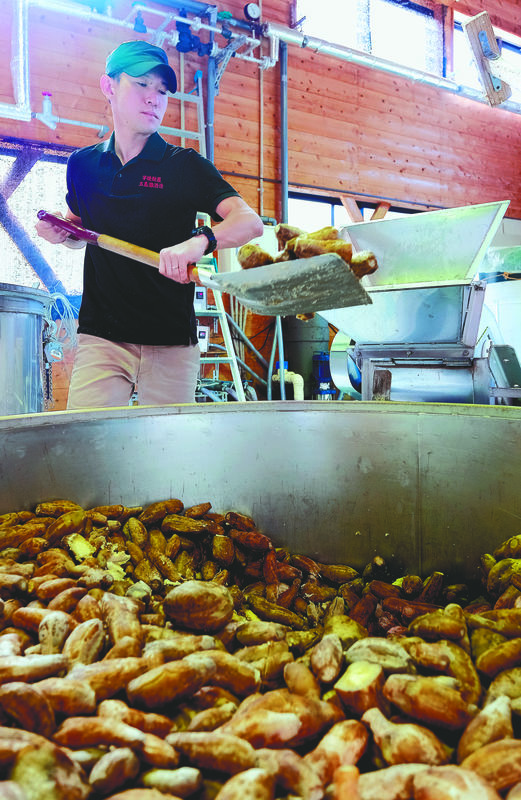
I was recommended to enjoy the dish with a cup of black koji shochu made from sweet potato from Yoshifumi Tamoto's Goto Nada Shuzo Co. distillery.
The distillery started in 2007 with the aim of producing a local specialty using sweet potatoes, which originally arrived via China, because their local production was decreasing at that time.
Tamoto's father, who was the first president of Goto Nada Shuzo, suddenly passed away before completion of the company's first shipment of shochu. To succeed him, Tamoto has been receiving training over the past two years to become a toji master brewer who supervises the production process for sake or shochu. "I hope to put my father's wish into the flavors of our shochu," he said.
After hearing such a story, a cup of black koji shochu mixed with hot water was called for.
The Goto Islands had strategic importance in ancient times because of their position along the sea route between Japan and China. Because of their history as a stopover through which people and goods passed, local islanders are known for their kindness toward travelers.
The Kamigoto area was a port of call for official Japanese delegations traveling to China during the Tang dynasty from the seventh and ninth centuries.
The piping hot kattoppo dish had a rich flavor, complemented well by the shochu. I had a blissful moment enjoying the dish and the cup of shochu bit by bit.
'Cooked hell'
The history of udon noodles can be traced to the Goto Islands, as noodles were possibly brought back to Japan by Japanese envoys dispatched to China during the Tang dynasty.
The islands have few flat areas of land, so the cultivation of sweet potatoes and wheat is more practical than rice. Local residents have long created hand-rolled dried noodles that are thin and have a chewy texture.
"Our [Goto] udon is characterized by smearing camellia oil on the surface so that the noodles won't stick together," said Nao Kumagai, a member of the local udon cooperative.
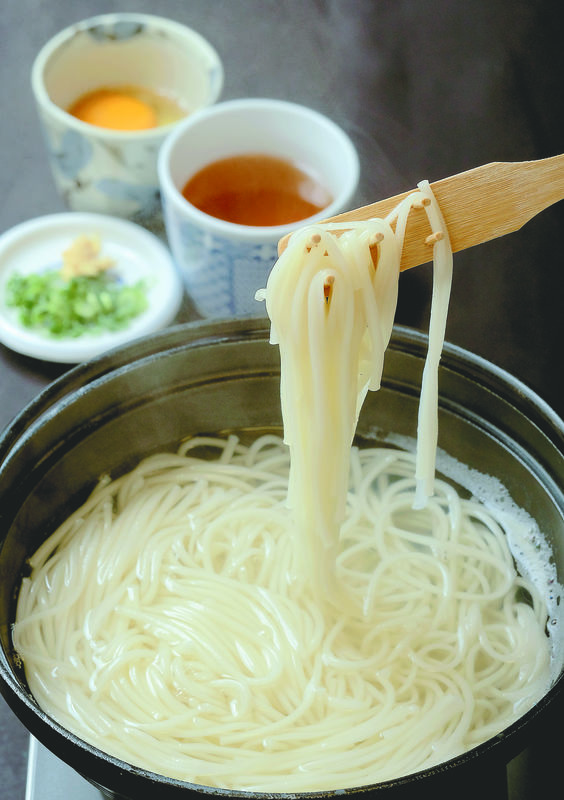
At a restaurant run by the association, I tried its specialty called jigokudaki, which literally means "cooked hell," for 750 yen.
"This dish has been enjoyed by families, or fishermen while sailing," she said.
The dish was served to me in an iron pot with boiling water, from which I scooped up the noodles to dip in a cup containing a beaten egg and another containing broth made from flying fish.
To find out more about Japan's attractions, visit http://the-japan-news.com/news/d&d
Read more from The Japan News at https://japannews.yomiuri.co.jp/