After seven hours on the plane and another three-and-a-half hours on the train, I finally found myself on a street of Hakodate, the southernmost city of Japan's northernmost prefecture.
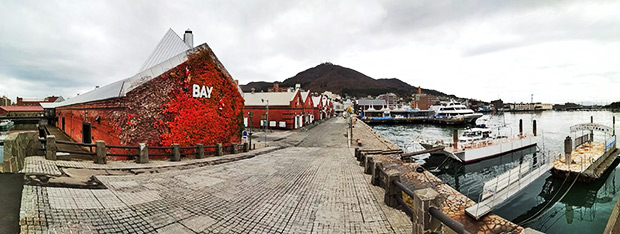
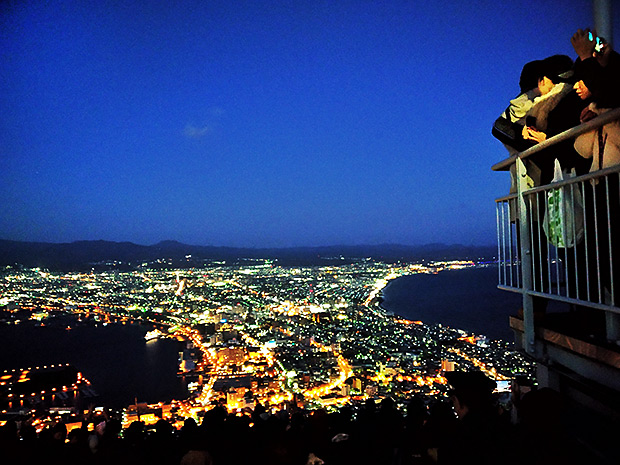
The Kanemori Red Brick Warehouse, a symbol of Hakodate Bay, is testimony to the city’s prosperous past as an international port. The warehouse business here began in 1887, but these fire-resistant brick structures were built later, in 1909. These days, the buildings house shops and restaurants. Towering in the background not so far away is Mount Hakodate, on whose hillside several other historic structures, from official buildings to churches and temples, can be found. On the hilltop is the lookout point that boasts one of Japan’s most celebrated night views.This vista from the top of Mount Hakodate has long been on my bucket list. The ropeway was closed for maintenance during the period when I visited, so I needed to take a bus to the summit instead. The good news for me was that it wasn’t so cold that evening; otherwise, I wouldn’t have been able to appreciate the magnificent sight for as long as I wished. While enjoying the illuminated scenery, my thoughts drifted to Chiang Mai. In my opinion, the night view of the northern city when seen from Doi Suthep is no less beautiful.
I had been to Hokkaido quite a few times, but this was my first visit to Hakodate. I had heard so much about the unparalleled freshness of the seafood here and the world-famous night view seen from the top of the mountain that shares a name with the city. And from my pre-trip research, I also learned that Hakodate played an interesting role in Japan's modern history.
Some might not know that during the Edo period, for over 220 years until a few years into the latter half of the 19th century, Japan isolated itself from the rest of the world. Foreigners were not allowed to enter the country. Trade and other forms of relation with foreigners were strictly limited. Only Chinese junks and ships of the Dutch East India Company were allowed to visit Nagasaki, the only point of contact with overseas influences.
At the same time, Christianity, which played an important role in spurring a rebellion, was banned. And Japanese people were forbidden to leave the country. (However, there were those who managed to sneak out. Some of them, samurai included, fled all the way to Ayutthaya.) Basically, judging from foreign policy alone, Japan back then was not unlike North Korea nowadays.
Then, in 1853 and the following year, the US sent heavily armed naval fleets to force the shogunate to put an end to its isolation policy and start doing business with the US. Having seen China lose to Britain in the first Opium War a decade earlier, Japan, whose military technology was far behind that of the West, was aware that resistance was futile, so it complied. And that was not a bad decision, considering that a few years later the second Opium War broke out and, again, China lost and had to accept several unequal treaties with Britain and France.
As a result of the agreement with the US, three international ports were opened in different parts of Japan, namely Nagasaki in Kyushu, Shimoda in Honshu and Hakodate in Hokkaido.
Not everybody was happy with the abolishment of the isolation policy. As a result, Japan was thrown into a civil war known as the Boshin War that last from 1868-69. The final battles of this war between the pro-shogunate and the pro-Imperial Court armies were fought in Hakodate.
After the war, Emperor Meiji became the head of state, and Japan was in a rush to modernise the country. It should be noted that in the meantime, King Chulalongkorn (Rama V) of Siam, who ascended to the throne in 1868, was doing the same thing to save the Kingdom from Western imperialism.
Throughout the Meiji period, to the beginning of World War II, Hakodate prospered as an international port. Westerners of different nationalities and faiths came to settle there. Many new businesses were born. The city's grid plan and beautiful Western-style buildings from yesteryear make up much of the charm of Hakodate. The city may not be the first that comes to mind for many first-time visitors to Hokkaido, but spending a day or two here is definitely worthwhile.
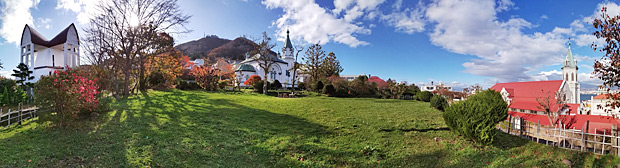
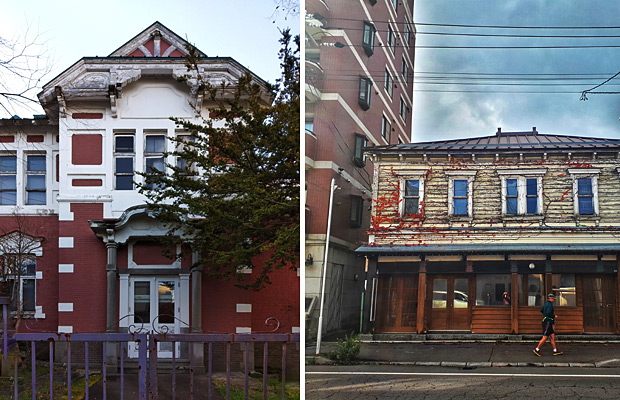
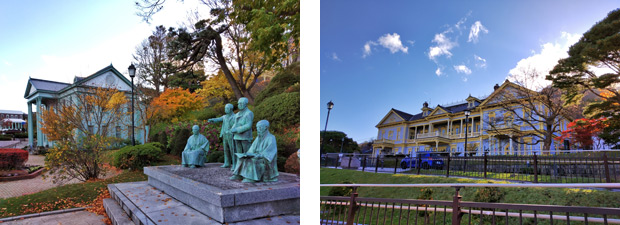
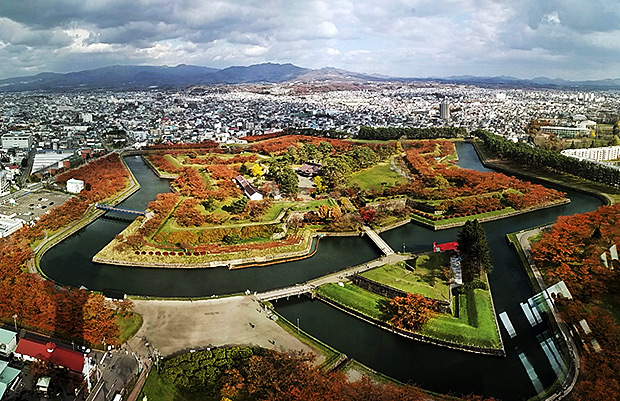
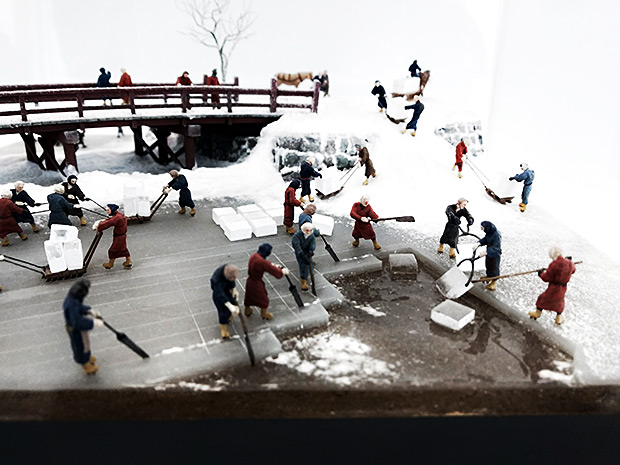
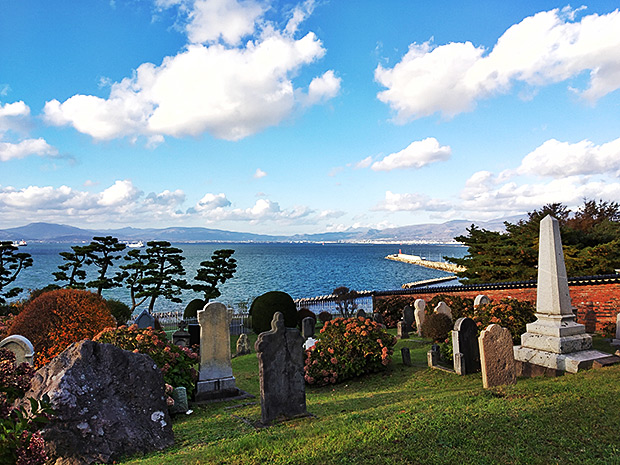
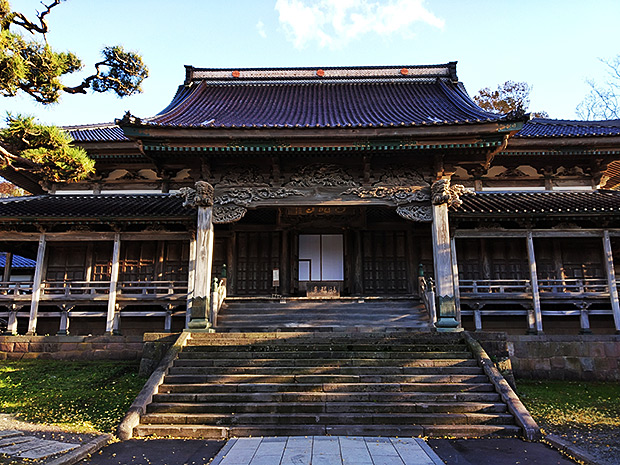
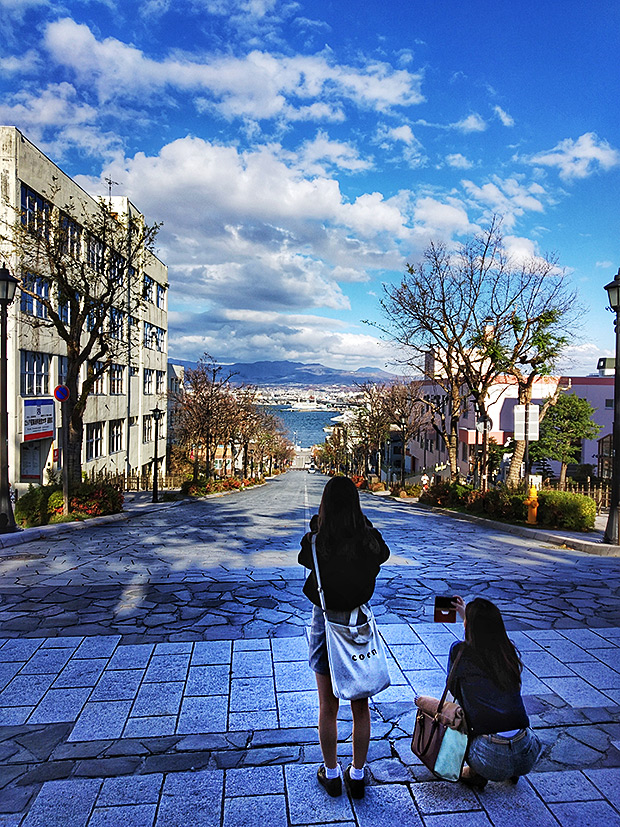
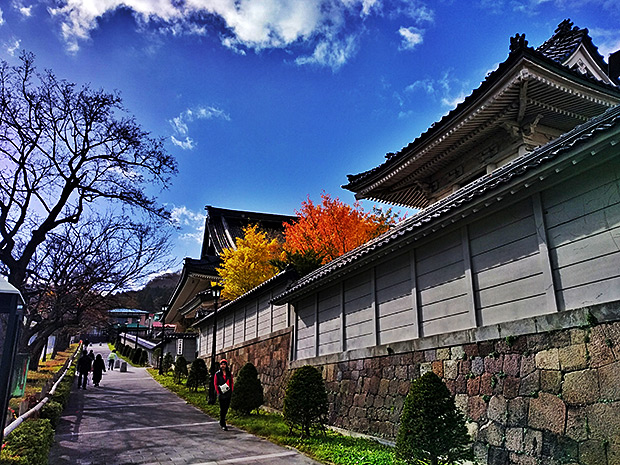
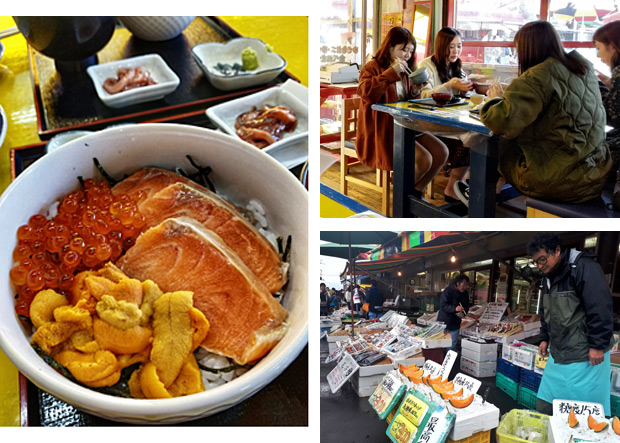
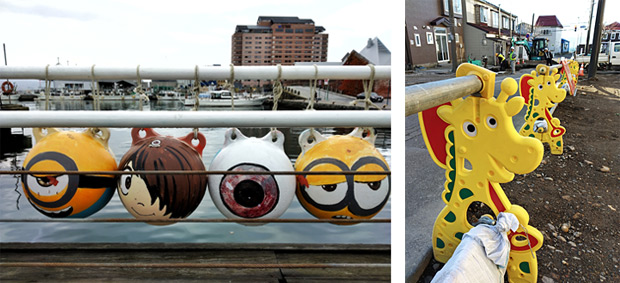
Apart from the Kanemori Red Brick Warehouse, Hakodate has many century-old buildings that are legacies of international trade. Several of them were not the original buildings but were rebuilt after a major fire disaster in 1907. The Motomachi area is a good place to find these historical structures. Some of the highlights in this hillside neighbourhood include three churches of different Christian faiths (Roman Catholic, Russian Orthodox and Episcopal), the Old Public Hall, the former Hakodate branch office of the Hokkaido government and the Old Russian Consulate. Japan’s oldest utility poles (two of them) can be seen at an intersection on Nijikken-zaka road, a short walk from the red-brick warehouse.From the observatory on the 107m-tall Goryokaku Tower, you can have a bird’s-eye view of the surrounding areas, including its namesake, the star-shaped fort, which used to be the last stronghold of the pro-shogunate troops. This is where the Boshin War ended, allowing Emperor Meiji to take full control of Japan and bring the formerly isolated country on a path toward modernisation. Other than the civil war, so many things had happened at this 19th-century fort, which you can learn about from the many displays in the tower’s history gallery. The one shown here relates that after the war, the moat of Fort Goryokaku became a commercial source of natural ice. In 1871, the ‘Goryokaku ice’ was known to be sold in Honshu, Japan’s largest island.The northern hillside of Mount Hakodate is home to several temples and cemeteries. This beautiful final resting place is one of the plots allocated for deceased foreigners. The first bodies buried in this cemetery belonged to two American sailors who died when their naval fleet arrived in Hakodate in 1854. Seen in the other picture is Sotoshu Koryuji Temple not far away. Like other temples in the area, its compound includes solemn graveyards. What makes this place stand out is the intricate carvings adorning the wooden structures. You don’t have to believe me, but I think visiting this part of Hakodate in the evening, as I did, is not a good idea, especially at this time of year, when it gets dark early.Located on the northeastern side of Mt Hakodate, the historical area of Motomachi is divided, and at the same time connected, by wide roads that run along the slopes. Each of these inclining roads offers a different view of the bay and the lower part of the city. With a grid plan, Hakodate is easy to navigate. The streets not only serve transportation purposes, but act as fire breaks. In the 19th century, fire was a big problem for the city’s residents.As a big fan of sashimi, eating was one of my major missions on this trip to Hakodate, famous for the freshness of its seafood. To be frank, after having three bowls of kaisendon (rice topped with sashimi) at three different restaurants, I couldn’t tell if the raw seafood here was fresher than that I had had in other parts of Japan. But one thing for sure: in Tokyo or Osaka, I could find the same dishes of similar quality at cheaper prices. At the famous Morning Market, the salmon in my kaisendon bowl was still icy. This was something new for me. I later asked a Japanese friend if it is normal practice to serve frozen fish. The answer was, just as I thought, ‘No!’. Well, at least the uni (sea urchin’s gonads) and the ikura (salmon roe) were OK.Japan is known for its kawaii culture. Cuteness can be found everywhere in the country, and Hakodate is no exception. Look how they painted these buoys! And can you guess what these adorable giraffes are for? The answer: They are part of the barricade to keep passersby out of a site where the road was being repaired!
Travel info
Hakodate sits near the southern tip of Hokkaido. There are no regular direct flights between the city and Bangkok. You need to first fly to New Chitose Airport, Hokkaido’s major gateway, 52km or so southeast of Sapporo, and take a train from there. The train takes about 3.5 hours. The railway runs westwards along the southern coastline. If time permits, you can drop by Noboribetsu or other towns on the way.
Sign up to read this article
Read news from 100’s of titles, curated specifically for you.