The family of a businessman taken into custody in Turkey in the assassination of Haitian President Jovenel Moïse is questioning his arrest while pushing back on accusations that he fled to Miami to avoid prosecution.
Samir Handal, 63, left Miami at 11 a.m. Sunday aboard a flight for Turkey, and was arrested shortly after arriving in Istanbul. His arrest was confirmed to the Miami Herald by Haiti Foreign Minister Claude Joseph, who said he reached out to Turkish officials after being alerted about Handal’s travel plans. At the time, an Interpol Red Notice, issued for wanted fugitives, had not yet been activated. It was activated Sunday night, he said.
Joseph said he has asked the Turkish government to transfer Handal to Haiti to answer questions about the middle-of-the-night July 7 murder, which is currently the subject of an ongoing judicial investigation.
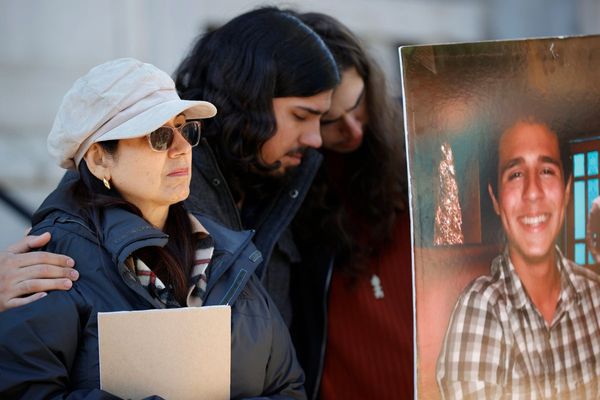
Handal’s eldest daughter, Samar, said her father’s travel plans were no secret. Ahead of his trip to Turkey, she said, he notified both his Miami and Haiti lawyers and the Miami FBI office. His final destination, she said, was Palestine, where he was traveling on a round-trip ticket to see his ailing mother. Though Handal holds Haitian citizenship, he was born and raised in Palestine.
“My dad was not in hiding. My dad was living at his private residence in Miami using his cellphone that he had and that’s registered,” she said. “We were here at home, hanging out with friends because the FBI said they had nothing against him.”
A receipt of an airline ticket showed that Samir Handal flew to Miami from Port-au-Prince on July 9 on a 1:43 p.m. American Airlines flight. He was contacted by the FBI shortly after, she said.
“They questioned him and we hired an attorney here,” Samar Handal said. “From everyone, it was said he was cleared and there was no reason to arrest him; there was just nothing. ... They asked if they could have his cellphone to clone so the FBI has all of the conversations that were done between anybody my dad spoke to. Obviously, they didn’t arrest him.”
A spokesman for the FBI did not respond to questions from the Miami Herald about the agency’s contact with Handal. The agency is assisting Haiti in the investigations and has interviewed several people in Port-au-Prince and in South Florida.
Sibylle Théard Mevs, Handal’s attorney in Haiti, said his arrest and the timing make no sense. Haitian authorities, she said, have known for months about her clients’ whereabouts because she informed them in several letters she sent, after his driver was arrested and released after questioning by the judicial police.
“In the letters we said he’s in Miami, in Florida, with his wife, taking care of her after she had had surgery,” Mevs said. “I think there was a lot of complicity among people, who needed this arrest. He was never invited by the police” to be questioned.
In fact, Mevs said despite police announcing in Haiti that there was an arrest warrant for her client, neither she nor he was officially informed. Instead of being sent to her client, the warrant was sent to the judicial police — a month after it was issued.
“He is a low-key businessman. He’s not involved in any social or political activities. He’s the perfect scapegoat because no one knows him,” Mevs said, calling the arrest “weird.” “He’s been living in Haiti for years, taking care of his business and family. Why make such a big scandal? He could in no way be involved.”
Handal is the second suspect to be arrested in the past month in connection with the crime. Mario Palacios Palacios, a key suspect and former Colombian military officer who fled the scene immediately after Moïse was shot multiple times in his private bedroom, remains in custody in Jamaica after surrendering there last month. With no extradition treaty between Jamaica and Haiti, a source in the Jamaican government said it’s more than likely that Palacios will be deported to his native Colombia. Haiti would then need to engage with Colombia about having him sent to Port-au-Prince, where 18 of his fellow ex-Colombian military soldiers are currently jailed in connection with the crime.
Like Palacios, Handal was the subject of a warrant issued by Port-au-Prince’s prosecutor’s office. An investor in real estate who owns the building that the Haitian government’s Ministry of Planning operates out of, Handal owned the home where Christian Emmanuel Sanon, a politically ambitious pastor, lived and was arrested by Haiti National Police two days after the killing.
A Haitian American who once filed for bankruptcy and says he’s a doctor, Sanon is accused of being one of the “intellectual authors” of the president’s slaying. Police have accused him of plotting the president’s murder by holding various meetings in and out of Haiti. Sanon has denied any involvement and is currently in prison in Haiti along with 43 other suspects, including two other Haitian Americans from South Florida.
Samar Handal said the relationship between Sanon and her father was a professional one.
Sanon had rented her father’s house across the street from where he was arrested in the Delmas 60 neighborhood of the capital to run a clinic, and was renting Handal’s personal home for three months, she said, while his home was being repaired. “My dad never sat in on any political meetings whatsoever; we’re not politicians.”
Mevs, the lawyer, said that in her correspondence to Haitian police she not only described the relationship between Sanon and Handal, but she also provided a copy of the rent contract.
“He was not disappearing or fleeing,” she said.
———