
The United Nations Security Council unanimously agreed Thursday to shut down its nearly 13-year peacekeeping operation in Haiti by mid-October and replace it with a new, leaner mission focused on justice, human rights and police development.
In adopting a draft resolution, member countries voted to extend the current stabilization mission's mandate for a final six months. The meeting, however, wasn't without controversy as Russia argued that the role of the new mission remains unclear, and Brazil objected to the addition of new requirements that will set accountability standards for troop- and police-contributing nations charged with carrying out the U.N. mandate in difficult environments such as Haiti.
That language, U.S. Ambassador Nikki Haley said as president of the council, "was added so that we are able to track effectiveness of remaining personnel."
"As the stabilization mission in Haiti draws down and the new mission draws up, the Haitian people will be sent on the path of independence and self-sufficiency," Haley said.
She raised the thorny topic of allegations of sexual abuse and exploitation by U.N. peacekeepers and personnel in Haiti and elsewhere around the world.
"While this is seen as a success, unfortunately it's a nightmare for many in Haiti who will never be able to forget, and live with brutal scars," Haley said about the U.N.'s presence in Haiti before reading from an Associated Press investigation published this week about sexual abuse. "We must acknowledge the abandoned children, 12 to 15 years old, who lived every day with hunger. They were lured by peacekeepers with cookies and snacks. The high price of this food was sexual abuse."
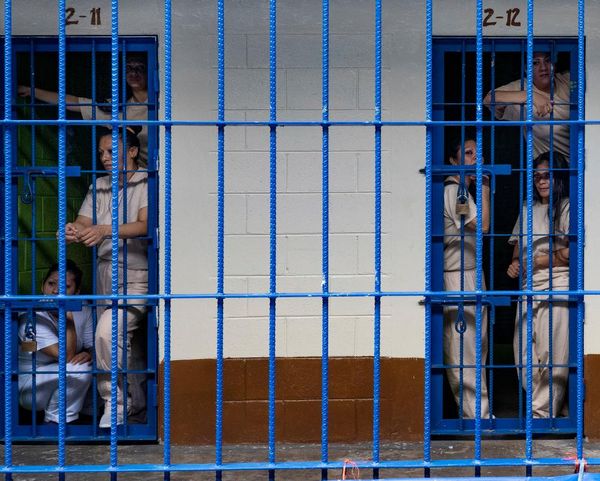
Though Haley was the only ambassador to raise the U.N. sex scandal, Security Council members all agreed that Haiti's 11 million citizens are still in need of human rights protection. Their concerns are underscored by the recent decision by the country's new president, Jovenel Moise, to discontinue the mandate of an independent U.N. human rights expert, Gustavo Gallon. His recent visits to Haiti's prisons have brought international scrutiny to the "inhumane conditions of detention in most prisons in Haiti" _ much to the Haitian government's dismay.
"All judges and court officials _ and all people _ should visit prisons to observe closely the ignominy to which the detainees there are subjected to," Gallon said at a news conference in Port-au-Prince last month, shortly before it was revealed that the government opted not to renew his term. "These are inhuman and degrading conditions."
On average, more than 70 percent of detainees around the country had not seen a judge, Gallon said, and the National Penitentiary, where many prisoners had died in the last year due to overcrowding, malnutrition and infectious diseases, was at 359 percent of its capacity.
"The situation has worsened dramatically: The average length of detention increased from 624 days to 1,100 days," Gallon said, citing a December 2016 study by the United Nations Stabilization Mission in Haiti about conditions in the National Penitentiary.
Haiti's prisons have capacity for 1,600 detainees. In total, they held 10,500 as of December.
"This enormous level of overcrowding also explains the high level of deaths in jail that were even more evident in 2016 because of the strikes in public hospitals, whereas previously for the same number of severe cases of disease or malnutrition, exacerbated by overcrowding, some patients were transferred to a hospital," Gallon said. "Such a transfer was not possible in recent months, and the number of deaths in prisons has increased tremendously."
At the current pace, he noted, an estimated 229 prisoners, or about 22 out of every 1,000, will die in jail this year.
On Wednesday, HaitiChildren, a Colorado-based charity that usually advocates on behalf of orphaned, abandoned and disabled children, announced that it would supply hundreds of thousands of meals over the next six months to feed the 4,200 prisoners inside the National Penitentiary starting Sunday.
Acknowledging that the prison focus was a break from the charity's usual mission, founder Susie Krabacher said she was driven to do something after one of her directors showed her photos of prisoners inside the National Penitentiary, and she toured the facility.
"We could not stand back and let more tragedy happen," Krabacher said.
Commissioner of Prisons Jean Gardy Muscadin said the charity-provided meals will supplement the two meals a day that prisoners now receive. He said a study is under way by a new government prison commission to investigate why prisoners are dying and how to improve conditions. He insisted that the deaths are not due to malnutrition but rather preexisting health conditions such as severe anemia, tuberculosis and heart attacks.
Muscadin also said officials are currently working on transferring detainees to less crowded detention facilities.
Observers both in and out of the United Nations have long acknowledged that despite the peacekeeping mission's success in cracking down on armed gangs and providing backup and training to the Haitian National Police, the mission has fallen short in helping Haiti reform its dysfunctional justice system and protecting human rights.
The resolution establishing the new mission, the United Nations Mission for Justice Support in Haiti or MINUJUSTH, states that strengthening the justice sector and the capacity of the Haitian National Police in its efforts to strengthen prisons management "is paramount" for the country.
"The Haiti of today is not the Haiti of 2004," United Kingdom Permanent Representative Matthew Rycroft said in welcoming the U.N.'s decision to focus less on peacekeeping and more on rule of law and human rights protection in Haiti. "Support for Haiti's security capacity alone will not sustain peace in the country. As history has told us time and time again, it is the rule of law and the protection of human rights, not the capacity to use force, that delivers long-term stability."