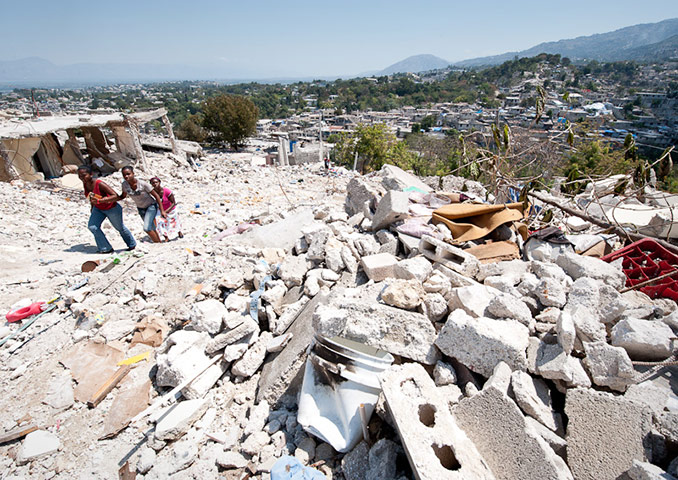
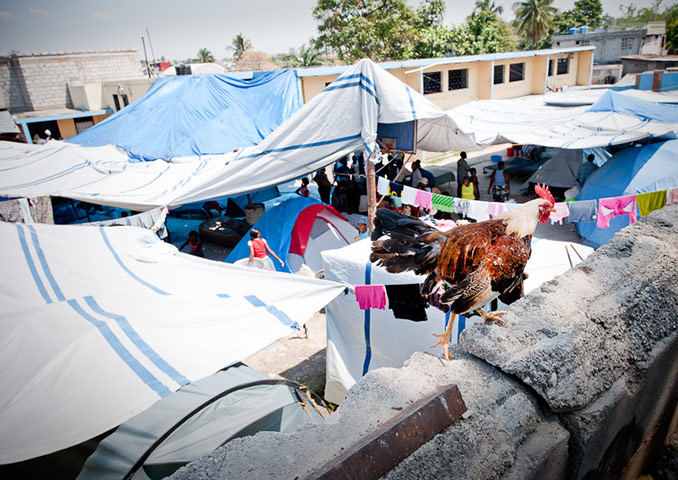
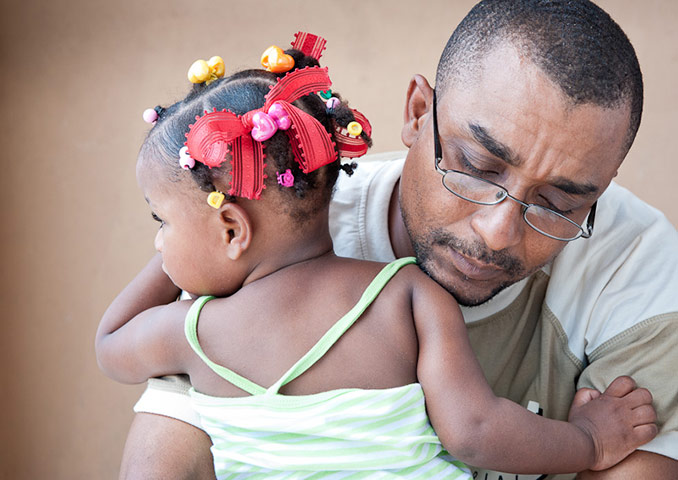
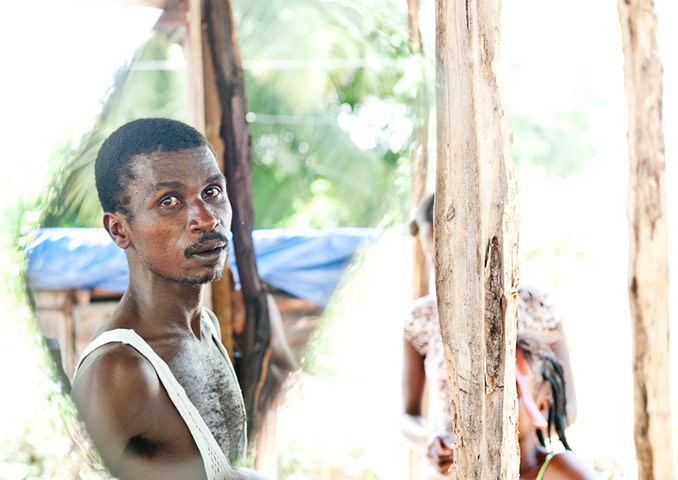
On 12 January 2010, a 7.0 magnitude earthquake devastated Haiti. Poor construction and cheap materials were partially blamed for the huge death toll caused by the collapse of buildings. Tearfund has been training builders and construction engineers in quake-resilient techniques to reduce the risk of comparable destruction in the future Photograph: Richard Hanson/TearfundIn the aftermath of the earthquake, which left homes in rubble and 2.3 million people displaced, tarpaulin shelters became commonplace. Here, a school basketball court provides the setting for a makeshift camp for people whose houses were destroyed Photograph: Richard Hanson/TearfundThe earthquake changed Quinet Desir's life irrevocably. 'I started the day on 12 January with everything a man could want: a wife, a family and a job,' he says. 'At the end of the day, it was all gone.’ His wife, Sonia, and 13-year-old daughter, Jocelyn, both died, as did his brother and sister. Desir is pictured here with his daughter, Isobel Photograph: Richard Hanson/Tearfund
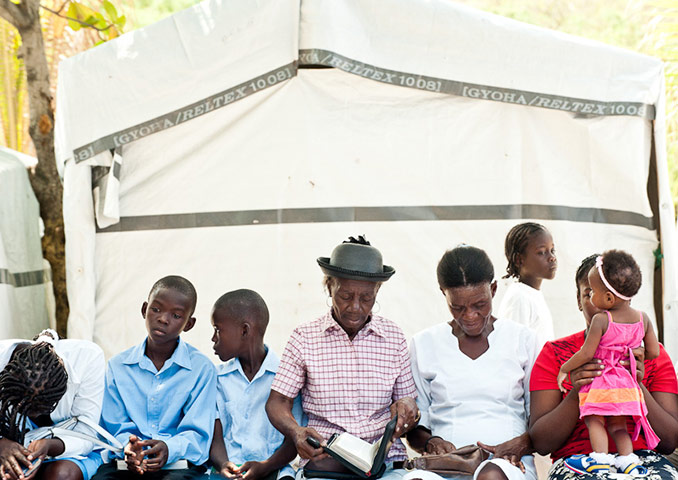
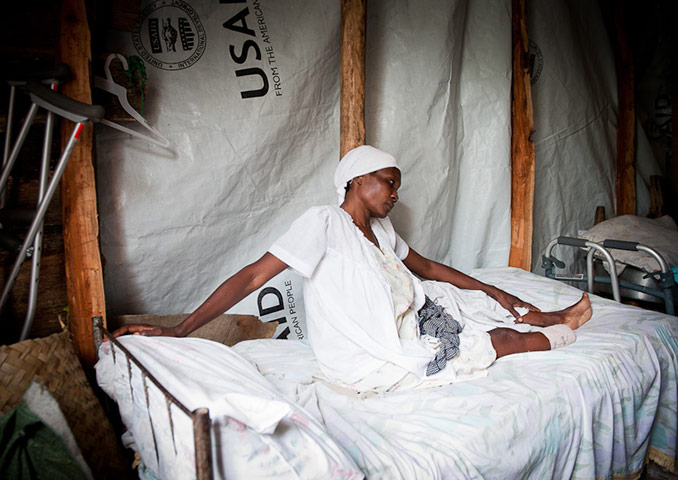
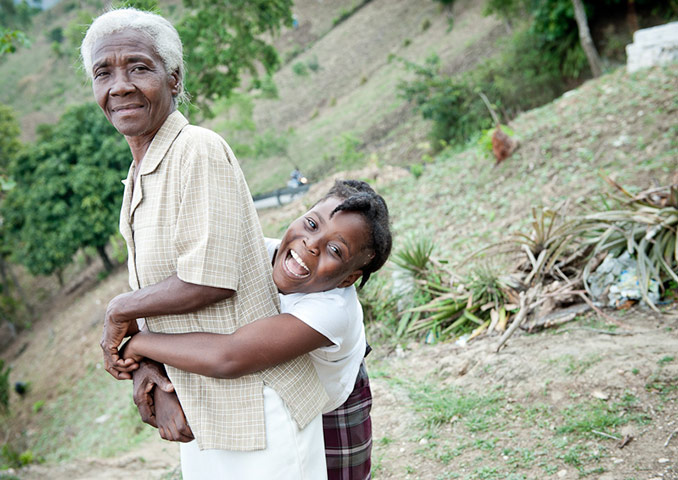
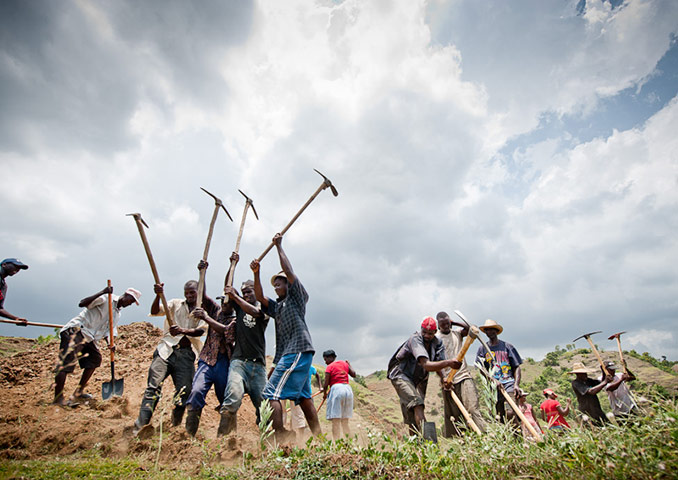
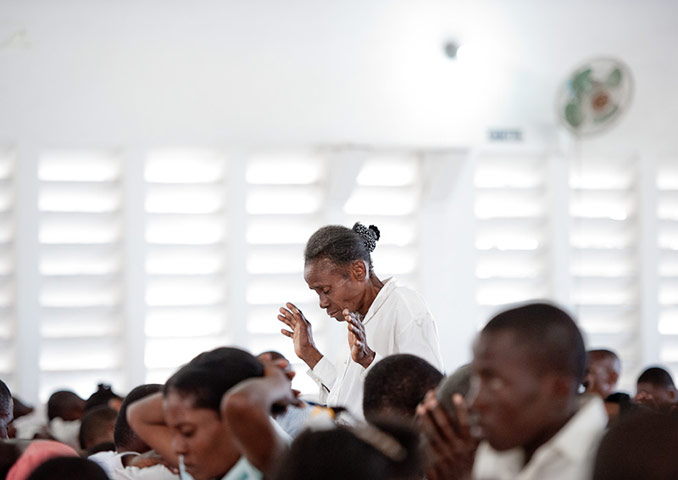
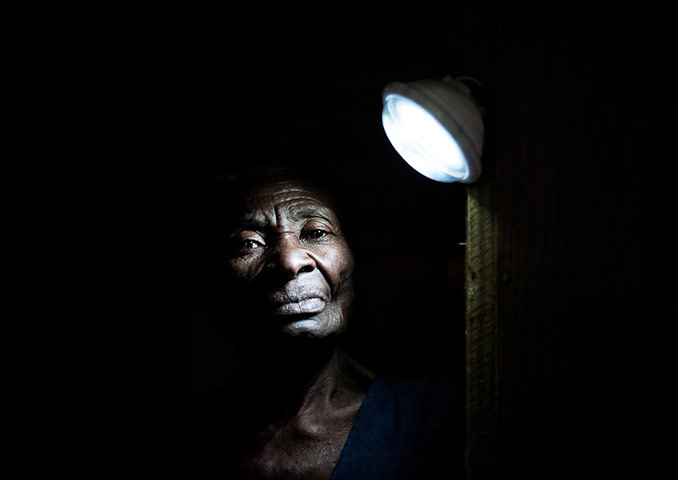
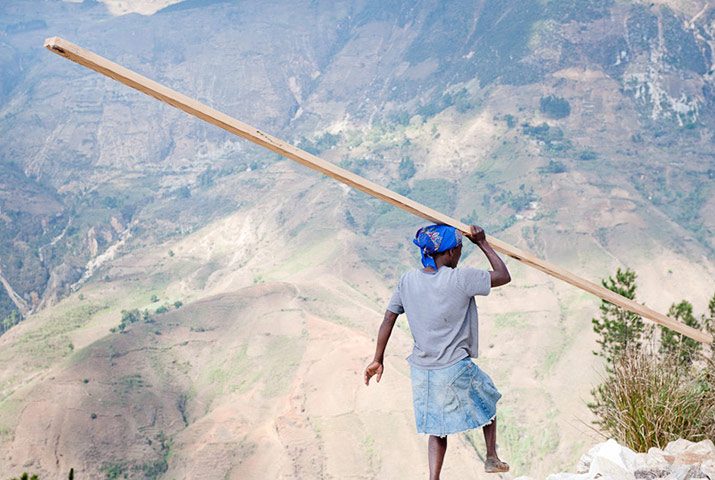
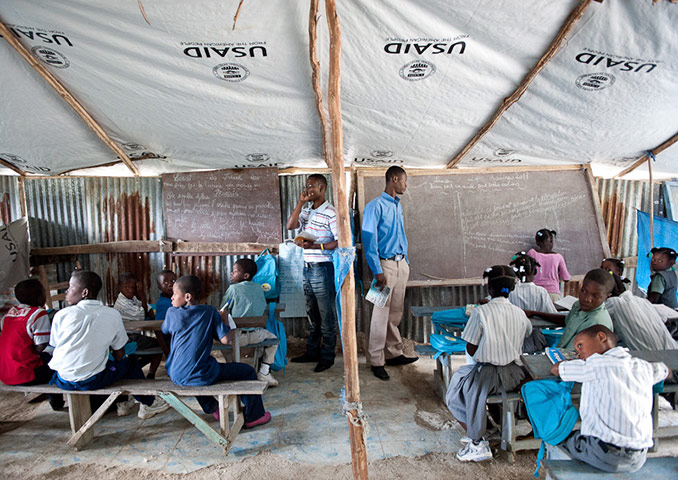
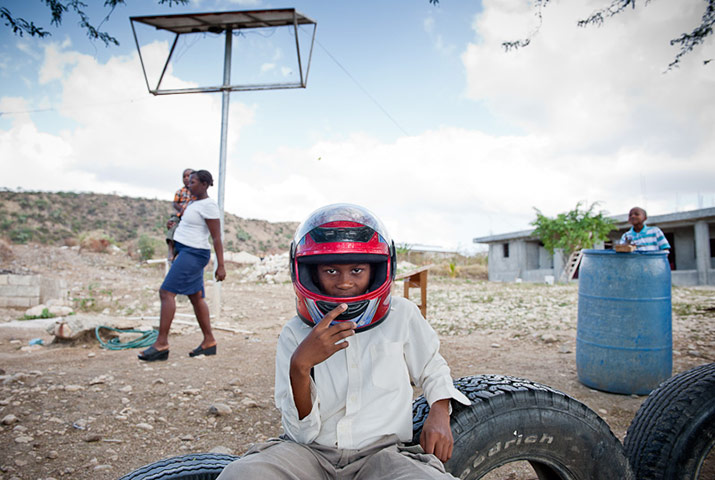
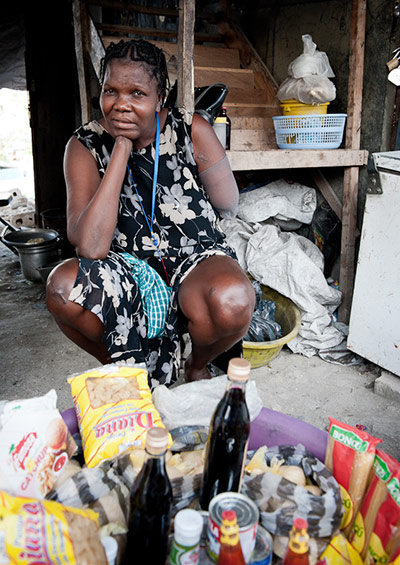
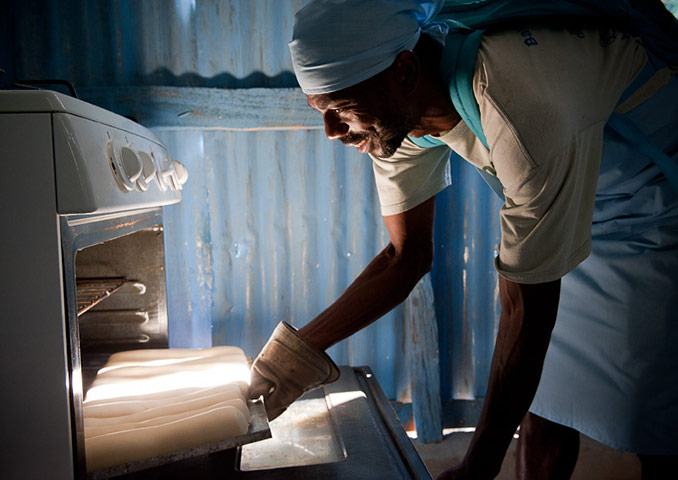
A church service in Afca camp, Port-au-Prince, takes place under a tarpaulin. After the earthquake, thousands of people ran to churches in search of help and shelter Photograph: Richard Hanson/TearfundGiselle Constane lives in Siloe village in the mountains above Léogâne. ‘I was cooking dinner and the house collapsed on my leg,' she recalls. 'As the roads were blocked, we couldn’t leave until the next day. A helicopter came and took me to hospital' Photograph: Richard Hanson/TearfundEvelyn Beauvois, eight, hugs her grandmother, Antoine. Evelyn was trapped under the rubble of her family home for three days before she was rescued. The earthquake killed both her parents. She and her grandmother moved to Siloe after the earthquake, as conditions were so terrible in Port-au-Prince. Now they both live with their extended family in a house in the capital. Evelyn was back in school by January this year. She wants to become a doctor so she can look after her grandmotherPhotograph: Richard Hanson/TearfundAs part of Tearfund’s cash-for-work programme, near Sous-Carrefour, in Léogâne region, local people were paid to clear roads and rubble in the aftermath of the earthquake. Clearing public thoroughfares as quickly as possible allowed local taxi companies to start up again, traders and families to access villages and relatives in the mountains and farmers to get to marketPhotograph: Richard Hanson/TearfundBenito Saint-Surin’s home collapsed during the earthquake. This meant he lost his business and the only source of income for his family. He lives in Borgnotte, a small village near Léogâne that was cut off when the road to it was blocked by quake debris. The cash-for-work programme has helped clear debris, and Saint-Surin has received seeds and farming tools so he is now growing his own food. This means he does not have to rely on relatives and neighbours for survivalPhotograph: Richard Hanson/TearfundA commemoration and memorial service held at the Bellevue Salem Baptist church in Port-au-Prince on 9 January 2011Photograph: Richard Hanson/TearfundAfter the earthquake, Lorgena Innocent was living in a shack in Tom Gato with her sister, as their houses had collapsed. They have now both received quake and hurricane-resistant shelters. Innocent also received a solar light, which has meant that for the first time in her life, she hasn’t had to save what little money she has to buy fuel for lamps. ‘I feel safe. I can see in my new house'Photograph: Richard Hanson/TearfundCarrying materials to rebuild a school in the mountains beyond Kenscoff, south of Port-au-Prince. Parents have been carrying in supplies by hand over difficult terrain to ensure their children’s learning continues uninterrupted despite the turmoil over the past 18 monthsPhotograph: Richard Hanson/TearfundPupils at Cormier Christian school have their last lessons under tarpaulin before moving to their new school. Headteacher Jonaisson Williams is positive about the future. He knows that, with the new building, more pupils will return to class. ‘Before the earthquake, we had 150 pupils. Since then, we’ve had only 80 pupils. Parents are finding it harder to find the fees and also [adjust to] the routines, and we’ve been operating in a smaller space'Photograph: Richard Hanson/TearfundA boy sits on a tyre after a church service at Bethel Church, in barren countryside north of Port-au-PrincePhotograph: Richard Hanson/TearfundIselene Celne lost both hands and an arm when she was trapped under rubble during the earthquake. Homeless and with a disability, she had to move into a tent in a camp in the centre of Port-au-Prince. She received a cash grant from the organisation World Concern of about US$100, which enabled her to start up her own business and earn money to look after her family. She is now slowly rebuilding her life and looking forward to the future with more hopePhotograph: Richard Hanson/TearfundFrank Marry lost his job when the bakery where he worked in Cormier, Léogâne, collapsed during the earthquake. All of the equipment was crushed, which meant that he and his colleagues could no longer provide bread to the community they had worked in since 1996. ‘Life after the earthquake was horrible: we were in a dark place. It was hard to get food and water. There was so much sadness.’ But now, more than a year since the earthquake, the OPACO bakery is back in business. After receiving a grant of $2,000, the company has been able to buy new machinery and build a new bakery. The business provides employment to 17 bakers and their familiesPhotograph: Richard Hanson/Tearfund
Sign up to read this article
Read news from 100’s of titles, curated specifically for you.