Haiti earthquake: Rediscovered frog species offer signs of hope - gallery
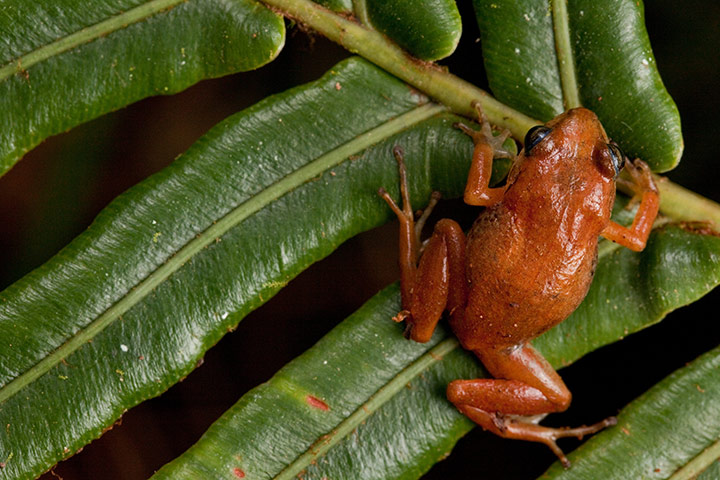
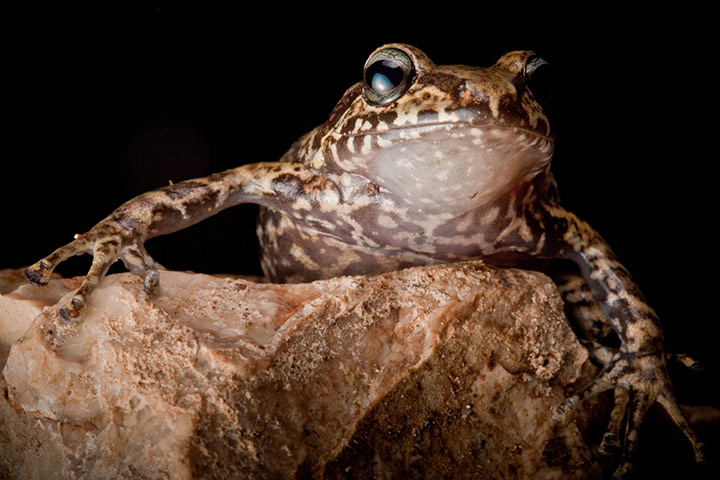
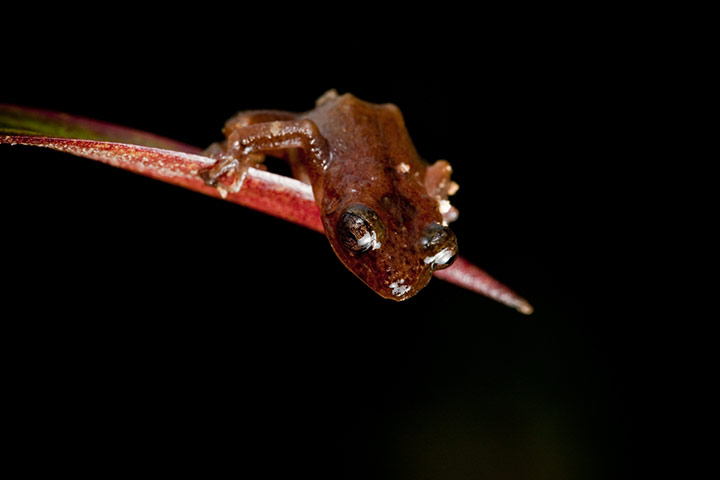
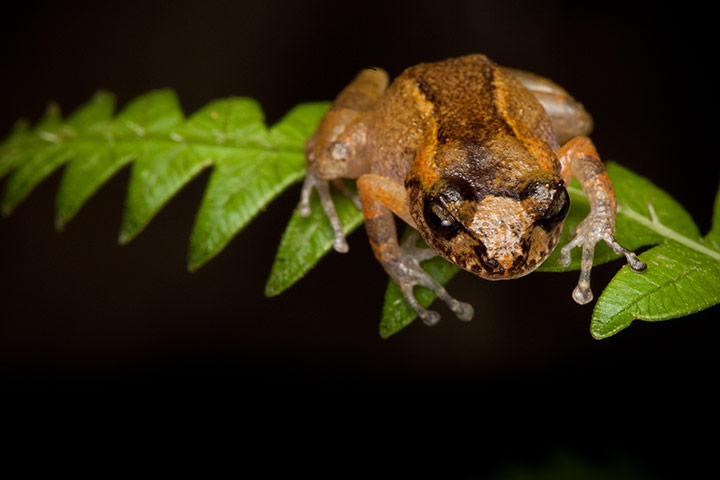
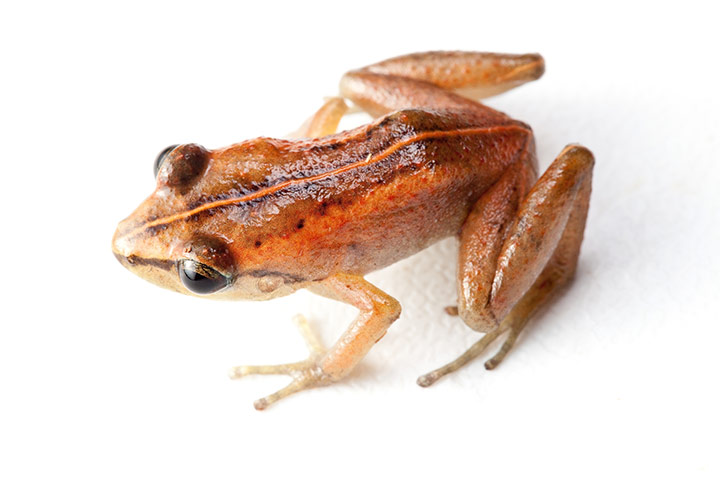
Macaya breast-spot frog, Eleutherodactylus thorectes, a critically endangered species in the Massif de la Hotte. Last seen in 1991. Approximately the size of a green grape, this is one of the smallest frogs in the world. In Haiti, this species has a very restricted range, occurring only on the peaks of Formon and Macaya at high elevations Photograph: Robin Moore/iLCP/CILa Hotte glanded frog – last seen in 1991, Eleutherodactylus glandulifer, a critically endangered species on the Massif de la Hotte. This frog's most distinctive feature is its striking blue sapphire-coloured eyes – a highly unusual trait among amphibiansPhotograph: Robin Moore/iLCP/CIHispaniola crowned frog – last seen in 1991, Eleutherodactylus corona, a critically endangered species from the Massif de la Hotte. This species was named after a subtle row of protuberances that resemble a crown on the back of its head. Prior to this expedition, the species was known from less than 10 individuals, and is likely to be extremely rare. It is an arboreal species, occurring in high-elevation cloud forest. Males call from bromeliads or orchids, which they appear to require for reproductionPhotograph: Robin Moore/iLCP/CI
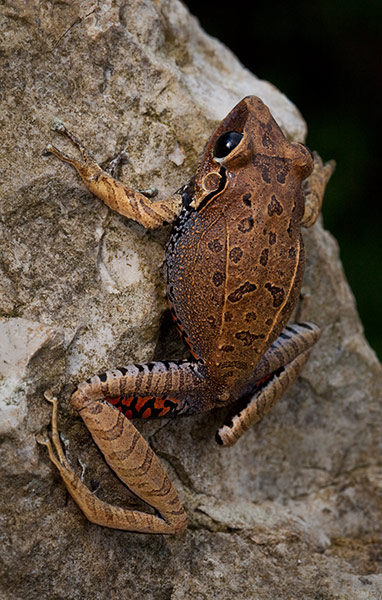
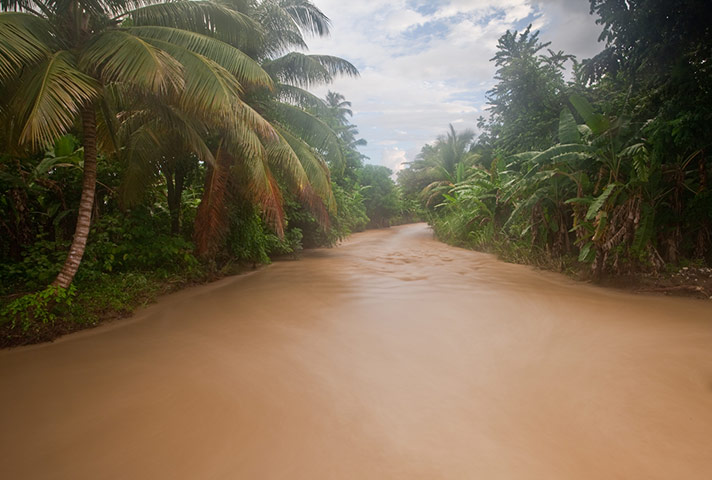
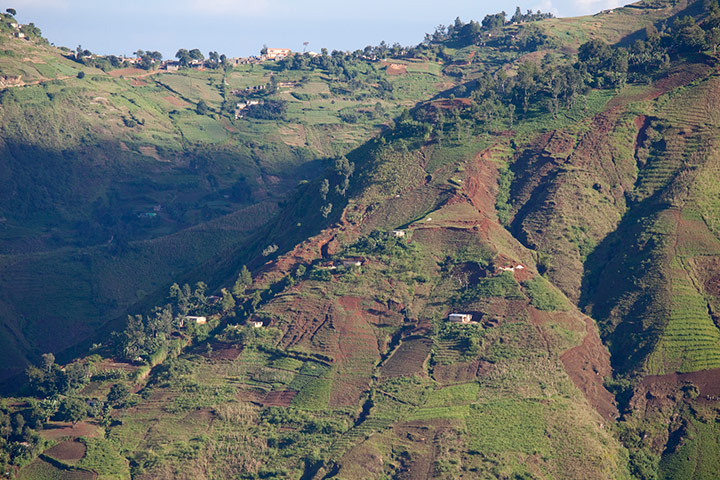
Macaya burrowing frog - last seen in 1996, Eleutherodactylus parapelates, a critically endangered species from the Massif de la Hotte. A surprise find: This is the first record of this species from this area (previously only known from two localities on the Massif de la Hotte). This is now the only place where two burrowing frogs are known to share the same habitat. This species is quite spectacular, with big jet black eyes and bright orange flashes on the legs. Males call from shallow, underground chambers and eggs are also laid underground, where they hatch directly into froglets Photograph: Robin Moore/iLCP/CIVentriloqual Frog – last seen in 1991, Eleutherodactylus dolomedes, a critically endangered species on the Massif de la HotteMaximum length 21.6mm. Elevation 1120 m. This frog is named after its call, which it projects like the ventriloquist which inspired its name. Its unusual call consists of a rapid, seven-note series of chirps, with the initial four notes rising slowly in pitch before plateauing; the call is released in widely-spaced intervals, often minutes apart. Prior to this expedition, the species was only known from a few individuals.Photograph: Robin Moore/iLCP/CIMozart's Frog – last seen in 1991, Eleutherodactylus amadeus, a critically endangered species on the Massif de la Hotte. Called Mozart's frog because when Blair Hedges, who discovered the species, made an audiospectrogram of the call, it coincidentally resembled musical notes. Its call is a four-note muffled whistle at night; usually given as a shorter, two-note call at dawn and duskPhotograph: Robin Moore/iLCP/CIA river fed by the Massif de la Hotte watershed runs brown as a result of deforestation upstream. With large-scale deforestation leaving the country less than 2% of its original forest cover and degrading most of the fresh water ecosystems Haitians depend on, the cloud forests of the south-west mountains stand as two of the last remaining pockets of environmental health and natural wealth in Haiti. In fact, the Massif de la Hotte has been highlighted by the Alliance for Zero Extinction (AZE) as the third-highest site-level conservation priority in the world, with 15 endemic amphibian species found there and nowhere else. As in other parts of the world, Haiti's amphibian populations are in danger of disappearing with a staggering 92% of the country's amphibian species listed as threatened. Globally, more than 30% of all amphibian species are threatened with extinction Photograph: Robin Moore/iLCP/CIDenunded hillsides of the Massif de la Selle, an important watershed that feeds Port-au-Prince. Such landscapes are sadly typical in Haiti. 'The devastation that the people of Haiti are still coping with is almost unimaginable. I have never seen anything like it,' said the amphibian conservation specialist Dr Robin Moore, who has explored regions in Haiti three times, before and after the earthquake. 'Clearly, the health of Haiti's frogs is not anyone's primary concern here. However, the ecosystems these frogs inhabit, and their ability to support life, is critically important to the long-term wellbeing of Haiti's people, who depend on healthy forests for their livelihoods, food security and fresh water. Amphibians are what we call barometer species of our planet's health. They're like the canaries in the coal mine. As they disappear, so too do the natural resources people depend upon to survive' Photograph: Robin Moore/iLCP/CI
Sign up to read this article
Read news from 100's of titles, curated specifically for you.