NAGOYA -- Businesses in Aichi in which the so-called 3C's -- closed spaces, crowded places and close-contact settings -- are prevalent have been preparing to reopen on Monday, following guidelines to prevent the spread of coronavirus infections.
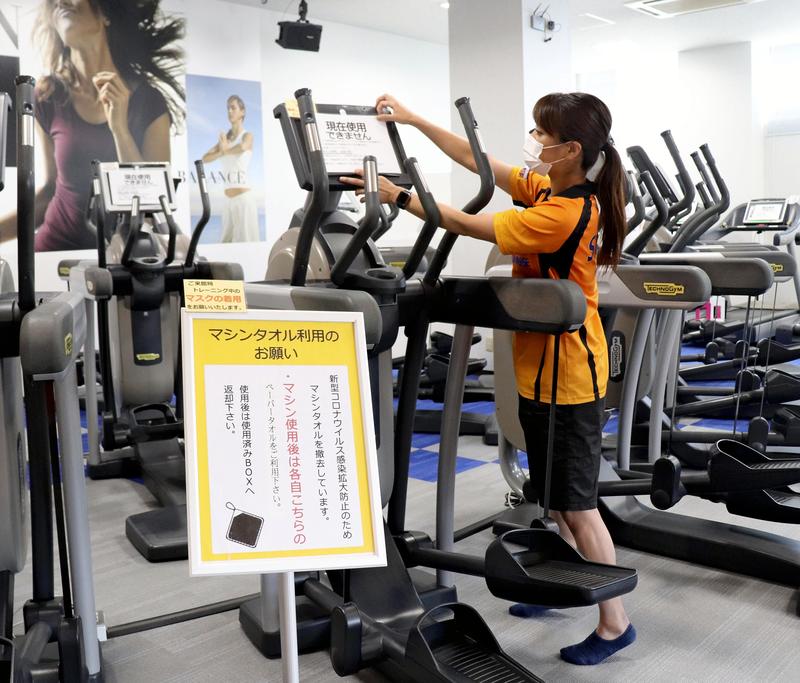
Sports gym La Grasse Sannobashi in Naka Ward, Nagoya, has been closed since April 17. On Thursday, employees were placing signs on some treadmills to indicate that they should not be used to ensure members are following social distancing guidelines.
La Grasse had a spate of membership cancellations and suspensions from its elderly members after a cluster of coronavirus infections was linked to a different gym in Nagoya.
"I'm happy we can resume operations, but it will cost a lot to strengthen measures against infections, and I wonder if members will come back," said Shinichi Hattori, the president of Hattori Sangyo Co., which operates the gym.
La Grasse has devised its own virus prevention measures based on guidelines compiled by the Fitness Industry Association of Japan.
Under the measures, its employees and members will be required to check their temperature when entering the facility, while training equipment and lockers will be disinfected and ventilated thoroughly.
Paper towels will be available for members to use instead of fabric towels. The gym also plans to reduce the maximum number of participants by more than half in exercise sessions, such as yoga.
As people will be required to wear masks at the gym, measures to prevent heatstroke will also be necessary.
"This was also a place for socializing, but we have no choice but to prohibit conversations in the changing rooms. We want to devise ways to let our customers use the facility with a peace of mind," Hattori said.
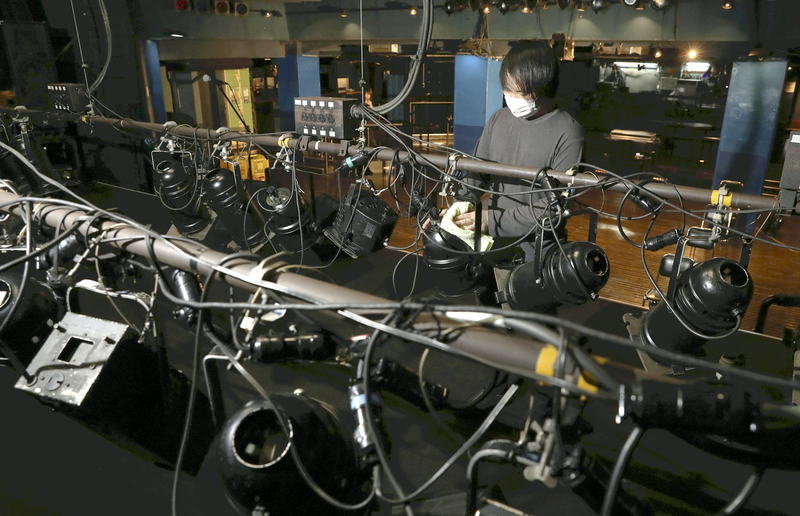
Live music venue Bottom Line in Chikusa Ward, Nagoya, has also started preparations to reopen.
The venue has been closed since March 1, after a cluster of infections was linked to a live music venue in Osaka.
Based on measures presented by the Aichi prefectural government, the venue will resume operations after installing acrylic panels in front of performers' microphones and reducing the number of seats from 300 to 100.
The venue's personnel and maintenance costs amount to 10 million yen a month. As a decline in ticket sales will be inevitable, business will be tough.
"I wonder if the live schedule will be filled," said Ikutomo Kurahara, president of the company that operates the venue, bemoaning the cancellations of performances during the closure.
"Live music venues have also played a role as a center to spread the culture," Kurahara said.
Bottom Line plans to raise funds through crowdfunding together with four other venues in Nagoya. However, Kurahara was not optimistic: "It's not enough at all. I want to submit a petition to the city government for additional support."
Read more from The Japan News at https://japannews.yomiuri.co.jp/