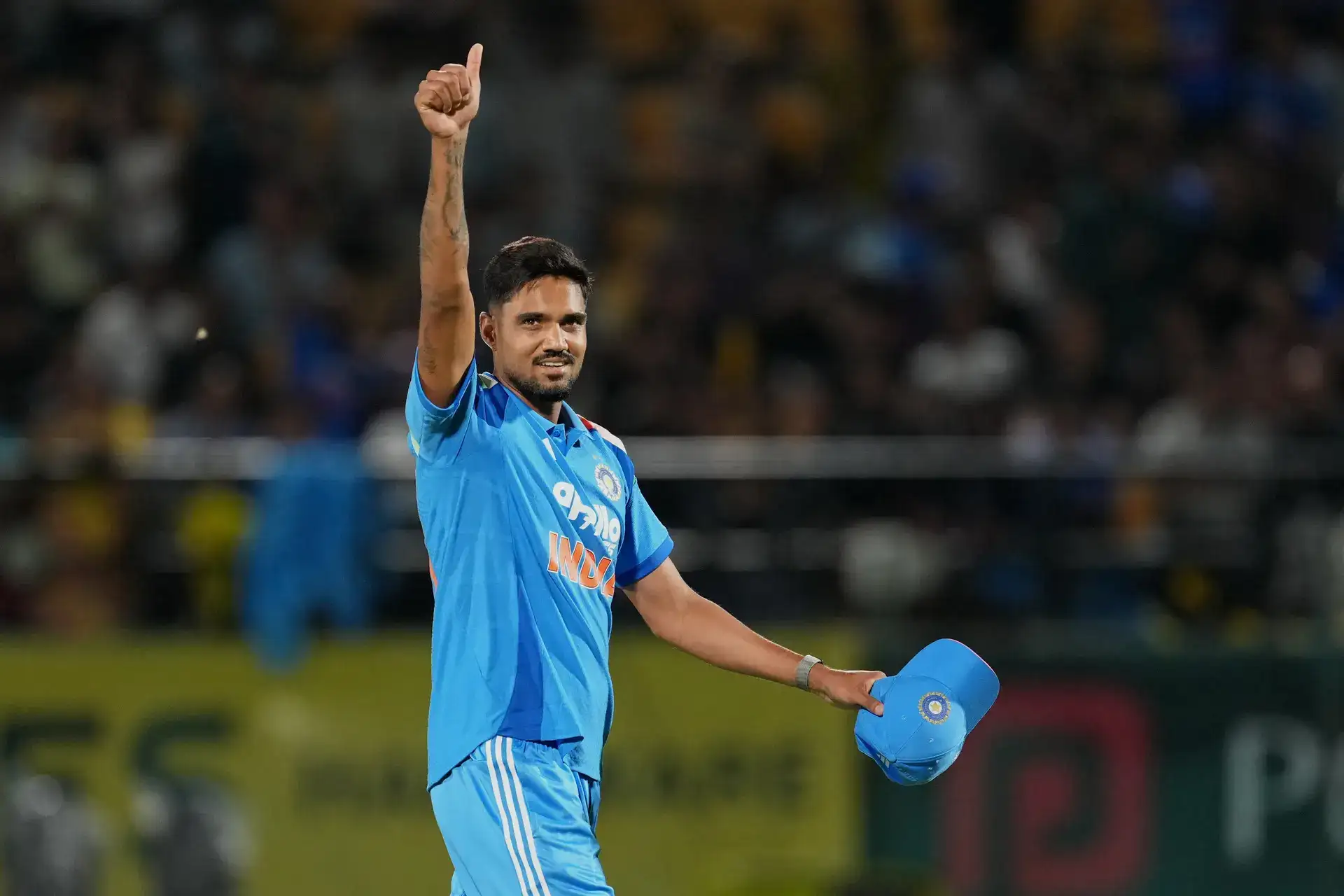
When Gurnoor Brar sent down a 148-kmph delivery in just the fourth ball of his international career during the first ODI against Afghanistan on Saturday, it underlined why India’s selectors had invested in the young left-arm pacer despite limited top-level experience.
Standing over six feet tall, Brar combined a relaxed run-up with natural bounce and late away movement to trouble the Afghanistan batters. He finished his debut spell with figures of 3/27, including the wicket of opener Ibrahim Zadran, who was dismissed by a rising delivery from a back-of-a-length. The performance also appeared to justify the faith shown in him by the Ajit Agarkar-led selection committee, which had backed him as a long-format prospect ahead of several domestic performers.
What makes Brar’s rise unusual is that much of his development as a fast bowler has come over the last three years, following a stress fracture in 2022. He took up cricket relatively late, at the age of 17, after his father, a Punjab Police officer, encouraged him to pursue the sport.
According to a report by The Times of India, Brar began training under Mohali-based coach Varinder Singh during the Covid-19 lockdown in 2020.
“Gurnoor was around 20 when he came to me. He didn’t play junior cricket at the state level. He just wanted to grow and we used to practice sneakily during lockdown without letting anyone notice us. At that time, he could barely hit 135 kmph and always bowled back of a length,” Varinder told The Times of India.
The coach said Brar’s 2022 stress fracture became a turning point. Having studied biomechanics and maintained a data-driven approach at his academy, Varinder believed the pacer needed technical changes to improve both pace and movement.
“We use all the sports devices and maintain data of our players in our academy—including sleep patterns and workload. When he broke down, I realised he needed to change his action to increase his pace and get the ball to swing. Earlier, he couldn’t swing the ball,” he told TOI.
Changing a bowling action in the early twenties is often a risky move, but Brar embraced the challenge, according to his coach.
“He said he was ready to do anything as long as it opened doors for higher level of cricket,” Varinder recalled in his interaction with The Times of India.
The coach also highlighted Brar’s willingness to absorb feedback from senior coaches, including those at the Gujarat Titans setup.
“Even now, whatever feedback he gets from Ashish Nehra at Gujarat Titans and BCCI coaches, he blindly follows it. He didn’t get any matches for Titans but he didn’t get affected because the communication was clear from Nehra and the selectors. Nehra told him to strengthen his bowling muscles and we did that,” he told TOI.
The transformation extended beyond technique. Brar changed his diet, gave up fried food and worked extensively on his fitness while also making adjustments to his bowling mechanics.
“He loved fried food even if he was working hard to burn it. But he decided to give it up. We drew up a diet, increasing his protein intake from natural resources. And then we got him to bowl more front-on besides changing his wrist position to get the ball swinging. His head used to fall in his leadup before the delivery. We got it straightened.
Those were three months of gruelling training before the domestic season. He started bowling at 145 kmph in another year,” Varinder said, as quoted by The Times of India.
After watching his protégé consistently touch 148 kmph on debut, the coach even suggested there is more pace to come.
“He can bowl above 150 kmph. Maybe he took it easy on his debut,” Varinder quipped in comments to TOI.
(With inputs from TOI)