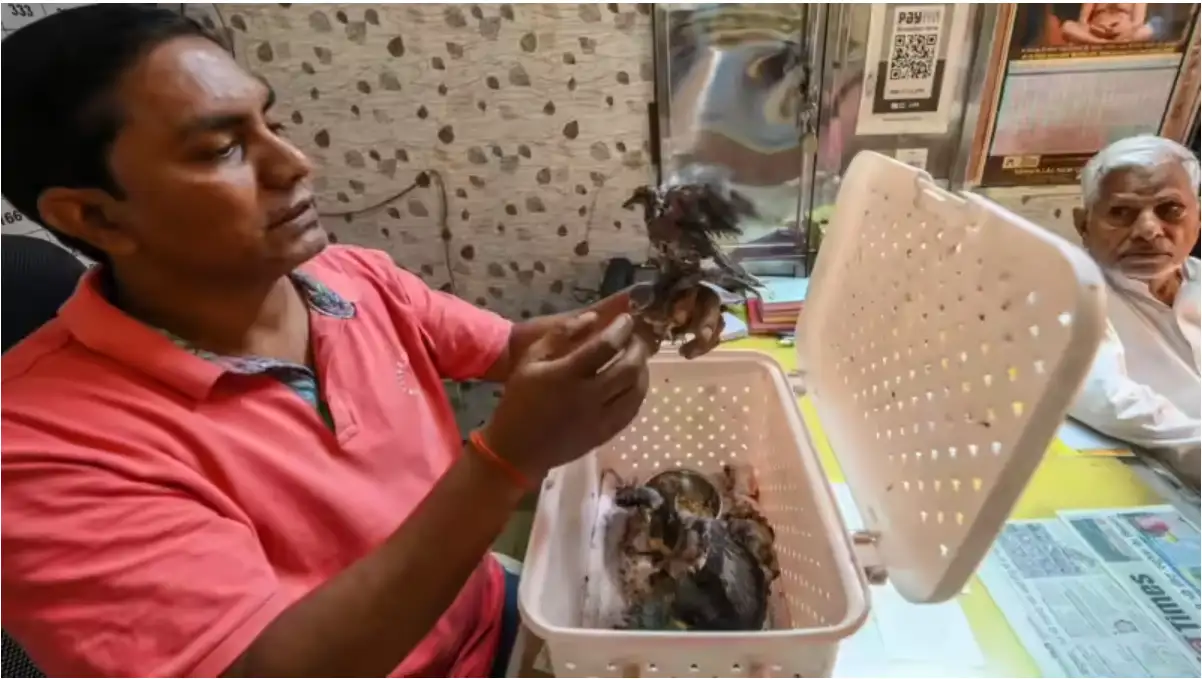
Gurgaon-based Bird Charity Hospital has been witnessing a steady rise in cases of injured and dehydrated birds during the ongoing heatwave, with dozens of avians collapsing due to extreme heat each day, reports TOI. While such inflow is common during summer months, veterinarians say the method of arrival has come as a surprise this season, with residents increasingly using app-based delivery services to send birds for urgent treatment.
App-based delivery services emerge as rescue transport
On average, seven to eight birds are now reaching the hospital daily through delivery platforms such as Porter, packed in perforated cardboard boxes. Residents prepare these makeshift carriers by lining them with soft cloth and creating ventilation holes before booking small parcel deliveries to the hospital in Sadar Bazar.
Hospital staff said the trend reflects how heat conditions are discouraging people from travelling long distances, leading them to rely on quick delivery services to ensure timely medical care. Users typically inform riders that the package contains an injured bird and often notify the hospital in advance about incoming cases.
One resident, Parayni Madan, used this method to send a pigeon chick that had fallen from its nest. The bird was placed near her home, but due to inability to travel in the extreme heat, she opted for delivery to the hospital.
Rising daily caseload and heat-related illnesses
The hospital is currently treating more than 30 birds per day, including pigeons, doves, parrots, bulbuls, mynas, kites, owls and peacocks. Veterinarians report a range of heat-related conditions such as dehydration, diarrhoea, paralysis, loss of appetite, asthma, skin and eye infections, and coryza affecting the lungs.
Raj Kumar, a veterinary physician at the facility, said that while such cases are regularly reported every summer, the severity this year has been notably higher. He added that treatment typically involves antibiotics, eye drops and rehydration support.
Veterinary advice for handling distressed birds
Doctors at the hospital have advised residents to place water bowls on balconies and rooftops to help birds during extreme heat. They also recommend soaking grains in water before feeding birds. In cases of distress, birds should be kept in shaded areas, provided water or ORS solution, and transported in properly ventilated boxes if required.
Legal framework and emergency response guidance
Under Indian law, the handling and transport of wild birds is regulated, particularly species protected under the Wildlife (Protection) Act, 1972. However, RK Jangra, divisional forest officer (Wildlife), Gurgaon, said that in emergency rescue situations, immediate care and survival take priority.
He stated that in cases of heatwave distress, injured or dehydrated birds should be taken for medical treatment at veterinary facilities or rescue centres, with the forest department informed subsequently.