The gunman who killed five people in an Aurora, Ill., factory had a history of threatening behavior and carried a gun he should not have had.
"You think you know people but you don't," said Mary McKnight, who lived next door to Gary Martin in Acorn Woods Condominiums, less than 2 miles from the shooting.
Police say Martin, 45, was called into a meeting inside the warehouse of the Henry Pratt Co. Friday and was told he was being fired. Martin shot the three workers in the meeting and two others nearby, according to Aurora police Chief Kristen Ziman.
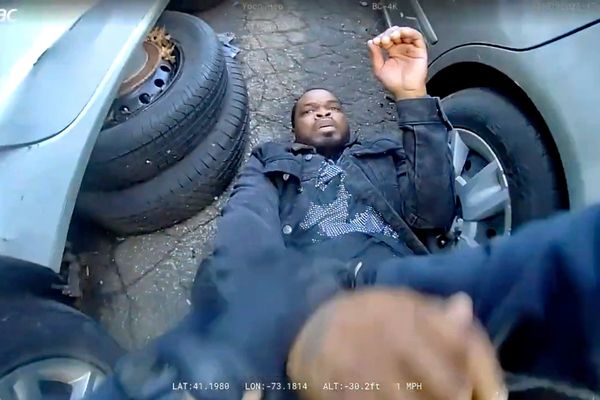
Martin also fired at police officers, hitting five of them, and then police had no contact with him for more than an hour as search teams combed through the 29,000-square-foot facility.
"He broke contact and went to the back," Aurora police Lt. Rick Robertson said.
They found Martin waiting, in a back machine shop, where the final exchange of gunfire ended the shooting about 90 minutes after it started. Martin was killed. "It was just a very short gunfight, and it was over," Robertson said.
Martin had a laser sight on his handgun, and "multiple spent magazines" were found in the warehouse, Ziman said.
Martin's family said he was "stressed" recently, but authorities could not say why he was being fired after working at the warehouse for 15 years. That was just one of many questions that remained Saturday.
Martin had been arrested six times in Aurora, most involving traffic stops and domestic violence. He also had a felony conviction for aggravated assault in Mississippi in 1995, authorities said.
His last known arrest was in 2017 in Oswego, Ill., where he was charged with disorderly conduct and criminal damage to property. His most recent arrest in Aurora was in 2008 for violating an order of protection, Ziman said.
Despite his record, Martin was issued an Illinois firearm owner's identification card in January 2014 and, two months later, purchased a Smith & Wesson .40-caliber handgun from an Aurora dealer.
He applied for a concealed-carry permit shortly after purchasing the gun, according to police. During the background check, Martin submitted his fingerprints and his conviction in Mississippi was found. His concealed carry application was denied, and his firearm license was revoked by the Illinois State Police, Ziman said.
The conviction may not have shown up on the criminal background check for an FOID card, Ziman said. Once it was found, Illinois State Police revoked the card and Martin's concealed-carry application was rejected, Ziman said.
The state police would have sent Martin a letter informing him of his revocation and asking him to "voluntarily relinquish the weapon," Ziman said. "We're looking into why that did not happen."
It would have been up to the local jurisdiction _ in this case, Aurora police _ to see that was done. Ziman said the department is looking into if it was. "Those are the unanswered questions.
"The fact remains is that some disgruntled person walked in and had access to a firearm that he shouldn't have had access to," Ziman said Saturday. "I don't want to make it political. This is a human issue. Lives were lost."