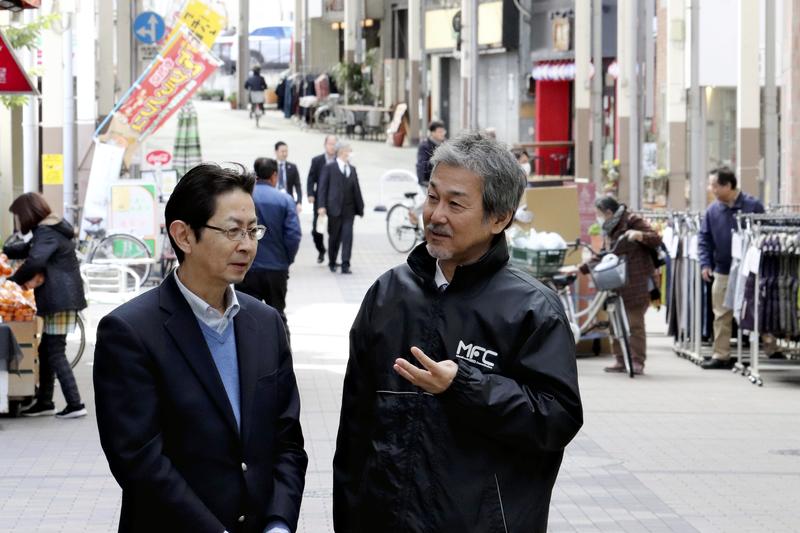
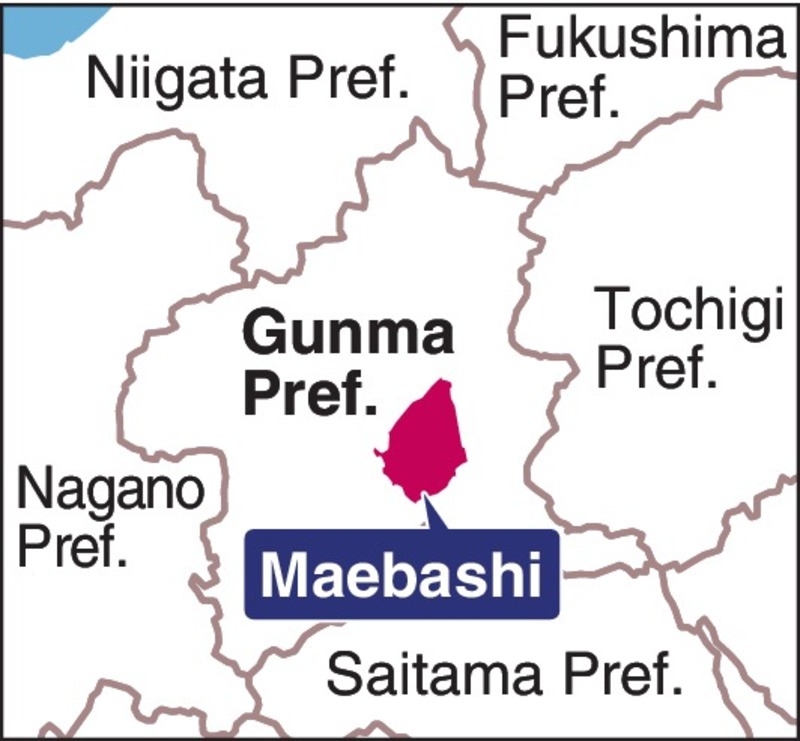
MAEBASHI -- You don't need an umbrella, even on a rainy day. The Maebashi Chuo-dori shopping street in Maebashi and the central shopping area have a Showa era (1926-1989) flavor. And what you often see on the streets are film crews with cameras and microphones at the ready. It has become a familiar sight to shopkeepers. They often wonder, "What movie is it about this time?"
"We do location work in Maebashi about once a week," said Satoshi Kako, 59, of the Maebashi Film Commission that directly works to introduce locations or serve as an intermediary for the locations.
Maebashi, the capital of Gunma Prefecture, is relatively close to Tokyo, where many video production companies are located, which is one of the reasons why people choose Maebashi. Recently, the 2019 movie "Kagefumi" (Shadow Stepping) was filmed in the shopping district.
However, the shopping area is still not very lively and shutters along the street are quite conspicuous.
"It used to be that shoppers would bump shoulders in the evenings," said Ohashi Yoshito, 60, owner of a cosmetics store and chairman of the board of directors of the shopping district's promotion association.
He looked somehow forlorn. In 1975, there were about 800 stores in the area, but now there are only about 200.
The turning point that brought the shopping arcade into the spotlight was the movie "Climber's High," which was released in 2008. The local newspaper company was used as the model for the film. And the director pursued reality and insisted on filming in the city.
The movie was also filmed in the shopping district. It was a big hit, and the shopping district was visited by tourists who toured the location.
Using this as an opportunity, the film commission started in earnest. They responded politely to phone consultations and sent photos and documents of the scenery.
During filming, shop owners would turn off music and lighting in the shopping arcade. Word of mouth then began to spread among crews that the scenery was as good as expected and it was easy to film a movie there. In fiscal 2018, the film commission received 182 inquiries.
There is also an economic impact in filming in the location. According to the film commission, the direct economic effect depends on the size of the film crew, but a day of filming would cost 500,000 yen to 1 million yen in facility fees and lunch boxes, while overnight filming would cost 3 million yen to 4 million yen. Additionally, more tourists provide an indirect economic impact.
According to Yume Hizume, 46, who runs the parlor restaurant Momoya with her husband, which has been used for commercials and movies, some out-of-prefecture customers have come to the restaurant on location tours in recent years, with junior high and high school students saying that they wanted to sit in the seats where the actors sat.
In its fiscal 2008 budget proposal, Maebashi allocated 751 million yen for the redevelopment of the shopping arcade, and now, after nearly 30 years of discussion, the project is finally underway.
However, Ohashi said, "I don't think we can go back to the bustling old days."
In order to keep up with the changing times, he believes that "even the shopping district must find new values and communicate them."
A rise in filming
The Maebashi Film Commission is managed by the Maebashi Convention and Visitors Bureau, a public interest incorporated foundation that helps go through procedures to obtain permission to use public facilities and apply for citizen extras, as well as introducing locations. According to the film commission, there were 54 shoots in Maebashi in fiscal 2018, including those in the central shopping district. For the past five years, it has been at a high level of about 40 to 50 per year.
In addition to "Kagefumi," they include movies "Yurigokoro" (2017), "Mimikaki Rendezvous" (2017) and "64 (Rokuyon)" (2016), and TV dramas "Kyo kara Orewa!!" (2018, NTV network) and "Fake News" (2018, NHK).
In February this year, with the aim of increasing the number of movie and drama fans, the company began giving out free "location cards" that introduce filming locations and films in cooperation with film commissions of Takasaki in Gunma Prefecture, Utsunomiya and Mito. In Maebashi, they are available at three locations.
--Getting to know the city
Maebashi is the capital of Gunma Prefecture, located in the south-central part of the prefecture. It has a population of 335,933, as of the end of January 2020. The city has Mt. Akagi in the north and the Tone River, which has the largest basin area in Japan, flows through the city. It is about 100 kilometers northwest of Tokyo. And it takes about two hours by car or about 1-1/2 hours by train.
Nine shopping streets in the central city are members of the Maebashi central shopping street cooperative. The area is also lined with historic buildings such as the modern Japanese-style guest house "Rinkokaku" and the Renaissance-style public hall "Gunma Kaikan," which is often used for filming TV dramas and movies.
Read more from The Japan News at https://japannews.yomiuri.co.jp/