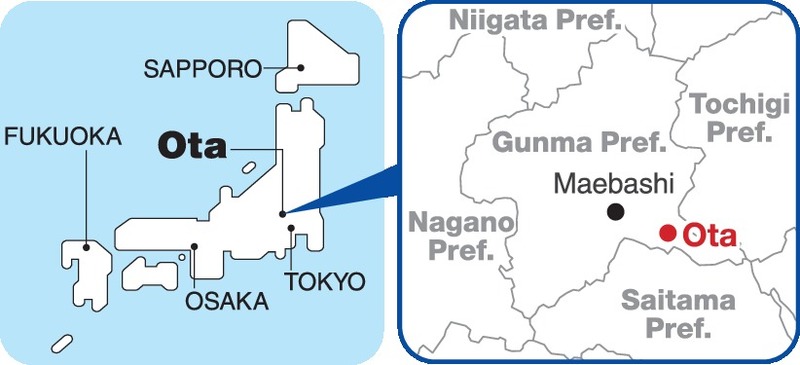
OTA, Gunma -- Private organizations and hospitals across Japan are struggling to support foreigners on provisional release from detention centers operated by the Immigration Services Agency. Although such people often live in poverty because they lack residence status and are unable to work, public support for them is almost nonexistent, forcing private groups to come forward to assume the burden.
Amid efforts to accommodate larger numbers of foreign workers in Japan, experts have stressed the need to provide some form of public assistance to detainees on provisional release, from the perspective of basic human rights.
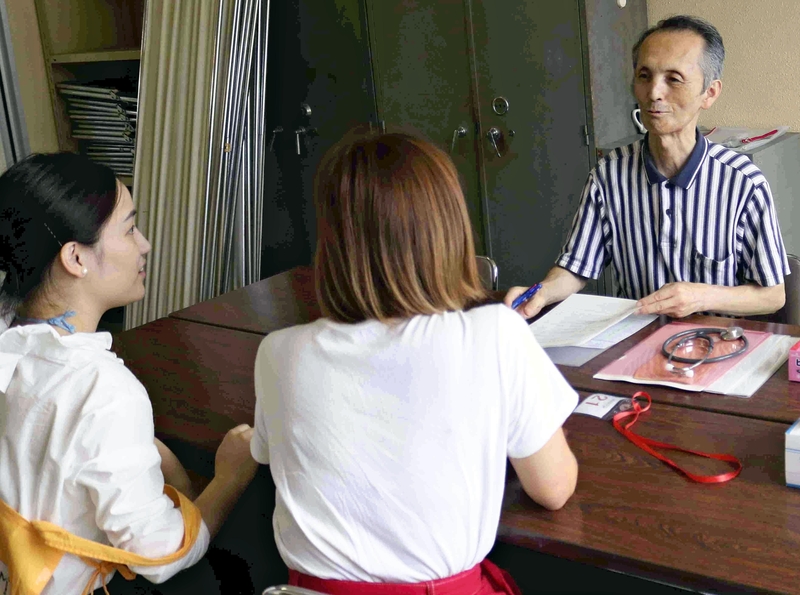
On June 30, a Vietnamese woman in her 30s was listening to the results of her health examination at a community center in Ota, Gunma Prefecture. "I'm really glad there was nothing wrong with me," she said with a relieved look after receiving a clean bill of health.
The woman has been living as a detainee on provisional release for two years. She is unable to receive public health insurance. If diagnosed with an illness, she would be unable to pay the high costs of medical care.
North Kanto Medical Consultation Center AMIGOS, a nonprofit based in Ota, conducted her medical examination free of charge in May as part of its efforts to provide exams for people living in poverty.
A doctor with AMIGOS explained the results with the help of a volunteer interpreter. The nonprofit conducts the exams five times a year, often receiving visits from individuals on provisional release who are worried about their heath.
Last year, the group helped cover the costs of food and medicine for 17 households of such people, in addition to their medical exams. Including the cost of transportation to the exam site, AMIGOS spent 1.5 million yen on these 17 households.
"We somehow manage to provide support through donations and other means, but we're always running out of money," Masataka Nagasawa, head of the secretariat for the nonprofit, said with a sigh.
Provisional release is a system that allows foreign detainees subject to deportation orders to live outside detention centers due to exceptional individual circumstances. The Justice Ministry classifies such people as "obligated to return to their home country," and they are not allowed to work or enroll in public health insurance.
However, some detainees have been living under the provisional release system for more than 10 years. At the end of last year, there were 2,501 people nationwide on provisional release.
Hospitals are also struggling to cope with the costs of providing medical care for uninsured detainees on provisional release.
Recently, such a person arrived by ambulance at a general hospital in Gunma Prefecture in a state of unconsciousness. The hospital found that the person had a serious ailment and performed surgery. However, the patient was unable to pay the nearly 3 million yen in medical fees. Currently, hospitals are required to cover the costs in such instances.
The hospital said it is providing ongoing care for several foreigners on provisional release. According to a social worker with the facility: "If we're presented with a patient, it's our policy to provide thorough care for them no matter who they are. However, there's a limit to having the hospital that receives the patient bear all of the costs."
"Some people rely on support from private organizations for their survival," said Tomoyuki Tsuji, a lawyer who handles issues related to foreigners at the Gunma Bar Association, explaining the situation confronting many of those on provisional release.
There is room for legal debate on how much social support to provide people who lack residence status. However, Tsuji said: "Health and having enough food to eat are very important in terms of human rights. Isn't it best for municipalities and other entities to provide a minimum level of support regarding food and other necessities?"
A future full of worry
"The health of my family and the future of my children -- all of it worries me," the 36-year-old Vietnamese woman on provisional release told The Yomiuri Shimbun, casting her eyes downward.
She came to Japan in the 2000s. Her husband once held permanent residence status as the son of refugees who fled to Japan during the Indochina refugee crisis. The woman and her husband were married in Japan, and their children are currently 6 and 8.
However, three years ago her husband was deported after he was found guilty over his involvement in a scheme to counterfeit residence cards. The woman and children also had their residence status revoked at that time.
"Why does Japan try to drive out even the children? They were born in Japan, and all they speak is Japanese," said the woman.
She refused to return to Vietnam and was recognized as a nonresident on provisional release from a detention center. Her life has been difficult. She lives with her mother-in-law, who works at a factory and helps her with living expenses.
AMIGOS helped cover the costs of medical care when one of her children was admitted to the hospital for asthma, which amounted to more than a hundred thousand yen. However, she is currently having trouble getting her children care for cavities.
Read more from The Japan News at https://japannews.yomiuri.co.jp/