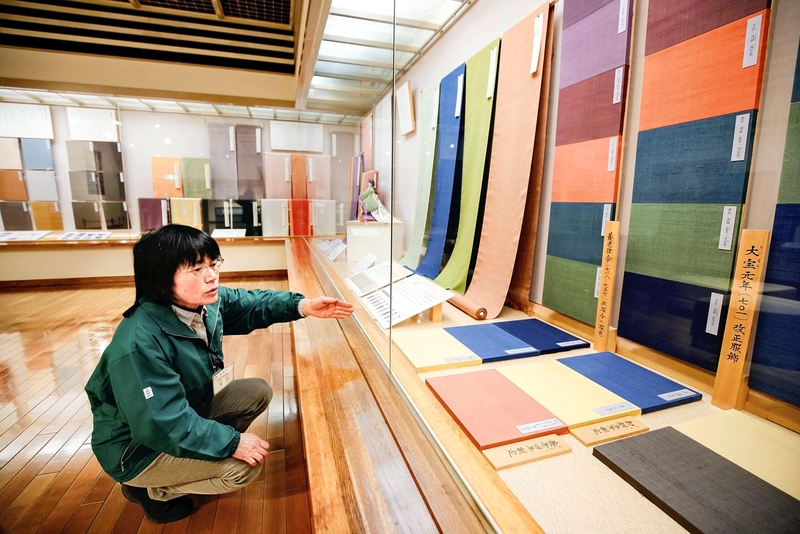
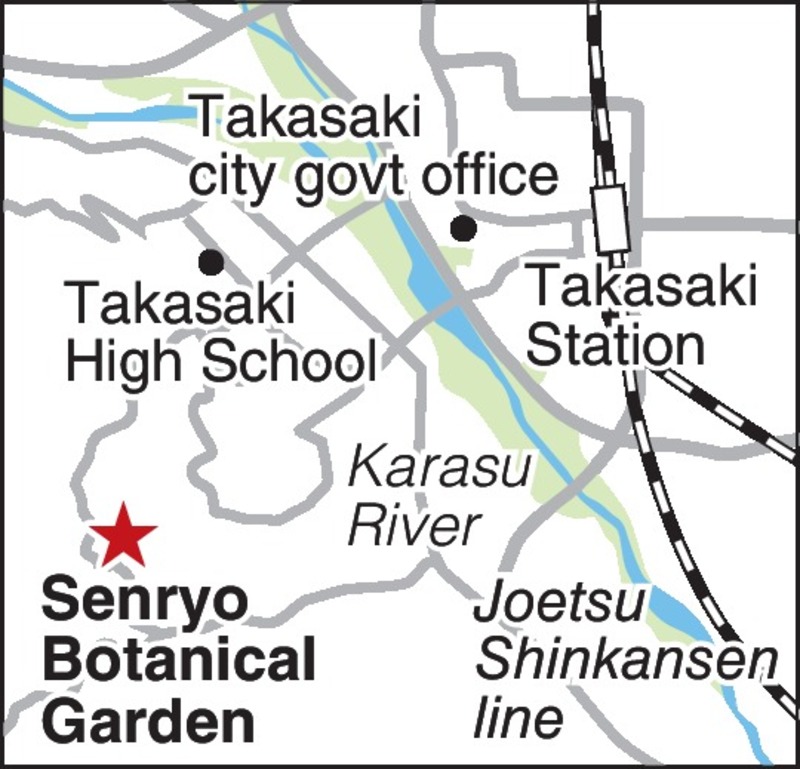
TAKASAKI, Gunma -- On the slopes of Mt. Kannon near the famous Byakue Dai-Kannon statue in Takasaki, Gunma Prefecture, is a botanical garden dedicated to Japan's traditional dyeing and weaving culture.
The about 8.5-hectare Takasaki Senryo Botanical Garden has about 160 species of dye plants in a peaceful setting where visitors can enjoy the about 17,000 specimens.
At the center of the garden is the dyeing and craftwork museum with displays of dyed cloth and panels explaining the history of dyeing and weaving.
Dyeing with plants is said to have begun in Japan in the Yayoi period (ca 300 B.C.-ca 300 A.D.), when the typical method was to chop up branches and leaves, boil them, put cloth into the pot and soak them in a mordant (fixative) solution rich in elements such as iron and aluminum that help fix the dye.
In the Asuka period (592-710), officials began using colors to signify their position, leading to advancements in dyeing and weaving technology.
In the Kan-i Junikai (12 level cap ranks) that are said to have been laid out by Prince Shotoku in 603, the highest ranking color is purple. Next is blue, followed by red and so on. These colors were created by dyeing with plants such as gromwell, indigo and madder, according to the botanical garden.
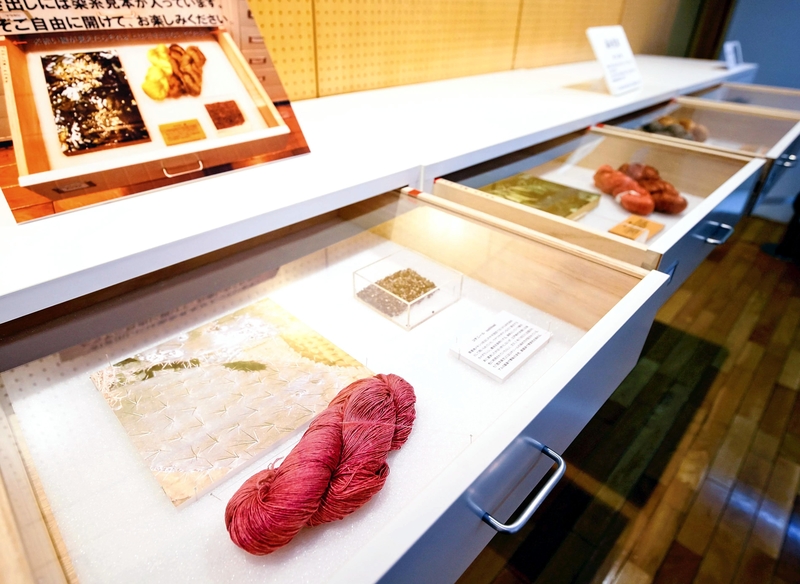
Threads dyed using various plants are also on display. Madder produces a bright pink or red, gardenia creates a golden color, and sappanwood produces a brown or red. The colors are all vivid without being harsh.
Depending on the dyeing process, indigo can be used to create a deep navy blue. Because it is good for dyeing cotton, indigo was widely used by the common people during the Edo period (1603-1867).
"I want people to know that such vibrant colors can be produced using natural materials, not just chemical dyes," said curator Ayuko Sugimoto, 49.
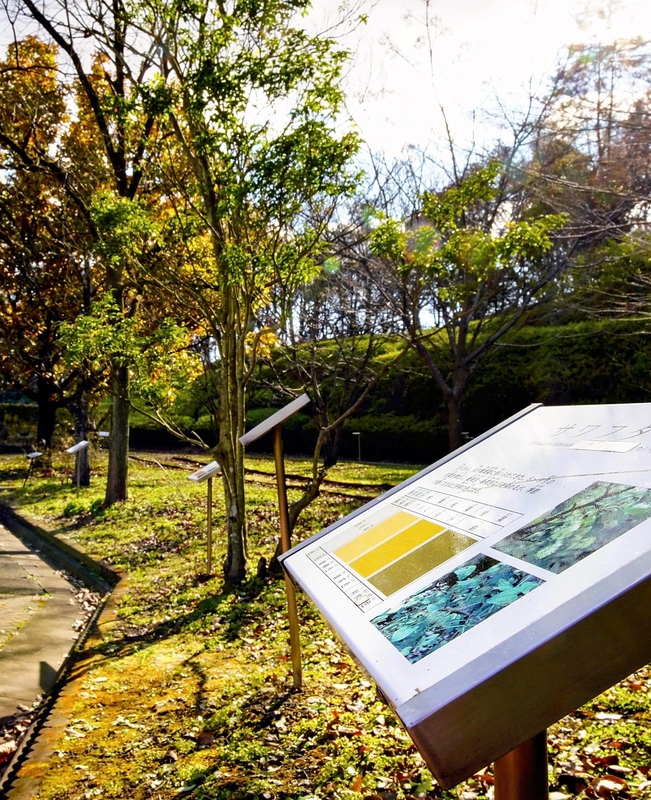
Outside the museum, the garden is divided into four areas, including an Asuka-Nara section and a Heian-Kamakura section, where the main dye plants for each era are planted.
Each plant has a sign board describing its characteristics and showing samples of its colors. When dyeing with dodan tsutsuji (enkianthus perulatus), if the mordant includes copper, it produces an auburn shade, and if it includes iron, it creates a dark brown.
Even trees that look the same can create completely different colors, a manifestation of the wonders of nature.
As the seasons change, so do the flowers that bloom. If I come again when it gets warmer, I can make different discoveries.
Takasaki Senryo Botanical Garden: 2302-11 Teraomachi, Takasaki, Gunma Prefecture
Read more from The Japan News at https://japannews.yomiuri.co.jp/