For as long as I can remember, the White House correspondents’ dinner was where the Washington press corps and Washington officials basked in each other’s celebrity.
Saturday night’s dinner ended abruptly with gunshots, Secret Service officers screaming at attendees to “get down”, Donald Trump and other officials being rapidly ushered out of the ballroom, plates crashing and chairs falling, and general pandemonium.
Saturday night, the celebrities became normal people feeling panic and fear.
Most of the time, Washington is a stage on which actors take on roles and dress up for assigned parts. I remember wearing an uncomfortable tuxedo to the White House correspondents’ dinner while working at the Clinton administration, trying to make pleasant conversation with people who had skewered me that very morning.
The glamor and swish of the event was at such sharp odds with the hard daily slog of my job that it seemed strangely disembodied, as if everyone had been given a script that they knew was total bullshit.
Trump has changed much of this. He has brought a grim hostility to the jobs of doing the public’s work and reporting on those who do the public’s work. He has personally targeted journalists with taunts and insults. He called one female journalist “piggy” and another “ugly”. He also targets newspapers and outlets he doesn’t like, calling media outlets including the New York Times and CNN the “enemy of the people”. His White House has also barred the Associated Press from the Oval Office, after the newswire refused to adopt “Gulf of America” terminology. This was the first White House correspondents’ dinner he agreed to attend as president, and by all accounts he was prepared to give the media pure hell in his remarks.
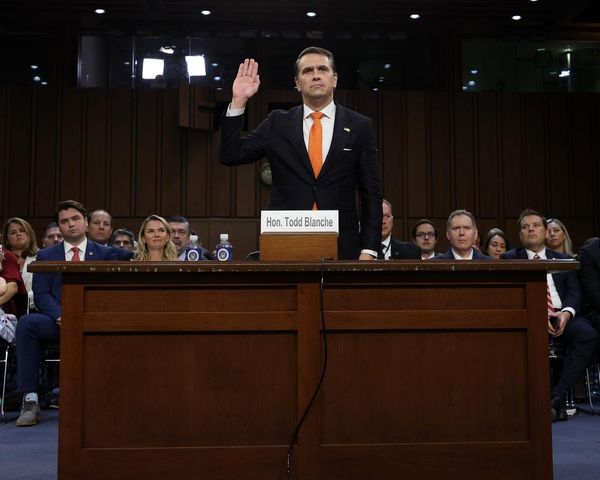
And then hell erupted in the form of a crazed gunman. As I write this, it appears that one Secret Service agent was injured but none of the luminaries was hurt. As yet, the motives of the gunman are unclear. Todd Blanche, the acting US attorney general, has said the gunman could be charged with attempted assassination of the president. If confirmed, this would be the third assassination attempt on Trump.
There is a close relationship between the Trump era and violence – not just the attempts on his life but also the violence his administration has unleashed on the world, the violence his ICE and border patrol agents have caused inside America, the violence he has incited among his followers. (A few of Saturday night’s guests at the correspondents’ dinner were in Congress on 6 January 2021 when Trump’s supporters attacked the US Capitol.)
The violence of the Trump administration has resulted in thousands of deaths and injuries. That is no justification for Saturday night’s attack, of course, but it is part of what he has wrought in America. He has changed the script in Washington. He has ushered in an America that is more divided, distrustful and hostile; an America where political opponents are enemies to be overcome and destroyed instead of debated and challenged at the ballot box.
It is no longer merely the hard slog I remember. The drama is now a chaotic tragedy, most of whose actors – those who make the news and those who report it – are in continuous uncertainty and turmoil.
Robert Reich, a former US secretary of labor, is a professor of public policy emeritus at the University of California, Berkeley. He is a Guardian US columnist and his newsletter is at robertreich.substack.com. His new book, Coming Up Short: A Memoir of My America, is out now in the US and in the UK