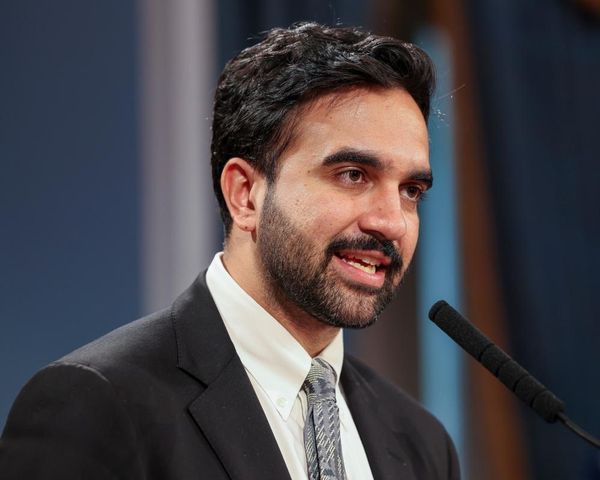
Raynelle Mensah, COO - Life Sciences at Genesis Technology Management Group, brings a grounded perspective to the evolving conversation around artificial intelligence (AI) in pharmaceutical research and development. She has observed that progress with emerging technologies often reflects the discipline with which they're woven into existing ways of working. Her view builds on the idea that AI carries meaningful promise when it's approached as part of a thoughtfully connected system, shaped by people who understand both scientists and regulators.
That perspective reflects Mensah's professional path. Her career has taken her through clinical research strategy, program leadership, and enterprise operations, giving her experience with complex initiatives that span disciplines and geographies. Along the way, she has built a career integrating clinical research methodologies, program management, accelerated improvement, research ethics and tools that help her bridge day-to-day execution with long-range vision. While her C-suite role offers a broad organizational view, she continues to ground her thinking in hands-on work with teams who turn scientific concepts into practical outcomes.
"My motivation for entering life sciences was never just about improving processes," Mensah shares. "Early on, I was exposed to the ethical side of medicine and regulation, and it showed me how much this field depends on protecting patients and upholding scientific integrity. That's what pulled me in and what keeps me committed to the work."
From that experience, Mensah has developed nuanced observations about the current landscape of pharmaceutical research. She points to an industry shaped by rigor, precedent, and deep respect for established methods. According to her, this foundation provides strength, while also influencing how new tools are evaluated and adopted.
"In this field, people build confidence through evidence," Mensah says. "I believe real change happens when new approaches consistently show return on value to researchers and return on investment to the business. That's what helps teams trust and adopt them." This dynamic is reflected in Deloitte's 2026 Life Sciences Outlook, where executives note that meaningful transformation depends on pairing bold investment in AI with practical adaptation to regulatory and economic realities. Mensah sees this as an industry that values data and well-supported progression, which in turn shapes how technologies like AI enter the conversation.
Within this environment, she sees AI offering possibilities that extend beyond incremental efficiencies. In her view, AI can inform earlier decisions about which scientific paths merit further exploration, supporting clearer judgment at moments that shape years of work. She explains, "When data is brought together with intention, it helps teams ask better questions sooner."
This aligns with the growing shift from isolated AI pilots to enterprise-level platforms, as noted in a 2025 report showing that more than 85% of major pharmaceutical leaders now consider AI an immediate priority. By improving the quality of early-stage investment decisions, AI can potentially influence downstream outcomes in ways that resonate across drug development.
Yet Mensah also emphasizes that technology alone doesn't create transformation. Integration discipline, as she views it, forms the connective tissue between insight and action. "AI tools gain relevance when they're embedded into workflows that scientists trust and understand," she states. According to Mensah, this requires shared language, transparency around data sources, and an appreciation for how different disciplines contribute to a single goal.
The same 2025 report mentioned above reinforces this point. Despite rising investment, AI adoption remains uneven, and successful deployment often depends heavily on governance, regulatory alignment, and measurable ROI.
Mensah's reflections extend to the time and cost dimensions of drug development. She notes that long development journeys typically involve extended investment of resources, much of which relates to the duration of experimentation and review. "What can ease this burden is thoughtful acceleration. But it must be guided by sound data and disciplined integration," Mensah says.
At the same time, she suggests that shorter pathways can allow organizations to allocate resources more flexibly and explore a wider range of possibilities, while maintaining scientific rigor. This is particularly relevant as rising late-stage attrition continues to signal lower future R&D productivity, reinforcing the need for earlier, more informed decision-making.
Just as importantly, Mensah aims to reframe conversations around speed to focus on human outcomes. "Faster development doesn't inherently diminish quality or the role of experts. It can actually allow for a greater focus on quality and for experts to benefit patients sooner by exploring more impactful solutions with less delay," she states.
As the life sciences community continues to explore AI's role, Mensah's perspective offers a grounded guide. Her focus on integration discipline, cultural understanding, and human impact highlights a path forward shaped by collaboration and care. By aligning technology with the values and expertise already present in pharmaceutical research, she envisions responsible and meaningful progress.