End of life matters
Why is it that so many people writing about end of life matters jump from anecdote to generalisation (John Harris, 14 August)? Harris writes that he “does not want to live in a world like that”, in which people like Gill Pharaoh decide to end their lives rather than cope with old age, and in which they do not want to “be a burden”.
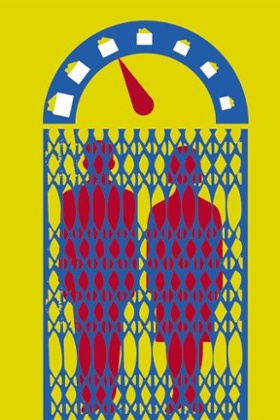
First, could we please acknowledge that just as there are a wide range of physical experiences of old age, so there is a wide range of intellectual and psychological attitudes towards death and dying. For every admirably physically and mentally spry nonagenarian, there are dozens who are mentally and physically impaired, bored and lonely. Of the latter, there are probably a majority whose urge to remain alive is strong, and who should receive the best palliative and social care possible. But there are also those like myself, who are not afraid of the idea of death, but who do fear mental and physical disability and who, yes, do not want to be a burden.
Could we also please consider what “being a burden” means to people like myself (and probably Gill Pharaoh)? It is not a spirit of abnegation that drives us – it is the objection to lack of control over our own lives, which old age and ill health are highly likely to incur.
Oliver Burkeman tells us that having control in one’s life is fundamental to happiness. In some of us this need overrides the fear of death. In others it doesn’t. Please don’t presume to make value judgments or decisions for all of us equally.
Gabi Duigu
Cammeray, New South Wales, Australia
• Midwives help us into this world when at our most vulnerable. Let us give a title to someone helping us at our next most fragile stage in life. The literal translation of midwife in Norwegian comes as “earth mother”, which seems to capture the essence of someone helping us when as from earth have we come and to earth will we go.
Simon R Wilkinson
Bekkestua, Norway
Migrants and the EU
With regard to British foreign secretary Philip Hammond’s comments about African migrants threatening Europe’s standard of living (14 August), I live in Baden Württemberg in south-west Germany, which at the moment is receiving hundreds of refugees every day. This is unprecedented, but by the vast majority of the population, they are welcomed, provided with food and accommodation, and treated with respect.
Meanwhile, the British government accepts far fewer refugees, describes the refugees in Calais in very insulting terms and refuses to work with other Europeans countries in seeking a common, fair and humane response.
Does it not occur to the British cabinet that people do not leave their homes and undertake perilous journeys that often take much more than a year, simply to seek a better standard of living?
Do they also not realise that the actions of European governments and the multinational companies to which they give shelter have contributed very greatly to the economic misery and the tyrannical governments from which they are escaping?
Three refugees with whom I spoke recently, one each from Togo, Nigeria and Gambia, were unanimous in saying that, in their opinion, if they so chose, European countries could exert such positive political and economic influence in their countries that no one would need to flee. But is that what our governments really want?
Keith Lindsey
Winnenden, Germany
• In your front page article The Europeans offering aid (7 August), you mention that British prime minister David Cameron was intending to work “hand in glove” with the French for a solution to the serious and growing refugee problem at their borders. However, you neglected also to mention Cameron’s recent broadcast explicitly offering a resolution to the existing situation on his own border.
Watching Mr Cameron’s broadcast, I found it grotesquely ironical to hear the head of a Nato nation proposing to increase funding for the building of better fences and an additional wall, all patrolled by sniffer dogs, in order to prevent young, foreign refugees from entering Britain after having possibly fled from a country on which Nato bombs may have earlier been dropped.
My own country, Canada, another bombing Nato member, should also be doing its utmost to provide transportation, money and easy entry into our own huge, welcoming country, as it did successfully for the Vietnamese “boat people” after the devastating events there many years ago.
Concern, positive effort, and money from all responsible countries must be directed to the help of desperate refugee people, without qualification, now!
David Darvill
Cobble Hill, British Columbia, Canada
Nuclear threat remains
In Alex Wellerstein’s Comment article Five ways the nukes could still be used (14 August), the fifth way – by accidental nuclear detonation – omitted what may well be the most likely accident to happen. About 10% of the 15-18,000 nuclear weapons are deployed in “Launch on Warning” mode. Under this protocol, if a nuclear threat is detected the nuclear power will respond within 15-20 minutes, before the missiles arrive on their targets.
Military personnel must be so well trained that they will never mistake a suspicious shadow on their monitor for a nuclear missile. Colonel Stanislav Petrov of the USSR on 26 September 1983 used his own instincts, against protocol, not to respond to a “missile launch” that later turned out to be a computer malfunction.
Given the high rate of psychological invalidism in missile personnel, this sort of accident is a real possibility. It is sobering to know that at the recent five-year review of the Nuclear Nonproliferation Treaty the five great nuclear powers refused to rescind this policy.
Dr John Bury
Saskatoon, Saskatchewan, Canada
Corbyn can open up debate
Jeremy Corbyn’s possible election as leader of the UK Labour party (7 August) gives me hope because, unlike the other candidates and the Labour grandees who have recently weighed into the fray, he is prepared to refute the Thatcherite doctrine that “there is no alternative”.
I do not worry greatly that Corbyn might not be media friendly – who wants a leader of whom most of today’s popular media would approve? Nor do I worry that he may not appear pro-business, when the business world simply perpetuates the myth that a competitive market dominated by global corporations is the only economic model on offer.
Nor do I worry that he is against Trident, when a nuclear war would be the end of civilisation. I simply want a party leader on the English scene who, like Nicola Sturgeon of the Scottish National party, can open up a far more penetrating debate than currently passes for “received wisdom” as to how we can build a just, peaceful and sustainable world in the years to come.
David Clark
Bakewell, UK
Flight attendants’ rights
As I read the article about flight attendants at Qatar Airlines (3 July), I felt like I had travelled back in time to the 1950s. I worked as a flight attendant for 43 years. I started with Pan American World Airlines in 1969. After Pan Am ceased operations in 1991 I continued with another airline until I retired two years ago. I witnessed dramatic changes in flight attendants’ lives. The elimination of age and weight restrictions, marital status, and the inclusion of paid maternity leave were the result of the unions’ efforts on our behalf. They negotiated improved work rules and filed lawsuits to end discriminatory practices. As a result, flight attendants are now like other workers. They marry, buy homes, raise children and send them to college, and contribute to the economy.
The flight attendants at Qatar Airlines need a good union, but it does not seem likely that will happen.
Ann Blumensaadt
Greenwich, Connecticut, US
Briefly
• Jessica Murphy, reporting on the federal election campaign in Canada (14 August), propagates the myth that “the NDP [dropped] references to socialism from the party constitution in 2013”. In fact, the 2013 preamble states that “New Democrats seek a future that brings together the best of the insights and objectives of Canadians who, within the social democratic and democratic socialist traditions, have worked … to build a more just, equal and sustainable Canada within a global community dedicated to the same goals.” It is clear and resonant language of which the NDP can be proud.
David Josephy
Guelph, Ontario, Canada
• The small selection of proposed designs of a new flag for New Zealand (World roundup, 14 August) demonstrates the lifeless banality of most of the submissions. The only symbol for us on a new flag should be our unusual and truly unique bird, the kiwi, in dramatic silhouette. Black, of course, on a South Pacific sea of blue. A symbol of the country, the citizen, the bird and the dollar.
John Balneaves
Christchurch, New Zealand
• “The International Olympic Committee has officially recognised flying disc sports” (Sport roundup, 7 August). ET, phone home.
Anthony Walter
Surrey, British Columbia, Canada
Email letters for publication to weekly.letters@theguardian.com including a full postal address and a reference to the article. Submissions may be edited for publication