Populism may arise from our evolutionary past
It was depressing to see Jonathan Freedland suggesting that the outbreaks of virulent populism on both sides of the Atlantic, not to mention Australia, will not be cured by legal or political remedies (Blond justice, 4 October).
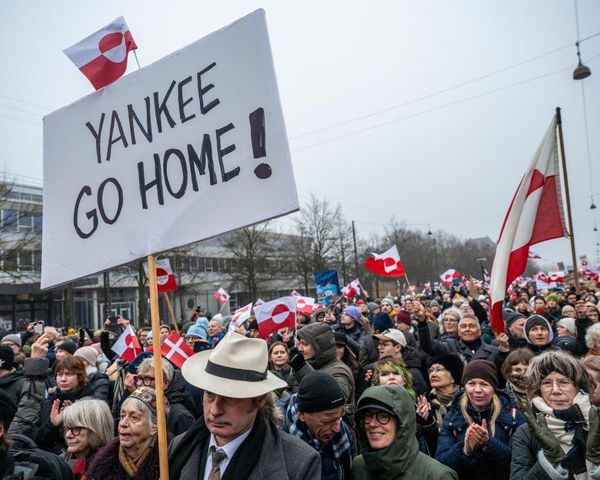
Some observers see them as generated in the fear and anger centres in the amygdala. Typical symptoms seem to be a craving to mete out draconian punishment, intolerance of other groups different from oneself, and a deadened perception of empathy.
It has been suggested that the most pernicious form of populism may be an evolutionary vestige that arose when domination of other primates was a desperate survival imperative. This seems a better explanation of the bizarre present than anything offered by Donald Trump, Boris Johnson or Scott Morrison.
John Hayward
Weegena, Tasmania, Australia
Johnson may not be as toxic as people think
Gaby Hinsliff, in Think Boris Johnson is toxic to voters? You’d better think again (13 September), is baffled by the fact that a fondler (Donald Trump), a philanderer (Bill Clinton) and a fighter (Boris Johnson) can attract major support (including that of many women) for their election to high public office, but she should not be. These characteristics are of minor significance in comparison to those sought in a leader.
Modern media give the impression of both reflecting and being capable of shaping public opinion. However, recent surprises have shown that this is highly questionable: the election of Trump, the result of the Brexit referendum and the accession of Johnson to No 10 being examples.
Today, special-interest groups are again creating much sound and fury in other fields – most dramatically energy policy – but most people do not want to abandon fossil fuels because they think we do not have viable alternatives.
Life is a balancing act; most people know it and let’s hope they continue to resist being conned into behaving otherwise.
David Barker
Bunbury, Western Australia
British expats are facing the ultimate injustice
Jon Henley’s piece, A “death sentence” for the EU’s Brit retirees (11 October), highlights the uncertainty that many elderly British citizens feel about the future. In most cases they will have spent all their working lives in the UK and have paid full social security contributions. It seems possible that seriously ill expats will have to return to the UK to take their chances with the already heavily overloaded NHS.
The great irony of expats’ situation is that we were not allowed to vote in the referendum.
While UK politicians are ranting about vassal states and unelected bureaucrats, nobody is screaming about the gross injustice of the plight of disenfranchised British citizens. Who will fight for us to take back control of our lives?
Mike Kearney
La Mouche, France
Impeachment can be bad for one’s political party
David Smith’s article, Will the Ukraine affair destroy Trump? (4 October), details the trouble that Donald Trump has caused for himself. Of the three previous presidents who faced impeachment, all also brought bad results for their political party. Andrew Johnson in 1868 avoided conviction in the Senate. Richard Nixon resigned in 1974 rather than be removed from office. And Bill Clinton escaped conviction in 1998.
In all three cases the president’s political party lost the following presidential election.
Dan Donovan
Dungarvan, Ireland
How can we compel rich people to get on board?
George Monbiot’s piece on the rich and the planet (27 September) is striking. Enough is enough. Now, by what means of persuasion or coercion may we encourage or compel the rich to embrace a philosophy of enough? And will consumers buy in too?
Douglas Porteous
Victoria, British Columbia, Canada
Mosquitoes seem to have lost their taste for me
As someone who grew up in Winnipeg, Manitoba – arguably the mosquito capital of Canada – I read Bad blood (27 September), the article on mosquitoes with great interest. I have an inordinately low body temperature and type A blood, factors that apparently lower one’s chances of being bitten. Still, as a child I was as plagued as the next person. However, now that I am post-menopausal I spend entire summers at our Lake Winnipeg cottage, watching others swatting pesky mosquitoes, while I’m blessedly never bitten.
Diane McGifford
Victoria, British Columbia, Canada