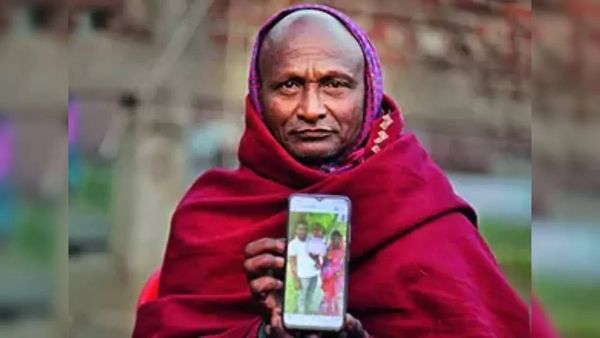
Sea otter hunt is indefensible
Ross Perlin’s feature on Native Alaskan sea otter hunter Peter Williams raises many conflicting ethical, cultural and ecological issues (27 March). Is this the only way we can (temporarily) preserve a doomed lifestyle and culture, and if so, at what cost?
The arguments employed by Williams and his fellows in defence of their technology-fuelled slaughter are in every way equivalent to those used by the Norwegians, the Japanese and other so-called advanced nations to justify continuing to exploit and exterminate the whale: we’ve always done this, it’s an integral part of our culture, and we’re entitled to carry on doing so, despite what the rest of the world might say.
Even were it possible for Native Americans or aborigines to revert to their traditional lifestyle, free from the technological encumbrances of our destructive western capitalist culture, this argument would still be indefensible, given the now universal awareness of the wider ecological implications.
This is not cultural imperialism on the part of the west. We all inhabit the same planet – we all bear the same responsibility for its future and that of our children.
Noel Bird
Boreen Point, Queensland, Australia
• The article on sea otters made me very sad. Using what is in this case the excuse of aboriginal tradition and subsistence – is that what they call New York fashion week now? – Peter Williams is opening up sea otters to the global capitalist market, and there can only be one outcome of that. Then there is his sickening aestheticisation of death (“blood … kind of like heaven”). Above all, these wonderful fellow-creatures are being killed to satisfy an entirely frivolous desire by fashionistas with more money than morals. Not all the faux-spiritual ritual in the world can justify that.
Patrick Curry
London, UK
We need climate justice
Thank you, Alan Rusbridger, for your legacy: challenging the way the media deals with climate change (13 March). I have one quibble: the Guardian initiative externalises responsibility for action on climate change, displacing it on to governments and corporations. But it’s we as individuals who fuel this brewing catastrophe with every decision on how we eat, dress, travel, communicate, play, work and waste.
My goddaughter, shocked by new data on micro-plastic contamination in the lakes of her native Bavaria, gave up plastic for Lent, and found she had to recalibrate all her eating habits. A neighbour grapples with ways to give her children a carbon-friendly birthday party. I wrote to my son in Geneva: “If an annual, sustainable, per capita carbon budget is 0.4 tonnes, and every passenger on a Europe-to-Australia flight excretes 0.9 tonnes, then the true cost of living in Europe is that you may never fly home again. Could you bear that? Could I? Yes, if that’s what it costs to bequeath a healthy Earth to my grandchildren.”
We unquestioningly accept the need for fiscal probity and regulation. Yet the biosphere, on whose wellbeing our own radically depends, barely enters into the equation.
If I could enact one law, I would make carbon accounting mandatory for every individual, enterprise, city and state. I would also like to coin a new term, Earthism – crimes against the biosphere – to be as stringently legislated.
The task ahead of us is vast. Do we evolve or perish?
Annie March
West Hobart, Tasmania, Australia
• Mark Lynas (20 March) looks at the alarmists on the political “left” and the denialists on the “right” and points the finger of blame at the left alone. The rightwingers are not “reacting against this rather miserabilist and dystopian worldview” of the “eco-Malthusian left” (whatever that is). They have denied climate change all along as a threat to their own dystopian way of life.
Yes, the developing world wants more energy, but need not take it on the condition that they buy whatever the corporate plunder of nature produces, whether necessities, conveniences, baubles, outright trash or toxins. The solution goes by the unlovable name of contraction and convergence but could also be called climate justice: we in the industrialised world must use far less energy so that people in the developing world may use a little more.
Henry Robertson
St Louis, Missouri, US
• Mark Lynas suggests that both climate change belief and denial are largely political positions and as such are aligned with such issues as the safety of GM crops on the one side, and the fight against corporate control on the other. We must choose the middle way, he says, not too extreme, tone down our demands for strong action on climate change and accept the doubling or tripling of the world’s energy consumption by 2050 to help Asia eliminate poverty.
He overlooks the fact that the developing world needs not just more crops, GM or otherwise, and more energy to grow them; it will also need more water. And at the rate the Himalayan glaciers are melting, there won’t be much around.
Lyn Paterson
Campbell River, British Columbia, Canada
Understanding fertility rates
Anne Chemin’s article, How gender equality is helping France to higher fertility rates (27 March), raises many questions.
1) Why are high fertility rates celebrated in Europe, and why are Asians haunted by the prospect of population decline, when the world population exceeds 7 billion and is still growing?
2) Must we aim to reproduce at the population replacement level to meet our future needs, when as Alan Travis points out, in The foreign incomers fuelling Osborne’s ‘comeback country’, there need be no shortage of immigrants, willing and able to supply Europeans with a ready-made workforce?
3) Better acceptance of non-conventional family arrangements correlates with higher numbers of children per woman. When couples break up and reform they often have another child. But is this always a good thing?
4) Chemin talks about mothers being free to work, but how much choice is involved? Women in the higher socioeconomic groups may opt for working because they have rewarding jobs. But many women’s jobs are unfulfilling, stressful and without prospects.
Julie Telford
St Louis, France
• A factor that will – at least in the longer term – facilitate a reduction in greenhouse gases is many countries’ falling birthrate. Maybe we the people are ahead of the politicians?
Keith Sayers
Charnwood, ACT, Australia
Briefly
• In her article on a lecture she attended on Syria (15 March), Natalie Nougayrède concludes “events have taken on a momentum that is beyond our influence”. Yes, just as the UK has a momentum that other countries are not supposed to influence. Since the Bush-Blair-Howard attempt to “influence” in Iraq, close to half a million people have died in the Middle East. Barack Obama is not about to compound that “embarrassment” on the word of a biased lecturer. The American people no longer support imperialist “influence” in the Middle East.
Wal Pritchard
Mount Kembla, NSW, Australia
• What a treat! Two young artists from Montreal, Quebec, two weeks running in the Guardian – so it is not always about London, Paris or New York!
Some minor irritants though: in Mali Ilse Paquin’s article (20 March), why put at the top of the article the reference to a death threat that could only have been a prank or the act of some perturbed mind? Why not rather highlight the success of a bilingual artist in a society that can laugh about itself?
Also, Quebec is not a region of Canada; it is a province. In Tom Seymour’s article (27 March), we no longer use the term French-Canadian; rather, there are Québécois, francophones, anglophones and allophones.
James Moran
Beaconsfield, Quebec, Canada
• Long ago, I used to innocently assume that every title I saw in a bookshop was the expression of the very passion for their subject Julian Baggini describes (27 March). Now that I know several published authors of non-fiction personally, I realise that the more mundane reality is that many books come into being not from a genuine passion for the subject – these are often immediately vetoed by commissioning editors because they don’t anticipate that they will be able to pitch them to something called The General Reader – but because the publisher decides that a certain subject will sell and then finds a writer who can supply the requisite number of words; or that the subject was a second or third proposal that the comissioning editor was finally prepared to run with.
Not surprisingly any idea that has already sold before is usually the easiest to pitch to a sceptical publisher. This, rather than the belief that “I really think mine will be the best”, best explains the proliferation of titles on a single theme so familiar on the shelves of our bookshops.
Richard Chatten
London, UK
Email letters for publication to weekly.letters@theguardian.com including a full postal address and a reference to the article. Submissions may be edited for publication