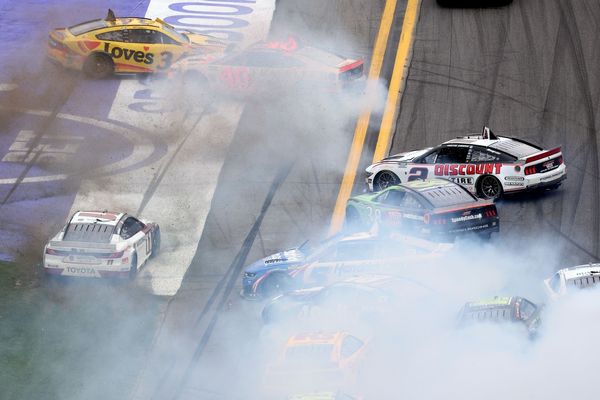
Automobile automation should offer us hope
Peter C Baker provides a cautionary perspective on the ongoing changes in cars (11 October). While his view is valid, there are reasons to be a little more optimistic.
Automation will remove aggressive, frustrated, distracted and sleepy people from behind the wheel. It will turn cars from high-performance pleasure-seeking toys into the means of moving people and goods safely from A to B. Automation will not be perfect, but can it be worse than the status quo: 30,000-40,000 people die in cars in the US each year, adding to the horrible pedestrian statistics. We should focus on delivering the promise of efficiency and safety, including the elimination of tragic accidents.
We should also applaud the progressive cities attempting to decrease car use through high-occupancy lanes and congestion charges, as well as separating cars, bicycles and pedestrians. Illuminating issues is vital but identifying solutions is important too.
John Thompson
Vancouver, British Columbia, Canada
Captain Cook anniversary should make us reflect
Paul Daley’s article on the colonial legacy of Captain Cook (11 October) is a reminder of the tragic consequences of British intrusion into the South Pacific, to be commemorated in Australia in April 2020, the 250th anniversary of the arrival of James Cook and the Endeavour at Botany Bay. It is to be hoped that the true impact of this event is made clear.
The Sutherland Shire Historical Society will publish a collection of essays under the title East Coast Encounters 1770 – Reflections on a Cultural Clash. Much of the writing will concentrate on the indigenous peoples. It is hoped that the book will help in creating a better understanding of what the events of 1770 mean.
Ian Stewart
Brucedale, NSW, Australia
Challenge to food culture goes back quite a way
The article Bite Me! (18 October) implies that only since the turn of the century has there been a challenge to the prevailing food culture. For Christmas 1979, when I lived in Edinburgh, I was given a copy of Elizabeth David’s 1977 English Bread and Yeast Cookery. All four of my flatmates and I took turns to bake bread, usually four loaves at a time, for general consumption.
Edinburgh had whole food stores with open sacks of various types of bread flour and we experimented with percentages of hard white flour to rye, to whole wheat and others. We were not alone in our bread baking.
David’s book taught us not only about the Chorleywood process, but also how to make our own bread in all different varieties in the days before artisanal loaves were available in Edinburgh. Her book was a revelation.
Victoria Keller
New York City, New York, US
We are all responsible for what we consume
Comforting though George Monbiot’s conclusions (18 October) may be for the average punter about which industries are most to blame for the climate crisis, the reality is that each of us is responsible for what we consume and therefore how much we support a consumer society and contribute to climate change. He has it in his power to rock the oil companies back on their heels – no flights, no car and no gas central heating.
Jason Spencer-Cooke
Saint Saturnin, France
Terminology is important in debate over abortion
Abortion-rights advocates like to call themselves “pro-choice”. This is their prerogative and, from a public-relations standpoint, understandable. When they label their opponents “anti-choice”, they are on shakier ground, as abortion opponents do not describe themselves using this term; yet they are partisans. When Guardian writers use this nomenclature in news articles, however, they undermine their journalistic neutrality.
Greg DePaco
New Westminster, British Columbia, Canada
Hard to find Möbius strip that has two surfaces
In her review of Zadie Smith’s short stories (18 October), Kate Clanchy refers to the surfaces of a Möbius strip. If she were to find a second surface it would cause a major upset in mathematics.
Graham Davey
Bristol, UK
Dung beetle is far more noble than a cockroach
The Gregor Samsa I remember became a giant dung beetle, rather than the giant cockroach Ian McEwan has him (25 October). The former seems a nobler insect – the scarab – a symbol of resurrection. A roly poly, cheery Sisyphus, busying himself uphill and down in worship of Amun-Ra. Is the original German ambiguous?
RM Fransson
Wheat Ridge, Colorado, US