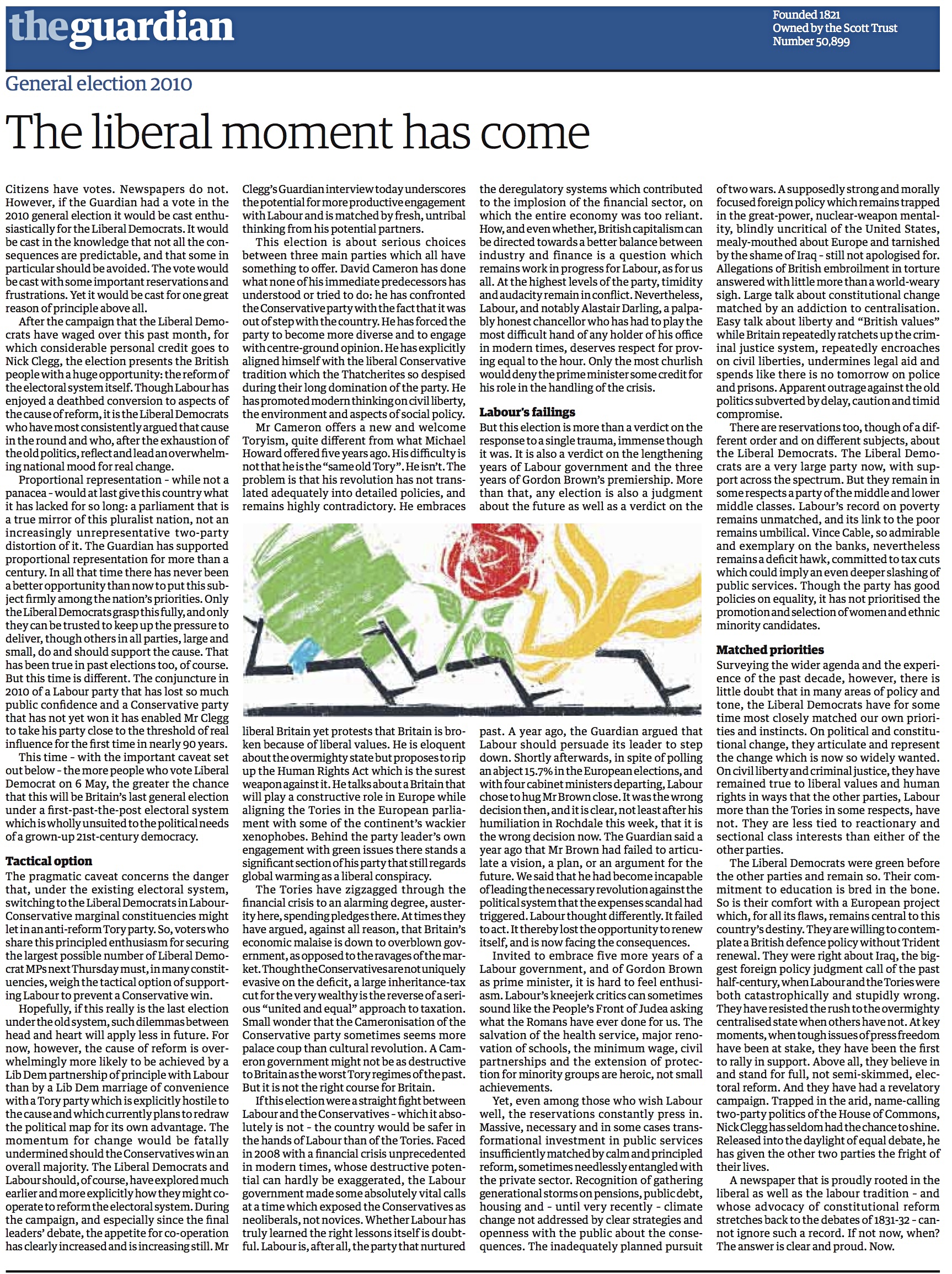
1 May 2010: The liberal moment has come
‘If the Guardian had a vote it would be cast enthusiastically for the Liberal Democrats.’
4 May 2005: Once more with feeling
‘voters should use their heads and hearts to re-elect Labour with an increased Liberal Democrat presence.’
6 June 2001: Give them a second turn
‘we believe that a second full term for Labour, combined with a historic boost for the Liberal Democrats, represents the best possible outcome for Britain from tomorrow’s election.’
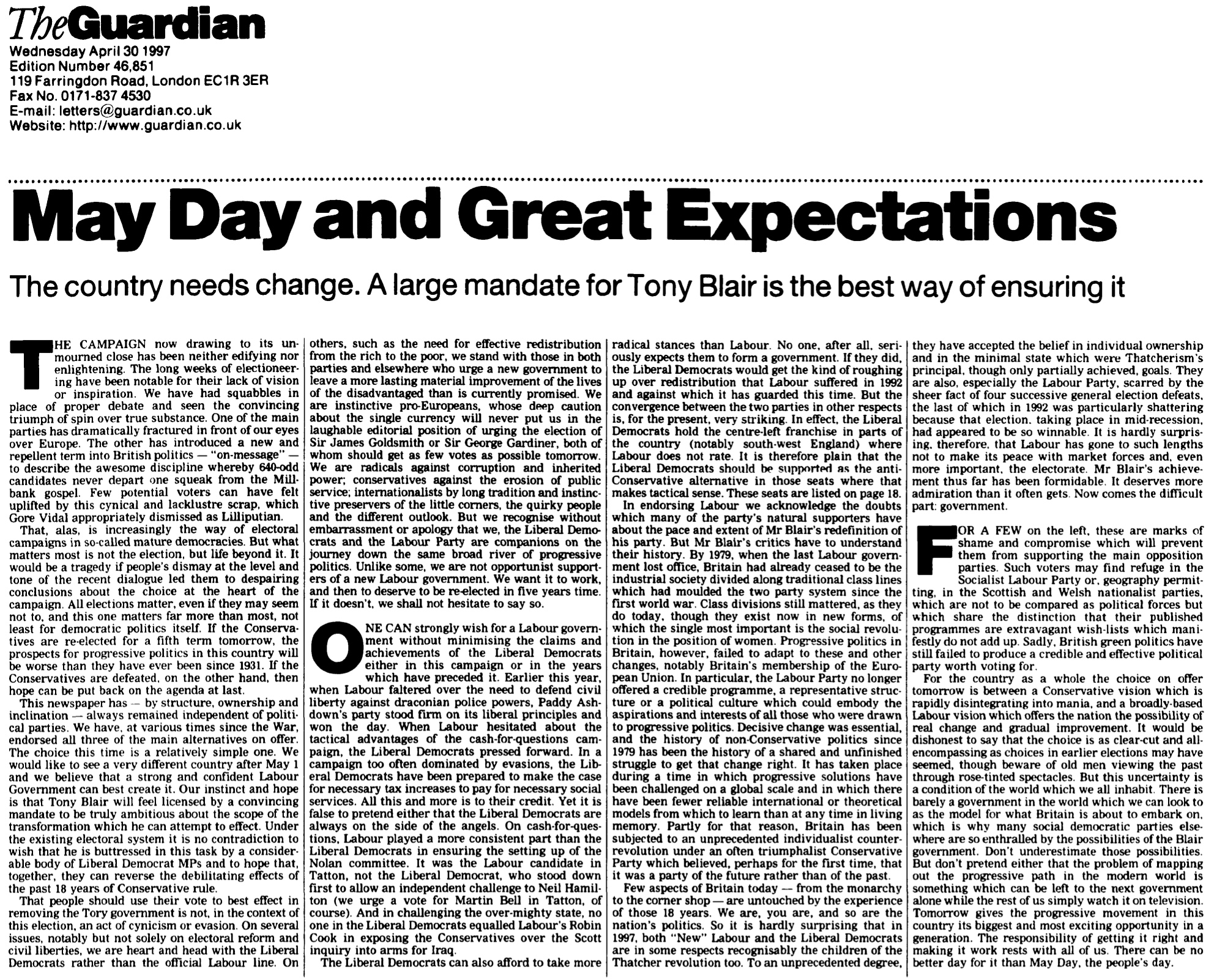
30 April 1997: May Day and Great Expectations
‘Tomorrow gives the progressive movement in this country its biggest and most exciting opportunity in a generation. The responsibility of getting it right and making it work rests with all of us. There can be no better day for it than May Day, the people’s day.’
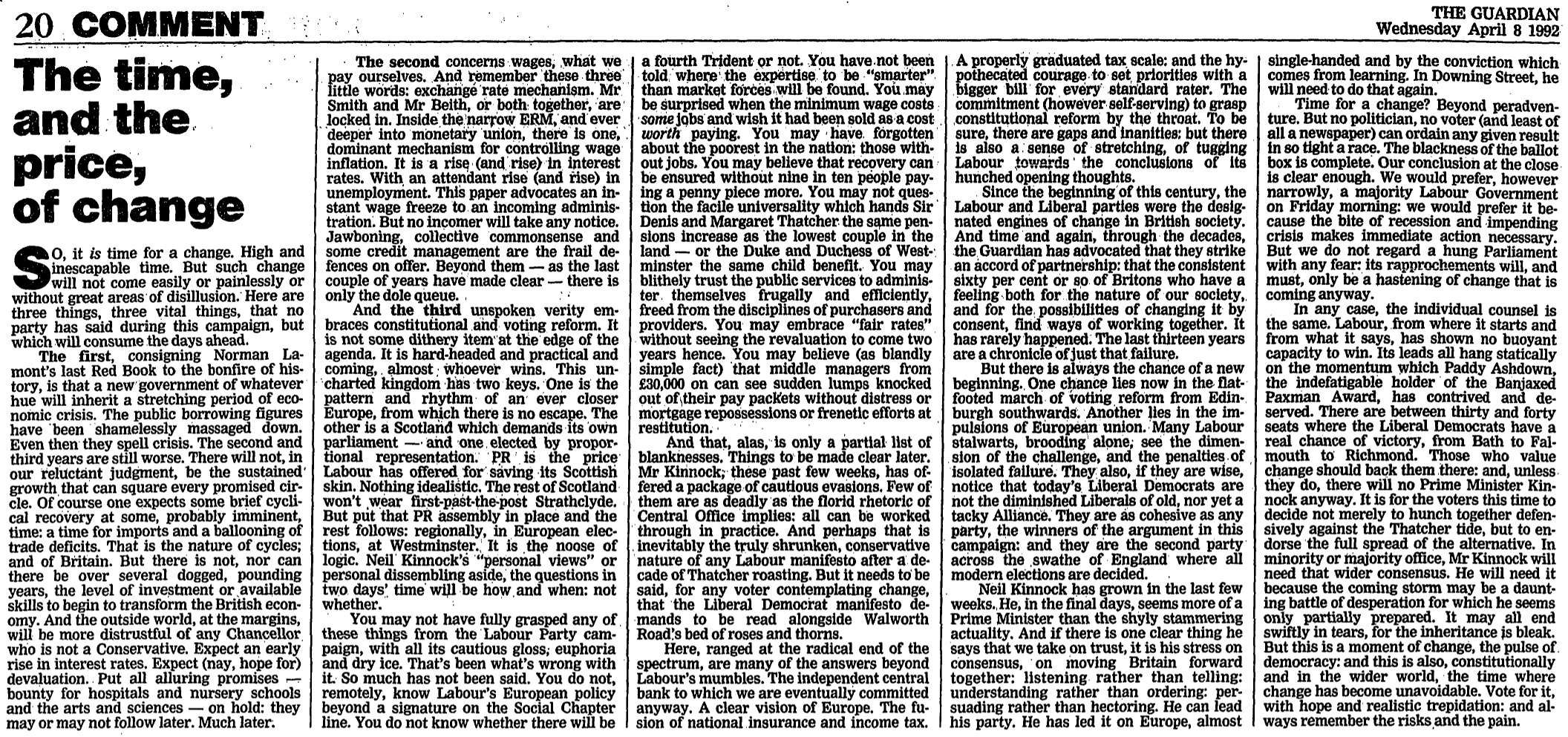
8 April 1992: The time, and the price, of change
‘We would prefer, however narrowly, a majority Labour Government on Friday.’
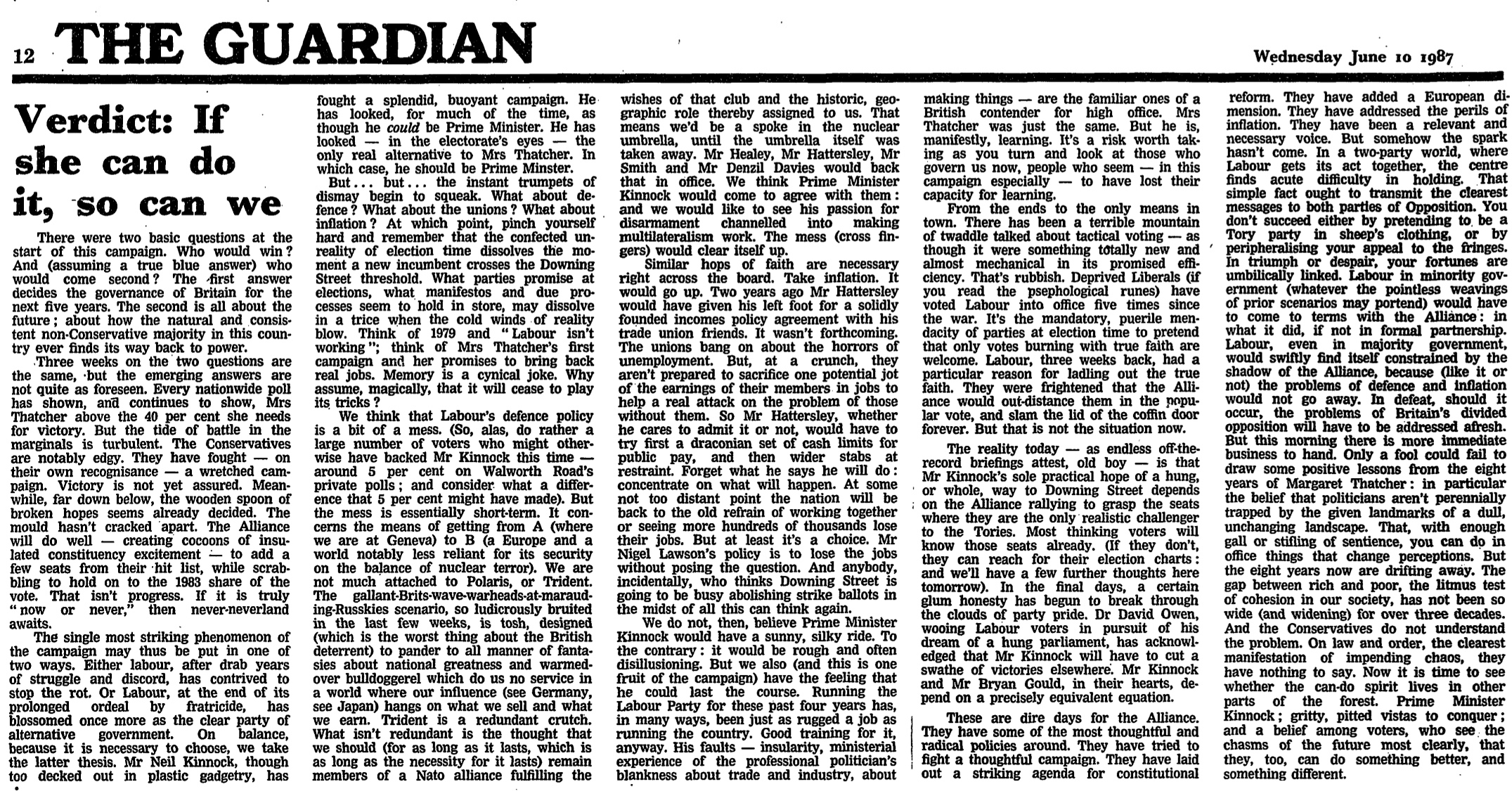
10 June 1987: Verdict: If she can do it, so can we
‘...the Conservatives do not understand the problem...Now it is time to see whether the can-do spirit lives in other parts of the forest. Prime Minister Kinnock; gritty, pitted vistas to conquer; and a belief among voters, who see the chasms of the future most clearly, that they, too, can do something better, and something different.’
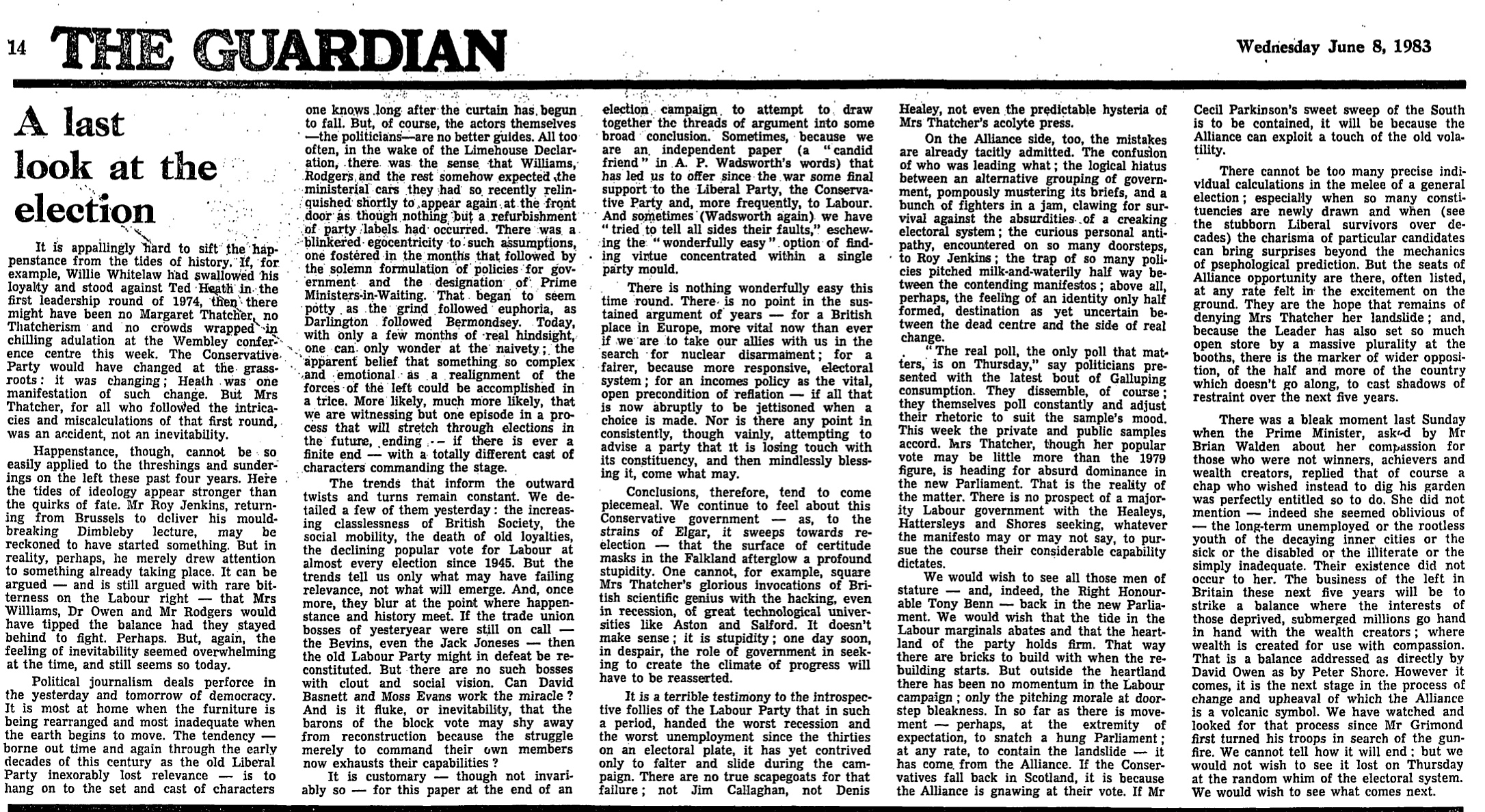
8 June 1983: A last look at the election
‘The business of the left in Britain these next five years will be to strike a balance where the interests of those deprived, submerged millions go hand in hand with the wealth creators...That is a balance addressed as directly by David Owen as by Peter Shore. However it comes, it is the next stage in the process of change and upheaval of which the alliance is a volcanic symbol...We cannot tell how it will end: but we would not wish to see it lost on Thursday at the random whim of the electoral system. We would wish to see what comes next.’
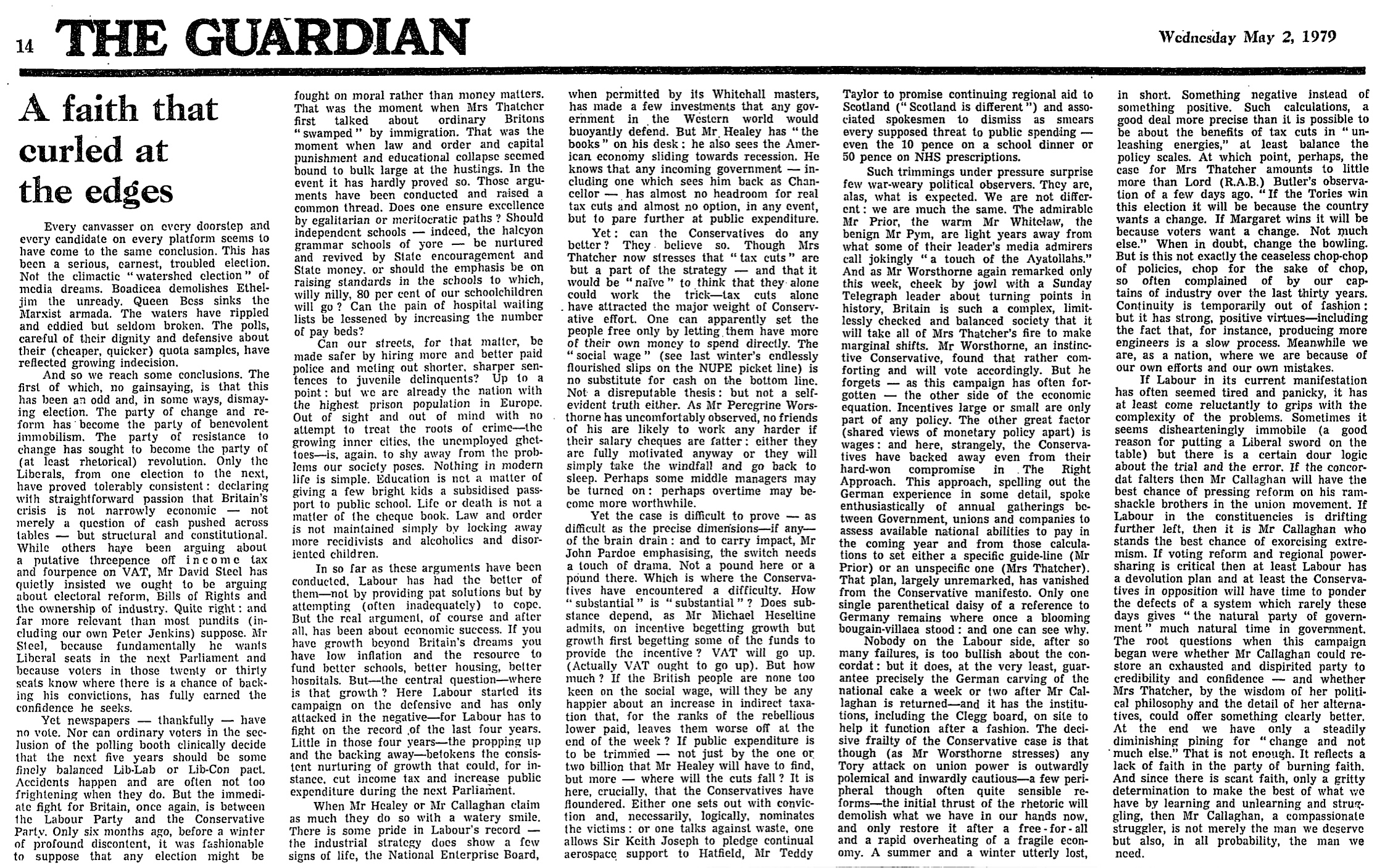
2 May 1979: A faith that curled at the edges
‘At the end we have only a steadily diminishing pining for “change and not much else.” This is not enough. It reflects a lack of faith in the party of burning faith. And since there is scant faith, only a gritty determination to make the best of what we have be learning and unlearning and struggling, then Mr Callaghan, a compassionate struggler, is not merely the man we deserve but also, in all probability the man we need.’
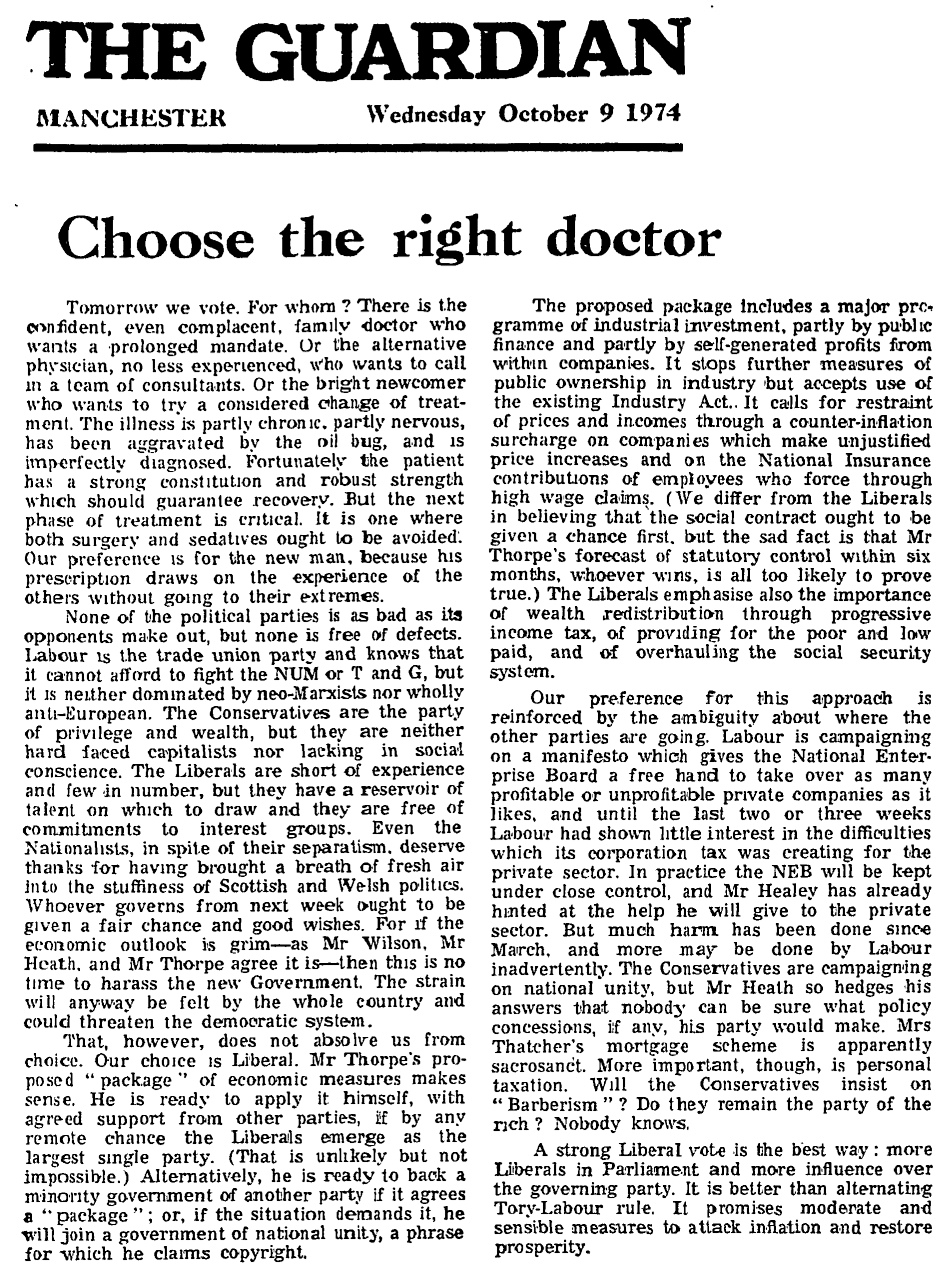
9 October 1974: Choose the right doctor
‘A strong Liberal vote is the best way: More Liberals in parliament and more influence over the governing party. It is better than alternating Tory-Labour rule.’
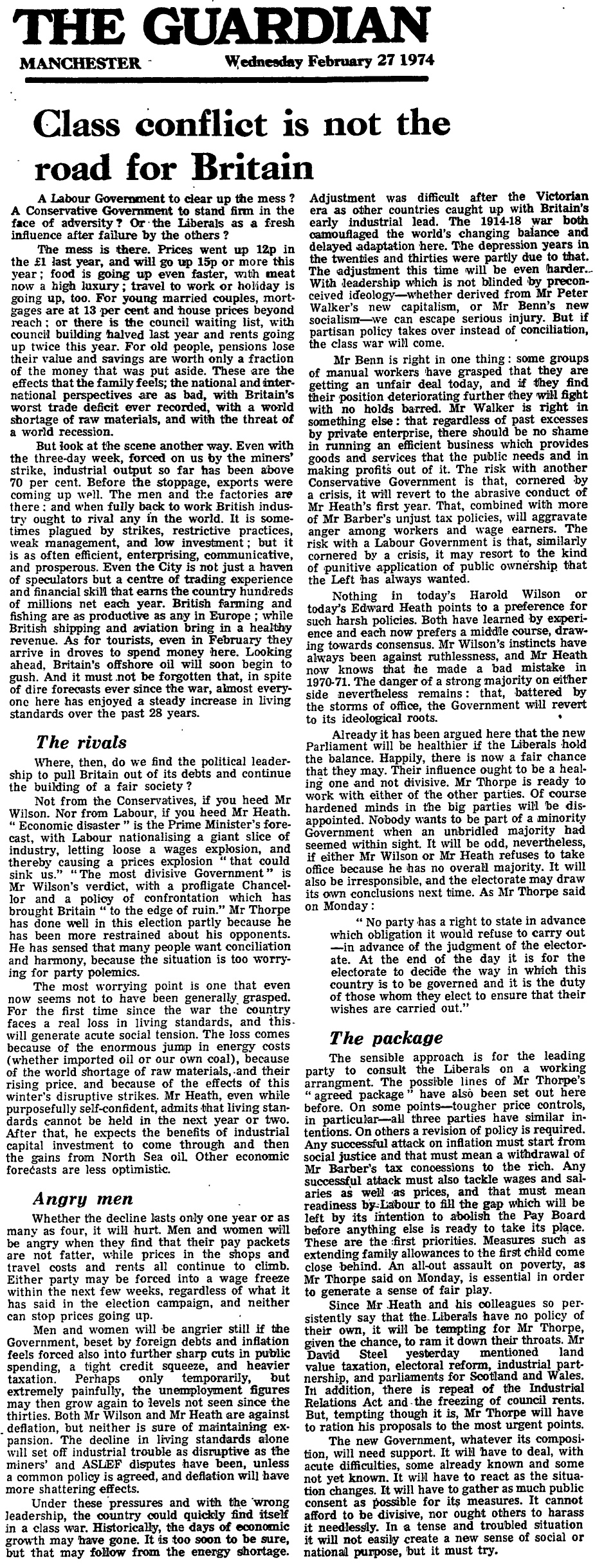
27 February 1974: Class conflict is not the right road for Britain
‘A Labour Government to clear up the mess? A Conservative Government to stand firm in the face of adversity? Or the Liberals as a fresh influence after failure by the others?’
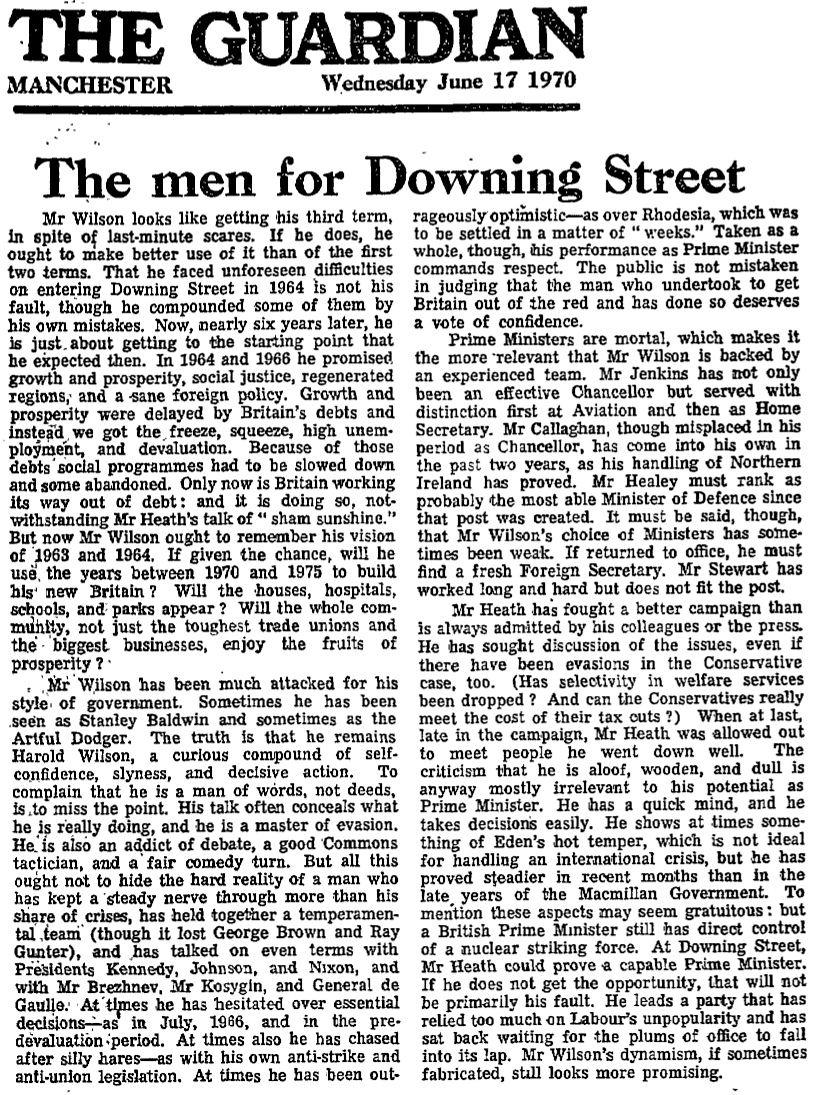
17 June 1970: The men for Downing Street
‘[Mr Heath] leads a party that has relied too much on Labour’s unpopularity and sat back waiting for the plums of office to fall into its lap. Mr Wilson’s dynamism, if sometimes fabricated, still looks more promising.’
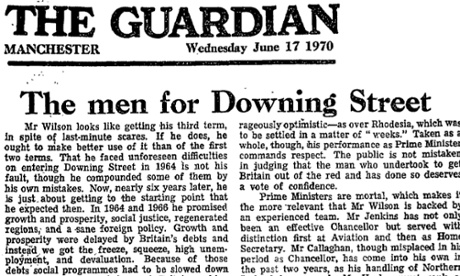
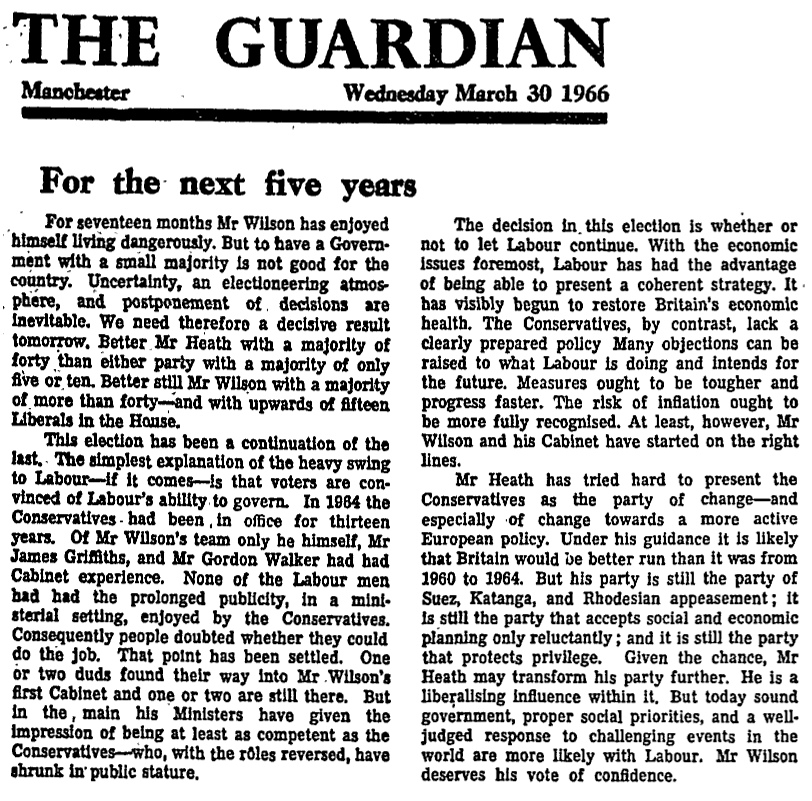
30 March 1966: For the next five years
‘Given the chance, Mr Heath may transform his party further. He is a liberalising influence within it. But today, sound government, proper social priorities, and a well-judged response to challenging events in the world are more likely with Labour. Mr Wilson deserves his vote of confidence.’
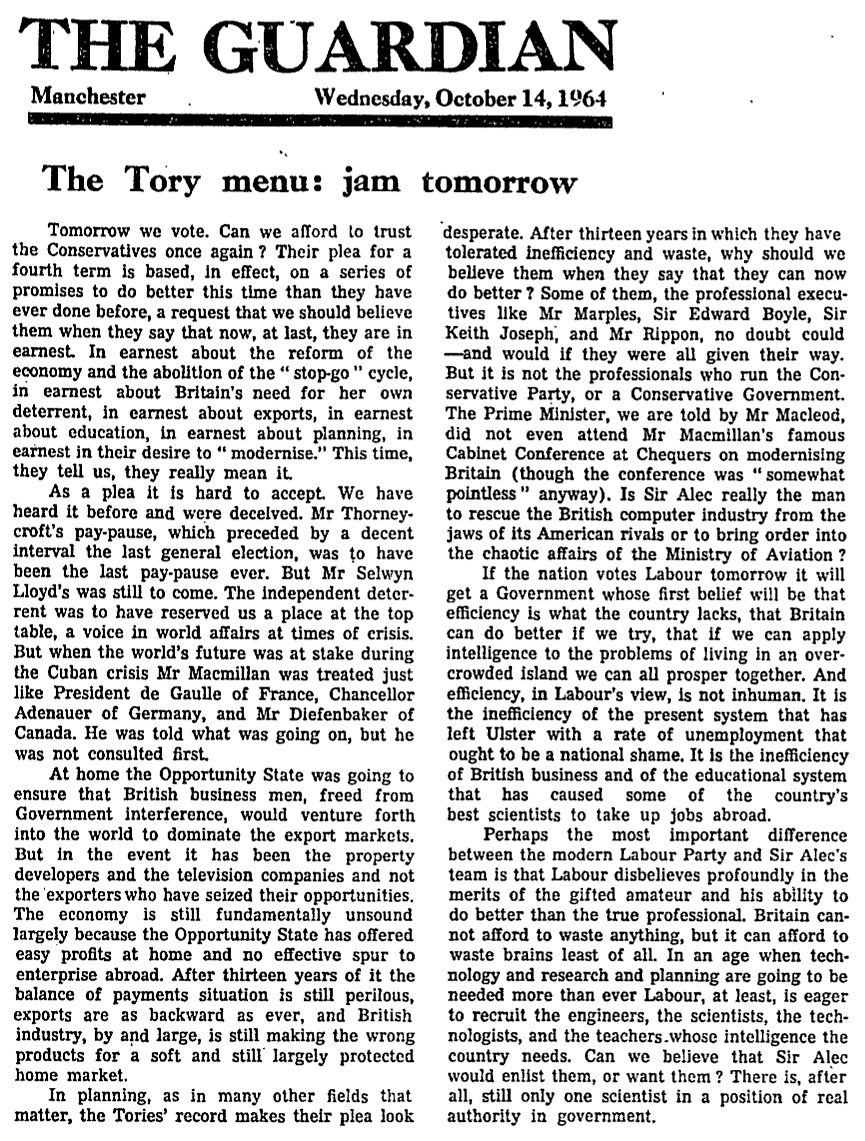
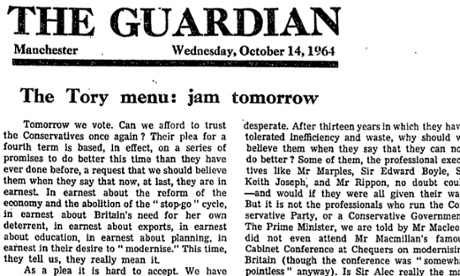
14 October 1964: The Tory menu: jam tomorrow
“If the nation votes Labour tomorrow it will get a Government whose first belief will be that efficiency is what the country lacks, that Britain can do better if we try, that if we can apply intelligence to the problems of living in an overcrowded island we can all prosper together.”
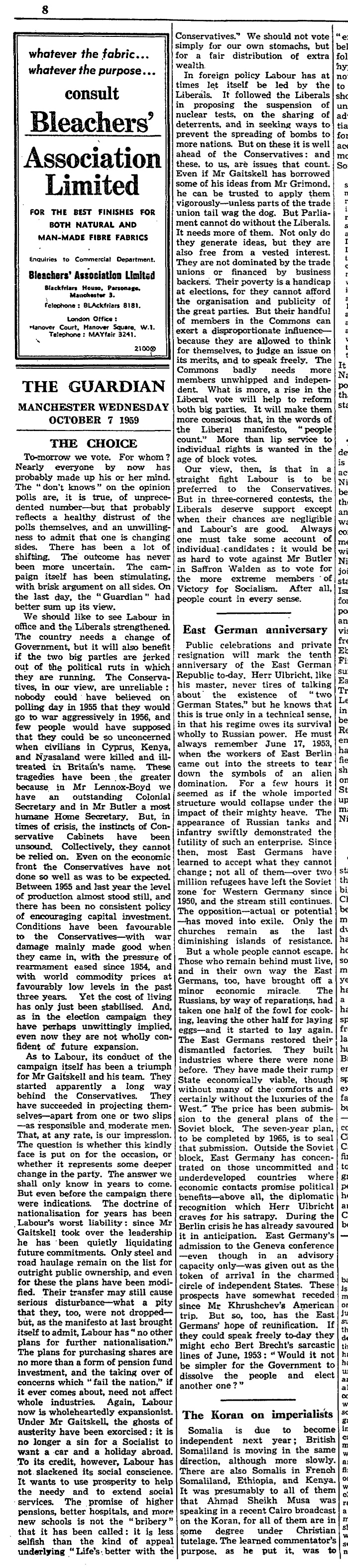
7 October 1959: The Choice
‘We should like to see Labour in office and Liberals strengthened. The country needs a change of Government.’
26 May 1955: Vote
‘We need a strong Labour party in the House - for its own sake and ours - and as many Liberals as can be got in. The simplest course for the non-Tory in this dilemma is to vote Liberal where he can, to vote Labour where there is a good, moderate man, to vote Conservative against a socialising Bevanite.’
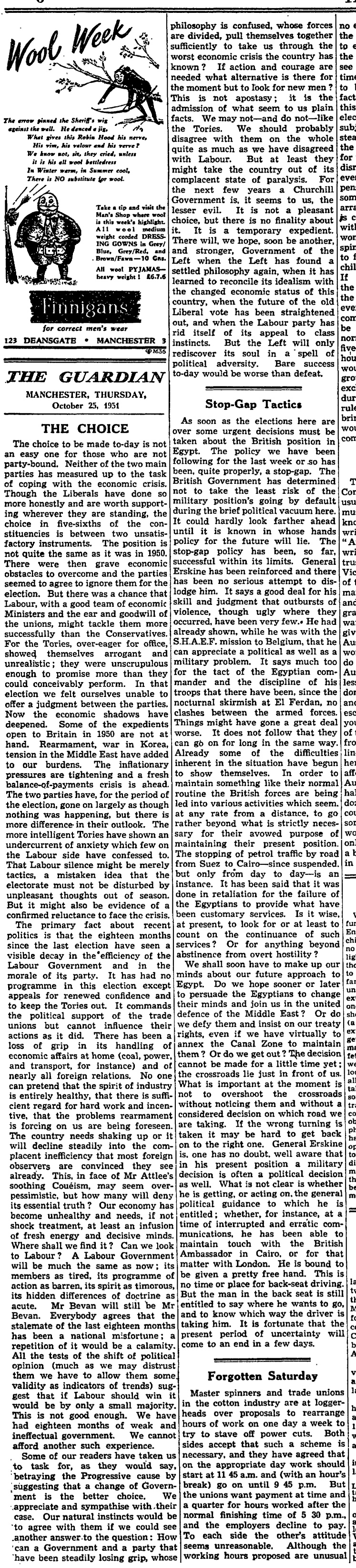
25 October 1951: The Choice
‘For the next few years a Churchill Government is, it seems to us, the lesser evil. It is not a pleasant choice, but there is no finality about it. It is a temporary expedient. There will, we hope, soon be another, and stronger, Government of the Left.’
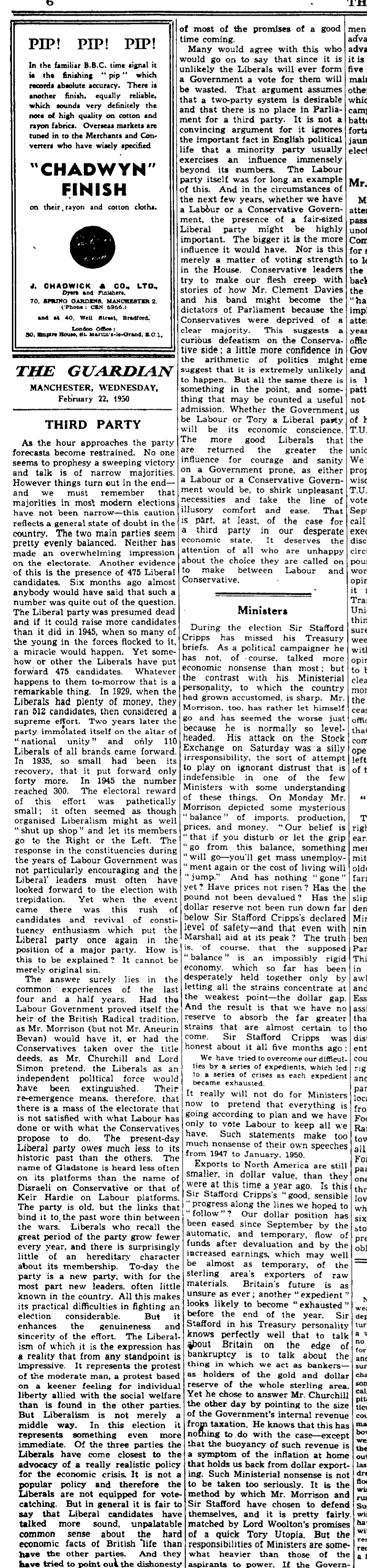
22 February 1950: Third party
‘Whether the Government be Labour or Tory a Liberal party will be its economic conscience. The more good Liberals that are returned the greater influence for courage and sanity on a Government prone, as either a Labour or a Conservative Government would be, to shirk unpleasant necessities.’
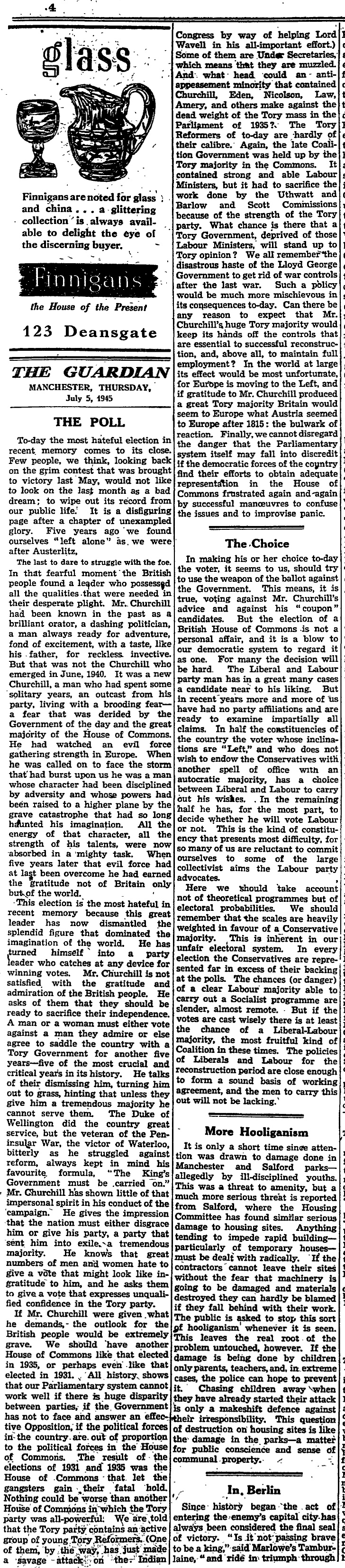
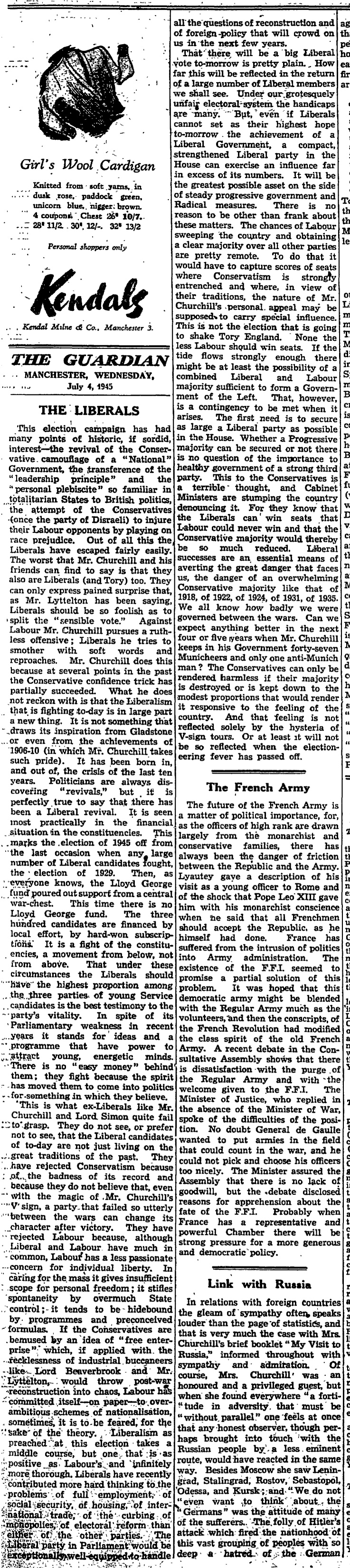
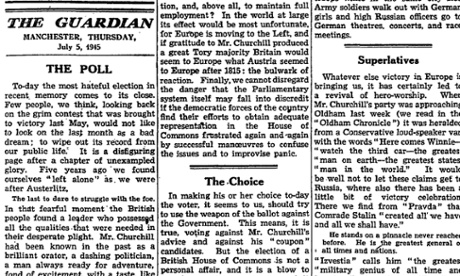
5 July 1945: The Choice
‘The chances (or danger) of a clear Labour majority able to carry out a Socialist programme are slender, almost remote. But if the votes are cast wisely there is at least the chance of a Liberal-Labour majority, the most fruitful kind of Coalition in these times.’
4 July 1945: The Liberals
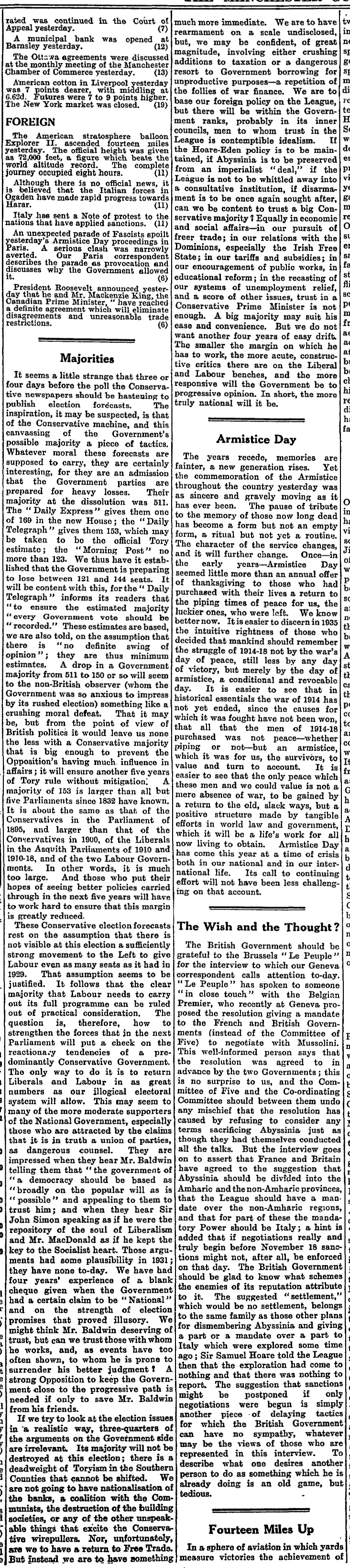
12 November 1935: Majorities
‘...in educational reform; in the recasting of our systems of unemployment relief, and a score of other issues, trust in a Conservative Prime Minister is not enough. A big majority may suit his ease and convenience. But we do not want another four years of easy drift. The smaller the margin on which he has to work, the more acute, constructive critics there are on the Liberal and Labour benches, and the more responsive will the Government be to progressive opinion.’
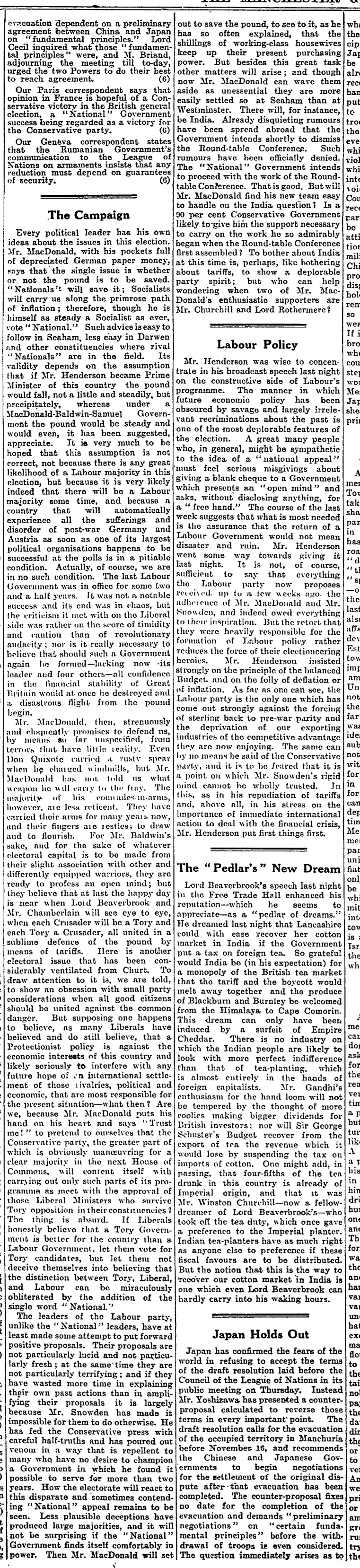
24 October 1931: Labour Policy
‘As far as one can see, the Labour party is the only one which has come out strongly against the forcing of sterling back to pre-war parity and the deprivation of our exporting industries of the competitive advantage they are now enjoying. The same can no means be said of the Conservative party.’
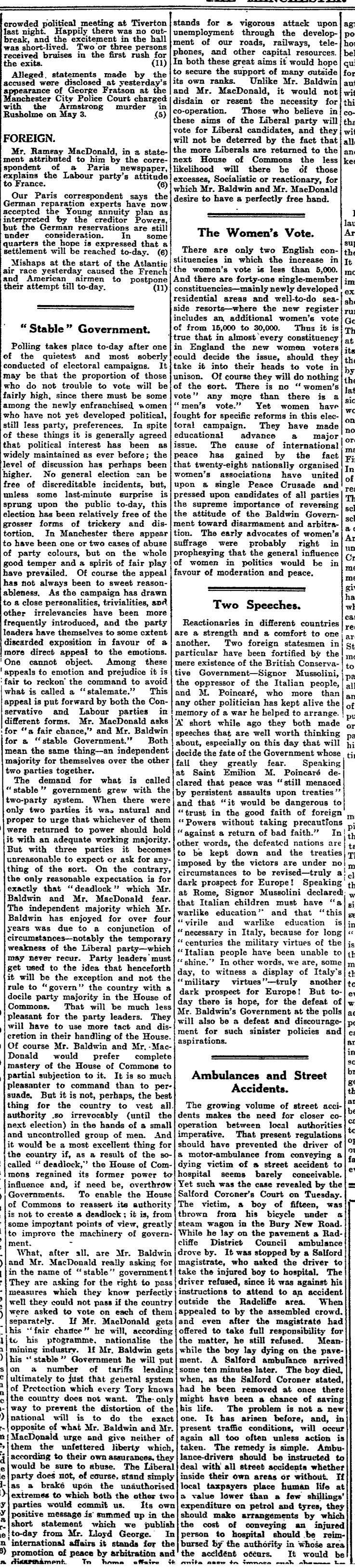
30 May 1929: “Stable” Government
‘Those who believe in [the] aims of the Liberal Party will vote for Liberal candidates, and they will not be deterred by the fact that the more Liberals are returned to the next House of Commons the less likelihood will there be of those excesses, Socialistic or reactionary, for which Mr. Baldwin and Mr. MacDonald desire to have a perfectly free hand.’
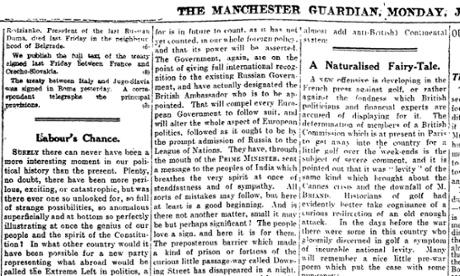
28 January 1924: Labour’s chance
‘the new party... has no sins and no failures to its account in the work of government because it has never governed, and it has no tradition of long political rivalry to divide it from either of its chief competitors. Everybody is prepared to give it a fair field and to wish it well.’
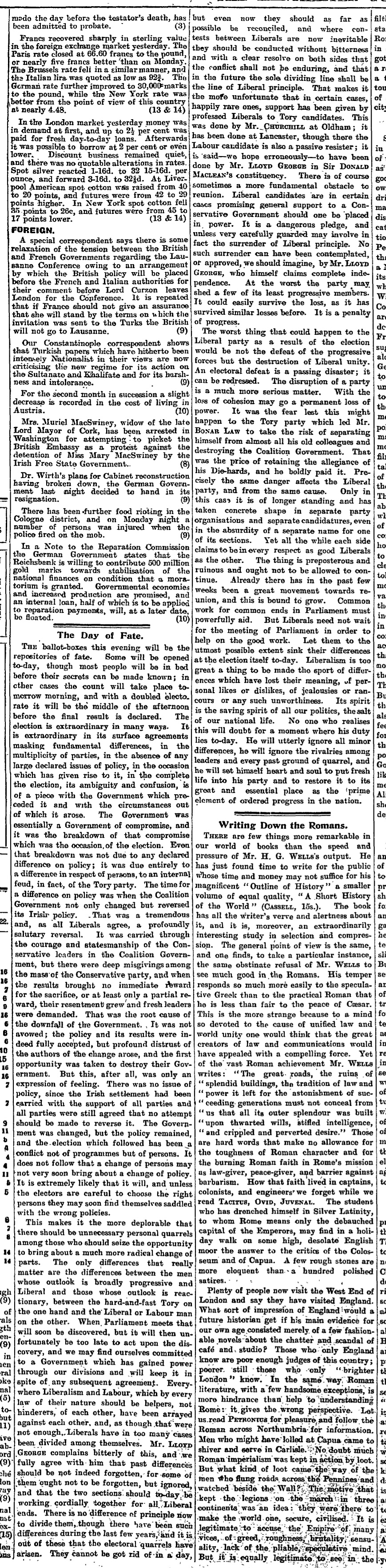
5 December 1923: To-morrow’s Election
‘For our own part we care very little whether, with a combined majority, the Liberal party takes office with Labour support or the Labour party with Liberal support’
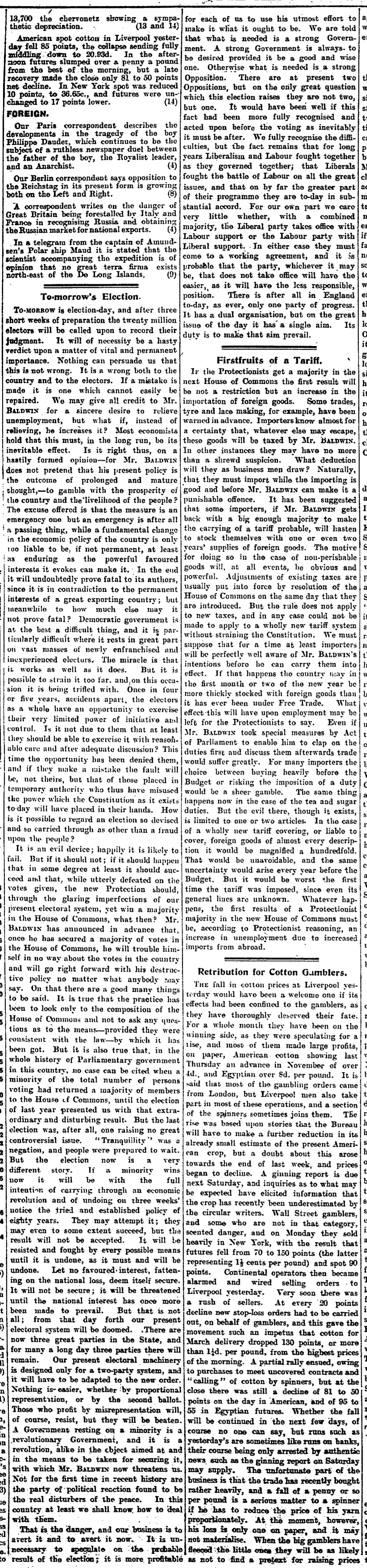
15 November 1922: The Day of Fate
‘[Liberalism’s] spirit is the saving spirit of all our politics, the salt of our national life. No one who realises this will doubt for a moment where his duty lies to-day.’
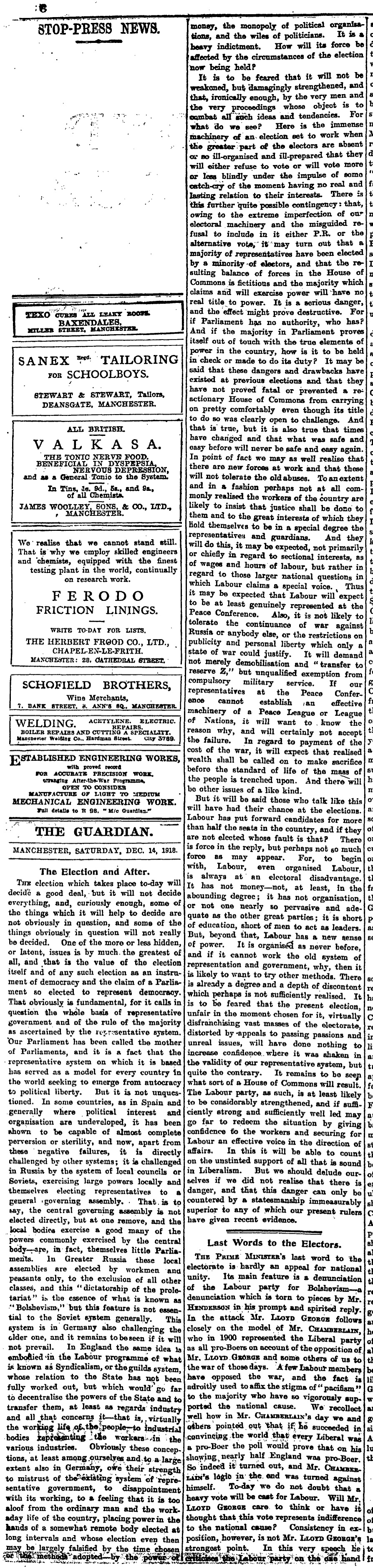
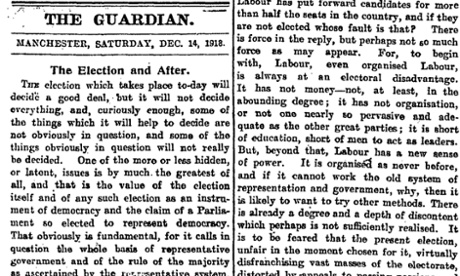
14 December 1918: The Election and After
‘The Labour Party...if sufficiently strong and sufficiently well led may go far to redeem the situation by giving confidence to the workers and securing for Labour an effective voice in the direction of affairs. In this it will be able to count on the unstinted support of all that is sound Liberalism. But we should delude ourselves if we did not realise that there is danger, and that this danger can only be countered by a statesmanship immeasurably superior to any of which our present rulers have given evidence.
All dates are dates of publication