
Meet the Thackerays
The Guardian’s India correspondent Jason Burke has been interviewing Aditya Thackeray, 24-year-old scion of India’s most controversial political dynasty.
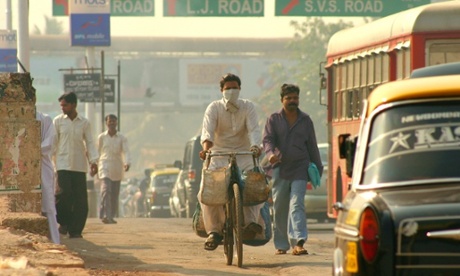
The portrait of the family patriarch, Bal Thackeray, a cartoonist turned rightwing populist politician who founded the Shiv Sena organisation in 1966 and led it until his death two years ago, is everywhere: hung in offices in slums, on the walls of cheap restaurants, beside temples. Images of the patriarch’s successor – his 54-year-old son Uddhav – and grandson Aditya, who heads a youth wing – are alongside. The trio look down on the teeming metropolis of 20 million-plus.
But after three decades of dominance of municipal politics, the Shiv Sena is, like so much in India, in transition.
You can read Jason’s piece here.
That’s all from the team here in Mumbai for tonight. We’ll be back ...
Updated
Striking images
We have a wonderful gallery of portraits of the people in Mumbai - contrasting the 1930s with the 200s from Jason Scott Tilley.
Inspired by his grandfather – a Times of India press photographer in the 1930s – he spent a decade recording the people of India in monochrome.
A women’s game
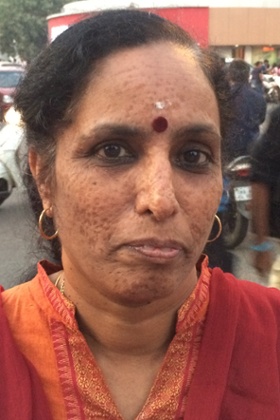
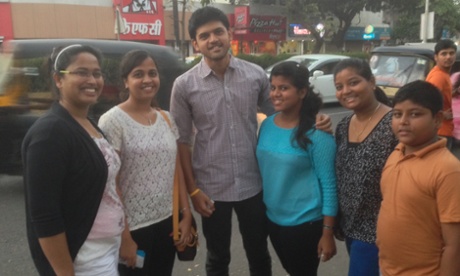
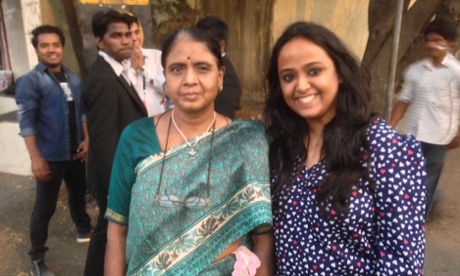
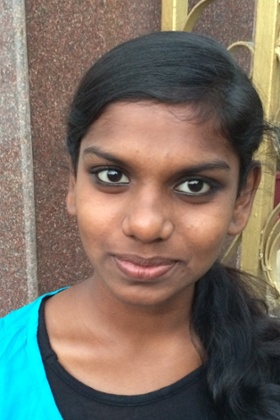
One of the developments the ISL has brought is that women are going to football in India, in a way they never did before.
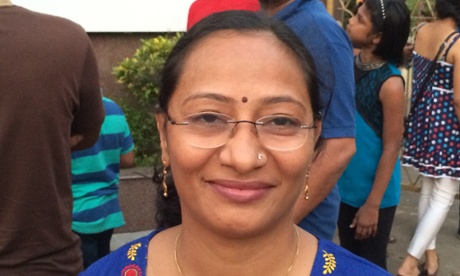
In that spirit, we did some voxpops before the Mumbai City v Chennaiyin game to see what the women of Mumbai made of the ISL.
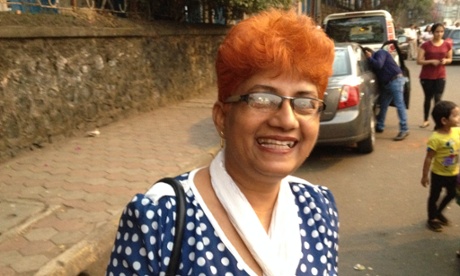
Gita, 50, from Navi Mumbai
“I recently become fond of football, and when my son got tickets to tonight’s game, I thought great! this is my first time here, so am very excited to be here”
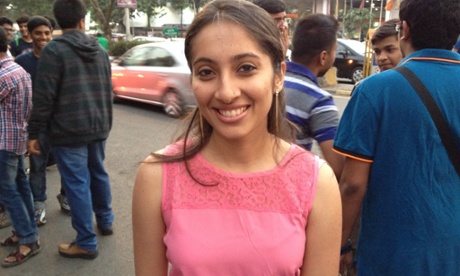
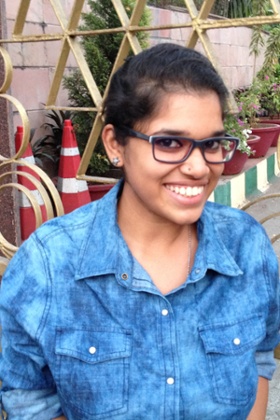
Sandra, 24, from Dadar
“I have come with friends and this is actually my first time, so I’m very excited. It’s definitely popular among young women like my friends - we all love football!”
Puja, 28, with Manju, from Navi Mumbai
“I am hoping to enjoy the Mexican waves as well as the action on the field. I have brought my mother and she is even looking forward to it.”
Ramiya, 17, from Kharghar
“I play football a lot, so love the game, and come often!”
Bhavana, 40, from Navi Mumbai
“Before I just used to come for the kids, but now I come because I love football so much.”
Jasmine, 22, from central Mumbai
“This is my first time at a match - my cousin gave me a ticket. The good thing about football, as opposed to cricket, is that everyone gets a part to play in the game.”
Simran, 18, from Navi Mumbai.
“This is my second time at a match. I like football because the game is full of energy and excitement - and it can change at any moment. More people have come out to go to the football now that the ISL has started.”
Barbara, 52, from north Mumbai
“Football is fun. My father played it, my nephew plays it. I’ve liked it for a long time. I enjoy it more now because there is more of it happening, which is good to see.”
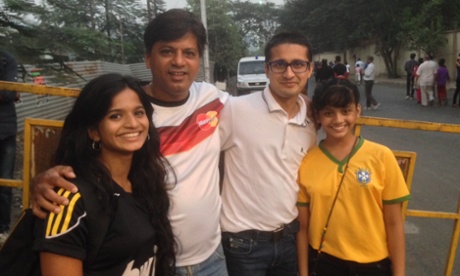
Sasha, 19, with Trevor, 49, Trisha, 12 and Neran, 36, from Santa Cruz
“I am here with my father and sister, and a family friend, and am very excited about the match. My dad is a football coach so he knows all about the game. I am a local, so of course I support Mumbai!”
I remember going years ago to a Mohun Bagan match in Kolkata with some cousins and the atmosphere was like English football in the 1980s: violent, nasty and certainly not somewhere I would take any female friends or relatives.
The sports writer Boria Majumdar told me:
We’re seeing games where there are around 15% women, normally you would not see a single one at Indian football. And educated women coming along with their female friends, not just going with their husbands or children. SR
Updated
Football v cricket: a serious debate?
We also take a look at the prospects for football in India as the Indian Super League seems to caught the imagination of the Indian public, in at least eight cities anyway.
Saptarshi Ray speaks to the CEO of Mumbai City FC and the Indian national captain, Sunil Chhetri, among others, to see whether, one day the beautiful game could ... whisper it ... replace the “heavenly bails” of cricket as the national game.
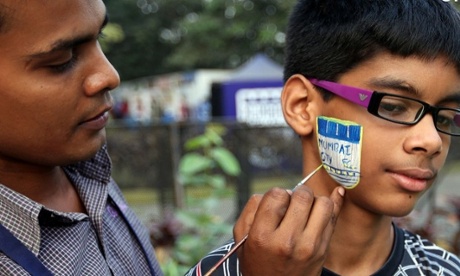
Arunava Chaudhuri, chief executive of Mumbai City, says the reaction in Mumbai to the ISL has been great.
It’s been highly positive. For the city of Sachin Tendulkar it’s surprisingly positive that we have 25,000 coming to each match at a stadium that is far out of town.
And not just in Mumbai but across India. The fact we have players like Freddie [Ljungberg] and Nicolas [Anelka] here and fans can make contact with them after watching them back in the English Premier League days is clearly exciting for Indian fans.
Share your responses in the comments below or on Twitter to @guardiancities or using the hashtag#GuardianMumbai. Alternatively, if it’s definitely football you love, you can share pictures and stories with GuardianWitness.
Updated
Sporting chance
It is time to enter the sport zone, we have two stories just launched - one looking at Mumbai’s runners, specifically the early-rising ones, as Latha Venkatraman joins the dawn chorus of those looking for space in which to pound those trainers.
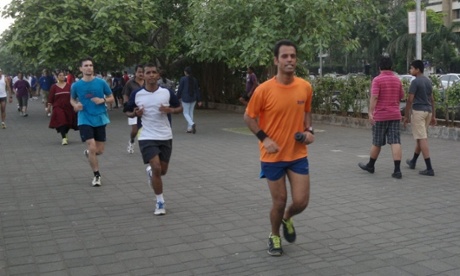
There is an especially interesting section on women joining in increasing numbers.
The number of women joining the ranks of recreational runners is slowly swelling – and barring occasional incidents of ‘eve-teasing’ (a euphemism for sexual harassment) most female runners find the Mumbai streets safe. Mumbai is a relatively danger-free city for women to run in, says Shah. “When I run, I am with myself and it helps me to unwind,” she adds.
“I am feeling strong after today’s run. Way better than my expectation,” says Avani Patel. She echoes Shah’s comments about Mumbai being a safe city for women. “I really enjoy this run. You meet so many runners,” says Bansuri Bharadwaj, an architect who has been running half, full and ultra marathons for two and a half years. As a female runner, it is good to connect with other runners, she adds.
Updated
Street kid kitchen
Former Taj Hotel chef Dinesh Bahrani popped in to the Juhu Beach children’s shelter this afternoon to give the boys a cookery lesson.
Helping the kids broaden their repertoire beyond the typical yellow daal they make most nights, Bahrani cooked up Mumbai black daal and coconut chicken.
You can read Chris Michael’s article – complete with recipes – here.
Dinnertime at Juhu Beach: black daal and chicken in coconut @bombayfoodies #guardianmumbai @guardiancities pic.twitter.com/e5Tjw03fDW
— Chris Michael (@chrismichaelgdn) November 27, 2014
The force is strong with these skywalks
Mumbaikars might be forgiven for having the impression that transit planning here is an oxymoron, but the truth is that concerted efforts are sometimes made to address the worst problems. Take Mumbai’s controversial skywalks, for example, designed to make life easier for pedestrians. Though some have nicknamed them “the ugly caterpillars”, they serve a vital purpose, writes Menaka Rao:
No matter the skywalk, you can find people leaning on the railings, talking to their loved ones, taking a smoking break (although it’s illegal in public spaces), waiting for friends, reading a newspaper or taking an afternoon stroll above the hustle and bustle of the city.
Updated
Well, we had to talk about the traffic at some point ...
If you’ve never had the experience of trying to relocate from south to north of this city by car during Friday evening rush hour, you haven’t lived - or rather, nearly died. It makes one wonder how Mumbai can possibly function on any level amid such serial chaos - and, for that matter, how everyone appears to stay so calm (horns are honked, sure, but scenes of actual road rage are few and far between ...)
The traffic is also a huge safety issue, of course, as Yasir Mirza writes in his story about Wasim Khan, a lovely taxi driver we have got to know during our time here:
India is thought to have some of the world’s deadliest roads, with an estimated 1.2 million fatalities over the past decade - that’s one every four minutes. Over the same period, 5.5 million have been seriously injured.
So as a taxi driver who works 16-18 hours a day 24/7, what does Wasim think of the standard of driving?
Mumbai drivers are generally skilled and good at driving, Wasim insists, but he did once see an accident happen next to him that seriously injured its passengers and the driver. “One guy had a broken leg, another broken ribs, and the cab driver fractured his wrist - but they recovered.” The driver was back on the road within days in another rented car. “It’s his livelihood, so he has to.”
So what, if anything, can Mumbai do to change its car-fuelled, traffic jam-plagued ways? We’ve asked Dr Andrew Harris, urban studies lecturer at University College London and a Mumbai regular. Read his analysis of the problem, and possible solutions - here’s a taster:
This institutional ‘analytical vacuum’ has been easily filled by civic-society pressure groups – small groups of ‘concerned’ middle-class citizens with interests in improving their journey to work by car. It has also been manipulated by corporate interests, who have a financial stake in steering transport planning towards large lucrative projects such as flyovers.
This afternoon, we’ll be assessing that interesting urban phenomenon of recent years, Mumbai’s skywalks.
In the meantime, we want to hear from Mumbai residents: what do you think about the city’s traffic problems? And what could help improve congestion on Mumbai’s roads? Share your thoughts by tweeting us @guardiancities and using the hashtag #GuardianMumbai. MH
Updated
Your favourite Mumbai novels
Which books best sum up Mumbai? Yesterday we shared Jerry Pinto’s top six novels that depict the city and asked you for your favourites. Here’s what you said:
@guardiancities @burke_jason Sacred Games #guardianmumbai
— indian nomad (@indian_nomad) November 26, 2014
@guardiancities Rohinton Mistry's Such A Long Journey is another memorable Bombay-based story. #GuardianMumbai
— Megha Nayar (@vvordyvvise) November 26, 2014
@GuardianBooks @guardiancities Bombay Wali -- collection of short stories set in Mumbai by Veena Gokhale @Veenago http://t.co/6OWlBgkHRk
— Michael Mirolla (@MichaelMirolla1) November 26, 2014
Dongri To Dubai has got to be one of the most gripping books I've ever read.. getting nostalgic about retro Bombay #GuardianMumbai
— BombayBeats (@BombayBeats) November 26, 2014

I know his other novel has been mentioned here already but I really loved Sacred Games by Vikram Chandra.
I thoroughly enjoyed Rohinton Mistry's Tales from Firozsha Baag, a series of interlinked stories involving the residents of a Bombay apartment building. Vivid, poignant and funny.
people keep on missing behind the beautiful forevers by Katherine Boo off these lists. an amazing book.
kuttanpilla and altlife on Reddit suggested Shantaram, while Kanchi, via Whatsapp, recommended Rohinton Mistry’s Such a Long Journey.
Are there any others? Keep sharing your top Mumbai novels on Twitter using #GuardianMumbai
Heavy rains and rising temperatures: how will Mumbai cope?
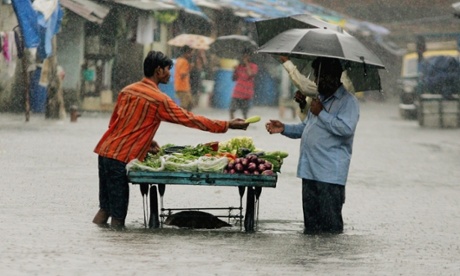
A combination of expanding populations and climate change is putting increasing environmental pressures on many cities around the world - and Mumbai is no exception. Today we’re taking an in-depth look at the environmental challenges in this city, and what can be done to ameliorate conditions or better prepare for the threats of natural disasters.
Shruti Ravandran has written two pieces about the looming threat of two disasters in the city: flooding and extreme heat. Her first article remembers the flood of 2005 which devastated Mumbai, explaining that the likelihood of a similar event occurring again is considerable - and not enough is being done to prepare. Despite the formulation of the Greater Mumbai disaster management action plan, vulnerability to flooding remains because of intense construction on floodplains and coastal areas, as well as plastic garbage clogging storm-water drains and waterways:
Much still remains to be done, but time is running out. Climate scientists predict that chances of a 2005-like flood could more than double in Mumbai by 2080, and the losses could triple. “We need preventive measures, rather than a Disaster Management Cell, when we know [flooding] is an extreme event we’re prone to,” says Rishi Aggarwal, an environmental activist involved in urban planning and mangrove conservation. “But we have not learned anything in 10 years.”
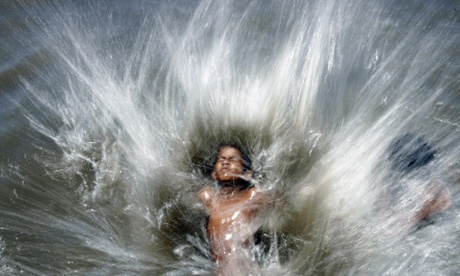
Looking at the city’s rising temperatures, Shruti explains that climate-change exacerbated heat in cities like Mumbai is likely to bring: “an uptick in deaths from cardio-respiratory disease, heat-related illness and death, increased rates of potential transmission of vector-borne diseases like dengue and malaria, and a shrinking in the quantity and quality of available water, further amplifying the burden of disease.”
This year, Ahmedabad’s municipality implemented a Heat Action Plan: let’s hope other cities around India, including Mumbai, get one soon.
Stay tuned for further exploration of Mumbai’s environmental issues today, as our roving reporter Chris Michael measures the city’s infamous pollution. FP
Spotting leopards in Mumbai
Yesterday, following Elizabeth Soumya’s story about Mumbai’s urban leopards, our reporter Nick Mead headed out to the city’s Sanjay Gandhi national park to see if he could track down one of the remaining big cats. Here’s what happened ...
I'm in Sanjay Gandhi national park - 100 sq km of tropical forest in the heart of Mumbai, and home to 21+ leopards pic.twitter.com/GAyv1cSSjb
— Nick Mead (@nickvanmead) November 26, 2014
250,000 people live in or on the border of the park, many in illegal settlements. The park wall is on the right pic.twitter.com/hwrVyNrkCT
— Nick Mead (@nickvanmead) November 26, 2014
Human settlements create garbage and attract stray dogs - easy prey for leopards pic.twitter.com/RAAyBrc9W0
— Nick Mead (@nickvanmead) November 26, 2014
Conservationist Krishna Tiwari sets up an infra-red camera trap near a path to an illegal village inside the park pic.twitter.com/7cAPc41ZRg
— Nick Mead (@nickvanmead) November 26, 2014
'When the sun goes down this is leopard territory,' says Tiwari. The big cats visit this path most nights pic.twitter.com/f3JUfmgB2i
— Nick Mead (@nickvanmead) November 26, 2014
Many leopard victims are children crouching in the forest at night to answer a call of nature pic.twitter.com/pSxdHUhcai
— Nick Mead (@nickvanmead) November 26, 2014
Tiwari helps park-dwellers dig latrines and tells children to visit the forest at night with an adult and a torch, and crouch in open space
— Nick Mead (@nickvanmead) November 26, 2014
Unfortunately this is the closest @guardiancities got to spotting an urban leopard ... #guardianmumbai pic.twitter.com/JlirkNOk9V
— Nick Mead (@nickvanmead) November 26, 2014
Don’t forget we are still hoping to spot either a leopard or Sachin Tendulkar in Mumbai this week - a prize to the first person to take a photo of either. If someone, somehow, gets a photo of the two together, we may just combust.
Night vision, and fishing
Yesterday I spent the day with the Koli fishing community in Chimbai Village, with my final run returning after the live blog had battened down its hatches.
But here’s a couple of tweets from last night, for a story to come later this afternoon. SR
Night fishing with Chimbai Village crew, 10km out in Arabian Sea. Story tomorrow @guardiancities #guardianmumbai pic.twitter.com/BDC32MGrcr
— Saptarshi Ray (@Saptarshi_Ray) November 26, 2014
Bally the Fish (named after 90s Brummie Bhangra star Bally Sagoo) went from sea to plate to belly. @guardiancities pic.twitter.com/1U8JjkwYr1
— Saptarshi Ray (@Saptarshi_Ray) November 26, 2014
Updated
Guardian Cities on NDTV: our debates so far
Watch all the live debates from our series so far.
Updated
Water works and car trouble
Good morning Mumbai, Saptarshi Ray here to welcome you to day four of the special Guardian Cities week in this fine city.
This morning we shall mainly be looking at transport and the environment and how they affect Mumbai - from flooding defences to traffic problems and what can be done to analyse and deal with the issues.
Plus we will have the usual roundup of events and happenings in the city, plus lots of content from our litany of writers and commentators.











Mistry's A Fine Balance is both incredibly moving and evocative of Mumbai. In addition I'd include 'Last Man in Tower' by Arvind Adiga (apartment block politics at its best) and 'The Death of Mr Love' by Indra Sinha (beautiful).