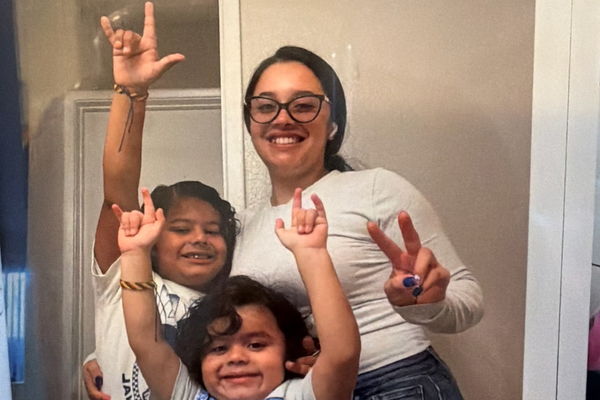
CHICAGO _ At 13, Sara Jayyousi started a new lunchtime routine. Once a week, she'd rush to the cafeteria, buy lunch and take it to the school parking lot where her mom would be waiting in the car. She and her two sisters would sit in the backseat while her mom dialed the number for a special prison unit in Terre Haute, Ind.
During those lunch periods, the Michigan family was using the 15 minutes a week they were allotted to speak to Sara's dad. Afterward, Sara would return to class, stopping sometimes to cry in the bathroom.
"You can't say anything in 15 minutes. You say 'everything is fine, everyone is fine,'" said Hedaya Jayyousi, Sara's mom. "It was torture for the kids."
More than a decade later, Kifah Jayyousi is no longer in prison, but his daughter _ who struggled through her teenage years without her father _ is among those speaking out against a law enforcement strategy they believe unfairly targets Muslims.
Jayyousi was convicted of conspiracy to murder, kidnap and maim people overseas and two counts of providing material support to terrorists. A year after his conviction, he was moved to a special unit called a "communication management" unit in Terre Haute's federal prison.
These special units are sometimes the last step in a law enforcement strategy, escalated after 9/11, to target and prosecute individuals or organizations whose beliefs, ideology or religious affiliations raise security concerns for the government, according to attorneys at the Coalition For Civil Freedoms, an advocacy group based in Washington, D.C.
Advocates say this strategy has led to penalties that far outweigh the crimes, and many of those affected are Muslim.
When you use the word "terrorism" in a case, people aren't really upset about harsh prison conditions, so there has been little public outcry, said Rachel Meeropol, one of Jayyousi's attorneys.
In 2007, Jayyousi went on trial in a case involving one-time Chicago gang member Jose Padilla, who was held for more than three years as an "enemy combatant" before he was charged. Jayyousi, Padilla and a third co-defendant were accused of being involved in a conspiracy to provide supplies, money and recruits to groups of Islamist extremists. A Navy veteran and Detroit school administrator at the time, Jayyousi denied the charges, saying he was collecting charitable donations for Muslims in Bosnia.
In a surprise move, the judge sentenced Jayyousi to the minimum sentence, saying there was no evidence linking him or his co-defendants to any specific acts of terrorism.
But Jayyousi was sent to one of only two communication management units in the country _ the other is in Marion, Illinois.
Conditions inside these units are harsh, critics contend: Phone calls and visits are severely limited. All visits are monitored, physical contact is barred and conversation must be in English.
"When she was little, my daughter would say 'Baba, I want to hug you,' and he would say they could air-hug through the glass," said Hedaya Jayyousi, who would arrange for the family to go visit her husband twice a year. "For Eid, we tried to get them to let her hug him; they said no, it's for security purposes, for the security of the country."