MIAMI _ More than two years after a Guantanamo war court judge ordered a brain scan of an alleged terrorist awaiting a death penalty trial, a mobile MRI unit has arrived at the remote U.S. Navy base in Cuba to carry out the study, a Pentagon spokesman said Monday.
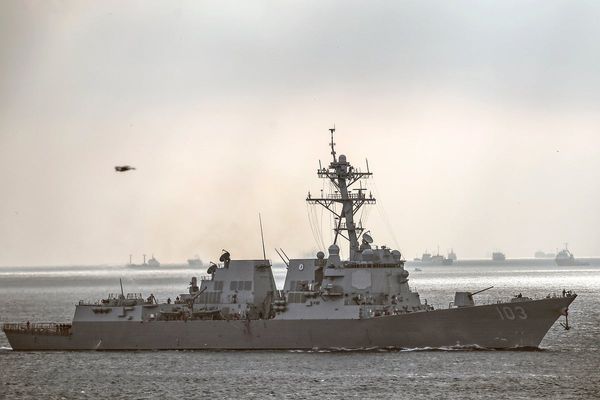
The magnetic resonance imaging study of Abd al-Rahim al-Nashiri's brain is a prerequisite to the Saudi captive's trial as the alleged mastermind of al-Qaida's suicide bombing of the Navy destroyer USS Cole off Yemen that killed 17 U.S. sailors Oct. 12, 2000. Dozens more sailors were wounded.
Lawyers for the 52-year-old Saudi argue that if there's demonstrable brain damage, the judge should not permit the case to go forward as a capital trial. During his 2002-06 CIA captivity he was waterboarded, confined to a coffin-sized box, and subjected to a mock execution and rectal rehydration, among other techniques, to get him to cooperate with his captors.
Air Force Col. Vance Spath, the judge, ordered the bran scan in early 2015. The protracted delay in delivery of the equipment is the latest illustration of the slow pace of progress at the Guantanamo war court where al-Nashiri was charged in 2011, and has had aspects of the pretrial phase reviewed at higher courts.
At the Pentagon, spokesman Air Force Maj. Ben Sakrisson said the mobile MRI arrived on Sept. 26, and should be up and running from mid-October through mid-February, and then return to the United States. The Navy initially advertised to rent the MRI in July 2015. It will cost about $370,000, the major said, including transport, setup and operation.
It was unclear whether four months was required to do multiple scans of al-Nashiri brain. "It is unknown at this time whether other individuals will utilize the MRI at other periods of time," Sakrisson said.
One apparent emerging issue, based on correspondence obtained by the Miami Herald, is whether torture expert Sondra Crosby, a physician who has spent time with al-Nashiri, will have access to the Saudi before or while he's put into the machine.
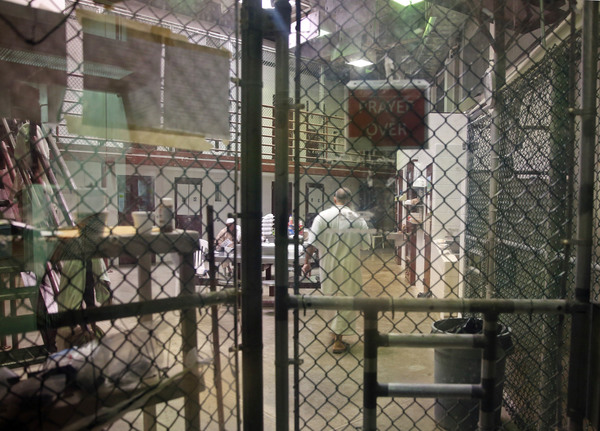
The base has 41 war-on-terror prisoners _ six awaiting death penalty trials _ and about 5,500 residents, including U.S. Navy families and contract laborers who are typically sent to the United States if Navy doctors order an MRI. U.S. law forbids the transfer of any Guantanamo captive to the United States for any reason, including medical care. So the equipment had to be brought to the base.
The base hospital got a CT scanner soon after the Pentagon opened the prison on Jan. 11, 2002. At the detention center, medical staff assigned to care for the captives have consistently told reporters on media visits that they have no need for an MRI, and that the one being brought to scan al-Nashiri's brain was strictly meant for forensic not therapeutic use.
Since then, one of the men facing a war crimes trial, Abd al-Hadi al-Iraqi, has undergone two spine surgeries, the latest of which caused a delay in his pretrial hearing as an alleged commander of al-Qaida forces in post Sept. 11 Afghanistan.
A lawyer for one of the alleged 9/11 terror attack plotters said his team was evaluating what medical tests they might seek on behalf of their client, Saudi Mustafa al-Hawsawi, who they say suffered rectal damage during his years in CIA incarceration. Attorney Walter Ruiz said his team was "in the process of determining which part of his body" would benefit from a scan _ both for potential treatment and legal defense purposes.
"Any medical treatment is also a mitigating issue," he said, adding they would first ask the prison to conduct the test before seeking court intervention.
The spokeswoman at the U.S. Navy hospital at the base declined to say whether the Navy doctor in charge, Capt. John C. Nicholson, had any interest in using the equipment for diagnostic purposes during its four-month stay there.
In 2012, the detention center bought a $1.65 million mobile MRI for delivery by Jan. 28, 2013, to a port in Jacksonville. It spent a year in storage before the U.S. Southern Command concluded the device was not needed and sent it to the Dwight D. Eisenhower Army Medical Center at Fort Gordon in Augusta, Ga.