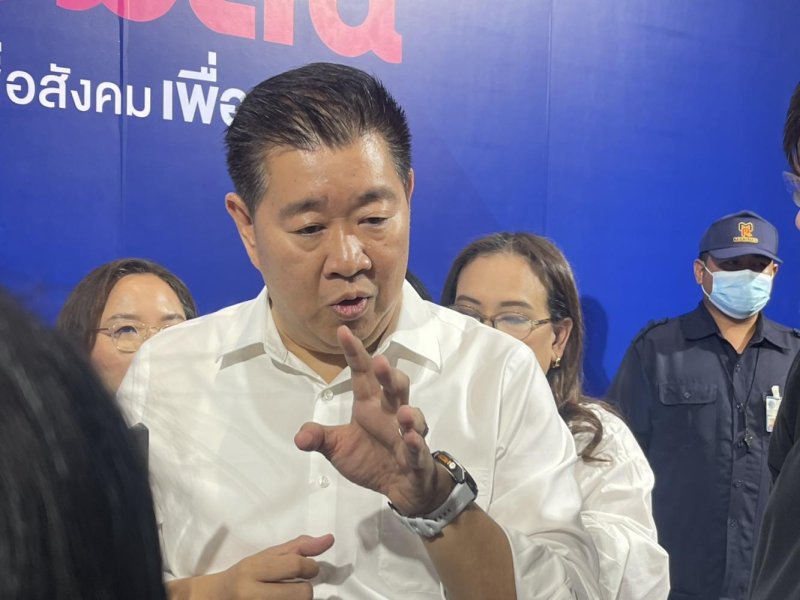
Government Savings Bank (GSB) is preparing a new initiative to assist borrowers with good repayment discipline by lowering their interest rates, in an attempt to help them pay off their debts more quickly.
According to Songpol Chevapanyaroj, president and chief executive of GSB, economic conditions over the past seven years have been challenging as the Thai economy has suffered consecutive blows, starting with the Covid-19 pandemic in 2020, followed by the repercussions of the Russia-Ukraine war, global trade wars, and most recently an energy crisis fuelled by conflicts involving the US, Israel and Iran.
Therefore, addressing household debt problems solely through debt restructuring or extending repayment periods is not enough to tackle the burden of debt. The bank must also help reduce debt burdens by lowering interest rates for customers who consistently make good repayments. In addition, if customers need liquidity, the bank may provide additional loans, Mr Songpol said.
This initiative would help encourage financial discipline among borrowers and serve as a reward for good customers. For example, if borrowers make timely repayments for three or six months, they will receive interest rate reductions, enabling them to repay their debts faster. However, if they default on repayments, the interest rate will revert to the original rate.
Mr Songpol said GSB, as a state-owned bank, does not aim for maximum profit, but rather focuses on supporting all segments of society. This is reflected in the bank's net interest margin, which stands at 1.7%, compared to the commercial banking system's average of 3%.
In terms of managing the bank, he said his policy is to take care of every group in society -- from child customers, for whom GSB promotes savings and financial discipline, to new graduates who are trying to build their future, street vendors and small firms, as well as retirees.
For example, the bank recently launched a "Back-to-School Loan" programme to help parents cope with expenses during the school term. Borrowers can apply for loans of up to 10,000 baht at a flat interest rate of 0.60% per month, with a repayment period of 12 months. It is also a clean loan, meaning no collateral is required.
Regarding the soft loan programme under the Finance Ministry, which aims to help the public adapt to the economic and energy crises, Mr Songpol said the bank allocated 100 billion baht for the programme.
The bank is channelling these loans through commercial banks, with each bank eligible to receive up to 500 million baht at an interest rate of 0.01%. The commercial banks will then lend the funds onward at interest rates that do not exceed the prescribed caps. For example, loans for purchasing electric cars or electric motorcycles will carry effective interest rates of no more than 5% and 10%, respectively.
Mr Songpol said the first phase of the soft loan programme was already implemented with a budget of 5 billion baht, and loans will continue to be gradually released according to demand. The programme will remain in place until 2027. Currently, surveys of demand for soft loans to purchase EVs indicate total requested financing of around 30 billion baht.