Malnutrition is a massive global issue. More than 800 million people aren’t getting enough to eat and some 3.1 million children die every year as a direct result of malnutrition. Although this figure is down from 3.5 million in 2008, we still have a long way to go.
The importance of malnutrition, and particularly child malnutrition, as a key development issue is now widely accepted. Since 2000 and the launch of the Millennium Development Goals, due to expire this year, the debate has expanded from a focus on hunger and the associated use of underweight as a key indicator to a more valuable focus on nutrition. But with the finalisation of the UN Sustainable Development Goals (SDGs) now upon us, what targets should we adopt to best monitor our progress towards these new goals?
A paper published in late 2014 by Susan Horton and John Hoddinott through the Copenhagen Consensus Centre (CCC) made the important argument that growth stunting is a far more meaningful development indictor than our previous and more limited focus on underweight.
Horton and Hoddinott also affirmed that nutrition investments aimed at reducing stunting are extremely cost-effective, estimating that every dollar spent on nutrition in the first 1,000 days of a child’s life can achieve an average saving of $45, and in some cases as much as $166.
These are powerful arguments.
But while a stunting-reduction goal is fundamental to improving nutrition over the next fifteen years, is it enough to guarantee success? Rebecca Spohrer, Senior Associate for the Global Alliance for Improved Nutrition (GAIN) highlights that stunting may actually be just the tip of the iceberg.
In her recent paper, also published by the CCC as part of its Post 2015 Consensus working paper series, Spohrer argues that targeting stunting, while critical, may not be enough to ensure we’re able to eliminate malnutrition in all of its forms.
Lawrence Haddad of the International Food Policy Research Institute has proposed that, as well as including nutrition and hunger as a focused goal, nutrition should be embedded “horizontally” within other SDGs and targets.
Spohrer agrees, also noting that “improving nutrition is about more than just reducing hunger – better nutrition means healthier and more productive populations, which in turn leads to better economic development.”
She adds: “We have an important opportunity at the moment to define what the targets are for the next development cycle; targets which will help guide policymakers to prioritise the issue of nutrition within their countries.”
While a goal for stunting picks up on the most severe cases, there is still much to be done to ensure nutrition is embedded within the post-2015 development agenda. Some two billion people are suffering from the health and development consequences of “hidden hunger”, but many don’t show any outward signs of illness. And it’s not just the health of the sufferers at stake but also that of the whole country, with estimates showing that under-nutrition can cost a country as much as 12% of its GDP.
Helping these people therefore means ensuring we have a broader focus than only targeting stunting, with the inclusion of targets focused on improving micronutrient intakes crucial in making sure we close the hidden hunger gap.
With many different approaches to increasing micronutrient intakes being used around the world, we need to be careful to pick the most evidence-backed and cost-effective strategies for inclusion in the SGDs. For Spohrer, this means a heavy focus on food fortification.
“We can’t invest in every health and development idea or programme, but what we can do is focus on the most proven and cost effective solutions to achieve maximum impact” she explains. “Food fortification is one of these solutions: low-cost and a proven way of adding critical micronutrients to the diets of people who can’t afford to purchase enough meat, vegetables, and dairy to meet their needs right now”.
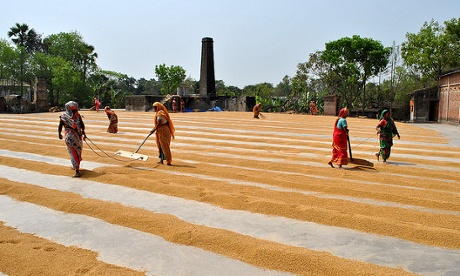
Food fortification refers to the addition of key micronutrients to staples such as flour, rice, salt and vegetable oils. An inherently low-cost solution, usually amounting to less than a fraction of 1% of the staple food, food fortification holds enormous potential – and there are few who doubt it. For example, in Chile research shows that for every $1 spent on fortifying flour with folic acid $12 was saved in medical treatment and care.
Spohrer doesn’t pretend that food fortification will fix everything, but she is adamant that it can’t be ignored as a tool – and one which, alongside targets for stunting, should feature prominently in the SDG toolbox: “Food fortification won’t solve the problem on its own, but together with other targeted strategies to improve micronutrient intake we see it as an essential part of a comprehensive health and nutrition programme.”
Content on this page is paid for and provided by GAIN sponsor of the Guardian Global Development Professionals Network.