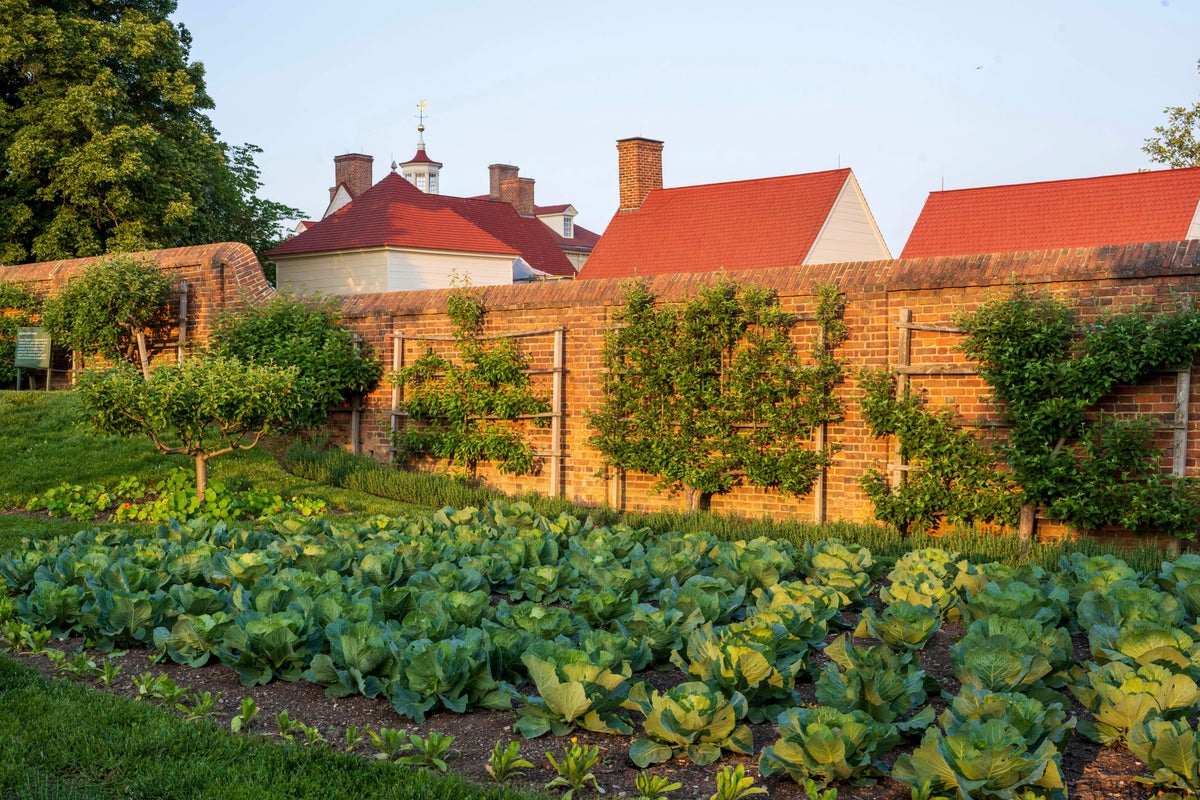
If you'd love to grow fruit trees but think you don’t have the space, think again. You don’t need an orchard or even a large backyard to enjoy garden-picked fruit.
Instead, use a method perfected by Louis XIV’s gardeners back in the 1600s at Versailles, when cold, windy winters, not a lack of space, inspired them to train trees to grow flat against walls. Their goal was to use the masonry as a windbreak and insulator, but the method they called “espalier” also made excellent use of a tiny footprint.
The trees’ form maximized their exposure to sunlight, and also enabled the trees to withstand chilly temperatures better than their untrained cousins. Surprisingly, perhaps, they also produced more fruit.
Which trees are good for espalier?
Most trees with long, flexible branches, such as apple, cherry, fig, peach, pear, plum and quince lend themselves nicely to the espalier method. Even ornamental trees like magnolia, firethorn and witch hazel are good candidates.
The name “espalier” comes from French, indicating something to lean a shoulder against, as the trees lean on their supports.
But the 17th century French didn’t invent espalier; it is believed to have been practiced in the Middle Ages and even as far back as ancient Egypt. The Versailles gardeners, however, gave the method a name — and fame.
How it works
Training an espalier tree requires equal parts pruning and patience. You remove undesired branches and coax the remainder to grow sideways by affixing them to walls or fencing with wires or frames until they submit to the process and adapt to the pattern.
Trees will send up shape-spoiling shoots that will continually need to be clipped, but the desired branches will take longer to establish.
To accelerate growth, apply a dose of high-nitrogen fertilizer (look for a ratio of 12-4-8 or 16-4-8 on the package label) three times per season — in mid spring, early summer and late summer.
Don’t expect flowers or fruit during this stage, which can take several years. The point of the fertilizer is to force the trees to direct most of their energy on growth, not production.
When the tree has achieved the shape and size you desire, switch to a fertilizer specifically formulated for fruit trees and cut down the frequency to just one application per year, in spring, following the dosage recommended on the package. (If growing a non-fruiting tree, seek out a product intended for the species).
The method, however, can lead to increased pest and disease problems, as growing a tree pressed against a wall will restrict air flow around it. So be sure to monitor trees closely, and address issues quickly if they arise.
All that TLC will pay off with a beautiful, living garden sculpture –- and a great story to tell as you await your juicy harvest.
___
Jessica Damiano writes weekly gardening columns for the AP and publishes the award-winning Weekly Dirt Newsletter. You can sign up here for weekly gardening tips and advice.
___
For more AP gardening stories, go to https://apnews.com/hub/gardening.
Qatar urges the urgency of a Gaza ceasefire after 'positive response' from Hamas
Oldest written reference to Moses ‘may be etched into ancient Egyptian mine’
Starmer returns to Scotland after family holiday interrupted by Ukraine talks
Home secretary steps in to try to halt bid to ban asylum seekers at protest-hit hotel
Kristi Noem claims she had to move into rent-free home because of the media