In April 1974, nine Cub Scouts in Texas decided that they would not accept their badges until an official agreed to award them to the pack’s only female member, Carrie Lynn Morgan.
In 1997, Katrina Yeaw’s push to join the Cub Scouts ended up in the California supreme court, two years after she attempted to join a local pack with three female friends.
In 2015, a group of girls in California are pushing to join the Cub Scouts officially, having unofficially participated in Boy Scouts of America (BSA) events and activities since September 2014.
The California group, who call themselves the Unicorns, are following a long tradition of girls fighting for inclusion in the boys-only organization.
Boy Scouts, Girl Scouts and other voluntary youth organizations are exempt from the anti-discrimination law Title IX, which was enacted in 1972.
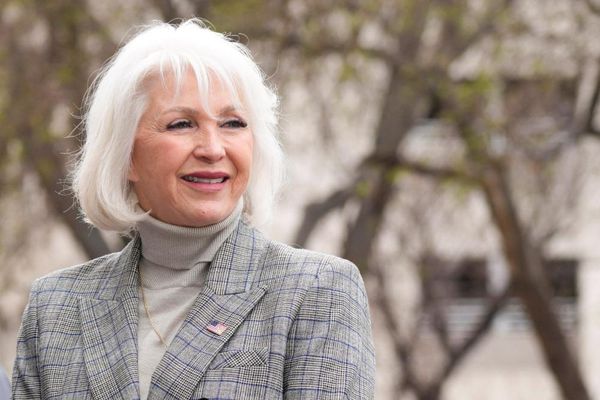
Then, there was Carrie Lynn Morgan, an eight-year-old grieving her father’s unexpected death. After realizing how much her mother had depended on her father, she wanted to join the Cub Scouts and learn skills that would help her lead a life where she was not dependent on anyone.
“I decided then that I didn’t want to be dependent, I wanted to learn it all,” Morgan told the Guardian.
There were no Brownie troops in Colleyville, Texas, so Morgan joined the Cub Scouts. The council chief of Dallas did not want to award badges to a girl, but her fellow Cub Scouts refused to accept theirs as well, and the leader was forced to award them to Morgan.
“He didn’t want to, but he gave me the badges I earned,” she said.
In California’s Bay Area, the Unicorns were supported by local and regional officials until an area representative advised the Unicorn’s adult leader, Danelle Jacobs, to shut down the program.
“We understand that the values and the lessons of Scouting are attractive to the entire family,” BSA national said in a statement. “However, Cub Scouts and Boy Scouts are year-round programs for boys and young men in the first grade through age 18.”
This specification is unique to the US. Girls can be Cub Scouts in Australia, the UK, Canada and the Netherlands. But after several rounds of legal challenges in the last 50 years, the BSA’s males-only clause holds firm.
The California supreme court ultimately rejected Yeaw’s lawsuit because the BSA is a charitable organization. She was briefly a member of a Girl Scout troop, but she said “they weren’t really doing the kind of activities that I was interested in”.
Yeaw said the Girl Scouts was a “wonderful” and more inclusive organization than the Boy Scouts, but did not have as many resources as the Boy Scouts, which was why Girl Scouts were sometimes characterized as “cookie sellers”.
“All the things about them being cookie sellers is actually about the fact that they have way less financial resources than the Boy Scouts do,” Yeaw said.
Both organizations, however, are facing declining membership.
This is why the Boy Scouts were pushed to be more inclusive of LGBT members, officially welcoming them into the organization in July. The BSA president, Robert Gates, said in May that continuing to ban such members would “be the end of us as a national movement”.
But this more inclusive BSA does not so far seem to include female members.
While Morgan was supported by the community as a Cub Scout, she thinks the reception would have been less positive if she had tried to enter the Boy Scouts when she was older. But when it came time to move on to the Boy Scouts, she was more interested in pursuing motocross and rodeo.
Today, she lives 10 minutes from Colleyville and is living the independent life she imagined for herself as a young girl.
She said there were now more opportunities for young women in the area. At the rodeo, girls can now ride bulls and broncos, something unheard of in the 1970s.
Morgan supports the Unicorns efforts in California, she said: “If it’s something they really want to do, tell them to do it, tell them to go for it.”