LOS ANGELES — California grocery workers have spent the last year stocking shelves with toilet paper, dealing with those who refuse to wear masks indoors and watching coworkers fall ill with COVID-19.
Now, those workers want their employers to pay up for their labor.
Grocery employees in dozens of cities from San Francisco to Santa Ana have successfully lobbied their council members to pass ordinances requiring employers to temporarily give hazard or "hero" pay, typically $3 to $5 an hour. Both proponents and opponents of the hazard pay movement expect more cities to adopt the policy. Similar ordinances may soon come up to a vote in cities from Fresno to Pasadena.
The movement is growing, labor leaders said, covering more workers affected by the pandemic. Coachella has already passed an ordinance giving hazard pay to farmworkers, the first in the nation to do so.
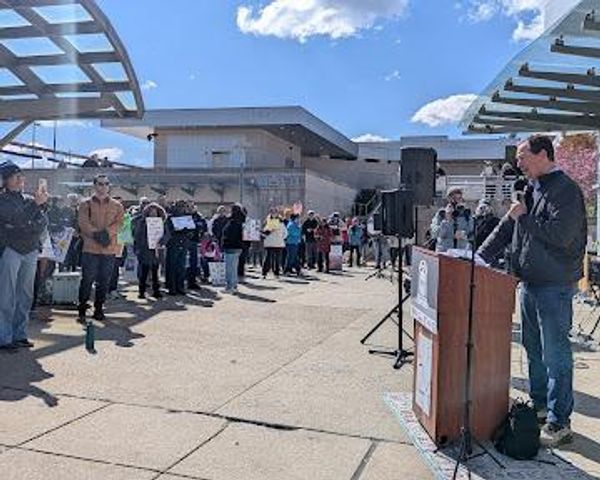
"We think this is an important, needed and principled idea and concept to bring to the healthcare industry," said Dave Regan, president of SEIU-United Healthcare Workers West, at a recent press conference rolling out a bill that would require hospitals to provide up to $10,000 in extra pay for their workers.
Labor leaders are also hoping the movement will lead to higher wages for those workers beyond the pandemic.
"This pandemic has demonstrated the need to increase compensation all the time for grocery store workers," said Andrea Zinder, president of the United Food and Commercial Workers local 324 in Southern California. "This is one pandemic, but there are other natural emergencies or civil unrest where grocery workers continue to go to work while others don't necessarily have to leave their house."
Companies boosted grocery workers' pay at the peak of the pandemic last year. But most — with the exception of companies such as Save Mart and Trader Joe's — had ended the practice by June, according to a report from the Brookings Institution.
The end to hazard pay came even as top retail companies, such as Walmart and Albertsons, earned an extra $16.7 billion in profit for much of 2020 compared to 2019, according to the report.
Grocery workers pushed companies to restore hazard pay especially as California went through a surge of coronavirus cases late last year, but Zinder said employers didn't budge.
"Workers, who felt this was something appropriate and needed, wanted another avenue, and city councils came forward," she said.
Long Beach was the first to pass an ordinance, giving workers at large grocery stores an extra $4 per hour for at least 120 days. In response, the California Grocers Association filed a federal lawsuit saying such ordinances are unconstitutional, and Kroger closed two grocery stores in the city.
Though Sacramento has been the site of protests calling for higher wages and better safety conditions for workers, neither the county Board of Supervisors nor City Council has proposed hazard pay ordinances. But the policy has spread to nearly a dozen cities in Southern California and several more in Northern California.
Fresno so far is the only city in Central California to consider hazard pay, but Fresno City Council President Luis Chavez said he has gotten calls from officials in surrounding cities. Chavez has proposed extra pay of $3 an hour for 120 days for the city's grocery workers.
"To me, this is really the beginning of the conversation of how we show our appreciation and respect for those jobs a lot of essential workers did," Chavez said. "We had left it up to the private sector, and the private sector didn't necessarily show they were doing it."
Many businesses have come out against hazard pay, saying the policy will only lead to more closures and layoffs.
For unionized grocery workers, it should be collective bargaining agreements, not city ordinances, that decide their wages, said Ron Fong, president and CEO of the California Grocers Association.
"Unions have opportunity to negotiate through normal (bargaining agreements), and they shouldn't go to city councils to run interference for them," he said.
Grocery stores have put in a number of safety procedures, such as requiring masks for customers and employees, Fong said. He also said the policy may become moot as more workers get vaccinated.
"They'll be taking the hazard out of hazard pay," he said.
Still, Fong concedes the movement will grow, absent a court ruling in his organization's favor.
"What we're waiting for is really the legal system to make its way through and see if we can prevail through our legal argument," he said.
Other workers are pushing for hazard pay as well.
Coachella in February approved "hero" pay for farmworkers and workers at grocery stores, pharmacy stores and restaurants. Only those who employ 300 or more workers nationally and more than five employees in the city would need to provide hazard pay.
Large fast-food chain restaurants have stayed open during the pandemic, with employees going to work every day, said Megan Beaman-Jacinto, a Coachella councilwoman and workers' rights attorney. She also pushed to include farmworkers, saying they have often been excluded from the protections provided by labor laws.
"Coachella is a community of farmworkers, historically and presently," she said.
Healthcare workers are also pushing for extra pay, through a bill introduced by Assemblyman Al Muratsuchi, D-Torrance.
Assembly Bill 650 would require private health care companies to provide a $10,000 bonus to a non-executive employee who is working during the pandemic and staying in the industry through 2022. Part-time employees would get up to $6,000.
The bonus would equate to about $5 an hour, Muratsuchi said. Regan said more than a million healthcare workers would benefit.
"Many have paid the price of frontline work with mental and physical scars to show for it," Muratsuchi said at the press conference rolling out AB 650. "They deserve frontline combat pay."
SEIU Local 2015, which represents 400,000 long-term caregivers, is also calling for hazard pay as part of its campaign promoting mass vaccination and calling on local officials to improve working condition for the union's members.
"As other workers were receiving hazard pay, we weren't," said the union's president, April Verrett. "Those workers were on the front lines of the pandemic and they should be recognized for what they've done to keep people safe."
With the exception of AB 650, a statewide bill on hazard pay may be unlikely.
"For a bill to get through the Legislature, that's nine months before it winds up on the Governor's desk," said Assemblyman Mike Gipson, D-Carson. He said people can't wait that long.
Still, Gipson wrote a letter to local elected officials urging them to require hazard pay for large grocery stores and pharmacies. He also said there may be some legislative ways the state could address any store closures, which Gipson sees as retaliatory.
As an example, Gipson cited a bill in 2017, vetoed by Gov. Jerry Brown, which would have required the state attorney general to review any closure of nonprofit hospitals.
Workers could also get some help from the coronavirus relief package that President Joe Biden signed March 11. A provision in the bill allows states to give "premium pay" of up to $13 per hour on top of their typical wages to employees deemed essential. The money would come out of the $26 billion the law allocates to California state government.
The bonus could apply to private sector employees, California Department of Finance spokesman H.D. Palmer told The Bee.
Verrett said her union will advocate for caregivers across the state to receive hazard pay.
"Funding from the American Rescue Plan must target the communities that have been most impacted by the pandemic," Verrett said in an e-mail. "Our elected leaders must respect caregivers that have risked their own lives to care for the most vulnerable members of their communities. They must take advantage of this opportunity to ensure that homecare workers' earnings reflect the essential nature of their work."
Those involved hope the movement will lead to a permanent wage gain for workers, whether pushed by government or employers.
"At a minimum, it should lift workers out of poverty," Zinder said.