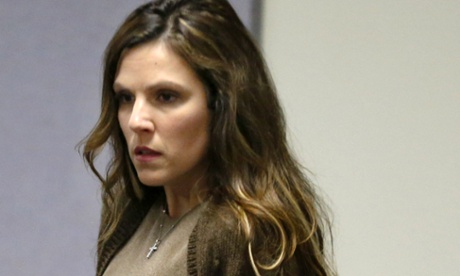
When her 22-year-old husband was killed by roadside bombs while serving in Iraq in 2007, Taryn Davis searched the internet for help.
“I Googled ‘widow’ and got the response: ‘Do you mean window?’” she said. “That really was a huge catalyst to me, to think that there were other women possibly out there that had Googled ‘widow’ too and either got that response or lots of pictures of spiders.”
Nearly 7,000 US service members have been killed since the “war on terror” began in 2001, creating thousands of bereaved young spouses like Davis, who was 21 when corporal Michael Davis died in Baghdad. Half those killed were aged under 25. More than half of active duty members are married.
Google “military widow” today and one of the first results is the Texas-based non-profit organisation Davis founded after her husband’s death, the American Widow Project. It provides nationwide support services and its website has collected hundreds of stories of grief, loss and love.
Taya Kyle is about to shine a spotlight on life as a military widow, with the publication in May of American Wife: A Memoir of Love, War, Faith and Renewal, and a carefully coordinated publicity campaign.
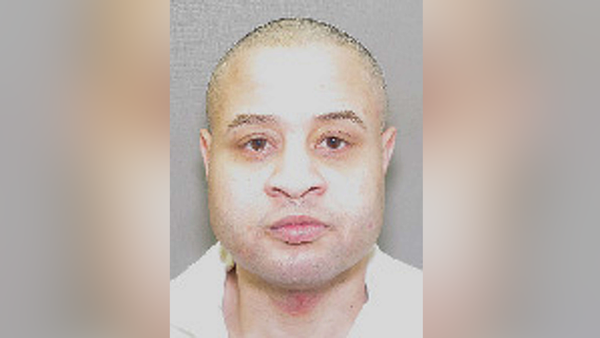
It will detail her life before and after the death of Chris Kyle, the subject of the book and blockbuster film American Sniper. Considered the deadliest sniper in US military history, Kyle left the US navy in 2009 and was murdered on a Texas gun range in 2013 by Eddie Ray Routh, a troubled former Marine who last month was sentenced to life in prison for the crime.
Taya Kyle, 40, provided emotional testimony in court about her family life, is a regular guest speaker on military issues and has given interviews to help promote the film. In the middle of the trial she flew to Los Angeles to attend the Academy Awards, walking the red carpet with her late husband’s dog tags. Clint Eastwood’s film was nominated for six Oscars, including best picture, winning one, for best sound editing.
“The story she’s sharing is one of thousands that haven’t really been told, and for her to bring light to her strife and her pain in hopes that someone else knows they’re not alone and that they can get through it and their grief is normal – whatever normal is – I commend that,” said Davis.
“When I saw American Sniper came out, for me I personally thought: ‘That’s something I don’t want to see because it might bring back images of what happened to my husband,’” she said. “For some people, reading the book might bring them back to a place that they don’t want to go back to. For others it might take them to a place where they realise how far they’ve come.”
Joanne Steen’s husband, Ken, was killed in 1992 along with six others when their navy helicopter exploded in mid-air during a training exercise in Virginia. She is now an advisor on line-of-duty loss and a co-author of Military Widow: A Survival Guide. The book was published 14 years after Ken’s death.
“It was difficult for me to write it because I had to ‘resurrect’ my late husband,” Steen said. “Most people write about their experiences, what losing a service member means to them, but few write about what military widowhood is like.
“What happens is that you end up with a public identity – hey, I’m a military widow – that’s recognised in society. And then you also have the private identity of losing a spouse. [Attention] helps to keep your husband’s memory out there because a big fear of survivors is that our loved ones will be forgotten.”
Steen said she admired Kyle’s decision to attend the Oscars. “I personally was happy to see her there, as another widow. She was dealt an incredibly tough blow; all widows are, but she was dealt an incredibly tough blow. I expect it has not been easy with all that publicity.”
Kyle has also, largely behind the scenes, had to handle disputes related to the profits from the film and book, as well as a defamation lawsuit brought by the former Minnesota governor and ex-professional wrestler Jesse Ventura.
The government provides potentially significant levels of financial assistance to bereaved spouses, although the bureaucracy can be hard to navigate for some.
Steen and Davis said military widowhood presents specific emotional challenges because such women are usually very young and the armed forces can represent a painful reminder of the tragedy as well as being a possible support network. Something as simple as seeing the American flag is capable of sparking painful memories while knowledge that the partner is in a dangerous job is no preparation for the shock of a loss.
“These service members usually die suddenly and they’re often catastrophic deaths, often traumatic deaths,” Steen said. “So as a widow you’re at a time when you’re beginning life and you’re creating life – marriage, babies, things like that.
“You don’t have very often the experience or the maturity to deal with a traumatic death … My husband and I had ‘the talk’ about what would happen should he crash. Did I think it would happen? Heck no. Did I worry? Heck yes. You may worry that it’s going to happen but you don’t necessarily expect it to happen.”
Like Kyle, many are widowed after their partner has left the military. The suicide rate among veterans is far higher than in the general population, with an estimated 8,000 killing themselves annually.
“A lot of the military widows we serve come to our events and share that they walked upstairs to find a note on the door saying ‘call 9-1-1’ and opened the door to see their spouse had [hanged] themselves or wrapped themselves in a sheet and shot himself in the head, or their kids found them in the basement,” said Davis.
She was 21 when her husband died and said she created the Project to fill a gap. “I was provided with leaflets that the military recommended, was reached out to by other organisations, but when I researched them I either saw the images I expected to see of what a widow is or I saw organisations that seemed to be based around which politician supported their cause or which major sponsor just funded their yearly budget.
“And at that point I was at an all-time low. I think people thought that because I was so young it would be easy to just recuperate and sweep it under the rug and in all honesty it was more difficult than anything I could have fathomed.
“You’re kind of like a zombie. You’re going through these motions and you’re putting on a smile outwards to make other people feel comfortable. When people ask how you’re doing you just say: ‘I’m fine,’ but in reality you think ‘I want to kill myself, I feel desperate, I feel lonely; the person I talked to for everything is gone.’”
Even widespread sympathy can be hard to handle. “There were almost 1,000 people at his funeral. So every time I went to the grocery store I’d see people come up and say: ‘We’re thinking of you, we’re sorry,’” Davis said.
“I was afraid to laugh in public for over a year after Michael’s death because I was in such a small town and I thought ‘OK, the first time somebody sees me laugh, they’re going to think I’m over Michael, that I’m not hurting, that I’m not in pain.’
“I want people to know that grief is a lifetime process. If 50 years from now I’m remarried with three kids and 12 grandkids, what happened to Michael and what happened to me because of his sacrifice is something that I will struggle with at all times, and that awareness and acceptance is what makes it easier for me. And so we want to create an environment for that.”





.jpg?w=600)