
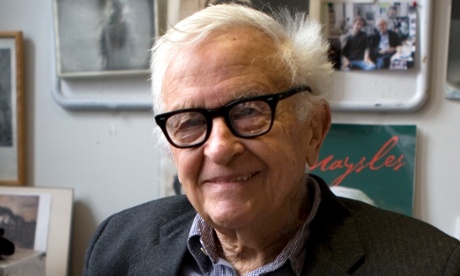
Albert Maysles, the celebrated film-maker who pioneered the fly-on-the-wall style of documentary making, has died at the age of 88.
Together with his brother David (who died in 1987, aged 55), Maysles made a string of documentaries from the early 60s onwards – initially specialising in entertainment, such as with their 1964 film about the Beatles’ first trip to the US – that would radically influence the entire documentary movement. They were regarded as leaders in the field of “direct cinema”, which prized intimate, unselfconscious observation that was made possible by lightweight cameras and sound recorders. French new wave director Jean-Luc Godard called Maysles “the best American camera-man”.
Their most famous film was perhaps Grey Gardens, the 1975 film about two reclusive socialites who lived in a crumbling mansion in East Hampton, New York. Their most widely seen film, however, is probably Gimme Shelter, the 1970 documentary of the Rolling Stones’ Altamont concert, which captured the murder of audience member Meredith Hunter on film. Mayles himself said his own favourite of his films was Salesman, the 1969 study of bible salesmen on the road.
Mayles continued making films after the death of his brother, including The Gates, about the Christo and Jeanne Claude art project to “wrap” Central Park in New York, and The Love We Make, a film about Paul McCartney’s 9/11 benefit concert. His final two films, Iris, a portrait of fashion icon Iris Apfel, and In Transit, a study of passengers on the Empire Builder train, will be screened in 2015.
In a statement, his family said: “For more than five decades, Albert created groundbreaking films, inspired film-makers and touched all those with his humanity, presence and his belief in the power of love. He was also a teacher, mentor and a source of inspiration for countless film-makers, artists and everyday people.”
In the same statement it was announced that Maysles died at home in New York on Thursday 5 March “after a brief battle with cancer”.



.png?w=600)








