Firms which refurbished Grenfell Tower appeared to know two years before the disaster that a new cladding system would fail if exposed to fire, emails disclosed to the public inquiry suggest.
Internal messages dated from March 2015 suggest designers, contractors and fire safety consultants responsible for the block’s revamp all foresaw the risk the new material created, the hearing was told.
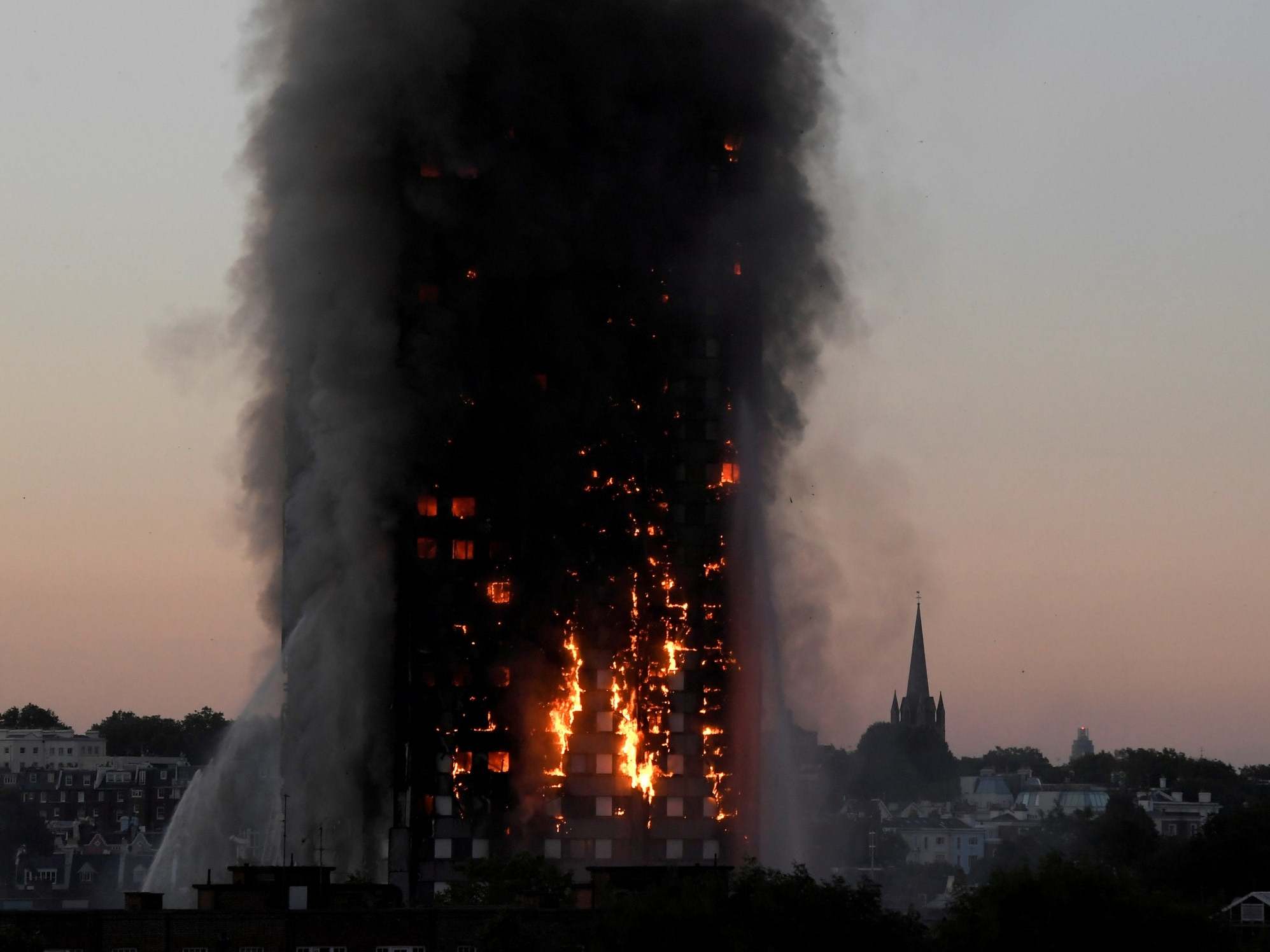
Seventy-two residents died when a blaze tore through the 25-storey tower in west London in June 2017.
Four companies involved have already delivered opening statements which the inquiry’s chief lawyer has said are intended to distance them from blame.
They are Rydon, the main contractor; Harley Facades, its cladding subcontractor; Studio E, the refurbishment architects; and fire safety inspectors Exova.
But the email exchange – introduced to the hearing on Tuesday – appears to contradict their claims they could not have been aware of any risks.
The messages reveal debates with building control officials about whether cavity barriers or fire-stops were required during the refurbishment.
In an internal Exova email on 31 March, a Mr Pearson told a Mr Ashton: “If significant flames are ejected from the windows, this would lead to failure of the cladding system, with the external surface falling away and exposing the cavity, eliminating the potential for unseen fire spread.”
In another message on the same day, a Mr Crawford of Studio E was told by Mr Ashton of Exova: “It is difficult to see how a fire-stop would stay in place in the event of a fire where external flaming occurred as this would cause the zinc cladding to fail.”
In his reply Mr Crawford said: “This was my point as well – metal cladding always burns and falls off, hence fire-stopping is usually just to the back of the cladding line”.
Several days earlier, in an email sent to Harley managing director Ray Bailey, Daniel Anketell-Jones, also of that company, wrote: “There is no point in ‘fire stopping’, as we all know; the ACM [aluminium composite material] will be gone rather quickly in a fire!”
The email exchanges were introduced to the inquiry by Craig Orr QC, counsel for Celotex, which supplied the insulation used in the Grenfell refurbishment between 2012 and 2016.
He said: “Whilst expressed in slightly different terms, the substance of what each of Harley, Studio E, Exova and Rydon was openly acknowledging in the above emails, was that the cladding would fail in the event of a fire with external flaming.
“This email exchange is also directly relevant to the claim made by Harley yesterday, that they had no idea and no reason to believe that the primary materials used on the cladding facade would behave as they did on the night of the fire.
“Harley, it appears, knew that the cladding would fail, indeed would fail rather quickly.”
Both the cladding panels and insulation were combustible and found to be a key factor in the fire’s rapid spread.
The hearing continues.
Additional reporting by PA