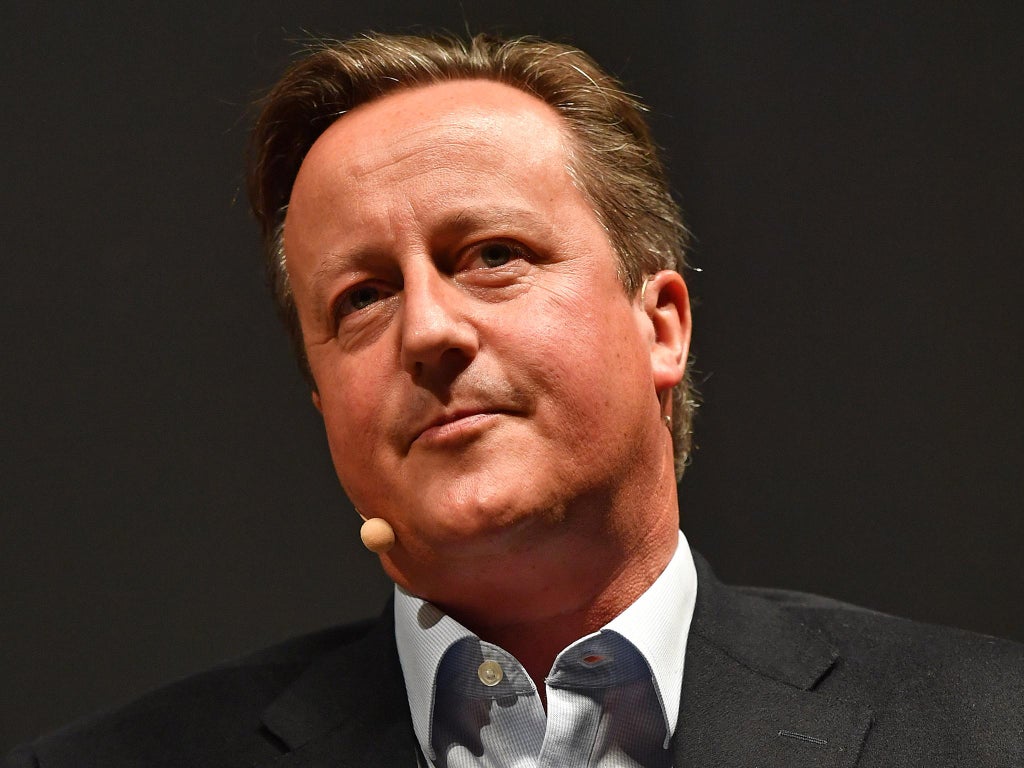
An NHS payment scheme pushed by David Cameron while he worked for Greensill Capital provided no “material benefits” to the health service, a government watchdog has found.
The former Conservative prime minister was at the centre of a scandal over his lobbying of Tory ministers on behalf of the finance firm which collapsed earlier this year.
In 2019 Mr Cameron lobbied then health secretary Matt Hancock about the benefits of payment scheme allowing NHS staff to get some of their earnings in advance, later rolled out to several trusts.
But an investigation National Audit Office (NAO) has found that the salary scheme – and a separate payment scheme for community pharmacies – did not receive the expected uptake and did nothing to help the NHS financially.
The Labour chair of the public accounts select committee said the failure of the schemes to deliver “promised savings” raised more questions about the government’s ability to “prevent conflicts of interest”.
The NAO investigation looked into the Pharmacy Earlier Payment Scheme brought in by the Department of Health and Social Care in 2013 following advice provided by Lex Greensill. His firm Greensill Capital later acted as the scheme’s financial guarantor.
The health department estimated that the scheme – aimed at getting banks to help reimburse pharmacists for prescriptions more swiftly – could save the NHS £100m. But investigators for the spending watchdog found “no evidence that these predicted savings were realised”.
The NAO also looked into a salary advance scheme called Earnd – pushed by Greensill Capital by 2019 and 2021 as a way of allowing employees of NHS trusts to receive a proportion of their earnings before payday.
The investigation found that seven NHS trusts adopted the scheme, but was not widely taken up and did not help the health service financially. The collapse of Greensill Capital in March 2021 forced some NHS trusts to switch to another advance scheme – incurring extra costs for doing so.
Earlier this year it emerged that Mr Cameron had organised a “private drink” with Mr Greensill and Mr Hancock in October 2019 to talk about the salary advance scheme.
The ex-health secretary later admitted his former Tory colleague had lobbied him, but details of the meeting were not published anywhere on records of official engagements.
Labour MP Meg Hillier, chair of the Committee of Public Accounts, said the NAO’s findings “raise yet more questions over the government’s ability to prevent conflicts of interest and the independence of advice it receives”.
The influential backbencher added: “The consequences once again fall squarely on the taxpayer – with increasing risks to value for money and promised savings vanishing into thin air.”
Mr Cameron came under intense scrutiny over his efforts to get Greensill Capital access to the government’s Covid support schemes in the early weeks of the pandemic as the firm faced insolvency.
Documents showed a barrage of messages sent by Mr Cameron to ministers, including chancellor Rishi Sunak, and officials at the Treasury and Bank of England in March and April of 2020 as he fought to get Greensill access to a loans scheme.
Mr Cameron later told MPs on the Treasury committee that he ought to have made formal approaches by letter – but insisted that his use of private phone numbers of former Tory colleagues was “acceptable”.