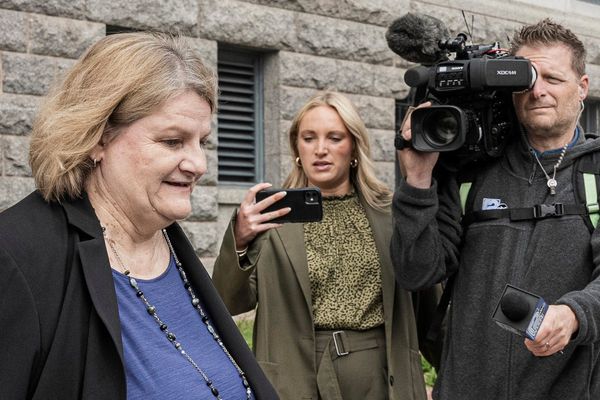
Victims of Denmark’s IUD scandal, in which thousands of Greenlandic women and girls were forcibly fitted with contraceptive coils without their knowledge or consent, have claimed victory in their legal fight with the Danish government after it was confirmed they will be eligible for compensation.
The Danish parliament, Folketinget, and the government reached an agreement on Wednesday that entitles about 4,500 Greenlandic women to claim 300,000 DKK (£35,000) each from a reconciliation fund.
The announcement comes after a three-year battle by 143 women who filed a lawsuit demanding the same figure in compensation for the pain and suffering they had endured as a result, which they said was a violation of their human rights. Denmark ruled Greenland as a colony until 1953 and retained control of its healthcare system until 1992.
In September, after years of failing to acknowledge the violations, Denmark made an official apology to the women. The prime minister, Mette Frederiksen, said she was sorry for the “systemic discrimination” against women and girls by the Danish healthcare system, who had been subjected to “both physical and psychological harm” because they were Greenlandic. Greenland’s former prime minister, Múte B Egede, has described the IUD scandal as a “genocide”.
Referring to the case as a “dark chapter” in Denmark and Greenland’s history, the health ministry said on Wednesday that women who were given contraception without their knowledge or consent between 1960 and 1991 would be able to apply for compensation from April 2026. The law will come into force in June.
According to the findings of an impartial investigation of contraceptive practices during that period, the government said an estimated 4,500 women may be entitled to compensation.
In order to qualify, the women will have to provide a “credible report” of the incident, must have lived in Greenland during the qualifying period, and declare on oath that they had no knowledge or consent of the procedure taking place.
Bula Larsen, one of the group of women who sued the government for their historical mistreatment, said it was politicians’ duty to give them compensation, “whether they like it or not”. She added: “Denmark is busy trying to save its reputation as a democratic country and as a country in which human rights are important to fulfil.”
Larsen was 14 when she was told by the head of her dorm in Paamiut in south-western Greenland to go to the hospital, without explanation, and was forcibly fitted with an IUD. She has previously said the experience felt like an assault, left her with pain that felt as if she had “shattered glass in my abdomen” and had left her sterile.
“Our activism as speakers and interviewees has been effective,” said Larsen. “We started our activism in 2022 with giving interviews and now within three years we got an apology and compensation for the pains and sorrows we have been through.”
Aviaja Fontain, whose mother, Hedvig Frederiksen, was also forcibly fitted with an IUD at 14 at school in Paamiut, said: “We are happy. Like my mother said when she called me: we won.” While Fontain believes the compensation should have been higher, she said: “I am happy that they got the recognition about what happened to them.”
Naaja H Nathanielsen, Greenland’s minister for justice and gender equality, said the compensation was “long overdue”.
She said: “I am very, very happy that the Danish state finally acknowledges the caused trauma in form of a compensation. It is long overdue. It is not about the money. It is about recognition of the hurt and the very severe implications these actions [have] caused.”
Denmark’s health and interior minister, Sophie Løhde, said the IUD scandal was a “dark chapter in our shared history”, adding: “It has had major consequences for the Greenlandic women who have experienced both physical and psychological harm, and which to this day has an impact on the perception of Denmark and the realm.”
She said compensation “cannot remove the pain from the women” but it “helps to acknowledge and apologise for the experiences they have gone through”.