It's been encouraging to see the effort that the large ICT companies have made in recent years to make their organisations more sustainable - the days of 'greenwashing' have pretty much past.
This week Newsweek announced its rankings of green companies based on environmental impact, policies and reputation. Six of the top ten in the US are well known ICT suppliers: Dell, HP, IBM, Intel, Adobe and Yahoo!
The down side is that in an industry dominated by companies from the US, that's where much of the effort has stayed. While Dell is ranked the greenest company in the US table, it doesn't appear in Newsweek's alternative list of the global green 100. For the UK industry, Vodafone is highest on the global list in 11th place, while BT and Logica don't appear, even though they have both won a string of awards in recognition of their sustainability efforts.
One notable absence from the Newsweek lists is Google. The company has been involved in a number of green investments and activities, although often focused outside the business. The most recent is to help finance the development of wind generation off the US Mid Atlantic coast. Google is putting money into the transmission 'backbone' that will collect power from offshore wind farms and bring it onshore through sub-sea cables.
The full list of Google's green activities includes:
- An investment of almost $40m in two wind farms that generate 170 megawatts of electricity, enough to power more than 55,000 homes.
- A total of $10m from Google.org, the philanthropic arm of the company, put in to a technology called enhanced geothermal systems (EGS). This is used in efforts to replicate the natural conditions that create steam and hot water, which can then be used to generate electricity.
- Investments in solar thermal start-up eSolar, as well as RechargeIT, a project that aims to accelerate the adoption of plug-in electric vehicles.
- Google Maps has been extended to include biking directions and bike trail data (although only in the US as yet).
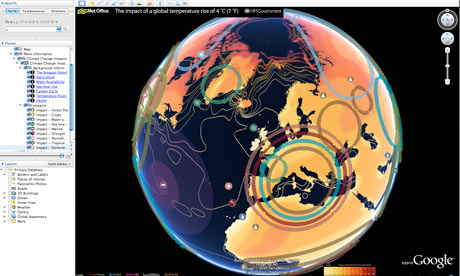
- In the build-up to the Copenhagen climate conference a year ago the company launched a series of Google Earth layers and tours that allows users to explore the potential impacts of climate change.
- My own favourite is the patent approved in the US around the means to power floating data centres – ship-based facilities with their own wave based power generation.
But despite the best efforts of many of the large ICT companies, the road to sustainability is not always smooth. Symantec, best known for its anti-virus software, revealed in its corporate responsibility report last week that its carbon emissions have increased by 4%, despite a plan to achieve a 15% reduction by 2012. The cause was the expansion of a data centre, the greatest source of energy use and greenhouse gas emissions for most computer and telecoms companies.
It's not easy being a green ICT business and there's always more that can be done, but efforts should be acknowledged. If nothing else, the pressure to be open about sustainability projects and targets means that even those companies who don't do as well as expected are likely to own up to their shortcomings, and that wasn't the case two or three years ago.