European markets fall on Greece and bond worries
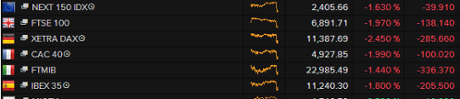
The perilous state of Greece’s finances, despite the payment of €750m owed to the International Monetary Fund, along with a continuing sell off in the bond market put pressure on European markets again. A slight rebound in US Treasuries saw Wall Street recover some ground from its early falls, helping other markets come off their worst levels. The closing scores showed:
- The FTSE 100 fell 96.05 points or 1.37% to 6933.80
- Germany’s Dax dropped 1.72% to 11,472.41
- France’s Cac closed 1.06% lower at 4974.65
- Italy’s FTSE MIB lost 0.93% to 23,104.87
- Spain’s Ibex ended 1.08% lower at 11,322.6
- The Athens market finished up 1.37% at 829.1
On Wall Street, the Dow Jones Industrial Average is currently down 65 points or 0.36%.
On that note it’s time to close the blog down for the evening. Sorry about the technical issues earlier, thanks for all your comments, and we’ll be back as usual tomorrow.
A Reuters snap from the Greek cabinet meeting:
12-May-2015 17:40:34 - GREEK PRIME MINISTER TELLS CABINET THAT GREECE HAS DONE AS MANY STEPS AS POSSIBLE, TIME FOR LENDERS TO MAKE NECESSARY STEPS -GOVT OFFICIAL
So here we go again...
Updated
Oil prices have moved higher again after Opec said demand would be stronger than expected.
In its monthly report, the producers said demand this year would be 50,000 barrels a day higher than previously thought, thanks to a lower supply forecast for countries outside the group.
Meanwhile the US Energy Information Administration also raised demand forecasts for 2015 and 2016, as well as lowering production guidance.
So Brent crude is now 2.8% higher at $66.75 a barrel.
Updated
Greece’s cabinet is meeting for the second time in three days to debate what concessions to make to its creditors in its proposed reforms to free up much needed bailout cash. The €750m paid to the International Monetary Fund eases the pressure but not for long, with the country set to run out of cash within a couple of weeks.


But in the midst of the Greek crisis, and great uncertainty in the markets, this is a notable fact:
Despite #Greece living day-by-day from their dwindling cash reserves...Athens stock exchange still up 20% from its April lows. What crisis?
— RANsquawk (@RANsquawk) May 12, 2015
Indeed the Athens market is up 1.37% today.
Updated
Another marker of Greece’s financial woes:
*GREEK DEPOSIT OUTFLOWS SAID TO RISE TO ABOUT EU7B IN APRIL..bbg
— econhedge (@econhedge) May 12, 2015
Back in the UK, and the country’s economy grew a little more quickly in the three months to April than in the first quarter of the year, according to new estimates.
The National Institute of Economic and Social Research said it grew by 0.4% during the period compared to the - preliminary - figure of 0.3% for the three months from January to March. NIESR said:
We expect the slight softening of GDP growth experienced in the first quarter of this year to be temporary and forecast the UK economy will expand by 2.5% for the year as a whole.
Here’s the full Reuters report on the ECB’s move to increase the emergency funding to Greek banks:
The European Central Bank raised the cap on emergency liquidity assistance (ELA) that Greek banks can draw from the country’s central bank by €1.1bn, taking the ceiling to €80bn, two banking sources told Reuters on Tuesday.
The move comes after eurozone finance ministers on Monday welcomed some progress in slow-moving talks on a cash-for-reform deal between Athens and the IMF, the European Commission and the ECB but said more work was needed to each a deal.
“This leaves an unused liquidity buffer of about €3.5bn,” one of the banking sources said after an ECB teleconference on Tuesday.
The ECB has raised the cap in increments, keeping pressure on Athens to strike a deal with its creditors over economic reforms required to unlock remaining bailout aid.
ECB increases emergency funding ceiling for Greek banks
A day earlier than usual, the European Central Bank has increased the emergency funding available for Greek banks:
#ECB raises emergency liquidity cap for Greek banks by 1.1 bln euros to 80 billion euros
— Mauro Ippolito (@MauroIppolito) May 12, 2015
ECB Haircut On Greek Collateral Left Unchanged - BBG
— Live Squawk (@livesquawk) May 12, 2015
Updated
Lunchtime summary: Greek crisis and UK demands

Time for a recap.
The UK has begun its push to renegotiate its relationship with Europe, at a gathering of EU finance ministers today.
Arriving in Brussels, Chancellor George Osborne drew up the battle lines, declaring:
We come here with a very clear mandate to improve Britain’s relationship with the rest of the EU, and to reform the EU so that it creates jobs and increases living standards for all its citizens.
I don’t think anyone’s now in any doubt that we will hold that referendum on Britain’s membership of the European Union having conducted these negotiations.
We go into the negotiations aiming to be constructive and engaged, but also resolute and firm.
And no-one should underestimate our determination to succeed for the working people of Britain, indeed the working people of the whole of the European Union.
Britain didn’t raise the issue officially, but the chancellor has used the meeting to gauge enthusiasm and identify allies, as the UK government considers a referendum in 2016
Tuesday's Guardian front page: PM hops on the fast-track to EU referendum in 2016 #tomorrowspaperstoday #bbcpapers pic.twitter.com/9yxD1xVr4t
— Nick Sutton (@suttonnick) May 11, 2015
However, Berlin has not dropped its opposition to reopening EU Treaties, which is one of London’s key demands.
Schäuble said:
“We agreed -- we spoke about this -- that we will both make our contributions to this process.”.
“The British desire to do a couple of things less bureaucratically, to limit abuse of the basic freedoms in EU treaties ... these are all points on which one can find a common solution,”
Austria’s finance chief, though, argued that a referendum showed a lack of leadership.
And France said Britain must wait until the Greek crisis has been resolved.
Fears over Greece’s debts also loomed over the Ecofin meeting.
So #Greece reportedly paid the IMF with its IMF emergency reserves. Clear indication of how much cash they still have http://t.co/EC5KCs6WJq
— Maxime Sbaihi (@MxSba) May 12, 2015
Athens has also revealed that it only has €600m of cash reserves left - not enough to meet wage and pension demands next month.
MNI: #Greece cash reserves dangerously low. Still needs to find more than €1bn order to cover salary and pension payments at end of this mth
— Holger Zschaepitz (@Schuldensuehner) May 12, 2015
And in the markets, shares and have fallen sharply amid a rout in government bonds,. which has driven up yields on eurozone debt.
Global Bond rout returns with a vengeance. Bund Future sells-off on high volume. pic.twitter.com/3ZjRD3g2vJ
— Holger Zschaepitz (@Schuldensuehner) May 12, 2015
The global market selloff has reached New York, where shares are dropping at the start of trading.
ALERT: Dow down 100 after the opening bell » http://t.co/s9obum1hPO
— CNBC Now (@CNBCnow) May 12, 2015
Ahha... as suspected, Europe remains unwilling to reopen its Treaties for the UK.
According to The Times, Germany’s willingness to work with Osborne only went so far....
Germany rebuffs UK on treaty change - day 1 of @George_Osborne's mission to "renegotiate" EU http://t.co/WhwUQilbV7
— Bruno Waterfield (@BrunoBrussels) May 12, 2015
David Cameron’s spokesman has added that the PM will lay out some further details on his reform plans at the next summit at the end of June (via Reuters)
Apologies if the most recent posts are vanishing and coming back, we’re having some technical problems.... GW

A flurry of newsflashes from Westminster just landed, showing that Britain is determined to get EU Treaty changes as part of its renegotiation strategy.
- BRITISH PM CAMERON STANDS BY PLAN TO HOLD REFERENDUM ON BRITAIN’S MEMBERSHIP OF THE EUROPEAN UNION BY THE END OF 2017 - CAMERON SPOKESMAN
- PM CAMERON COULD HOLD REFERENDUM ON EU MEMBERSHIP EARLIER THAN END OF 2017 IF HE CAN - PM’S SPOKESMAN
- PM CAMERON IS VERY CLEAR HE WANTS TREATY CHANGE FOR EU REFORMS AS PART OF RENEGOTIATION ON BRITISH MEMBERSHIP - SPOKESMAN
- PM CAMERON HAS HAD ADVICE THAT TREATY CHANGE IS REQUIRED - PM’S SPOKESMAN
- PM CAMERON BELIEVES HE NEEDS TIME TO ACHIEVE RENEGOTIATION OF BRITAIN’S TIES WITH THE EU - SPOKESMAN
- PM CAMERON’S SPOKESMAN SAYS THERE HAS BEEN NO CHANGE TO TIMETABLE FOR REFERENDUM ON BRITAIN’S EU MEMBERSHIP
Back in March, European Council president Donald Tusk told the Guardian that it was “virtually impossible” to reopen treaties for the UK.
Of course, that was before Cameron won re-election, and a majority, transforming the referendum from a possibility to a certainty....
Back to Greece, and it appears that Greece’s largest pension fund has taken unorthodox measures to meet next month’s bills.
Enikos has the details:
The Social Security Foundation (IKA), Greece’s largest pension fund, has decided to take short term loans worth €360 million in order to pay June’s pensions to its members, financial site enikonomia.gr reports.
The decision was made Monday by IKA’s governing board.
The loan is comprised of €150 million in repos from a private bank, using Greek Treasury bonds that IKA owns as collateral, and the rest from cash reserves of three other funds, including €100 million from the Public Power Corporation (PPC) employees’ insurance fund.
That feels rather risky, frankly. But in the short term, it might keep payments flowing until a deal can be struck. Assuming it ever can....
Greece's biggest pension fund borrows €360 mln so it can pay June pensions - http://t.co/6jpS2t2qNL pic.twitter.com/KQ3YyOlDYe
— enikos_en (@enikos_en) May 12, 2015
Radio 4’s World At One programme has been discussing the EU referendum.
Mike Wood, who won the marginal seat of Dudley South for the Conservatives, is keen to see what George Osborne can win from Brussels, then hold a referendum.
New MP for Dudley South @mikejwood: "Let's get that renegotiation out of the way, then people can judge for themselves" on the #EU #wato
— The World at One (@BBCWorldatOne) May 12, 2015
Wood has described himself as a eurosceptic, who wants to see “a fundamentally different relationship with the EU to persuade me it’s worth staying in.”

France’s finance minister has told reporters that Britain must be patient and wait until the Greek debt dramas has been resolved.
I’ve taken the details from Associated Press:
French finance minister Michel Sapin said there was no discussion with Osborne of “the so-called re-negotiation.”
“This will be for tomorrow. After the ‘Greek weeks’ we will have the ‘British weeks,’ even if they are not of the same nature,” he said, referencing Greece’s difficulties in securing much-needed bailout cash.
But how many more weeks will Greece need? Its bailout programme expires at the end of June, and the whole crisis could escalate unless Athens reaches a deal with creditors soon.
Updated
Ecofin ends
Today’s meeting of EU finance ministers has ended, with no signs of further progress over Greece’s bailout crisis or the UK’s push for a new deal.
Instead, Ecofin has simply agreed about the need to implement structural reforms to tackle economic imbalances in Europe. Ministers also discussed the looming costs of the ageing populations, which could eat into economic growth in future decades.
They also hope to reach agreement on a new scheme, the European fund for strategic investments (EFSI), by June - so it can begin investing in private projects this summer.
Main results of today’s #ECOFIN Council http://t.co/ajf7mDTTWJ #investEU #EuropeanSemester #ageing
— EU Council Press (@EUCouncilPress) May 12, 2015
#brexit @schaeuble says he discussed eu refugee quotas with Osborne. Clearly wants east europe to do more
— Ian Traynor (@traynorbrussels) May 12, 2015
#brexit cameron's 'impressive' victory provides a 'chance' for the negotiations - @schaeuble
— Ian Traynor (@traynorbrussels) May 12, 2015
We also have confirmation that Germany has agreed to work with the UK on EU reform.....
#brexit @schaeuble "It wasn't up to Osborne and me to decide reform of EU. But we agreed to take this process forward."
— Ian Traynor (@traynorbrussels) May 12, 2015
Our Europe editor, Ian Traynor, confirms that Germany’s finance minister remains somewhat unimpressed with Greece:
#grexit @schaeuble says atmosphere better with greece, can't say same about the substance
— Ian Traynor (@traynorbrussels) May 12, 2015
Osborne 'didn't push UK renegotiations today'
Jānis Reirs, Latvia’s representative at Ecofin, was responding to a question from Bruno Waterfield of The Times.
Bruno flagged up Osborne’s concerns that eurozone countries could vote as a block and thus damage the single market. Did he push this?
It appears not, suggesting that the chancellor restricted his diplomatic efforts to the sidelines of today’s council meeting.
We did not receive any communication from @George_Osborne says @eu2015lv on today's stunningly uneventful Ecofin
— Bruno Waterfield (@BrunoBrussels) May 12, 2015
Updated
Latvia’s finance minister, Jānis Reirs, (corrected), has told reporters that Osborne didn’t raise the UK’s demands officially today:
Latvian finance minister (holder of #EU presidency) says @George_Osborne did not raise UK renegotiation at #ECOFIN meeting
— Peter Spiegel (@SpiegelPeter) May 12, 2015
Updated
Wolfgang Schäuble: I agree with George

Newsflash: Germany’s Wolfgang Schäuble has just told reporters in Brussels that he agrees with George Osborne - Europe needs reforming.
- 11:27:23 - GERMAN FINANCE MINISTER SCHAEUBLE SAYS AGREED WITH OSBORNE TO MAKE REFORMS IN EU
Schäuble was less complimentary about Greece, though, in his news conference with the media:
- 12-May-2015 11:21:47 - GERMAN FINANCE MINISTER SCHAEUBLE SAYS IMPROVEMENT IN GREEK TALKS CLIMATE NOT MATCHED BY SUBSTANCE
Ministers are starting to emerge from the Ecofin meeting in Brussels.
French finance minister Michel Sapin has revealed that finance ministers congratulated Osborne on the election result , but didn’t discuss his mandate for reform.
FR fi minister leaving Brussels session: they had time to congratulate @George_Osborne on election but not to start Britain's renegotiation!
— Mark Urban (@MarkUrban01) May 12, 2015

For readers just joining us, here’s Associated Press’s write-up of George Osborne’s tub-thumping comments in Brussels today, with some history of Britain’s often troubled relationship with Europe.
Britain’s Osborne spells out mandate on EU referendum
British finance minister George Osborne insisted Tuesday that his recently re-elected Conservative government has a “very clear mandate” to push ahead with discussions to reform the European Union ahead of a planned referendum on British membership of the bloc.
Arriving for talks Tuesday with fellow finance ministers from the 28-country EU, Osborne said his Conservative Party will aim to “improve Britain’s relationship with the rest of the EU and to reform the EU so it creates jobs and increases living standards for all its citizens.”
A referendum on Britain’s membership of the EU by the end of 2017 was a key plank of the Conservatives’ winning manifesto in the British general election last week.
Osborne, who is set to be one of the lead negotiators, refused to address growing speculation that the referendum may be brought forward a year to 2016. Many in his party and within business think the referendum should take place earlier than planned because it would reduce uncertainty and won’t clash with general elections in Germany and France.
He said:
“We go into these negotiations aiming to be constructive and engaged but also resolute and firm, and no one should underestimate our determination to succeed for the working people of Britain and indeed for the working people of the European Union.”
Since it joined what was then known as the European Economic Community in 1973, Britain’s membership has often been strained.
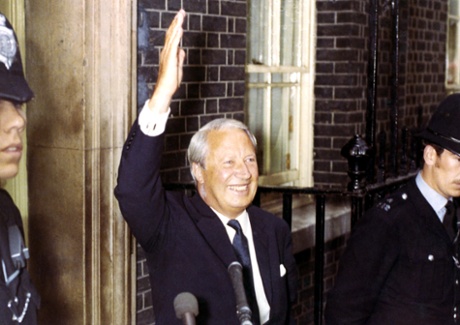
Over the past few years, a growing groundswell of opinion in the country thinks exiting the EU is the best option for the country especially at a time when many of its members are getting closer together, notably with the creation of the euro currency. In last week’s election, the U.K. Independence Party, which aims to get Britain out of the EU, won 4 million votes.
The Europe question has troubled the Conservative Party for decades. Splits within the party were notable in the 1990s when many EU countries were preparing for the euro, and contributed to its spell in opposition between 1997 and 2010. Many think that Prime Minister David Cameron has opted for a referendum to shore up his party, which is still divided over the merits of Britain’s membership. [end]
I do wish I could have eavesdropped the moment when George Osborne chatted with Austria’s finance minister.

The handshake came minutes after Hans Jorg Schelling suggested that a referendum showed a lack of political backbone....
Another Greek development -- prime minister Alexis Tsipras has called a cabinet meeting for 2 PM local time (noon BST).
Over to Helena again:
Tsipras is expected to present the agreement (in so far as it has been thrashed out to date) to ministers although insiders are not EXCLUDING that he may also take a a firmer step on the issue of a referendum being held - and might even announce a date for the plebiscite.
Media and analysts in Greece this morning believe it is almost inevitable that a deal will now be put to public vote.
But as the leading commentator Alexis Papachelas told SKAI News today:
“there is almost no-one who believes that negotiations over a [long-term] deal will end in June.
Everyone is saying journalists should be prepared to work right the way through the summer and ensure they are around in June, July, early August.”
It's official, Greek cash reserves are running dry

Over in Greece the government has released figures showing just how low public finances are running.
Helena Smith reports from Athens:
In a move that puts Greece’s credit crunch into perspective, prime minister Alexis Tsipras’ government has revealed that it has just over €600m euro in cash reserves. A presidential degree allowing the state to sequester the funds of public bodies has seen €64.5m being transferred from local authorities to the Central Bank of Greece, said a government statement released this morning.
Some €535.8m have been transferred from “other bodies [representing] general government” it added.
The statement’s timing – hours after Greek finance minister Yanis Varoufakis’ alarming warning that the country could go bust “in a couple of weeks” – is clearly aimed at focusing minds as EU finance ministers meet in Brussels.
It comes amid mounting fears of a Graccident – described by the leading economist Mohammed El Erian today as potentially “devastating for Greece’s long-suffering population.”
He wrote in a column for Bloomberg today.
“The probability of such a Graccident are now around 50 percent, as financial and economic conditions continue to worsen. That brings the probability of muddling along for a long time to below 50 percent, and they are declining,”
Updated
So here's the catch on the IMF paying the IMF thing. The reserves need to be replenished within a month = Greece no money, needs a June deal
— Jonathan Ferro (@FerroTV) May 12, 2015

It has emerged that Greece met yesterday’s €750m debt repayment to the International Monetary Fund with money held at the IMF itself.
Athens officials have revealed today that most of the money (around €650m) came from Greece’s holding account at the Fund, which is there for emergencies.
One official told Reuters:
“We made use of money in our holding account in the fund....
“The government also used about 100 million of its cash reserves.”
This underlines the concern about Greece’s liquidity position, especially as it must now replenish those reserves (but probably not for several weeks).
Updated
David Madden, market analyst at IG, blame the Greek crisis for today’s stock market selloff, which is accelerating as I type.
European equity markets are sustaining heavy losses as Athens gives with one hand and takes with another.
No sooner had Greece got back into traders’ good books after making a repayment to the IMF, a comment from Yanis Varoufakis about the country’s solvency sparked a new selloff.
That’s a reference to Varoufakis’s warning that the Greek liquidity situation is now “terribly urgent”.
And with the FTSE 100 now down a chunky 2%, it could be a bad day in the City....
The sterling rally shows that City traders suspect UK interest rates may rise earlier than thought:
GBP jumps as both UK manufacturing and industrial production beats. We also think #BoE inflation report tomorrow could be hawkish #GBP #FX
— Joshua Raymond (@Josh_CityIndex) May 12, 2015
The equity selloff has deepened too, knocking 119 points off the FTSE 100 index; another sign that monetary conditions could tighten....
*U.K. 1Q INDUSTRIAL OUTPUT RISES 0.1%, REVISED FROM 0.1% FALL
— World First (@World_First) May 12, 2015
The pound has jumped on the back of the jump in UK industrial production.
Sterling hit its highest level of the year against the US dollar, at $1.5628.
Industrial output in the UK up 0.5% on a monthly basis in March, strongest increase since September 2014 (+0.7% y/y)
— Markit Economics (@MarkitEconomics) May 12, 2015
Updated
Some upbeat economic news -- UK industrial production grew at its fastest rate in six months in March.
Industrial output rose by 0.5%, according to the Office for National Statistics, mainly due to a pick-up in oil and gas activity.
Photos: George Osborne in Brussels
Back in Brussels, George Osborne has been catching up with fellow finance ministers, as he begin his push to renegotiate Britain’s EU membership.
It’s the first time the’ve met up since the General Election. (I wonder how many expected to see him back?)


Updated
Spain’s El Mundo newspaper is reporting that the International Monetary Fund is reluctant to fund a third Greek bailout.
It says the Fund is disappointed by the lack of progress this year, and also concerned that the new Greek government is unwinding some of the previous austerity measures, by rehiring public workers.
Business Insider has a good take:
REPORT: The IMF won’t join in a third bailout for Greece
It seems likely that Greece will need another financial assistance programme when the current deal with the eurozone ends at the end of June. Its existing IMF deal runs until 2016.
European stock markets fall as bond selloff deepens
Over in the City, shares are dropping this morning.
The blue-chip FTSE 100 is down almost 1%, as markets across Europe are bathed in red.
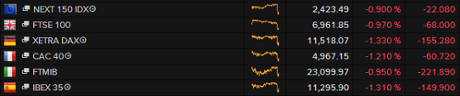
The main driver is a big selloff in the government bond market which is driving up the yields (or interest rates) on sovereign debt.
Euro-Area Government Bonds join global selloff as rout deepens; Italian 10Y yield +12bps to 1.89%; French 10Y yield +9bps to 0.99%
— Francine Lacqua (@flacqua) May 12, 2015
Bond rout rattles markets. #Germany's Dax starts >1% lower as German 10yr Bund yields jump. pic.twitter.com/tBQ9Nf7sH3
— Holger Zschaepitz (@Schuldensuehner) May 12, 2015
So, what’s happening in the bond market?
One theory is that capital is flowing out of bonds and into other riskier assets, because traders are actually less worried about Greece defaulting:
Peter Rosenstreich, Head of Market Strategy at Swissquote, explains:
Risk of a disorderly or straight non-payment by Greece has helped compress yields (as traders piled into safe haven). The lowering of this event risk is allowing capital to search for quality higher returns.
Predictions of higher inflation are also hitting bond prices (which fall when yields rise). In the eurozone, that would suggest that the ECB might not run its QE programme (which mops up eurozone bonds) for as long as expected.
A third factor is that the market has become dangerously illiquid, because investors have bought so many bonds in recent years (driving yields down to record lows). That can lead to wild swings when everyone tries to sell at once....
Newsnight’s Duncan Weldon explains:
Now get ready for commentary saying rising bund yields show ECB QE is failing. It isn't. QE is policy loosening - if it works, yields rise.
— Duncan Weldon (@DuncanWeldon) May 12, 2015
Of course the risk is that a lack of liquidity/over-valuation push yields up too high.
— Duncan Weldon (@DuncanWeldon) May 12, 2015
German journalist Ines Zoettl of Capital Magazine isn’t impressed with George Osborne’s timing:
#Grexit looming, but Osborne wants to talk about Britain in #ECOFIN. Splendid isolation
— Ines Zoettl (@izoettl) May 12, 2015
And Bruno Waterfield of The Times fears that the government is keeping the UK in the dark over its renegotiation plans:
It's how EU public-free-zone works. Ecofin then FAC then #EUCO soon to know more about @David_Cameron's EU 'renegotiation' than Brit voters
— Bruno Waterfield (@BrunoBrussels) May 12, 2015
Reuters has now published the Austrian finance minister’s criticism of an in/out referendum on Britain’s EU membership.
Hans Joerg Schelling told reporters in Brussels that:
“I think politicians have to act decisively. And when politicians believe they have to ask the people, it’s an indication that they themselves are not willing to make the decisions and carry the consequences.”[End]
A sign that Osborne may get a rough ride at today’s Ecofin meeting?
Updated
#Austria fin min #Schelling: #Greece gov has to tell voters that it can't stick to electoral promises #Eurogroup pic.twitter.com/U6Nejpgjkj
— Dirk Hoeren (@DirkHoeren) May 12, 2015
Austria: British are ducking tough decisions
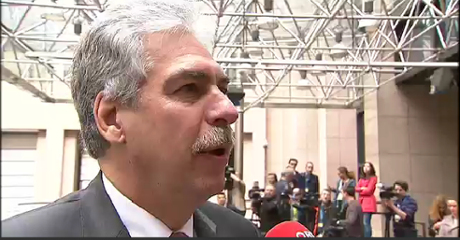
Austria’s finance minister, Hans Jörg Schelling, has just given a taste of the opposition Britain may face over EU renegotiations.
According to Reuters, Scheling suggested the referendum was a sign of weakness:
- 12-May-2015 08:25:12 - AUSTRIAN FINANCE MINISTER SAYS BRITISH REFERENDUM PLAN SHOWS BRITISH POLITICIANS ARE NOT WILLING TO TAKE TOUGH DECISIONS ON THEIR OWN
You can watch George Osborne’s comments on EU reform here:
#ECOFIN Council - Arrival and doorstep #UK #Osborne @George_Osborne http://t.co/6u3roNuDLZ pic.twitter.com/eWz7E6HnbP
— EU Council TV News (@EUCouncilTVNews) May 12, 2015
Osborne vows to reform EU to help working people
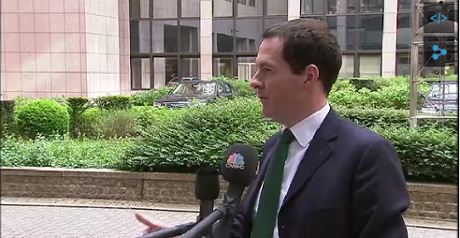
George Osborne has just arrived in Brussels for today’s Ecofin meeting, and declared that he’s determined to reform the EU for the benefit of Britain, and the rest of Europe too.
The chancellor told the media outside the Justus Lipsius building that:
We come here with a very clear mandate to improve Britain’s relationship with the rest of the EU, and to reform the EU so that it creates jobs and increases living standards for all its citizens.
I don’t think anyone’s now in any doubt that we will hold that referendum on Britain’s membership of the European Union having conducted these negotiations.
We go into the negotiations aiming to be constructive and engaged, but also resolute and firm.
And no-one should underestimate our determination to succeed for the working people of Britain, indeed the working people of the whole of the European Union.
As Osborne headed inside the meeting, a reporter asked whether the referendum could come as early as 2016 (as the Guardian reports today) but there was no reply.
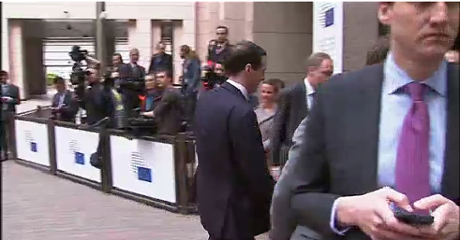
Chancellor George Osborne has confirmed that Greece, and Britain’s membership of the European Union, will both be discussed at today’s meeting in Brussels.
At ECOFIN this am to discuss Greek crisis & in margins of meeting start in earnest conversation how we reform Britain's relationship with EU
— George Osborne (@George_Osborne) May 12, 2015
Updated
Easyjet chief warns against Brexit
Carolyn McCall, the boss of budget airline easyJet, has warned that Britain would suffer if it left the European Union:
. @easyJet CEO Carolyn McCall says EU referendum v impt for British business, want reformed Europe but stay in Europe as a lot of benefits
— Caroline Hyde (@CarolineHydeTV) May 12, 2015
"We believe staying in the EU is very important" - Carolyn McCall, CEO of @easyJet this morning
— Tony McDonough (@tonymc39) May 12, 2015
She was speaking after easyJet reported it had returned to profit, partly thanks to the fall in the oil price and the weaker euro.
Jeroen Dijsselbloem, head of the eurogroup of finance ministers, has echoed Yanis Varoufakis’s warning that Greece’s financial position is increasingly precarious.
He told Bloomberg that:
Liquidity is getting more difficult, obviously, as time goes by…
Finance ministers should be arriving in Brussels any moment, and may speak to the media on their way into the Ecofin.
Doorstep #ECOFIN around 8.50 AM
— Jeroen Dijsselbloem (@J_Dijsselbloem) May 12, 2015
They’re due to have breakfast at 8am BST, then discuss various issues including EU investment and macroeconomic imbalances. It should be wrapped up before lunchtime, according to the agenda.
Indicative programme for today’s #Ecofin Council meeting http://t.co/NUtqJePtrb #investEU #EuropeanSemester
— EU Council Press (@EUCouncilPress) May 12, 2015
The Agenda: Greek liquidity fears grow as EU finance chiefs meet
Good morning, and welcome to our rolling coverage of the world economy, the financial markets, the eurozone and business.
European finance ministers are gathering at the Justus Lipsius building in Brussels this morning for an Ecofin Council meeting, with the Greek bailout crisis casting a shadow over their work.
Last night, finance minister Yanis Varoufakis warned that Greece’s financial situation is now “terribly urgent”, suggesting it could blow up before the end of this month.

Varoufakis told reporters that:
“The liquidity issue is a terribly urgent issue. It’s common knowledge, let’s not beat around the bush....
From the perspective [of timing], we are talking about the next couple of weeks.”
#Varoufakis says that the liquidity issue is a terribly urgent issue; says this is no news to anyone. #Eurogroup
— The Greek Analyst (@GreekAnalyst) May 11, 2015
Varoufakis’s warning brought us back to earth with a bump, following the news that Greece had begun repaying €750m to the International Monetary Fund a day before today’s deadline.
Overnight. NZD remains under pressure. Concern over greece's deteriorating liquidity position. Fixed income markets still under pressure
— Cameron Bagrie (@ANZ_cambagrie) May 11, 2015
That repayment has eased fears of a default in May (although it also means we have one less thing to watch out for today).
While eurozone finance ministers did credit Greece with making more progress towards a deal, there is still deadlock over several crucial issues - including pensions and labour reform.
And without more progress, it’s hard to see the European Central Bank relaxing its rules to ease the liquidity crisis.
Varoufakis also insisted that a Greek referendum isn’t on the radar screen right now, a day after Germany’s finance minister suggested it could be a good idea (thanks, Wolfgang).
If you missed yesterday’s action, here’s Monday’s liveblog:
George Osborne, Britain’s finance minister, is attending Ecofin this morning -- meaning that the prospect of a referendum on the UK’s EU membership will surely be discussed in the corridors and backrooms of Brussels.

As our chief political correspondent Nick Watt reports:
George Osborne, the chancellor, will meet other European finance ministers at a summit in Brussels on Tuesday. The issue of Britain’s membership of the EU is not on the official agenda, but it is expected to be raised informally.
A parliamentary bill to approve the referendum will be included in the Queen’s speech on 27 May. The bill will be formally tabled in the House of Commons shortly afterwards to ensure that the prime minister has the option of holding the referendum next year.
More here:
European stock markets are expected to dip in early trading, as traders worry about Greece’s bailout.
Capital Spreads dealer Jonathan Sudaria says:
“Reaching an agreement remains difficult to achieve despite expectations for Greece to commit a number of reforms to unlock aid.”
And there are signs of tension in the bond market, after the yields on longer-term US debt jumped last night.
I’ll be tracking all the main events through the day.