Friday’s front page, and a reminder of what we’ll be covering in a few hours:
Guardian front page, Friday 19 June 2015: Fears over Greek banks as talks collapse in acrimony pic.twitter.com/EPSD5JX8ZX
— The Guardian (@guardian) June 18, 2015
Friday’s newspapers are heavy with Greek news...
Friday's FT front page: EU calls crisis summit after Athens bailout talks collapse #tomorrowspaperstoday #bbcpapers pic.twitter.com/IA3q30tBRx
— Nick Sutton (@suttonnick) June 18, 2015
Friday's Times front page: Greek banks on brink of collapse as savers panic #tomorrowspaperstoday #bbcpapers pic.twitter.com/SdS1OylzP2
— Nick Sutton (@suttonnick) June 18, 2015
A late treat - a video of Yanis Varoufakis’s press conference in Luxembourg tonight, for anyone who missed it at the time (or wants to relive it)
PS: Interesting lines from Channel 4’s Paul Mason tonight, on the Greek bank fears:
I understand @yanisvaroufakis warned Spanish and Lux, who raised q of Greek bank opening, to cease speculation. It was leaked by Lux (1/2)
— Paul Mason (@paulmasonnews) June 18, 2015
Intent of Spanish/Luxemburg line and ECB response, which was leaked, was "to create bank run" Greek govt source. No bank run where I am, yet
— Paul Mason (@paulmasonnews) June 18, 2015
Greece on brink of banking crisis
Here’s our latest news story on the unfolding, deepening crisis in the eurozone:
Greece faces banking crisis after eurozone meeting breaks down
Greece is facing a full-blown banking crisis after a meeting of eurozone finance ministers broke down in acrimony and recrimination on Thursday evening, bringing the prospect of Greek exit from the eurozone a step nearer.
Some €2bn of deposits have been withdrawn from Greek banks so far this week – including a record €1bn yesterday – triggering fears that a breakdown in talks would spark a further flight of funds. The German leader Angela Merkel, French president François Hollande and Greek prime minister Alexis Tsipras agreed to stage an emergency EU summit on Monday as a last critical attempt to prevent Greece going bankrupt. A representative of the European Central Bank told the meeting it was unsure whether Greek banks would have the funds to be able to open on Monday.
Eurozone talks end without deal as Greek proposals rejectedRead more
As thousands of pro-EU protestors gathered outside the Athens parliament building, leaders of the eurozone and the International Monetary Fund aimed bitter criticism at the leftwing Greek government, accusing it of lying to its own people, misrepresenting and misleading other EU leaders, refusing to negotiate seriously, and taking Greece to the brink of catastrophe.

The Luxembourg talks broke down within an hour of discussions on the Greek crisis starting, indicating the bad blood between both sides. Christine Lagarde, the head of the IMF, said there was an urgent need for dialogue “with adults in the room”.
She added:
“We can only arrive at a resolution if there is a dialogue. Right now we’re short of a dialogue.”....
Updated
The ECB is going to decide tomorrow whether to extend more emergency liquidity to Greece’s banks, to allow them to cope with the outflow of deposits.
Unscheduled @ecb call Fri agreed at request of #Greece central bank to request approval for more ELA loans. Sign huge withdrawals continuing
— Peter Spiegel (@SpiegelPeter) June 18, 2015
Yanis Varoufakis has also published a blog post, outlining the plan he put before the eurogroup today:
Greece’s Proposals to End the Crisis: My intervention at today’s Eurogroup
I recommend reading the whole thing, so I won’t attempt to summarise it. But as a tempter, here’s some of the proposals Greece made today:
- An extensive (but optimised) privatisation agenda spanning the period 2015-2025
- The creation of a fully independent Tax and Customs Authority (under the aegis and supervision of Parliament)
- A Fiscal Council that oversees the state budget
- A short-term program for limiting foreclosures and managing non-performing loans
- Judicial and civil procedure code reforms
- Liberalising several product markets and services (with protections for middle class values and professions that are part and parcel of society’s fabric)
- Elimination of many nuisance charges
- Public administration reforms (introducing proper staff evaluation systems, reducing non-wage costs, modernising and unifying public sector payrolls).
Greece’s Proposals to End the Crisis: Tabled at today’s Eurogroup, as related also in the subsequent Press Conference http://t.co/ssI8SedENF
— Yanis Varoufakis (@yanisvaroufakis) June 18, 2015
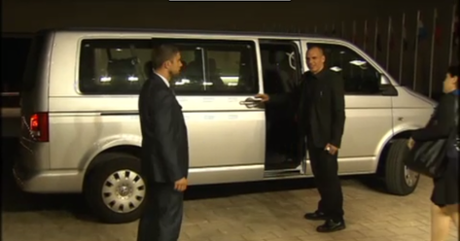
Yanis Varoufakis has left the eurogroup meeting, telling reporters only that “I think I’ve spoken enough today.... go home and rest”
And who are we to argue?
A couple more shots from Athens - a day after pro-government demonstrators paraded in Syntagma Square. What will we get tomorrow?!


Pro-EU demonstration in Athens
A dramatic day has ended with pro-European demonstrators taking to the streets of Athens outside the parliament to protest against the government, and insist that Greece remains in the EU.


Bloomberg reports that the crowd were pushing for a deal that keeps Greece within the European Union.
Spyros Kasimatis, 61, told them:
“I’m here to support the cause of staying in Europe.
The ripple effects would be disastrous, but it’s difficult to explain this to the unemployed youth.”

Not your usual Greek demo. Well-heeled protestors pro EU, anti Syriza pic.twitter.com/crBg1VFlWy
— Marcus Walker (@MMQWalker) June 18, 2015
Alexis Tsipras’s claim this week that the IMF has “criminal responsibility” for the damage caused to the Greek economy has not gone down well with Christine Lagarde, according to Pablo Rodríguez of El Mundo.
According to good sources Lagarde introduced herself today to Varoufakis saying: "the criminal in chief comes to say hello"
— Pablo Rodríguez (@Suanzes) June 18, 2015
"He immediately apologized for Tsipras's remarks and said he had rectified already, but she is very angry yet
— Pablo Rodríguez (@Suanzes) June 18, 2015
Updated
EU summit called to address bank fears
A senior EU official taking part in the meeting told The Guardian that Monday’s summit was convened as soon as EU leaders learned of the collapse of the Luxembourg talks.
The spectre of a Greek banking collapse under the weight of withdrawals prompted eurozone heads of government to meet on Monday, he said.
Updated
Dijsselbloem has also apparently warned that Grexit is a growing danger
#Dijsselbloem says #Greece moving in direction of Euro Exit
— Francine Lacqua (@flacqua) June 18, 2015
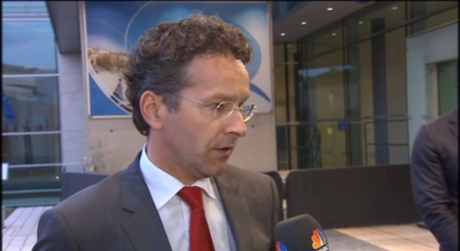
Jeroen Dijsselbloem has left the Eurogroup meeting tonight, but not before firing another warning at Athens to present new reform plans urgently.
We haven’t heard a credible and full plan tonight, he told a reporter outside the event, explaining that Varoufakis’s new fiscal proposals basically covered measures already agreed in the eurozone.
What we need are credible measures that will fill in the fiscal gap which are still in the talks, and credible measures to bring the economy back on track.
Those measure are not popular, they will not be easy to take. And the big question is whether the Greek government is prepared to take them. Because they are inevitable and they are necessary for Greece.
And if they are not prepared to do that they are taking a big, big risk on the future of Greece. So I strongly hope that in the coming days they will come up with those proposals.
And with that, Dijsselbloem exited to his limo, closing his door with quite a thump.
Updated
Euclid Tsakalotos, Greece’s chief negotiator, has told the Guardian that EU commission chief Jean-Claude Juncker had called Alexis Tsipras last night - and both agreed they would talk again over the weekend.
Tsakalatos said:
“what we need is a mid-term solution that will take us through to the end of 2016. A short-term solution might be the worst of all.
What we don’t want is a postponement of issues like Grexit and financing, so the economy remains depressed and people don’t have a shift in better expectations.
Optimism is a material force in the economy.”
The FT’s Peter Spiegel has also heard that the ECB expressed concerns today about Greek banks ability to open next week.
2 sr officials who participated in #eurogroup meeting have confirmed to me @Reuters report @ecb worried #Greece banks may not open Monday
— Peter Spiegel (@SpiegelPeter) June 18, 2015
If you missed tonight’s drama....here’s a video of Eurogroup president Jeroen Dijsselbloem warning that Greece must seize this ‘last opportunity’ to get a deal.
And that’s the end of Varoufakis’s press conference....
Varoufakis denies fears over Greek banks
Varoufakis has firmly denied that the European Central Bank warned that Greek banks might not be able to open on Monday, according to Greek journalists.
Varoufakis strongly denies Reuters story of alleged ECB 'fears' about Greek banks. #Greece
— Yannis Koutsomitis (@YanniKouts) June 18, 2015
Varoufakis: "I strenuously deny any leaks from Eurogroup" regarding report claiming ECB briefed Greek banks might not open on Monday #Greece
— Kathimerini English (@ekathimerini) June 18, 2015
That follows a Reuters report which stated:
Two officials said that during the meeting, Eurogroup chairman Jeroen Dijsselbloem asked ECB Executive Board member Benoit Coeure if Greek banks would be able to open tomorrow.
Coeure answered: “Tomorrow, yes. Monday, I don’t know.”
#ECB is denying it warned Greek banks may not be able to open on Monday.
— Peter Spiegel (@SpiegelPeter) June 18, 2015
Updated
Do you expect a massive flow of capital in Greece tomorrow, and do you think the eurogroup has provoked it in any way?
Varoufakis:
I think you have been around long enough to know that these are impertinent questions to put to a minister of finance.
Lovely - @yanisvaroufakis has a go at journalist for 'impertinent questions to a finance minister'. Hope that hack is proud
— Danny Kemp (@dannyctkemp) June 18, 2015
But he continues by saying:
I trust that the Greek people are calm. They understand that this is a very critical period, but they have confidence in Europe and in the Greek government to make sure that we build on the common ground that we Europeans have ...to make sure that no accident happens
So the answer to your question must be no.
Updated
What’s your reaction to Christine Lagarde’s comment tonight that we need “adults in the room” to get a deal? Is there a real disconnect between you?
Varoufakis: No. When we discuss things at the sidelines, we may have disagreements, but I don’t feel there is a disconnect.
And on the first point, since I took office I have committed to not making disparaging comments about any colleague.
I want Greece to raise more money from VAT, Varoufakis insists. But right now, the way to that is to tackle evasion and improve collection, not hit people with higher rates.
He’s explaining that the root of the problem in Greece, and the key to his proposals, is to tackle mispractices and clean up the system.
That's another trigger for money leaving #Greece. Recall EZ member #Cyprus had capital controls during its rescue. https://t.co/IP9EEauQbt
— Linda Yueh (@lindayueh) June 18, 2015
Are you worried that capital controls will soon be needed in Greece, to prevent people withdrawing their savings?
Varoufakis replies that the outflow of deposits began in December, in a “cynical” move by the previous government.
He also condemns the Bank of Greece for fuelling the panic with recent warnings, rather than by providing reassurance as a central bank should.
And capital controls, he says, are the “precise antithesis” to the principles of monetary union. They would show:
A monetary union that has failed to ensure the free flow of capital.
Varoufakis says he is “very sad” that our Greek debt swap plan (to get the European bailout fund to take over €6.7bn maturing Greek debts held by the ECB).
More Varoufakis: "Very sad" to say that Greek proposal for debt swap was not even discussed at #Eurogroup #Greece pic.twitter.com/wmBaNZvWjI
— Derek Gatopoulos (@dgatopoulos) June 18, 2015
Varoufakis is now taking questions. The first was in Greek, so I’ll try to find the answer shortly :)
Second question:
If you don’t get debt swaps or debt reduction of any time deal, would it be preferable to leave the eurozone?
Dealing with the debt repayments of a highly indebted nation state that has no access to markets or devaluation is of the essence in rendering that economy stable and sustainable
The IMF has made this point several times - I’m surprised they don’t make this point at the eurozone, even though this is part and parcel of its logic.
So yes, it’s quite right to assume that debt relief is crucial.
But he won’t even consider the second point, that Grexit might be needed. The eurozone is more than just a system of fixed exchange rates, Varoufakis insists.
To even begin to imagine the deconstruction of monetary union is to jeopardise the well bring of Europeans, not only those in the eurozone.
We are dangerously close to a state of mind that accepts an accident, Varoufakis concludes, urging Greece’s partners not to fall into this trap.
'We're dangerously close to a state of mind that accepts an accident' says Varoufakis #Grexident
— Danny Kemp (@dannyctkemp) June 18, 2015
Varoufakis: Greece offered a budget debt brake

Yanis Varoufakis says he presented an “automated deficit brake” at today’s meeting.
That would kick in if there were signs that the Greek budget was heading into deficit.
This sounds similar to George Osborne’s proposal to force future UK government to run budget surpluses (which a group of economists dismissed as a gimmick last week)
But Varoufakis says it would reassure lenders that Greece was serious about getting its borrowing under control.
This was our gesture of goodwill to our partners that this government is keen to reform this country, and put mechanisms in place that are credible and show that the Greek state will not need to borrow again to pay salaries, procurements. and so on.
Cutting pension benefit for low-income pensioners would create “popular discontent”, Varoufakis warns.
Our proposals offered an extensive privatisation agenda, a new fiscal council overseeing state budget, liberalising services, he adds.
Varoufakis is now repeating his statement, in English.
He says that Greece and its creditors are close to a deal on fiscal targets -- the gap is just 0.5%.
That is too small a difference to justify this dangerous impasse.
Our economy has experienced a gigantic adjustment since the first bailout programme -- GDP is down 27%, unemployment is over 25%, inflation is minus 2%.
And we are losing our best young people as they leave Greece and offer their skills to other nations.
Poverty, hunger is rife, investment has dried up.
Updated
Our allies at Kathimerini have translated Varoufakis’s key points:
Greek FinMin Varoufakis says gov't has agreed on a "roadmap" of structural reforms with OECD #Greece
— Kathimerini English (@ekathimerini) June 18, 2015
Greek FinMin Varoufakis says #Greece has "pleaded" with lenders to agree adoption of reforms rather than cuts
— Kathimerini English (@ekathimerini) June 18, 2015
Greek FinMin Varoufakis says ESM-ECB debt swap would solve Greece's immediate funding problems #Greece
— Kathimerini English (@ekathimerini) June 18, 2015
Varoufakis is now outlining his proposals, in some detail:
Varoufakis presenting details of #Greece govt's reform proposals.
— Yannis Koutsomitis (@YanniKouts) June 18, 2015
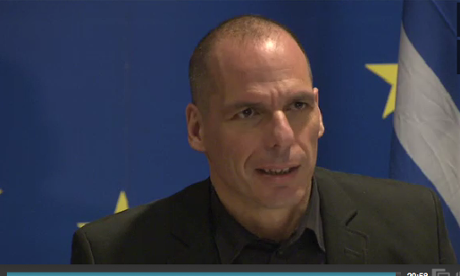
Varoufakis: We presented good proposals
Varoufakis is speaking in Greek first, and then English (eventually).
He says that Greece brought a “comprehensive proposal” to today’s meeting that would have ended this drama once and for all.
But instead, he says, Jeroen Dijsselbloem didn’t encourage creditors to engage.
#Eurogroup President decided to focus only on #Greece responsibilities but not on institutions', Greek FinMin says #ec #ecb #imf.
— Manos Giakoumis (@ManosGiakoumis) June 18, 2015
Varoufakis insists that he presented deep economic reforms.
And “all political leaders bear a responsibility” for finding a solution.
Dismissed as not serious & not an adult by the eurozone & IMF, Varoufakis puts his side of the story pic.twitter.com/HdwlNNrRh1
— Bruno Waterfield (@BrunoBrussels) June 18, 2015
Updated
Yanis Varoufakis is now giving his own press conference:
Snap Summary: It just gets worse
Relations between Greece and its creditors were already bad, and they’ve got even worse.
Another meeting with no progress means it’s very hard to see how a deal will be reached before June 30, to avoid the default that’s been looming over the eurozone for months.
Indeed, EU leaders have clearly had enough -- with an emergency summit set for Monday. That is your last chance saloon, Mr Tsipras.
Greece has effectively been instructed to come back with new proposals in the next few days, otherwise it’s game over. Grexit is no longer unthinkable -- with Dijsselbloem saying that all eventualities are being considered
And Christine Lagarde’s comment that we need “adults in the room” suggests a complete breakdown in relations.
Back with the Maltese finance minister:
#Malta FinMin: 'I don't think #Greece wants to get out of #euro, however actions and situations leading to that
— Nektaria Stamouli (@nstamouli) June 18, 2015
Dijsselbloem: Bank withdrawals are worrying
Money appears to be leaving Greek banks faster than emergency liquidity from the ECB is arriving. How worried are you about that, asks my colleague Ian Traynor.
Dijsselbloem says he can’t confirm the figures (there’s a rumour that €2bn was withdrawn between Monday and Wednesday)
But... It’s worrying. The key word is trust. Trust needs to return to the Greek economy.
People are taking money of the bank because they are worried about what the future will bring.
But it can be fixed quickly by the Greek government.
Eurogroup chief Dijsselbloem says deposit outflow in #Greece is a sign of Greeks' "great concern about future" but can be quickly fixed
— Kathimerini English (@ekathimerini) June 18, 2015
Are you now planning for a Grexit?
It is our dearest wish to keep Greece in the eurozone, Dijsselbloem replies.
But if that is not possible, we are prepared for all eventualities.
Updated
Dijsselbloem: Greece needs politicians who are prepared to tell the truth to their people
What is your message to the people of Greece?
Dijsselbloem replies:
They deserve a credible and a fair deal. Which means Greece has to become financially independence, and have its future in its own hand
Any deal that doesn’t deliver a fair and sustainable financial future for Greece would eb a bad deal for Greece too.
We are still fully committed to keeping Greece in the euro, he says.
But it will be impossible to reach that deal unless you are prepared to take some tough decisions.
Decisions on Restructuring the economy, restrucutring the public sector.
And it also “requires politicians who are prepared to tell the truth to their people”.
Outside the press conference, the Maltese finance minister has told Reuters that Yanis Varoufakis came up with “a sort of” last minute plan.
OUCH. For a Greek deal to happen, there have to be “adults in the room”, says Christine Lagarde.
Just how bad was today’s Eurogroup meeting?
Lagarde: Deal with Greece needs dialogue with "adults in the room" #Greece pic.twitter.com/ecmj4gRwoZ
— Derek Gatopoulos (@dgatopoulos) June 18, 2015
Only chance is to resume with adults in the room, says Lagarde. Ouch, that's a jibe at Varoufakis
— Bruno Waterfield (@BrunoBrussels) June 18, 2015
We are “prepared for eventualities” if no agreement can be reached, Dijsselbloem says.
That isn’t our “preferred scenario”, though.
EU leaders to hold Greece crisis summit on Monday
Dijsselbloem confirms that Donald Tusk, president of the European Council, has called a Eurozone leaders meeting on Monday.
European leaders to hold Greece summit on Monday, commission president Tusk announces, after no deal reached at Eurogroup meeting today.
— CNBC Now (@CNBCnow) June 18, 2015
And he also suggests that another eurogroup meeting could be required first, so that something can be prepared for the leaders to discuss.
At presser, @J_Dijsselbloem suggests another #Eurogroup may need to be held before emergency #eurozone summit Monday. God help us. #Greece
— Peter Spiegel (@SpiegelPeter) June 18, 2015
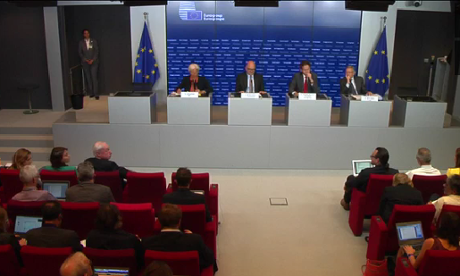
Onto questions.
Is a bailout extension being discussed?
Dijsselbloem says that if there is a deal with Greece, then it will have to include an extension because there simply isn’t time to get agreement and disburse funds by June 30.
Updated
Lagarde concludes:
We are waiting, and we hope that the next few days will be used by the Greek authorities to come back with credible, tangible measures....
No more smoke and mirrors, Greece needs to be credible says Lagarde pic.twitter.com/W4QKqbPkJd
— Bruno Waterfield (@BrunoBrussels) June 18, 2015
Lagarde explains that a successful programme has four elements:
- debt sustainability
- delivery of the measures
- financing of the programme
- flexibilility of the institutions, accepting substitutability of the measures.
And “The less the adjusting, the more the financing”.
In simple language, that means that Greece should be allowed to propose new measures, but only if they are credible. And if Greece imposes less tax rises and spending cuts, it creates a fiscal gap that can only be filled with more borrowing or debt relief.
And Europe is still resisting debt relief.
@Lagarde is speaking to the Europeans while looking at the Greeks. IMF wants debt relief, Eurozone does not.
— Maria Margaronis (@mariamargaronis) June 18, 2015
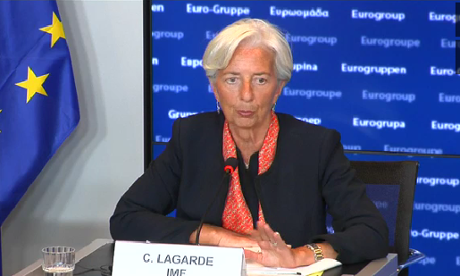
Now Christine Lagarde has the microphone.
On Greece, she wants to make a few basic points:
We are waiting.
The institutions have put together some very sensible proposals that are a clear easing and we are waiting”
Jumping between French and English, the IMF MD says:
It cannot be about smoke and mirrors.... It must be credible.
We lend the money of 188 countries, and we are accountable to all of them.
Updated
Moscovici reiterates that the eurozone are ready to work “day and night” for a deal.
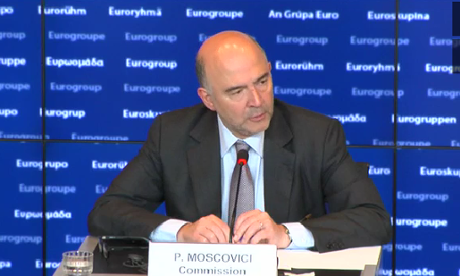
Commissioner Pierre Moscovici speaks next (mainly in French), and warns that Greece risks a “catastrophic scenario” unless it engages seriously with negotiations.
It is in everyone’s interest that Greece remains in the Euro zone, we are making progress, he says.
Moscovici: We're approaching end of game. I call on Greek gov't to seriously return to negotiating table and avoid catastrophic scenario.
— Open Europe (@OpenEurope) June 18, 2015
Updated
Dijsselbloem couldn't have been clearer: Too little progress, no agreement in sight, up to Greeks to put forward credible proposals. #Greece
— Vincenzo Scarpetta (@LondonerVince) June 18, 2015
Reuters is reporting that there will be a eurozone leaders summit on Monday to discuss Greece....
Apparently Germany’s finance minister has left the eurogroup without speaking to the media:
Schaeuble leaves #Eurogroup without speaking to the press. Somebody's angry...
— Maxime Sbaihi (@MxSba) June 18, 2015
Dijsselbloem: There is still time for a deal
An agreement needs to be credible, Dijsselbloem adds.
If one is put forward in the next few days, we will consider it.
There is still time to find an agreement and extend the current programme.
But very little time remains, (as it might need to be voted on by some national parliaments)
And the ball is in Greece’s court.
Updated
Dijsselbloem: Greece has not put forward credible measures
Dijsselbloem: We agreed to be flexible in February, when Greece’s bailout was extended.
We agreed to adjust the fiscal targets for Greece, and to replace existing measures with other measures put forward by the Greeks, once we had assessed them.
Too little measures have been put forward that are credible.
The talks over the last weeks have not progressed....
Updated
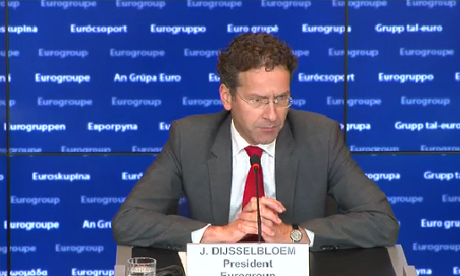
Dijsselbloem starts by saying that the eurogroup took stock of the situation with Greece.
It is regrettable that too little progress has been made in the talks, and “no agreement is in sight”.
OK, the first press conference is starting now, with Jeroen Dijsselbloem, president of the Eurogroup, plus Christine Lagarde, Pierre Moscovici and Klaus Regling.
The lack of a deal tonight isn’t really a surprise -- expectations were really rather low this morning.
Bloomberg economist Maxime Sbaihi suggests we could be weeks away from a resolution:
No Greek deal at #Eurogroup. What does it mean, what's next? Read my reaction on the terminal http://t.co/IYqHl7jhb5 pic.twitter.com/WWuEwvjxtb
— Maxime Sbaihi (@MxSba) June 18, 2015
Finland’s finance minister tweets that it was an ‘interesting’ meeting....
End of my first #Eurogroup. Interesting indeed.
— Alexander Stubb (@alexstubb) June 18, 2015
Watch the press conference here
You can watch tonight’s press conferences from Luxembourg here:
Updated
No deal at Eurogroup. The situation is really difficult now. #Greece
— Fabrizio Goria (@FGoria) June 18, 2015
It's official: Eurogroup over with no deal
The Eurogroup meeting has concluded, without a deal on Greece.
And that’s according to Valdis Dombrovskis, European Commission Vice-President for the Euro and Social Dialogue.
He has tweeted that eurozone finance ministers have given a “strong signal” to Greece to engage seriously.
The eurogroup is ready to reconvene at any moment, he adds.
No deal at #Eurogroup. Strong signal for #Greece to engage seriously in negotiations. EG stands ready to reconvene at any moment.
— Valdis Dombrovskis (@VDombrovskis) June 18, 2015
It doesn’t sound good news, frankly.
Press conferences will begin in a few minutes.
#grexit #eurogroup greek discussion seems to have lasted around an hour #cantbegood
— Ian Traynor (@traynorbrussels) June 18, 2015
Updated
Eurogroup meeting in Luxembourg: Varoufakis presents for 30 minutes "some ideas", among them again a debt write-down for #Greece.
— Stefan Leifert (@StefanLeifert) June 18, 2015
Varoufakis presents new proposals
Another important development: Yanis Varoufakis has been presenting new proposals to his fellow eurozone finance ministers.
According to one report, he’s presented five pages of ideas.
Our Europe editor, Ian Traynor, says Athens still wants Europe’s bailout fund to help it, by buying the €6.7bn of bonds it must repay to the ECB this summer.
#grexit varoufakis spokesman says greeks tabling 'new proposals', still asking for esm-ecb debt swap
— Ian Traynor (@traynorbrussels) June 18, 2015
One Greek official told Reuters:
“Varoufakis is presenting new ideas right now...The proposals are based on fiscal consolidation that needs to go with debt sustainability.”
Athens also downplayed speculation that the two sides were at odds:
“There is no clash. We are negotiating. We are open to proposals.”
As we covered earlier, Varoufakis declared that he would present proposals to “replace costly discord with effective consensus.”
His press conference later tonight could be a sellout.
There was no room big enough for the press conference of @yanisvaroufakis so its been set up on a hallway! #eurogroup pic.twitter.com/c14KHJomyD
— Eleni Varvitsiotis (@Elbarbie) June 18, 2015
Diplomatics in Luxembourg are downplaying Die Zeit’s claim that Greece is being offered a short-term deal by the eurozone.
Diplomat calls Die Zeit report of Greece side deal "daydreaming" (corrects spelling) #Eurogroup
— Alex Pigman (@parisnewsroom) June 18, 2015
The euro soared, then slumped, as traders digested Die Zeit’s claim that Greece is getting a ‘final offer’:
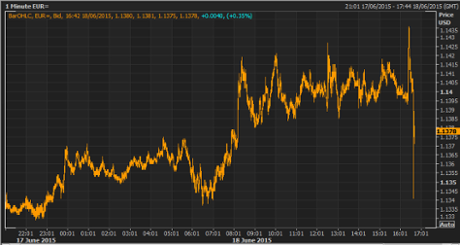
Perhaps traders are concerned that the story isn’t sourced, and only four paragraphs long....
Die Zeit: Eurozone offers Greece an extension
German newspaper Die Zeit is reporting tonight that the eurozone is proposing extending Greece’s current bailout until the end of the year.
According to Die Ziet’s story, Greece would receive €10bn of cash which is currently set aside to recapitalise the Greek banking sector.
The ECB would also raise the cap on Greek banks, allowing them to buy another €2bn of government debt.
Together, this would allow Greece to meet its repayments to the IMF and the ECB this summer.
It is billed as a “final offer” to Greece to avoid bankruptcy.
The IMF wouldn’t be involved in the plan -- understandable, given its concerns that Greece’s debt burden is now unsustainable, meaning debt relief is needed.
Creditors to offer Greece ext until Dec. €10bn from bank recap fund to repay IMF, ECB. ECB would lift bill cap by 2bn http://t.co/uB0h1jIUAP
— Holger Zschaepitz (@Schuldensuehner) June 18, 2015
So, it sounds like the short-term can-kicking offer that some analysts had expected. There has been speculation that the bank recapitalisation money could be used in this way.
But a word of caution -- it is not clear what conditions Greece would have to agree to.
More as we get it.
DIE ZEIT und ZEIT ONLINE exklusiv: Eurozone wollen Griechenland neues Angebot vorlegen – ohne den IWF (nd) http://t.co/vMzw4hknZd
— ZEIT ONLINE (@zeitonline) June 18, 2015
Updated
Summary: IMF rules out payment delay as eurogroup meets
I was going to put together a summary, but AFP have just published a really decent round-up of events. So, over to them... (with links to the main points in today’s liveblog)
IMF rules out Greek payment delay
International Monetary Fund chief Christine Lagarde warned Greece on Thursday it would get no leeway on a huge debt payment as EU ministers warned they were looking at a “plan B” for a possible default.
Eurozone finance ministers holding a crisis meeting in Luxembourg [photos] pressed Athens to finally present a credible reform plan and end the five-month standoff between Greece’s anti-austerity government and its creditors.
But with Athens owing a 1.6-billion-euro payment to the IMF at the end of June and Greece’s international bailout due to expire the same day, they were pessimistic about the chances of a deal on Thursday.

“There will be no period of grace” for the loan payment, Lagarde told reporters before she joined the ministers for their Eurogroup meeting. “I have a term of June 30 - if it’s not paid by July 1, it’s not paid.”
Greece’s creditors are withholding the last €7.2bn of its bailout until Athens caves in, but leftist Prime Minister Alexis Tsipras has refused to make changes to pensions and VAT rates.
Europe’s most powerful leader, German Chancellor Angela Merkel, weighed in on the issue earlier Thursday when she told German lawmakers in the Bundestag she was “still confident” that a deal was possible.
- ‘Not a lot of hope’ -
But the mood was darker in an overcast Luxembourg, where ministers were openly broaching scenarios such as a Greek exit from the euro if it defaults on its debts.
“The next step to make the deal credible, also financially sustainable, will have to come from the Greek side,” the Dutch Eurogroup chief Jeroen Dijsselbloem told reporters.
He added that he did “not have a lot of hope” that the Greeks would present a new plan Thursday.
No deal at the Eurogroup meeting means the issue will likely go to the wire at an EU leaders’ summit in Brussels on June 25 and 26.
Greek Finance Minister Yanis Varoufakis, the motorbike-riding former economist whose relations with his counterparts have been strained, said he wanted to “replace costly discord with effective consensus.”
“Today we are going to be presenting the Greek government ideas,” he added, without specifying whether he meant a new reform plan.
Without the bailout tranche and the IMF deadline missed, Greece would be for the first time in five years financially alone, with its coffers empty and all eyes on what happens next.
“The other option is to prepare the B plan,” said Irish finance minister Michael Noonan, adding that he didn’t fear any “contagion effect” in the case of a “Grexit” - meaning Greece crashing out of the euro.
Finnish Finance Minister Alex Stubb added:
“Option number 1 is extension .... Option B could be default.”
The IMF has taken a harder line than its co-bailout monitors the European Commission and European Central Bank, pushing for Europe to write off some Greek debts.
Greece had already bought itself time by bundling four looming IMF loan payments into one lump sum to be paid by June 30 - becoming the first country to use such a possibility since Zambia in the 1980s - and it is losing patience.
- No Waterloo -
The coincidence that the Eurogroup was meeting on the 200th anniversary of the Battle of Waterloo led EU Economic Affairs Commissioner Pierre Moscovici to draw a comparison between then and now.
Greece’s central bank warned for the first time Wednesday that the country could suffer a “painful” exit from the single currency area - and even the European Union - if it fails to reach a deal.
Greece has another €6.7bn due to the European Central Bank in July and August and there have been reports of planning for possible capital controls if Greece’s financial system runs dry.
European officials warned that the IMF’s zero-tolerance on July 1 could also force the European Central Bank to cut-off vital financing to Greece’s creaking banks.
Elected in January on a vow to end five years of bailout-imposed austerity, Tsipras warned Wednesday that an EU “fixation” with pension cuts would scupper a deal and harm Europe as a whole.

In a move that seemed calculated to irk other European leaders amid tensions with Russia over Ukraine, Tsipras visited Saint Petersburg Thursday where he is the star guest at President Vladimir Putin’s investment drive forum. [end]
European stock markets shook off their Greek fears by the close of trading.
Most indices finished higher, matching rises on Wall Street where shares rallied after the Federal Reserve dampened fears of an early rate rise.
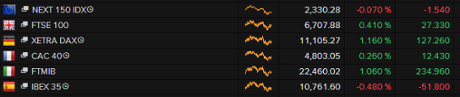
Tony Cross of Trustnet says investors are waiting for any signs of a resolution over the Greek debt crisis:
Obviously any further word on what happens next in Greece will be closely followed, but until we see this, it seems as if equity markets are happy to tread water.
While Michael Hewson of CMC Markets sees little sign for optimism today:
Given that German Chancellor Angela Merkel reiterated the creditor’s position in a speech to the Bundestag earlier today that no money would be released unless Greece implemented reforms, the prospect of any sort of deal seems more remote than ever.
The Eurogroup agenda has been slightly reshuffled, the FT’s Peter Spiegel reports, so that ministers will cover all the other business before Greece.
I'm told #Greece discussion moved from top of #Eurogroup agenda to last item. Don't think that means anything other than I'll miss deadline!
— Peter Spiegel (@SpiegelPeter) June 18, 2015
No deadlines in the liveblog, obviously!
Earlier this week, EU negotiators had suggested the Greek discussion would be quite short. What is there to talk about, they suggested?
Perhaps this reshuffle means they expect a longer debate?
Updated
After that early wobble, the Athens stock market ended the day up 0.37%.
The news that Yanis Varoufakis is going to present some ideas at today’s meeting may have generated some optimism, after the index hit a three-year low this morning.
Here’s our economics editor, Larry Elliott, explaining why the Greek crisis gives Angela Merkel such a headache (including references to Bob Dylan and British left-winger Ken Livingstone)
Updated

Updated
Students of body language will have a field day with these photos from the eurogroup meeting, showing most of the main characters in this crisis:


Greek bank withdrawals spike as revenue slides
Greece’s battered economy is sinking even deeper into the mire, according to two pieces of information today.
First, Reuters is reporting that two billion euros were withdrawn from Greek banks between Monday morning and Wednesday night.
That would be a significant acceleration in the steady outflow, that has already pushed deposit levels to 11-year lows. Before talks collapsed last weekend, Greek banks were losing €200m to €300m per day.

The second worrying news is that government revenue tumbled in May, as households and firms hoarded cash and delayed filing tax returns.
Greek government revenues in May were 24% under target -- or around €900m. That’s a remarkable shortfall.
But Greece is still running a primary budget surplus this year, because it has deferred so much of its own spending.
As one senior banker told the Financial Times:
“There appears to be a complete freeze on domestic payments apart from wages and pensions as the government rounds up cash to pay international creditors,”
“This is starting to have a knock-on effect on revenue collection.”
Just feel that tension....
Don't forget Yanis, i want my money back! #IMF #Lagarde talking to #Greece fin min @yanisvaroufakis at #Eurogroup pic.twitter.com/62v7k6mTLR
— Dirk Hoeren (@DirkHoeren) June 18, 2015
Not quite as friendly as four months ago, when Lagarde turned up in a leather jacket in solidarity with Yanis, who sported a Burberry scarf.
The eurogroup meeting is now underway. It’s a packed agenda -- ministers are talking about the Cyprus bailout, Portugal, the state of the eurozone, and implications of the current record low interest rates.
And Greece, of course -- with Yanis Varoufakis presenting his new ideas.
A press conference will be held later, perhaps at 7pm BST?
If Greece does fail to repay the IMF on 30 June, the consequences could be very nasty.
Klaus Regling, who runs the Europe’s bailout fund (the ESM) told reporters in Luxembourg that an IMF default could trigger clauses in ESM lending, allowing it to demand early repayment on its own loans.
He’s not saying that would definitely happen, but that’s the procedure.
The FT’s Peter Spiegel has the quote:
"Our lending is linked to IMF; if there’s a non-payment to IMF, it’s an event of default & we have choice to accelerate our loan."- Regling
— Peter Spiegel (@SpiegelPeter) June 18, 2015
What is Regling showing to Varoufakis here? The exit? pic.twitter.com/xgv2Ot7WW8
— Yannis Koutsomitis (@YanniKouts) June 18, 2015
Updated
Stubb: €-zone now in position where it cld weather #Grexit. Wld be much worse for #Greece.
— Open Europe (@OpenEurope) June 18, 2015
Stubb: Plan B if no Greece deal
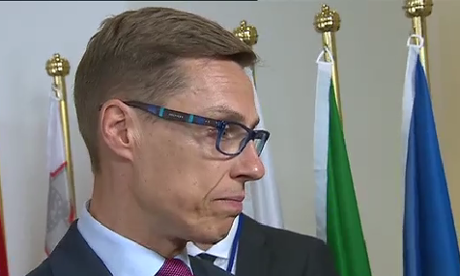
Patience is a virtue, but some countries are running out of patience. says Finland’s finance minister Alex Stubb.
In the EU, if you make a deal, you’re supposed to stick with it, he adds, somewhat archly. There has been too much going back and forth in recent months.
Stubb thinks there are two options, either a new deal for Greece with some ‘conditionally’, or a plan B, which could result in a default.
And he argues that there’s little risk of contagion for the eurozone if Greece defaulted.
Finnish FM Stubb: There was more sympathy, but the past 6 months have eroded that. #Greece
— Open Europe (@OpenEurope) June 18, 2015
Stubb: Either we reach a deal, or plan B - which means Greek default. I don't think there will be contagion on €-zone periphery. #Greece
— Open Europe (@OpenEurope) June 18, 2015
Updated
Lagarde: IMF must be credible, and flexible
Christine Lagarde defended the IMF’s handling of the Greek debt crisis as she arrived at today’s meeting.
When we make a loan, the money comes from Senegal, Sri Lanka, Switzerland.... so we need to be credible because it’s their money we’re lending.
But we also need to be flexible, she adds:
If there are credible proposals on the table then of course we’ll examine them.
Updated
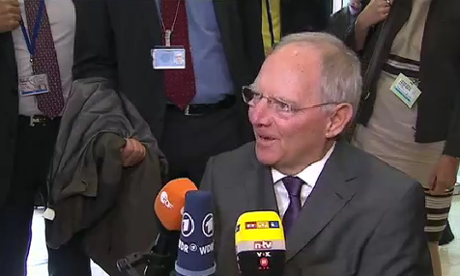
Germany’s finance minister, Wolfgang Schäuble, told reporters that he is “optimistic” that ministers will now get proposals from Greece.
Asked about the dangers of “Grexit”, he replied:
“One mustn’t speak in public about everything.”
(Don’t get all coy on us, Wolfgang!)
Moscovici: Let's get a deal and avoid another Waterloo
Pierre Moscovici says that a solution is badly needed, both for Greece and the wider eurozone project.
Let’s start by examining proposals..... we are in a state of mind to find a deal, which is indispensible.
But it’s up to the Greeks to deliver. The ball is in their camp (oh god, not again)
EU's Moscovici says lenders have been waiting for "more than a week" for new proposals from #Greece #Eurogroup pic.twitter.com/LiQ9eIXPmj
— Derek Gatopoulos (@dgatopoulos) June 18, 2015
Moscovici (a former French finance minister) has also joked about how he hopes to avoid another Waterloo, on the 200th anniversary of that famous away win.
Moscovici: I really wish we can avoid another Waterloo. #Greece
— Open Europe (@OpenEurope) June 18, 2015
Updated
Excellent diss by Ireland's Noonan: 'I've heard Yanis's proposals before and they tend to be more macroeconomic than micro'
— Danny Kemp (@dannyctkemp) June 18, 2015
Irish finance minister Michael Noonan told reporters that we shouldn’t have “any great expectations” for a positive outcome from today’s meeting.
Discussions will be preliminary, before Greece is discussed by heads of government next week.
There is “no optimism among the people I’ve spoken to today”.
Noonan says discussions have taken place at a high level in Ireland in case Greece leaves the eurozone, involving the ECB, but believes there is still time and space to get a deal.
BREAKING Ireland's finance min Michael Noonan says Irish govt is "taking advice" on a Grexit from the NTMA, Irish central bank and the ECB
— Tony Connelly (@tconnellyRTE) June 18, 2015
Noonan adds that he has heard that the Greek finance minister plans to “make an intervention” at today’s meeting. He’s not sure what it is, but we’ll see.
I’ve heard Yanis’s proposals before, they tend to be macroeconomic in nature rather than about specifics, and these proposals need to be about specifics, Noonan concludes.
Updated
Ireland’s finance minister says the eurozone cannot make further concessions to Greece.
Irish fin min Michael Noonan says eurozone lenders have gone "as far as they can go". Options beyond that? "Prepare the B plan.." #Greece
— Tony Connelly (@tconnellyRTE) June 18, 2015
Updated
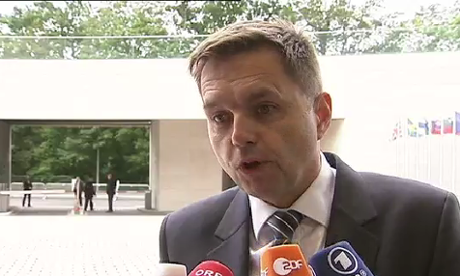
Peter Kazimir, Slovakia’s finance minister, has arrived.
He denies being angry with Greece. I’m tired, he says, and I’m not the only minister tired on this issue
We need to be honest, he says, there is no time left for the games. and we have to deliver. Greece must face the reality - they might like it, we may not like it, but we cannot shake the reality
When a bill is due, certain things need to be done. You cannot cheat it....
What do you think about Yanis Varoufakis saying he has brought some ideas today?
Kazimir smiles. Now is a good time for ideas, he replies.
We have wasted a lot of time. but I do believe in miracles - I’m Catholic, so I have to believe in miracles.
Is this the time to talk about capital controls?
We need to be ready for everything, Kazimir replies.
Slovakia FinMin Kazimir: "#Greece has to face reality ... We have wasted a lot of time. I do believe in miracles" pic.twitter.com/jRKs3I4UG5
— Derek Gatopoulos (@dgatopoulos) June 18, 2015
Updated
Here’s a video clip of Yanis Varoufakis saying he will present ideas to “replace costly discord with effective consensus” (but not revealing if they are old ideas or new ones)
#Eurogroup meeting - Doorstep #GR @yanisvaroufakis on the Greek proposal http://t.co/xvSCldtBz3 pic.twitter.com/zJUxYcBjjc
— EU Council TV News (@EUCouncilTVNews) June 18, 2015
More arrivals! France’s Michel Sapin says talks must resume, and it’s wrong to think there are “monstrous differences” between two sides.
French FinMin Sapin: "We have reached a crucial moment in talks with Greece" #Greece #Eurogroup pic.twitter.com/kIt8cRVd8o
— Derek Gatopoulos (@dgatopoulos) June 18, 2015
Varoufakis says he'll be presenting Greek gov't "ideas". Not clear whether they're new ones or old ones. #Greece
— Vincenzo Scarpetta (@LondonerVince) June 18, 2015
Greek finance minister: We'll present our ideas today
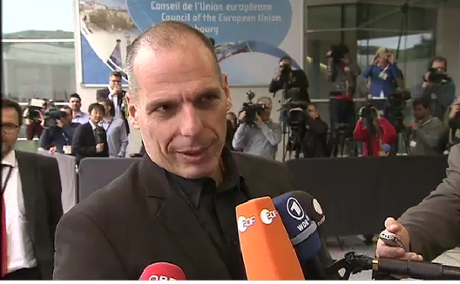
Yanis Varoufakis has just arrived.
He tells reporters:
Mario Draghi once said that for the euro to succeed anywhere, it has to succeed everywhere.
We think he is spot on. And today we will be presenting the Greek government’s ideas along those lines.
And then he adds:
The purpose is to replace costly discord with effective consensus.
With that, Varoufakis vanishes inside the building.
Does that mean that Greece has brought some new proposals?.....
#grexit @yanisvaroufakis says he'll be presenting greek govt 'ideas'. not the case yesterday
— Ian Traynor (@traynorbrussels) June 18, 2015
Greece's Varoufakis says wants to 'replace costly discord with effective consensus.' Also uses the phrase 'spot on'.
— Danny Kemp (@dannyctkemp) June 18, 2015
Updated
Pierre Gramegna, Luxembourg’s finance minister, has warned that “time is coming to an end”, as he arrives at the Eurogroup.
He hopes to make progress at today’s meetings, and doesn’t accept that Greece is heading out of the eurozone:
We are still on the same lines, Greece and the rest of Europe.... We need a deal so Greece can start to grow again, and attract investors.
Gramegna: We need to see facts and figures to measure in which way both sides are getting closer to each other to bridge gaps. #Greece
— Open Europe (@OpenEurope) June 18, 2015
That really wasn’t a very confident-looking eurogroup president who swept into today’s meeting.
Dijsselbloem says he hopes the Greeks come with a proposal; says he's not so optimistic; "not sure we'll make progress" #Greece
— Yannis Koutsomitis (@YanniKouts) June 18, 2015
#grexit @J_Dijsselbloem 'i don't have a lot of hope'
— Ian Traynor (@traynorbrussels) June 18, 2015
Dijsselbloem gives little indication that there will be a breakthrough today.
Too little progress has been made, and there are still gaps between Greece and the institutions, he adds. Time is very, very short.
Dijsselbloem: Not sure we will make progress today
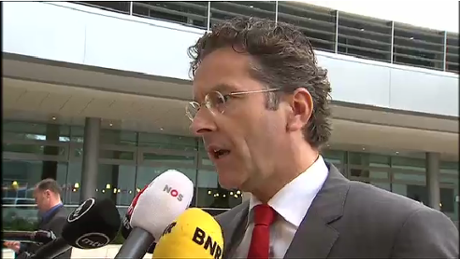
Jeroen Dijsselbloem, head of the eurogroup, has just arrived at this afternoon’s meeting, and is being grilled by the EU press pack.
Asked about Christine Lagarde’s comments, Dijsselbloem says he won’t speculate about whether or not Greece will make its 30 June repayment.
Only have one job today, to see if we can get that deal with Greece closer
It need a solid deal, for Greece and Europe that can hold up in the coming years, says Dijsselbloem, adding:
I am not sure if we will make any progress, but we will try.
Not much new from @J_Dijsselbloem as he heads into #Eurogroup. "I'm not sure we'll make any progress." #Greece
— Peter Spiegel (@SpiegelPeter) June 18, 2015
Has Finland’s finance minister, Alex Stubb, just uttered the D word?....
#Finland fin min @alexstubb talks about "some form of default" as option for #Greece. #Eurogroup #Grexit pic.twitter.com/W8BxIrQS3I
— Dirk Hoeren (@DirkHoeren) June 18, 2015
We’ve put together a chart to guide you through the next few crucial days for Greece, and the eurozone:
Eurozone finance ministers have already held one session today -- the annual meeting of the European Stability Mechanism Board (that’s the main Eurozone bailout fund).
Here’s some photos:


Updated
Greece has arguably been given one delay by the IMF already, which is perhaps why Christine Lagarde says it can’t have another one.
This 30 June payment consists of four smaller bills due this month, which are being wrapped together. That’s within the Fund’s rules, but is also the first time in decades that any country (hello Zambia!) has done it.
@OmairaGill @GreekAnalyst The period up to June 30th *was* the grace period.
— Andrew Lilico (@andrew_lilico) June 18, 2015
Public support for Alexis Tsipras’s party is still holding up, according to a new poll this morning.
Pro Rata poll for Kokkino FM SYRIZA 33.5% New Democracy 13.5 G Dawn 6 Potami 6 KKE 4 Ind Grks 3 PASOK 3 Others 9 Undecided 22 #Greece
— MacroPolis (@MacroPolis_gr) June 18, 2015
There could be shockwaves through Greece and the wider eurozone if Athens doesn’t repay the IMF on 30 June, says Diego Iscaro, senior economist at IHS Global Insight.
Even though it’s not a technical default, Iscaro reckons a non-payment would trigger volatility:
Deposit outflows in Greek banks are likely to accelerate, increasing the pressure on the government to introduce capital controls.
Meanwhile, increasing uncertainty regarding the outcome of the negotiations will result in higher volatility in Eurozone financial markets (most likely through pressurizing bond yields in the southern periphery countries), as well as weighing down on confidence levels.
Just to be clear, here the *normal* IMF procedure in case of a missed payment. But Greece is unique, right? pic.twitter.com/gHLhUqPlAt
— Fabrizio Goria (@FGoria) June 18, 2015
Got it in one....
When you might be sequencing policy wrong, Lagarde edition: Greece needs long-term pension reform, & oh btw it might default on us June 30
— Joseph Cotterill (@jsphctrl) June 18, 2015
Christine Lagarde’s demand for an “intelligent approach” to Greek pensions is the latest shot in an intense war of words between the two sides.
Alexis Tsipras has argued this morning that Greece cannot accept pension cuts.
Writing in Der Tagesspiegel, Tsipras pointed out that pensioners are actually the main breadwinner in many Greek families:
The social security system is the institutionalized mechanism of intergenerational solidarity, and its sustainability is a main concern for society as a whole. Traditionally, this solidarity has meant that young people, through their contributions, fund the pensions of their parents. But during the Greek crisis, we’ve witnessed this solidarity being reversed as the parents’ pensions fund the survival of their children. The pensions of the elderly are often the last refuge for entire families that have only one or no member working in a country with 25% unemployment in the general population, and 50% among young people.
Faced with such a situation we cannot adopt the logic of blind and horizontal cuts, as some have asked us to do, which would result in dramatic social consequences.
On myths & crisis, my article in @tagesspiegel: German taxpayers not paying for Greek pensions http://t.co/jhnxFZTIc1 pic.twitter.com/dLa3rIyACB
— Alexis Tsipras (@tsipras_eu) June 18, 2015
Christine Lagarde has just crushed the idea that Greece could delay its €1.6bn repayment due to the International Monetary Fund on 30 June.
There is no chance of a ‘grace period’ or a delay, the IMF chief says:
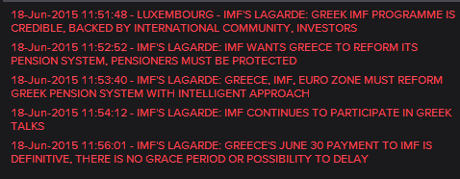
Yesterday, Greece admitted that it won’t have the money to repay the IMF unless it gets a bailout deal fast, meaning it would be in arrears with the Fund (this isn’t an official default, though)
We’re facing a “very difficult situation”, says Finland’s finance minister, Alex Stubb, as he arrives at the Eurogroup meeting.
And you’ll never guess where the ball is.....
Very difficult situation, have to stick to conditionality.Ball is on the #Greek court says Finish Fin Min @alexstubb pic.twitter.com/8RgLRS3GOm
— Eleni Varvitsiotis (@Elbarbie) June 18, 2015
Greek prime minister lands in Russia
Alexis Tsipas has just been sighted in Russia, which might cause a few alarm bells to ring in Brussels and Washington.
Greek PM Tsipras arrives in St Petersburg as the Eurogroup prepares to meet in Brussels http://t.co/NNxNiRjQSe pic.twitter.com/xbwkTf2dum
— Bloomberg Business (@business) June 18, 2015
The Greek PM is attending an economic forum in St Petersburg, and is due to meet President Putin tomorrow.
This has fuelled talk that Moscow could offer Athens some help - perhaps a credit line, to help it handle debt repayments.
Greek officials have been defending the trip, though, arguing they are allowed to pursue a ‘multi-dimensional foreign policy’. And after all, Germany does a lot of business with Russia (before the Ukraine sanctions, anyway)
#Greece as full member of #EU has right 2 have multi-dimensional f/policy" Costas Isychos, travelling w Grk PM to Russia, tells me
— Helena Smith (@HelenaSmithGDN) June 18, 2015
"Why should Germany have the monopoly of commercial relats w Russia?" says Costas Isychos, part of #Greek delegation, in St Petersburg
— Helena Smith (@HelenaSmithGDN) June 18, 2015
There are reports swirling that the European Commission and the European Central Bank are drafting some kind of statement on the issue of Greek debt relief.
Not clear exactly what, at this stage, so we’ll keep you posted.
EU Commission & ECB drafting statement on debt relief for #Greece, Brussels source tells @Elbarbie. But may be repeat of pledge Samaras got
— Nick Malkoutzis (@NickMalkoutzis) June 18, 2015
The EC and ECB have been resisting pressure from Athens, and the IMF, to consider the issue of Greece’s debt pile, which appears simply unsustainable at 180% of GDP.
My colleague Heather Stewart has looked at this issue, and explains:
When debt repayments reach a certain level, they undermine social solidarity because governments struggle to afford investment in schools, health and public services. And they undermine economic growth, because the state has to divert resources that could be spent on infrastructure, training and export support towards its foreign creditors.
Great piece by @heatherstewart3 on the burden of Greece's debt http://t.co/DQMrkWNUWw
— Alberto Nardelli (@AlbertoNardelli) June 17, 2015
Bank of Greece governor Yannis Stournaras continues to be criticised by government MPs today, after warning yesterday of an “uncontrollable crisis” unless a deal is reached:
#BOG gov #YannisStournaras focus of lawsuit by Syriza MP who accuses him of panic-mongering w his warnings of econ collapse
— Helena Smith (@HelenaSmithGDN) June 18, 2015
In Athens, talk of euro exit is rife

Over in Athens there has been some fighting talk from senior members of the governing far left Syriza party this morning, reports our correspondent Helena Smith.
With no signs of a deal in sight, leading Syriza party cadres are now being asked, outright, whether euro exit is on the cards.
Speaking to Mega TV this morning, the party’s hardline social security minister Dimitris Stratoulis said the leftist-led government had already “taken measures” to ensure that ordinary Greeks did not suffer in the event of an agreement not being reached.
“We have seen to it that people won’t have a problem if we reach the point of having to say the big no,” he said, insisting that if Athens did not pay the IMF the €1.6bn it owes at the end of the month it would not amount to a credit event (default).
Presumably, with that in mind, Stratoulis also said that the government would have the means to pay public sector salaries and pensions “in July, August, September, October etc.”
“If we are forced to say the big no the difficulties will last for a few months …. but the consequences will be much worse for Europe.”
Thanasis Petrakos, Syriza’s parliamentary spokesman, reiterated that Athens would not give in to the “irrational demands” of lenders.
“We want to stay in the euro zone but we will not submit to blackmail, if our partners want to be logical we will come to an agreement,” he said told Star TV. “Currencies aren’t a religion,” he said to the surprise of the startled news anchor Popi Tsapanidou.
“Who said currencies are a religion? Nothing of the sort is written in our constitution.”
What was most important was that Greece did not return to the era of “memoranda” (the bailout agreement), he argued
Kostas Lapavitsas, the London University economics professor who is now a Syriza MP, agreed.
“That would mean death,” Lapavitsas told Star TV. “Now that we are in the euro what lenders are dong essentially means we have limited sovereignty.”
Any “adjustment period” that did take place in event of euro exit would only last a few months, he said.
“The idea that we can’t live with our own currency is absurd.”
Updated
Moscovici: Eurogroup will be difficult, but solution is possible
European commissioner Pierre Moscovici has predicted that today’s eurogroup meeting will be ‘difficult’, Reuters reports (possibly winning a prize for understatement).
Moscovici told reporters that a solution can still be found, even at this late hour, if there are cool heads and political will.
“Today’s meeting might not be conclusive, we all know that, but it must be useful. It must be a meeting that opens the way for a solution, if we cannot find it today. We’ll try, we must try.”.
But the ball is still in the Greek court, he added (a phrase we have heard quite enough this week)
. @pierremoscovici 30th of June program expires markets r watching us.Solution not only possible but necessary pic.twitter.com/UtRxGYb5n1
— Eleni Varvitsiotis (@Elbarbie) June 18, 2015
Updated
Belgium’s finance minister, Johan Van Overtveldt, has told reporters in Luxembourg that today’s meeting “all depends” on what Greece proposes.
He told reporters:
“We’ll see what they bring to the table. I don’t know whatMr Varoufakis is coming up with. If there are reasonable proposals we will discuss them.
Some European finance ministers are already arriving in Luxembourg for the eurogroup meeting, but most of them are staying silent.
And @yanisvaroufakis just walked in. Not a single word.
— Eleni Varvitsiotis (@Elbarbie) June 18, 2015
Spanish Finance Minister De Guindos. No comment. Not a very talkative crowd this morning pic.twitter.com/M8CX1B8XZx
— Eleni Varvitsiotis (@Elbarbie) June 18, 2015
* Belgian finmin, asked if worried about Greece, replies "who isn't" - RTRS
— Fabrizio Goria (@FGoria) June 18, 2015
Eek. The Athens stock market is now down 3.5%, extending those early losses.
Alpha Bank shares has tumbled almost 9%, with Piraeus Bank down 6.8% and Eurobank down 5.3%
Amid all the trouble and strife gripping Greece, it’s emerged that Alexis Tsipras’s domestic bliss is also on the line.
The Greek prime minister reportedly admitted to French president Francois Hollande that his partner, Peristera (Betty) Baziana, would leave him if he caves in to Greece’s creditors.

That’s according to French satirical magazine Le Canard Enchaîné, which claims Hollande said:
“[Tsipras] informed me that if he gave in to too many of the troika’s demands, he risked not only losing his party but also his partner, who is a fierce militant and is much farther left of him.”
won't anyone think of Tsipras' marriage? https://t.co/LhMDjY2UIE
— Katie Martin (@katie_martin_fx) June 18, 2015
Tsipras: wife will leave if I surrender to #Europe http://t.co/nhBU1UEYXa pic.twitter.com/2dlfuimlaE
— The Times of London (@thetimes) June 18, 2015
Alexis and Betty have known each other for decades; she’s credited with having encouraging him to join the communist party.
As we wrote back in January:
The two have kept their 30-year relationship largely out of the public eye. Unlike the first ladies that have come before her, Batziana has so far stayed away from the glamour that will come with the Maximos mansion, the official seat of the Greek prime minister.
The flat she shares with her partner and their two young sons is in the heart of working class district Kypseli, in Athens.
Heads-up. The head of the Eurogroup will speak to the media around 1.15pm BST (3.15pm Athens time).
That’s before today’s meeting of finance ministers kicks off (so to speak).
Doorstep #eurogroup around 2:15pm in Luxembourg
— Jeroen Dijsselbloem (@J_Dijsselbloem) June 18, 2015
There’s a lot on the agenda, apart from Greece, so the meeting could last until 7pm BST.
Expectations, as I flagged up in the introduction, are not high. Or, as Hans Nichols of Bloomberg put it:
They’re below low. They’re subterranean.
Good morning Mr @J_Dijsselbloem: shall we just call off today's Eurogroup meeting & use the time for something more constructive? #Greece
— wolf piccoli (@wolfpiccoli) June 18, 2015
Updated
With shares down across Europe, traders are bracing for a long, painful summer, says David Madden of IG:
The word ‘default’ is being bandied around the trading floor even more so, and there are only so many times dealers will stare at the sea of red screens before they jump ship. The left-wing Syriza is determined it will not be the first one to blink and the ECB continues to stand its ground, but playing chicken with people who have nothing to lose is a dangerous game.
The pressure is intense, even by Greek debt crisis standards, and one by one dealers are ducking of out the market.
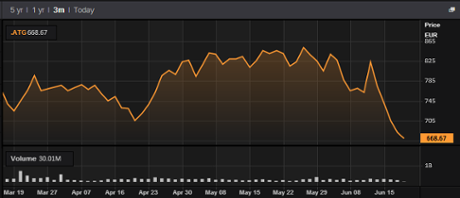
Greek stock market hits three-year low
Greece’s stock market has fallen almost 2% in early trading, hitting a new three-year low.
#Greece's Athex share index hits fresh 3yr low below 670. pic.twitter.com/o8AmLJfXAV
— Holger Zschaepitz (@Schuldensuehner) June 18, 2015
The Athens market has now shed 18% of its value since last Thursday (!), in a broad-based and unnerving rout.
Shares jumped last week on the back of reports that Germany was open to a ‘staggered deal’ for Greece, but has been sliding since as both sides have entrenched their positions.
Euclid Tsakalotos has also told France’s Libération that Greece’s people could be asked to vote on its future, echoing his comments on the Today Programme.
Tsakalotos to @libe: If the choice is btw austerity inside the euro or leave the euro, it will be up to Greek people to say its opinion.
— David Carretta (@davcarretta) June 18, 2015
Updated
#Greece "currencies aren't a religion" says ruling Syriza party's parliamentary spokesman Thanasis Petrakos
— Helena Smith (@HelenaSmithGDN) June 18, 2015
Greek government "will go to the people" if no deal
The Athens government could call fresh elections or a referendum if it cannot get an acceptable deal, chief negotiator Euclid Tsakalotos suggests.
Asked for his contingency plan in case Greece leaves the euro, he replies:
Our position is that if we have an economically feasible plan that doesn’t create recession and continue the debt trap we will sign.
If we don’t, we have to go to the Greek people because we have no mandate to leave the euro, and that would be a very bad eventuality.
But we will consult the Greek people. Becuase our mandate was the best possible deal within the euro, as we are pro-European.
If that is not on the cards, and if Europe says you can do whatever you want, you can vote what you want but in the end you always have to do the same policies, then we’ll have to reconsider with the Greek people what to do about that.
While Merkel was addressing the German parliament, Greece’s chief negotiator was warning the British people that Europe could be plunged into Depression-era economics if Greece were to leave the euro.
Speaking on the Today Programme, Euclid Tsakalotos argued that Grexit would radically change the nature of the single currency
My greatest fear as a progressive person, Taskalotos said, is that:
“once one country has left, you change a monetary union into a fixed exchange rate system, where it’s a cost-benefit analysis whether another country leaves”.
My greatest fear is that the break-up of the euro will return (us) to the competitive devaluations, and the nationalisms, and the kind of politics we had in the 1930s.”

But if Greece stays in, isn’t the lesson to other countries with similar problems is ‘we don’t actually need to pay our debt’?
No, Tsakalotos argues. the lesson is that we need to stop financial markets going on a lending spree:
When someone has borrowed too much, someone else has lent too much...
Cue much spluttering from John Humphrys - That’s like a drunk blaming the barman for selling him the drink.
Tsakalotos won’t take this lying down; he reminds Humphrys that Greece’s debt/GDP ratio has done up from 129% to 180% since its first bailout programme began. A different approach is needed.
Updated
Oppermann of the SPD went on to talk about the British referendum on EU membership, which could be held as early as next year. He is hoping for a yes vote, saying:
Britain is a great political, economic and cultural force in Europe.
We owe Britain a lot – it gave us the first parliamentary democracy.
He mentioned Magna Carta, and the fact that many Britons lost their lives in the battle against Hitler Germany.
Without Britain, the EU’s foreign policy would have less weight.
But Europe can’t function like a sweet dispenser where everyone picks the best bits.
Europe does not work if everyone thinks only of their own advantages.
If the “I” becomes a “we” we can emerge from the crisis.
Updated
Following Merkel’s speech, Gregor Gysi, of the Left Party, launched a blistering attack on the German government’s eurozone policies. Now Thomas Oppermann, who heads up the Social Democrat group in the Bundestag, has warned that “time is running out” for Greece.
He accused the Syriza government, elected in January, of wasting its first few months in office by giving interviews – “I find this irresponsible.” He added that he got the impression that the Greek government didn’t really want to negotiate, and took issue with its branding of the IMF as “criminal”. But, he said:
It’s five to 12. I still hope we can get a fair solution.
#Gregor Gysi (Die Linke) delivers scathing attack of German #Eurozone politics in Bundestag - says its breaking down the idea of Europe.
— Open Europe (@OpenEurope) June 18, 2015
Europe’s stock markets are in the red again, despite Merkel’s pledge to keep working towards a Greek deal.
Most indices are at fresh four-month lows:

Merkel this morning reiterates that Germany's goal is to keep #Greece in Euro.
— Open Europe (@OpenEurope) June 18, 2015
#Merkel didn't sound ready to compromise at all. She didn't talk about the hardships for the Greek, but about how #Greece failed to deliver.
— Hubertus Volmer (@Hub_Volmer) June 18, 2015
As usual, Merkel delivered a very measured speech. The only stab at passion was when she said the euro is far more than just a currency.
Updated
#Merkel addressing the Bundestag: goal is to keep #Greece in euro, deal with creditors "is still possible". Really not a passionate speech.
— Maxime Sbaihi (@MxSba) June 18, 2015
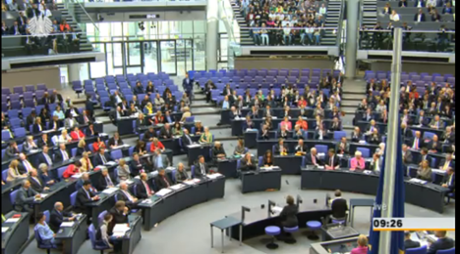
Merkel ends speech. No room for concessions to #Greece visible in her speech.
— Yannis Koutsomitis (@YanniKouts) June 18, 2015
That concludes Merkel’s statement – she has received a lot of applause from MPs in the German parliament.
Merkel: A deal is still possible
Merkel is now talking about Greece.
Greece was on a good path, but it has not been completed. It has dragged its heels on necessary structural reforms.
She is heckled when she says: “Self-responsibility and solidarity go hand in hand.”
She reiterates that Germany is working to keep Greece in the euro, using her mantra “where there is a will, there is a way”. A deal is still possible with Greece’s three international creditors – the EU, International Monetary Fund and European Central Bank.
Merkel: #Euro far more than a currency
— Yannis Koutsomitis (@YanniKouts) June 18, 2015
Updated
Merkel says the EU summit next week won’t discuss Britain’s demands for EU reforms, but Donald Tusk, president of the European Council, will be asked to examine them. But, Merkel stresses, the principle of freedom of movement within the EU is not up for debate.
The German chancellor says it’s not the first time that a member state has sought to clarify its role within the EU, but in the end, compromises were always found. She mentions Denmark in 1992 and Ireland in 2008.
I’m confident that we can achieve this this time. [i.e. keep Britain in the EU]
Updated
On to Brexit: Merkel says she wants Britain to continue to be an “active partner in a strong EU”.
Britain needs to figure out itself what role it wants to play in Europe, she says.
Updated
Merkel is now talking about the eurozone. France and Germany will be pushing for the coordination of economic policies within the current treaties – to boost competitiveness and jobs, she says. This means more structural reforms by member states.
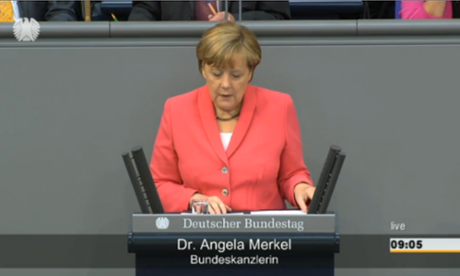
The EU summit will address immigration policy, she says, particularly the “tragedies” in the Mediterranean. Thousands of migrants have died trying to cross the Mediterranean in recent months, and thousands of others have been rescued.
After a brief mic malfunction, Merkel is speaking now.
Angela Merkel addresses German parliament
German chancellor Angela Merkel is due to give a statement on next week’s EU summit in the German parliament shortly. You can watch it live here.
Updated
French finance minister: Grexit would be a catastrophe

French finance minister Michel Sapin has set the tone for today’s meeting by warning it would be a “total catastrophe” for Greece if Athens left the eurozone.
France was doing all it could to find a deal, he told the France Info radio, adding:
“We will fight till the end to find an agreement with Greece.”
Updated
Europe’s stock markets are expected to fall again today, extending recent losses, as investors watch the Greece crisis play out.
Here’s the pre-market predictions:
-
FTSE100 is expected to open 20 points lower at 6,660
-
DAX is expected to open 90 points lower at 10,888
-
CAC40 is expected to open 35 points lower at 4,755
Last night, Fed chief Janet Yellen warned there will be “spillover effects” across the financial markets if the Greek crisis ends badly.
Michael Hewson of CMC Markets confirms that hopes for today’s meeting aren’t high:
Today’s Eurogroup meeting in Luxembourg has been touted as the “last chance saloon” for Greece to agree a deal in time for the end of June.
Regrettably the meeting is likely to come and go without any deal given that Greek officials have refused to submit any fresh proposals, and Greek Prime Minister is jetting off to Russia to see President Putin, which means we may well get some talks over the weekend.
In a sign of how bad things have got the Greek central bank broke with convention and abandoned its neutrality by criticising its incumbent government for the policies it was implementing, in a sign of the fissures opening up in the Greek establishment.
Updated
Introduction: Eurogroup meets, but hopes aren't high
Good morning.
Finance ministers from across the eurozone are heading to Luxembourg today to discuss Greece, which has less than a fortnight to reach a deal with creditors before its bailout expires.
Hopes of a breakthrough are desperately low, though, despite fears of looming capital controls and Greece’s membership of the EU now at stake.
Today’s Eurogroup meeting had been inked in as the moment where Europe could rubber stamp a deal; instead, it could be another missed opportunity to make progress.
Both sides expect the other to make the next move, to close the gap between the measures Greece is prepared to take in return for bailout aid, and what creditors demand. Athens’ insistence that debt relief is needed - and Europe’s reluctance to address this - mean it could be a short discussion.
And without a deal very soon, Greece will simply be unable to repay the IMF the €1.6bn it owes on June 30.
Today's @guardian on #Greece: "can't pay, won't pay", and the striking numbers on unemployment, cuts pic.twitter.com/eDXt3SQ98S
— spyros gkelis (@northaura) June 18, 2015
Last night, Greek finance minister Yanis Varoufakis told ITN News he doesn’t expect a deal today, even though time is desperately short.
“This is the 11th hour.”
“The only sensible proposals on the table at the moment are those that we have tabled. The other side have not come to the party,”
The other side, though, insist that it’s Greece’s move in this long-running saga.
The meeting takes place this afternoon, but we should hear from ministers through the morning as they make their way to the meeting.
We’re also watching out for comments from Angela Merkel this morning, when she addresses MPs in Berlin.
#grexit merkel delivers govt statement to bundestag thur morn on next week's eu summit. she always does that on summit day, not a week early
— Ian Traynor (@traynorbrussels) June 17, 2015
We will be tracking all the key developments through the day...
Updated