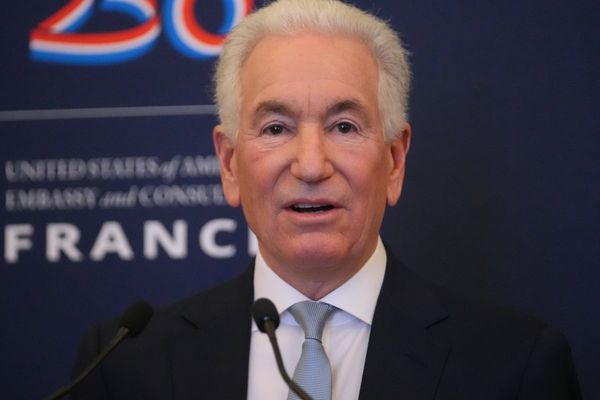
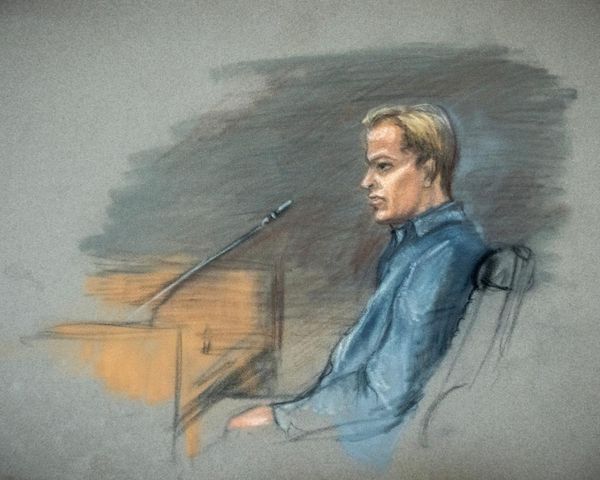
And that’s all for tonight:
Thanks for reading, and commenting, as ever. Goodnight. GW
Our politics editor Patrick Wintour sums up HSBC’s appearance before the Treasury committee:
HSBC is suffering “horrible reputational damage” as a result of the exposure of the systematic aiding of tax avoidance in its Swiss subsidiary, the bank’s chairman has conceded before MPs.
Douglas Flint told the Treasury select committee on Wednesday that he blamed the failings at the Swiss unit on its management, and said secrecy surrounding banking in the country made it difficult for him to have a direct line of sight of what has happening at the bank.
Chairman of the bank since the end of 2010, Flint was finance director at the time the Swiss subsidiary was purchased by HSBC. He also insisted he took personal responsibility for decisions for which he had direct accountability....
Full story: HSBC scandal caused horrible damage to bank’s reputation, says chairman

Political pressure from the Treasury committee, and beyond, could force HMRC into prosecuting more wealthy people suspected of breaking tax law.
That’s according to Fiona Fernie, partner at Pinsent Masons, who says:
“It’s difficult to imagine that HMRC can simply shrug off the immense political pressure that they are coming under at the moment to put more high-profile, high net worth cases forward for prosecution.”
“The result of this is that we see a lot more complex, and costly tax cases coming forward for prosecution.”
That would surely delight campaigners, and critics who say HMRC are too soft on the rich.
But Fernir argues that it could potentially backfire:
“There is a legitimate debate to be had over whether this is the best use of HMRC’s scarce resources. HMRC and the CPS have a good track record of securing convictions for fairly run-of-the mill tax evasion cases, but for complicated cases, even high profile ones like the Harry Rednapp trial, the results seem to be more mixed. HMRC faces Hobson’s choice – take a pragmatic approach and focus on successfully litigating the lower value cases, or take a moral stance and target higher value cases even where the odds of securing a return for the exchequer are longer.”
“If the defendant makes a sympathetic witness and their financial arrangements are reasonably complex, then prosecutors will have a tough time convincing the jury that deliberate evasion – which necessarily involves proving dishonesty on the part of the defendant - took place.”
Video: Protests outside parliament
Campaigners congregated outside parliament today to call for a fair and effective tax system, as MPs quizzed HSBC’s top bosses.
MPs quiz HMRC: the key points
So, what did we learn from that two-hour grilling of Britain’s top tax chiefs?
The only big news is that the UK, at long last, has the right to share the data on Swiss bank accounts with other law enforcement agencies. A case of ‘better late than never’, after five years.
HMRC CEO Lin Homer has already dampened expectations, saying she doesn’t think this will lead to a waterfall of new prosecutions, though.
The fact it took France so long to waive the restrictions on the data is also a concern, given the importance of tax. Britain needs to avoid a repeat, so HMRC must release the letters it exchanged with French counterparts.
MPs also expressed concern that the list leaked by whistleblower Herve Falciani has only led to one successful UK prosecution, out of more than 6,000 names.
Perhaps the most important point was made by Jesse Norman MP: how many of the people on this list are non-domiciled for tax purposes? HMRC wasn’t prepared to say -- despite, as Norman said, this might show whether the non-dom rules are being abused.
Homer also admitted that she’s concerned by the perception that HMRC is soft on the rich and tough on the poor. Some MPs on the committee, such as Rushanara Ali MP, argued that the public have a point.

Last question goes to John Mann -- What would you do if you discovered any parliamentarians were dodging tax?
Lin Homer replies that she’d have to check “whether I had an obligation, or an ability, to refer” them to the parliamentary authorities.
But you have my assurance that where there are people in positions of responsibility, we do act, she insists.
We have taken a senior barrister to court -- i think he was jailed -- and a magistrate, she adds.
John Mann has crunched the numbers, and suggests that the Brits who’ve been using Swiss bank accounts to evade tax have actually made a loss.
Either that, or HMRC have failed to get the right amount of tax back.
That’s based on the fact that HMRC has recovered around £67,000 each from the 2,000 people who didn’t have a legitimate reason for a Swiss bank account (the £135m in recovered tax and penalties, divided by 2,000).
It actually costs £100k to set up a secret Swiss account, Mann reckons.
Homer replies that she’s very comfortable if people have repaid too much tax -- but Mann’s point is that the amounts recovered could be too low.
Can we see the letters from you and the French during the five years while they wouldn’t let you share the Swiss data with other law enforcement agencies and regulators, asks John Mann?
Lin Homer says she’ll consider it, and might need to check with the French....
Mann is also unimpressed that HMRC didn’t get a minister involved to break the deadlock.
You are hiding behind the fact that the French wouldn’t let you share the data, so there couldn’t be prosecutions, he declared.
Not true, Homer insists. We have done a lot with this data.
Homer repeats that HMRC doesn’t expect a ‘waterfall’ of new prosecutions, even though it can now share the date with other agencies.
HMRC says meeting next with Serious Fraud Office, the FCA, CPS, Nat' Crime Agency and EuroJust to discuss sharing of HSBC Suisse data.
— Matthew Moore (@mattmoorek) February 25, 2015
John Mann MP why Dave Hartnett, HMRC’s former head of tax, was allowed to work for HSBC shortly after stepping down from the Revenue?
Lin Homer denies that Hartnett has any inside information on HSBC’s Swiss bank, or HMRC’s systems.
But surely he knew all about problems with the Swiss bank that have only recently come to light?
Homer says not.
This is what MPs mean when they talk about HMRC giving the richest an easy ride:
Lin Homer refuses to accept #HMRC tough on "little guy" whilst soft on prosecuting #HSBC, Goldman Sachs, #Vodafone > pic.twitter.com/cSKBwy2YK7
— Move Your Money UK (@moveyourmoneyuk) February 25, 2015
The International Consortium of Investigative Journalism is tweeting the key points from this hearing:
HMRC making it harder and harder for people to say "I didn't know what I was doing," Homer tells Treasury committee pic.twitter.com/slcYE3VAFb
— ICIJ (@ICIJorg) February 25, 2015
Homer refuses to answer how many cases investigated by HMRC relate to non-domicile people. Says it's not practical, and could breach privacy
— ICIJ (@ICIJorg) February 25, 2015
Rushanara Ali MP is taking HMRC to task about public concerns that the taxman gives preferential treatment to the rich and big businesses.
Lin Homer replies that she’s concerned that this is a perception, but it’s totally not true.
Really?
Ali reminds the committee of an ex-serviceman who was almost made homeless after he got a part-time job, and informed HMRC about the change.
So....what proportion of your staff allocation is chasing high net worth individuals who are avoiding or evading, or accused of it?
Homer agrees to provide the data, but argues that it’s not just rich people who try to avoid and evade tax.
Great @rushanaraali question to the HMRC's Lin Homer about richer people being let off tax dodging, everyone else chased down for it.
— Alex Wilks (@alexwilks) February 25, 2015
Jesse Norman and Lin Homer then clash, after the HMRC boss declines to say how many of the thousands of UK names on the Swiss tax accounts list are non-doms.
It’s not relevant to whether they have paid the right amount of tax, Homer argues, and it might also breach laws on confidentiality.
Norman is seriously unimpressed.
Leaning forwards to get his point home, the Conservative MP points out that this information could be highly relevant to whether the non-domicile tax system is being abused.
But HMRC aren’t keen to release the data (it would be hard to get hold of, apparently), so Andrew Tyrie suggests that they “drop the committee a line” with more info.
Jesse Norman: How was Gulliver's tax set-up allowed?
Jesse Norman then turns to HSBC’s boss, Stuart Gulliver, who appears to be “operating at the outer limits of aggressive tax avoidance”.
He’s been able to enjoy the benefits of living in the this country, his kids go to [private] school here, but he’s still...non-dommed in Hong Kong for potentially 40 years, Norman says.
How was this allowed to happen?
Lin Homer replies that the rules have been applied accurately. Her job is to get the tax that is due, not what people think is due.
Jesse Norman MP returns to the precise status of the Swiss banking data obtained by Herve Falciani. Why is the HMRC copying HSBC and calling it “stolen”?
“It definitely was stolen”, HMRC chief executive Lin Homer replies...... “but we will use data from whatever source”.
We did not pay someone to steal the data, she adds.
But you aren’t prepared to be more pro-active, Norman asks?
Homer: We would prefer big organisations to give us better data.
Norman doesn’t look too impressed [and rightly not – banks hardly have a good record on this]
And why didn’t you tell us that this Swiss data was so gappy and incomplete when you got it, rather than letting expectations build?
HMRC argues that it was clear about the state of the data when it came to light.
Here’s a video clip of Stuart Gulliver apologising to MPs today, at the start of the hearing:
But isn’t the HMRC disappointed by this lack of prosecutions against people who may have used Swiss bank accounts to dodge UK tax?
Lin Homer replies that, as a lawyer, she is happy that there is a high bar to getting a successful prosecution.
And the HMRC does have stronger civil penalties too, don’t forget.
Some twitter reaction:
@BBCBreaking Very poor performance from Lin Hamer - head of #HMRC in committee hearing. How did she get the job? #Strong person needed here
— Andrew J C C (@ParkinsonsImpro) February 25, 2015
Homer says that much of the evidence leaked from Switzerland is too weak to support successful prosecutions.
Q: Is this because of weakness in the law or weakness in the data? Homer: "It's because of weakness in the evidence." #SwissLeaks
— ICIJ (@ICIJorg) February 25, 2015
Onto prosecutions. Or the lack of prosecutions.
Andy Love MP presses Lin Homer on why more people with Swiss bank accounts haven’t appeared in the dock.
Homer explains that HMRC identified around 150 accounts that could have criminal intent, but only one successful prosecution has followed out of 20 cases.
And that might be all we get.
Homer tells the committee that she doesn’t think there will be many more successful prosecutions.
Why on earth not, Love asks? Even a one-in-20 success rate means that the remaining investigations might yield success?
Homes reckons probably not. A total of 1,200 cases were reviewed by our criminal investigations arm, she says, but “the evidence for prosecution is very high”.
HMRC still investigating about 100 cases of possible tax evasion from leaked Swiss bank acct data says HMRC boss #HSBC #tax
— nick huber (@nickahuber) February 25, 2015
HMRC: We've recovered £135m
MPs are pushing for details for what HMRC did with the Swiss tax account data it was handed.
Lin Homer explains that £120m of unpaid tax and interest was recovered, plus £15m in penalties.
And “broadly speaking”, HMRC has recovered almost all the money, although there are still around 100 cases to go.
Updated
HMRC say that they made 1000 requests for data on UK taxpayers from the Swiss authorities in the 2014 calendar year, the maximum possible under Britain’s deal with Switzerland (the deal allows 500 per financial year)
We’re getting some long answers from HMRC, but not many knock-out blows yet.
Finding Treasury Committee's questioning of HMRC bosses a bit meandering. #tax #HSBC
— nick huber (@nickahuber) February 25, 2015
Lin Homer, HMRC CEO, is explaining that the Swiss data has been tricky to use:
Homer: "It's very rough data, it's very incomplete, we actually need to do some data-matching with [other agencies]" - now HMRC can do that
— ICIJ (@ICIJorg) February 25, 2015
Homer emphasizes 2/3 accounts were deemed tax compliant, the rest have been investigated. But prosecution has been difficult #SwissLeaks
— ICIJ (@ICIJorg) February 25, 2015
Hopefully, the long-awaited breakthrough with the French this week should help.....
[or “our friends, the intransigent French” as David Ruffley dubbed them]
HMRC has confirmed, with a tweet, that it now has permission to share the Swiss banking data leaked by Herve Falciani with other law enforcement bodies (as covered earlier)
HMRC confirms HSBC Suisse bank data can now be shared with other law enforcement agencies and regulators: http://t.co/am7eXcKhuo #TSC
— HM Revenue & Customs (@HMRCgovuk) February 25, 2015
The HMRC’s Jennie Granger denies that the UK’s deal with Switzerland would prevent it taking data from a whistleblower, but that people shouldn’t be encouraged to steal data wherever they are.
(a reference to the whistleblower-or-thief argument between John Mann MP and HSBC chairman Douglas Flint earlier)
Updated
Would a simpler tax code lower the amount of tax avoidance and tax evasion, Steve Baker asks?
HMRC’s CEO, Lin Homer, replies that for “hard-edged” tax evasion, the complexity of the tax system isn’t a major factor.
But on the avoidance side, there was “definitely a culture in the mid-2000s when banks and other institutions were aggressively creating tax avoidance schemes, and created an environment we weren’t happy with”.
Back in Parliament, Steve Baker MP asks HMRC officials about the “nonsense” that parliament is still incentivising people to lower their tax bills through film sponsorship schemes.
Edward Troup, tax assurance commissioner at HMRC, says there was a “huge amount of tax avoidance through film tax relief” in the last decade.
But the system was reformed in 2007 and 2008, so it’s working as parliament intended.
What we learned about Stuart Gulliver's tax affairs

My colleague Juliette Garside, one of the team behind the HSBC investigation, explains what we learned about Stuart Gulliver’s tax affairs today.
The key details of Stuart Gulliver’s affairs are beginning to emerge.
He claims the full advantages of nondom status. He pays an annual charge - Gulliver says it is £30,000 - in order to keep his offshore assets out of reach of the UK tax office.
The remittance charge was introduced by a Labour government in 2008. Those who do not pay but are tax and are resident in the UK must disclose their worldwide assets, like any other British taxpayer.
But Gulliver is exempt from this. He pays tax on all his HSBC earnings, but his offshore assets will be taxed in Hong Kong or not at all.
Gulliver has succeeded in persuading the revenue that his domicile is Hong Kong, now under Chinese control. This is because he intends to retire there, and has a home there. MPs on the committee expressed surprise that he was able to be granted such a tax perk.
Conservative MP Jesse Norman said:
“The anomaly is you could have worked for a UK bank for 40 years, you could have lived in this country for 20 years and you could still be non domicile for tax purposes.”
Gulliver was born in Derby, educated at a grammar school in Plymouth and Oxford University, runs Britain’s biggest bank from a UK office, has lived in the UK since 2003, and sent his children to boarding school in the UK.
And Gulliver’s own verdict:
“The amount of tax I have paid is the fair and appropriate amount of tax. The absolute lions share of my earnings have been taxed at UK tax rate.”
HMRC gets French green light to share Swiss data
The committee are now hearing from top officials at HMRC.
Lin Homer, HMRC’s chief executive, says there is “good news” to report.
On 23rd February, the French authorities have formally confirmed that HMRC can use the leaked HSBC Swiss data with other law enforcement officials and regulators to pursue wider offences those on the list.
Tax officials will hold their first meeting next week to plot their next move, Homer says.
Until now, the UK were restricted to only using the data for tax purposes only. That has meant that Britain has potentially missed out on wider offences (as they couldn’t ‘interrogate the information against other data sources)
1st multi-agency meeting of UK investigators over #HSBC to happen next week after French formal waiver on Falciani data, HMRC head says.
— caroline binham (@carolinebinham) February 25, 2015
Andrew Tyrie points out that this has taken five whole years. What would have happened if the shoe was on the other foot, and the French wanted our data?
We have shared it within weeks, or even days, Homer replies.
On 23rd February, French tax authorities confirmed to HMRC it can share data with other UK law enforcement agencies.
— Accountancy Age (@AccountancyAge) February 25, 2015
Summary: HSBC apologises to unimpressed MPs
So, a very quick summary:
CEO Stuart Gulliver told parliament’s Treasury committee that:
“I would like to put on the record an apology from both myself and Douglas for the unacceptable events that took place at our private bank in Switzerland in the mid-2000s. It is an apology we would like to make to you, our customers, our shareholders and the public at large.
“It clearly was unacceptable. We very much regret this, and it has damaged HSBC’s reputation.”
Gulliver also defended his non-domicile tax status, insisting that he has not avoided paying any tax in the UK.
He conceded that using a Swiss bank account, via a Panamanian company, would look unusual to the public, but vowed that it was to ensure privacy.
“It was purely about privacy from colleagues in Hong Kong and Switzerland. We had a computer system back in the day that allowed everybody to inquire into staff accounts ... I was amongst the highest paid people and I wished to preserve my privacy from colleagues. Nothing more than that.”
Gulliver also denied engaging in “aggressive” tax avoidance.
HSBC boss and nondom Stuart Gulliver: "I don't think that the nondom laws would represent aggressive tax avoidance"
— Juliette Garside (@JulietteGarside) February 25, 2015
MPs repeatedly asked Chairman Douglas Flint (a former finance director) who should take the blame for the wrongdoing at its Swiss arm.
Flint argued that he, and other board members, shared “collective responsibility” for the mistakes of the past. But he would not agree to hand back his own bonuses, despite David Ruffley MP calling for “atonement” over the Swiss scandal.
Flint also revealed that 70% of staff who worked at its Swiss bank at the time of the revelations have left. The rest have been retrained.
Gulliver told MPs that he has made sweeping changes to HSBC, and that the bank no longer offer “hold-mail” accounts where details were never sent to a customer’s home.
Gulliver also denied trying to influence the UK media, and defended putting advertising with the Daily Telegraph ‘on hold’ after it published negative stories about the bank.
We believe in a “free and vibrant” press, he pledged.
HSBC spends £31ml on adverstising in the UK - discussing pauses on advertising at the Telegraph: No one would purchase products at that time
— Jane Samuels (@Jane_Samuels) February 25, 2015
And Gulliver, who was paid £7.6m last year, declined to say whether he was a fat cat.
Asked if he is a fat cat HSBC CEO Gulliver tells HMRC cttee: "You would have to define fat cats for me to be able to answer". Good riposte!
— Gordon Rawlins (@rawlins22444) February 25, 2015
But overall, the Treasury committee looked somewhat unimpressed by the performance.
Labour’s John Mann, for example, was horrified that Flint described the leak of Swiss data as “theft”, while other MPs tried repeatedly to get more personal accountability from the pair.
Yes! RT @ED_Forensic John Mann MP "You are calling whistleblowing, which has exposed criminality, as being data theft" #Whistleblowing #HSBC
— Jane Samuels (@Jane_Samuels) February 25, 2015
Updated
And that’s the end of the session.
Andrew Tyrie sums up that fixing HSBC appears to be a “work in progress”.
Steve Baker MP asks about the £250m loan which HSBC gave to the owners of the Telegraph in 2012, as the Guardian reported last week.
Gulliver replies that, while he’s restrained about releasing customer details, “we do not lend any money to the Telegraph at all”.
Gulliver denies ever trying to use commercial threats to influence the media - a free press is that very body that makes our ads valuable, he says
What about the revelations that you threatened to pull advertising to avoid negative publicity?
Gulliver says there was one occasion, after the Telegraph wrote about HSBC’s Jersey bank, that it “postponed” advertising.
He says the ads ran later, and no money was lost.
We felt that “No-one in their right mind” was going to take out a HSBC mortgate or credit card while these stories were running.
Steve Baker MP moves onto the issue of the media, and accusations that HSBC used its muscle to influence the Daily Telegraph.
How much money does HSBC spend with the Telegraph?
Gulliver explains that HSBC spends £31m on advertising, including £4.6m on print adverts.
The top five newspapers are (in order) Metro, the Evening Standard, The Telegraph, The Times, and the Daily Mail.
Update: he also revealed that in digital advertising, it spends the most with the Guardian, followed by the Independent.
Updated
Mann asks why Flint hasn’t fired Gulliver.
Because he’s doing a very good job.
So in that case, why haven’t you resigned yourself?
Flint insists that he and Gulliver are fixing the problems at HSBC.
Flint right - #HSBC is not a special case, just got caught out. Any other bank with a Swiss Private Bank will have done just the same.
— Louise Cooper (@Louiseaileen70) February 25, 2015
John Mann MP asks Flint how he dares to use the term “theft” to describe the leaked details of its Swiss bank accounts [see earlier post].
Because the data was stolen, Flint replies.
But isn’t that a good thing?
Flint feels it is not.
But it means that we, the public, regulators get to see what you’re not able to see or fix, Mann hits back.
Why did HSBC fire a compliance officer, Sue Shelley, after she tried to flag up the problems at the Swiss bank?
HSBC denies that Shelley was fired for whistle-blowing, and will write to the committee with further details.
Focus turns to Sue Shelley, #HSBC ex-compliance officer in Luxembourg, who was dismissed in 2013. Flint: "Her job was to escalate concerns."
— Mark Kleinman (@MarkKleinmanSky) February 25, 2015
Amazing - no one will take responsibility - all shared responsibility #hsbc #fail
— Steve Collins (@TradeDesk_Steve) February 25, 2015
Now it’s Alok Sharma MP’s turn to try to get Flint and Gulliver to take full responsibility for its Swiss banking arm.
Flint says they take collective responsibility, which includes personal responsibility. But you can’t expect him to take personal responsibility for a large operation that he’s not personally running.
HSBC CEO asked if he's a fat cat
Stuart Gulliver is asked if he’s a fat cat.
You’d have to define fat cat for me before I can give a ‘meaningful response’, he replies.
Have you ever met anyone who has had their benefits sanctioned?
No, he replies.
MP @MikeKaneMP asks "would you describe yourselves as Fat Cats?" #HSBC CEO says: you'd have to define Fat Cat for me to answer that question
— Chris Ship (@chrisshipitv) February 25, 2015
Updated
Douglas Flint is asked if he might hand back your own bonus because of the scandal.
I’ve not had a bonus since 2010, he replies, and I’ve waived three during my career when I felt I should take personal responsibility.
Can bonuses be clawed back?
Apparently not. Flint says that the remuneration has “long gone”, and clawback rules didn’t exist at the time.
He then reveals that 70% of staff involved with the Swiss private banking arm have now left the company.
Flint: Swiss management are most accountable
Shouldn’t we see some “atonement” from HSBC over this scandal, asks David Ruffley MP?
Douglas Flint says he “totally” agrees.
So who’s going to take personal responsibility? Chris Meares and Clive Bannister, who ran the private banking arm?
Flint agrees with the principle that people should take personal responsibility, where appropriate. Meares and Bannister “bear pretty direct responsibility”, he concedes.
But the local Swiss management were “most accountable”.
What action did you take as CFO, Mr Flint, when you learned that whistleblower Hervé Falciani had been arrested in 2008? What conversions did you have as head of risk?
I was given board level responsibility for risk in 2010, Douglas Flint replies.
The private bank got more attention during the 2000s, from the audit committee and the management committee. So Chris Meares and Clive Bannister, who ran HSBC’s Private Bank , appeared before us and given targets.
Might their bonuses have encourage them to take risks or not operate best practice?
Flint argues not -- bonuses were ‘discretionary’
Flint then repeats that a lot of changes have been made to avoid a repeat of the Swiss scandal....
"We are suffering from horrible reputational damage" says Douglas Flint HSBC chairman, but it's all in the past and no one responsible.
— Patrick Wintour (@patrickwintour) February 25, 2015
How could HSBC have been operating proper scrutiny if it allowed cocaine smugglers to launder money through its Swiss bank? (a reference to this, I think)
Flint embarks on a long explanation about how leaked account details was stolen during a system upgrade (ironically, to improve controls), so the records aren’t complete or totally accurate (he says).
Flint: "Some of the revelations are accurate but not within the timeline." Says one account closed in 1991. #HSBC
— David Pegg (@davidtpegg) February 25, 2015
HSBC's leaked data around its Swiss bank was leaked during a data upgrade that was meant to improve controls, Flint says
— James Titcomb (@jamestitcomb) February 25, 2015
Stewart Hosie MP on HSBC controls: "It's not really robust when a man convicted of smuggling a tonne of cocaine is taking out wads of cash?
— Juliette Garside (@JulietteGarside) February 25, 2015
Updated
Will Douglas Flint take responsibility for the acquisition of the Swiss bank subsidiary, asks Andy Love. You were the finance director at the time.
Flint plays the collective responsibility card, saying that he certainly shares responsibility, as part of the team.
I signed off…everyone on this management team signed it off, he replies.
Updated
HSBC chairman: We wouldn't do these schemes again
Now it’s Andy Love’s MP turn - he grills Douglas Flint about the aggressive tax avoidance schemes which HSBC has been involved with.
Two, Eclipse 35 and Goldcrest, have cost UK taxpayers tens of millions of pounds. Would you do them again?
Flint admits that “We wouldn’t do them today”, and indeed stopped such schemes in 2009.
Flint pressed on HSBC support for film schemes accused of tax avoidance "We wouldn't do it today."
— Kamal Ahmed (@bbckamal) February 25, 2015
Douglas Flint, chairman of HSBC: "I pay all my tax and I find it abhorrent that others don’t". Yes, really.
— Kate McCann (@KateEMcCann) February 25, 2015
Do you understand the deep frustration that customers in this country feel in this country, asks John Thurso. Good citizens in this country who pay tax get hammered by HMRC, but large firms get around it.
So, what are you going to do to ensure that the right amount of tax is paid by companies, in the right jurisdiction?
One of the fundamental parts of banking is “rule of law”, Douglas Flint replies, and that is based on equality before the law.
He then adds:
I pay all my tax and find it abhorrent that others do not.
So are there any other offences you’d like to admit now?
The board ask me that regularly, Flint replies. He doesn’t name any other looming problems that aren’t in the public eye.
Updated
Some early reaction to the hearing (reminder, there’s a live feed here)
#HSBC's Gulliver and Flint slippery as hell when asked by @tpearce003 about "hold mail" and related dodginess their bank condoned
— Ian Fraser (@Ian_Fraser) February 25, 2015
just started watching the Treasury Committee with HSBC. Douglas Flint looks uncomfortable.
— Louise Cooper (@Louiseaileen70) February 25, 2015
Douglas Flint speechless when asked why HSBC clients would bring large amounts of cash to Switzerland
— Catherine Boyle (@cboylecnbc) February 25, 2015
QuoteOfTheDay. HSBC boss tells MPs re Swiss tax clients: "I can understand how people find these kind of arrangements unusual"
— Paul Waugh (@paulwaugh) February 25, 2015
Onto the revelation in the Guardian that some clients turned up in Switzerland to take large amounts of cash. Wasn’t that a little bit suspicious?
Flint struggles for a moment, before arguing that there are “legitimate” reasons for this. Today it’s a “red flag”, though.
Douglas Flint: There are clients who like to have a large amount of cash for legitimate purposes. It's a red flag today.
— Juliette Garside (@JulietteGarside) February 25, 2015
And why did HSBC operate hold mail accounts?
For people who didn’t their bank details to arrive where they live, Gulliver says. HSBC don’t offer them any more.
Are they hiding from their spouse, or the taxman?
Gulliver replies that such hold-mail accounts weren’t suspicious in Switzerland at the time.
*HSBC CEO: HOLD-MAIL ACCOUNTS WEREN'T SUSPICIOUS IN SWITZERLAND
— Steve Collins (@TradeDesk_Steve) February 25, 2015
Teresa Pearce MP asks Gulliver couldn’t trust HSBC staff not to check his own account fi he banked in Hong Kong.
I’m a high-profile employee, he replies. Other clients would be completely secure, of course.
My financial affairs are very public now, he adds wryly.
But why didn’t HSBC operate proper controls, Tyrie asks.
Flint says that the system “worked very well until it didn’t work”, and it’s now being fixed.
So are we fixed yet?
It’s an ongoing process.....
Flint compares cleaning up HSBC to painting the Forth Bridge. "you start at the beginning and you go again because circumstances change."
— Juliette Garside (@JulietteGarside) February 25, 2015
Tyrie takes a broader view now, running through the list of investigations or fines which HSBC faces.
Interest rate derivative mis-selling, Libor manipulation, Eurobor manipulation, misselling mortgage-backed securities to Fannie Mae and Freddie Mac, Forex rigging, Weakness in money laundering controls, credit default swaps, US investigation for rigging precious metals, Various class action lawsuits over the Bernie Madoff fraud..... (I think I missed one).
Not a very good list, is it?
It’s a terrible list, chairman Flint replies. Although he says HSBC wasn’t fined for Libor rigging.
Updated
Andrew Tyrie wants to know who is responsible for HSBC buying these overseas operations where banking standards were too low. Who should carry the can?
Chairman Douglas Flint argues that you can’t pin the blame for a major acquision on a single person. It’s a joint decision.
Tyrie’s not impressed -- how will bankers ever be held to account if no-one takes the blame?
Gulliver: Never discussed Swiss case with Treasury
Gulliver says that he never discussed the Swiss case with Treasury officials at any of the 56 meeting he had with officials.
It may have been raised at “two or three” HMRC meetings.
But your Swiss bank has bent over backwards to allow tax avoidance and evasion, says Rushanara Ali, so how can you be trusted?.
These were Different Times, Gulliver replies.
How can the public be expected to trust HSBC, asks Rushanara Ali?
Gulliver says HSBC is confident that we have made significant changes to its Swiss private bank.
We have cut the number of clients from 30k to 10k. The total assets have been cut by 42%.
We’re aiming to only take clients from 38 countries, from 150 before. We want certification from lawyers before taking money from UK non-doms.
Flint:I share the comments that stuart made about the shame we feel about what happened in switzerland and I take my share of responsibility
— Juliette Garside (@JulietteGarside) February 25, 2015
Douglas Flint say he echoes Gulliver’s apology.
Gulliver: I'm cleaning HSBC up
Gulliver runs through the changes he’s made as CEO.
We used to be run as 88 separate operations before I changed the set up. I have sold 77 businesses, and cut headcount.
I hope the British public see that the action steps I gave taken leave HSBC in a better state...
Updated
Labour MP Rushanara Ali asks Gulliver about his comment this week that large corporations are being held to “higher standards than the military, the church or civil service.”
He concedes that this comparison was unfortunate.
What about the statement he couldn’t guarantee that the Swiss tax affair would happen again?
We have put in place systems, process, controls, to reduce the chance of this happening again to a very low level, he insists.
Updated
Jesse Norman asks Stuart Gulliver about his non-dom status.
Gulliver insists that he has “I have absolutely followed the letter of the domicile law”, including paying that remittance charge.
But he has paid the remittance charge, introduced in 2008, which he says costs him £30,000 a year.
— Juliette Garside (@JulietteGarside) February 25, 2015
Norman points out that Gulliver has worked in the UK since 2003. How long do you expect to be here?
Until I retire from this job, Gulliver replies.
So you could work here for 20 years, as a non-domiciled individual?
Gulliver says he could:
But the important point is that I have paid UK tax on my worldwide HSBC income
I have paid the fair and appropriate amount of tax.
Gulliver confirms no tax on offshore assets. I have the same tax advantage that any non dom has which is that my oversaes assets are taxed..
— Juliette Garside (@JulietteGarside) February 25, 2015
2/on a remittance basis and I pay the £30,000 charge each year.
— Juliette Garside (@JulietteGarside) February 25, 2015
Updated
Onto chairman Douglas Flint, who is asked about reputational damage from these allegations.
He insists that HSBC’s pay is among the most transparent in the industry.
Gulliver has begun by apologising for what "damage to trust and confidence to hsbc" which "hurt clients, customers and shareholders"
— Juliette Garside (@JulietteGarside) February 25, 2015
Important point -- Gulliver says he pays tax on the ‘remittance’ basis:
Gulliver admits for first time he pays tax on the remittance basis
— Juliette Garside (@JulietteGarside) February 25, 2015
This means his offshore earnings are exempt from UK tax
— Juliette Garside (@JulietteGarside) February 25, 2015
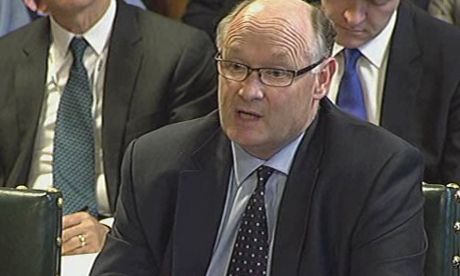
Gulliver concedes that his arrangements may look unusual and “puzzling”, but insists that he has paid all the tax he owed in the UK.
I have been registered for UK tax since 2003. I have paid UK tax on my HSBC dividends, and capital gains on all shares I have sold, he says.
Updated
Why Panama?
That was simply the nominee entity that our Swiss bank advised, Gulliver says.
Explaining his own tax affairs, Gulliver says that he comes from an ordinary background, a state school in Plymouth.
But then he joined HSBC, and began working overseas - based in HSBC.
He insists there was no tax benefit to the Panamanian company he used for his salary
So why do it, asks Tyrie?
Simply to give me privacy, Gulliver insists. The system in Hong Kong meant that every employee could see my renumeration.
But transparency is a key part of banking - your salary is now disclosed in the company report, Tyrie points out.
This is before I joined the board, Gulliver replies.
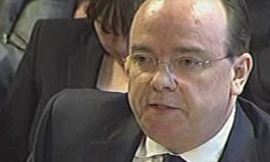
Stuart Gulliver apologises for Swiss tax
Stuart Gulliver starts by putting on record an apology for the “unacceptable events at our Swiss bank” in the 2000s.
He is making it to MPs, customers, shareholders and the public at large.
So who is apologising, asks Tyrie?
I am personally, Gulliver says.
I am responsible for cleaning this up, he adds. Although I wasn’t running the Swiss bank, I was an HSBC employee during this time.
Committee chairman Andrew Tyrie says there are some quite remarkable revelations to discuss.
Starting with Stuart Gulliver - why did he used a company based in Panama, as well as a Swiss bank account, to handle his money?
HSBC hearing begins
HSBC chief executive Stuart Gulliver and chairman Douglas Flint have just arrived in Committee Room 8, where the Treasury Committee are assembled for today’s session.
The UK Treasury Select Committee with the #HSBC Chairman is about to start. We'll be tweeting any key moments. #Swissleaks
— Global Witness (@Global_Witness) February 25, 2015
MPs in the main chamber of parliament are debating bankers bonuses. My colleague Aisha Gani is covering it in our Politics Live blog:
Banking Bonus debate: Politics Live blog
Watch the committee session here
The Treasury committee hearing with HSBC, and HMRC, will be broadcast live on the web, here. (right-click to open in a new page)
Updated
Greg Wise, the actor married to Oscar winner Emma Thompson, has announced that the couple will refuse to pay tax until those who evaded tax through HSBC’s Swiss arm are jailed.
Wise told the Evening Standard that:
“I want to stop paying tax, until everyone pays tax,”
“I have actively loved paying tax, because I am a profound fucking socialist and I believe we are all in it together. But I am disgusted with HMRC. I am disgusted with HSBC. And I’m not paying a penny more until those evil bastards go to prison.”
Here’s the story: Emma Thompson and Greg Wise in tax boycott over HSBC scandal
Background reading
The revelations about HSBC’s Swiss banking operations broke on the evening of Sunday, February 8th, and dominated the media for days.
The Guardian’s full coverage of the story is online here:
HSBC Files
This article is a great summary of what’s been uncovered:
The HSBC files: what we know so far
Updated
HSBC CEO Gulliver &Chairman Flint to answer MPs' questions about their Swiss bank at 14.15GMT.First time they'll be on camera since scandal
— Joanna Partridge (@JoannaPartridge) February 25, 2015
MPs grill HSBC over tax revelations - live
I’m switching my attention to parliament now, where the two top executives at banking giant HSBC are appearing before the Treasury committee soon.
Chief executive Stuart Gulliver and chairman Douglas Flint will be grilled about the revelations that HSBC’s Swiss arm helped wealthy customers avoid taxes and conceal millions of dollars of assets.
They’ll also face questions on how the division was able to advise clients on how to circumvent domestic tax authorities, as exposed by leaked files from 2005 to 2007.
The committee extended the session from 45 minutes to 2 hours last night, and announced that Gulliver would be attending; originally Flint was due to be alone.
Both men can expect tough scrutiny over Swiss tax revelations, and the wider culture at one of the world’s largest banks.
Gulliver, who said on Monday that the revelations were a “source of shame and reputational damage”, will probably also be asked why he used a Swiss bank account himself.
MPs will also hear from HMRC staff, including CEO Lin Homer.
The hearing begins at 2.15pm GMT, so in around half an hour.

As City editor Jill Treanor wrote last night:
MPs have turned up the heat on HSBC by summoning its boss, Stuart Gulliver, at the last minute to give evidence alongside the group’s chairman.
Revelations that Gulliver, brought in as a reforming chief executive of Britain’s biggest bank, had a bank account in Switzerland that was routed through Panama prompted the Treasury select committee to call him in to give evidence.
Leaked files covering 2005-2007 show bank chief executive sheltered £5m of his own money at Panamanian company with Swiss HSBC accountRead more
Two hours are now scheduled on Wednesday for the MPs to put their questions to the banking bosses, rather than the 45 minutes that had initially been timetabled for the bank’s chairman, Douglas Flint.
The two HSBC executives will give evidence to the committee prior to Lin Homer, chief executive of HM Revenue & Customs. She faces questions about why only one person has been prosecuted for avoiding taxes.
On Monday while presenting HSBC’s latest results, Gulliver and Flint said they were humbled and shamed by the tax revelations.
The Treasury select committee called the hearing after the Guardian and other publications published leaked details of 100,000 bank accounts held by HSBC’s Swiss operation that showed how the bank had helped clients avoid tax and move bricks of cash out of the country.
Here’s Jill’s preview:
HSBC boss Stuart Gulliver called to answer MPs’ questions on Wednesday
Lunchtime summary: Greek PM calls for support

Time to recap, before I move away from Greek matters for a few hours.
Greece’s prime minister has urged MPs to support the country’s bailout agreement.
Alexis Tsipras said the deal was a step forwards, and insisted that the new government must prove it can govern.
He told the Charlie Hebdo magazine that:
“This is what I tell my counterparts: if you think it is in your interest to shoot down progressive governments like ours, just a few days after our election, then you should fear the worst”
But concerns are growing in Germany, where finance minister Wolfgang Schauble questioned whether Greece can be trusted.
Two senior Berlin lawmakers have warned that Germany must not ‘throw good money after bad’ at Greece.
And in a Greek courtroom, former finance minister George Papaconstantinou faces criminal charges that he removed names from the Lagarde List of suspected tax evaders.

Updated
Chart time! The Bank of England has unlocked a treasure trove of historic data, as it holds a research conference in London today.
Economists have been truffling for tasty highlights:
Gym time. We work around 32 hours per week. It was almost 60 back in the 1850s - not much time for the gym back then! pic.twitter.com/qcUbbQAy0q
— RBS Economics (@RBS_Economics) February 25, 2015
As @tomashirstecon jokes 'there is no productivity puzzle', we've just returned to the 1857-1947 trend... pic.twitter.com/tgCtBjYeTX
— Duncan Weldon (@DuncanWeldon) February 25, 2015
Inflation adjusted UK share price index since 1700. Couple of historical highlights along the way. @DuncanWeldon pic.twitter.com/7DSY7UefyW
— RBS Economics (@RBS_Economics) February 25, 2015
The UK's history of current accounts and currency crashes since 1816. Brace for Gold Standard advocates... pic.twitter.com/Lk91atozVo
— RBS Economics (@RBS_Economics) February 25, 2015
So if economic data is your thing, you’ll love this page:
Three centuries of macroeconomic data
Updated
Over in Dublin, a banking inquiry has heard that Ireland’s Central Bank took more risks with the Republic’s high street banks than its state counterparts in southern European countries like Spain before the financial crash.
A reminder that Greece wasn’t the only country to blunder in the good times.
Henry McDonald has the story:
Professor Gregory O’Connor said that the Irish Central Bank was “really excessively too risky” during the credit boom before the banking system almost totally collapsed in Ireland.
The Maynooth University Economist compared the Central Bank in Dublin unfavourably to the likes those in trouble in Southern Europe which were “more modestly too risky” at the time.
He was speaking to the ongoing parliamentary inquiry into how Ireland’s banks had to be rescued by Irish and EU taxpayers with hundreds of billions of euros - a near collapse brought about by excessive lending to fuel a building boom and property buying spree not only in the Republic but across the world.
Professor O’Connor said even the Central Bank got caught up in the banking frenzy:
“It took the spirit of the times and really ran with it.”
He added that two of Ireland’s insolvent banks should have been left out of the bank guarantee that cost the Republic so much financially, and led to the country’s bailout.
Securing the two most insolvent banks with taxpayer’s money was an obvious error and, at a cost of €35bn, “they should have been left out”.
“The economy was going into a slump but it could have saved a big chunk of that money.”
Alexis Tsipras has told his MPs that Greece took a step forwards at this month’s bailout negotiations, Enikos reports.
While things remain tough, his government will be judged by its ability to negotiate and govern, he added, at today’s meeting.
A signal to concerned Syriza members not to break ranks. More here
Tsipras: We will also be judged by our ability to govern - http://t.co/gYGE70Mlmz pic.twitter.com/QR2kG9DYqK
— enikos_en (@enikos_en) February 25, 2015

Syriza MPs have been gathered in the Athens parliament for over two hours listening to prime minister Alexis Tsipras dissect the deal his government signed last week.
Media reports are describing the climate “as anything but jubilant” noting that today marks the 28 the day since Greece (and Europe) got its first far left government (h/t Helena)
Updated

Updated
Syriza MP: We will succeed
With dissent within the ruling Syriza party on the rise as the magnitude of the government’s climb-down sinks in, the Euro MP Dimitris Papadimoulis has also waded in, says Helena Smith.
Papadimoulis told SKAI TV this morning that the government is going to ride out the storm.
The veteran leftist declared:
“None of the government’s senior members are going to pull the rug from under [prime minister Alexis] Tsipras at a time when we have only just begun and the difficulties lie before us.”
“The discussion about the future has already started”, he said, adding that it was “only logical” that when a compromise occurs there are differences of opinion.
Papadimoulis, one of Syriza’s big guns, said the government had scored a major coup in opening up a discussion over “the preposterous” primary surpluses that the previous administration had agreed to with the country’s creditors (3 % in 2015 and 4.5 % in 2016).
And he added confidently:
“And when we succeed, it will be a breath of air [with which] to confront the humanitarian crisis”.
If a picture can speak a thousand words it did this morning in the Ta Nea newspaper.
Page 12 carried a picture of the Greek finance minister Yanis Varoufakis conferring with Energy minister Panagiotis Lafazanis “late at night” in parliament’s cafe. Lafazanis, who heads Syriza’s hard left faction, has openly voiced his displeasure over the government’s plans to press ahead with privatisations [as covered this morning].
Updated
Quartz have helpfully deconstructed the letter which Greece’s creditors sent to Athens yesterday:
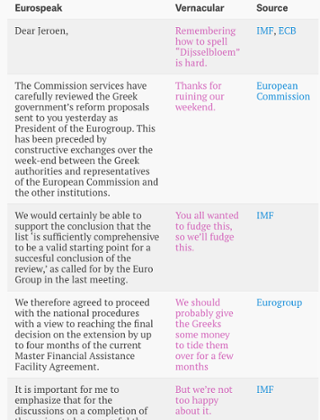
Here's what the Eurogroup really told the Greek government: http://t.co/YDNCJbd4fw
— Tim Weber (@tim_weber) February 25, 2015
Greek minister: We face daily negotiations
Over in Athens Greece’s labour minister, Panos Skourletis has pledged that the next four months will be a period of “daily negotiation,” as debt repayment demands loom.
Our correspondent Helena Smith reports:
“We know that until August we have huge financial requirements,” said Skourletis, referring to the maturing debt that Greece will have to cover by the summer.
The labour minister, formerly spokesman of the ruling radical-left Syriza party, told Mega TV that:
“The next four months will be four months of daily negotiation.”
Greece has to pay back IMF loans of just under €2bn by April when it also has to redeem short-term debt of €4.4bn and €2.4bn in March and April respectively. Under the aid extension agreement reached on Friday, Athens will receive the last €7.2bn aid instalment it has yet to draw down from its previous bailout once it has successfully completed a review of that programme (which won’t be until the end of April).
“If the €7.2bn disbursement is delayed the public sector will have a very serious and possibly unprecedented cash problem,” the leading commentator Ioannis Pretenderis wrote in today’s Ta Nea - with the cynical aside that the disbursement was the one “we didn’t want because we didn’t need it.”
Skourletis also said the left-dominated coalition would confer with the Swiss-based International Labour Organization (ILO) on its plan to re-instate the minimum wage to €751 (although as part of last week’s deal it pledged to do that “gradually” over the course of the next two years).
World stock markets hit a record high this morning, the FT reports, as relief over the Greek bailout talks helped to push shares higher.
A solid day’s trading in Asia pushed the FTSE All-World index up to a new high, after the UK FTSE 100, German DAX and US Dow Jones indices all posted record closing highs on Tuesday.
However, most European markets are now dipping:
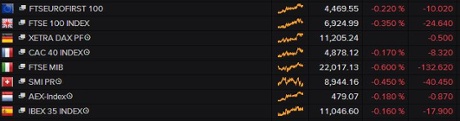
The City is also digesting one shocker this morning. Shares in AO World, which sells kitchen appliances over the internet, have plunged by 30% after it issued a profits warning.
Full story: AO World shares plummet as appliance retailer issues profits warning
Not the best way to mark the first anniversary of AO’s stock market float, and vindication for those who wondered whether a firm flogging fridges over the web could really be worth more than £1.5bn.
Wrote this @FTLex note on AO World a year ago to the day. Since it's off 28% at pixel, holds up pretty well http://t.co/m8dmTuJdk2
— Joseph Cotterill (@jsphctrl) February 25, 2015
Investors have paid Germany for the chance to lend it money for five years, for the first time ever.
Germany auctioned €3.3bn of five-year debt at an average yield, or interest rate, of -0.08% this morning, meaning traders paid more than the face value of the debt.
Paying to lend to GE RT@MarcoBabic1: Germany AUCTIONS 5-YEAR NOTES AT NEGATIVE YIELD FOR FIRST TIME. YIELD IS -0.08% pic.twitter.com/ea8DW6TDaq
— Linda Yueh (@lindayueh) February 25, 2015
Other eurozone bond yields have been hitting record lows again today, continuing a long-running trend. Weak growth prospects, deflation fears, and the imminent launch of the ECB’s quantitative easing programme are all driving money into eurozone debt.
This world we live in, redux. *GERMANY AUCTIONS 5-YEAR NOTES AT NEGATIVE YIELD FOR FIRST TIME
— Frederik Ducrozet (@fwred) February 25, 2015
Varoufakis tells Charlie Hebdo: Europe risks right-wing backlash

Europe will hand racists and nationalists a victory if it does not support the new Greek government, finance chief Yanis Varoufakis has warned.
Varoufakis made the claim in a new interview with French satirical magazine Charlie Hebdo.
And here it is, headlined “Europe prescribes austerity, as doctors prescribe bleeding.”
Interview du ministre grec des finances #YanisVaroufakis #yanis dans #CharlieHebdo pic.twitter.com/Byo8q7egBc
— Mathilde Golla (@Mathgolla) February 25, 2015
The article isn’t online, alas. But Reuters has the details:
In an interview published on Wednesday - the second edition since the satirical weekly was attacked by Islamist gunmen - the leftist academic says European government’s will suffer if governments like his are “asphyxiated.”
“This is what I tell my counterparts: if you think it is in your interest to shoot down progressive governments like ours, just a few days after our election, then you should fear the worst,” he said.
Our Paris correspondent Angelique Chrisafis has written about the new issue, and the magazine’s struggle to recover from last month’s attack:
Charlie Hebdo staff ponder bittersweet new success after jihadi terror attack
France: départ en douceur pour les ventes du nouveau «Charlie Hebdo» http://t.co/zmNgwm3B4L pic.twitter.com/Z1KzXd2Im8
— TVA nouvelles (@tvanouvelles) February 25, 2015
Greece’s finance minister has now weighed in on the privatisation issue, saying that sales that haven’t been completed might be changed.
Yanis Varoufakis told the Real FM radio station that:
“We will not change the privatisations that have already been done.”
“With the privatisations that are ongoing, the Greek government can implement the law and change some terms, and also examine the legality.”
That follows the energy minister’s claim today that two key ongoing sales will be abandoned....
Updated
Greek communists call anti-government demo
Alexis Tsipras will soon face his first protest rally since becoming prime minister.
Greece’s communist party has called a demonstration on Friday night, against the bailout agreement hammered out late last week.
The KKE party accused Tsipras of caving in to the eurozone and trying to deceive the public about the result, declaring:
“The agreement and the list of reforms contain all the anti-popular policies of New Democracy and Pasok parties [the previous government]”.
KKE said that citizens who feel disappointed by recent events should assemble in Syntagma Square at 7pm on Friday night (5pm GMT).
It also called for the minimum wage to be raised immediately, labour market reforms to be reversed, and more spending on health, education, and other public services.
Greek Communist Party KKE planning 1st anti-government demonstration, will submit anti-bailout legislation http://t.co/JUyiSZUGOc #Greece
— Derek Gatopoulos (@dgatopoulos) February 25, 2015
Updated
Germany’s Rheinische Post newspaper is reporting today that Berlin politicians expect Greece will receive a third bailout this summer, of at least €20bn.
It also predicts that up to 60 government MPs could rebel on Friday, when the Bundestag votes on Greece’s four-month bailout extension. Here’s the full story.
Over in Germany, finance minister Wolfgang Schäuble has done his bit for international goodwill by questioning whether Greece’s government can be trusted.
Discussing the Greek bailout extension on SWR2 radio, Schäuble said:
“It wasn’t easy an easy decision for us but neither was it easy for the Greek government because (they) had told the people something completely different in the campaign and afterwards,”
“The question now is whether one can believe the Greek government’s assurances or not. There’s a lot of doubt in Germany, that has to be understood.”
(quotes via Reuters)
Mehr Zeit für Griechenlands Reformen. Wir haben Finanzminister Schäuble interviewt: http://t.co/Xk7YXVPTVX @BMF_Bund pic.twitter.com/L9vbJV9P8B
— SWR2 (@SWR2) February 25, 2015
Updated
Greece’s energy minister has declared that the privatisation of the country’s largest electricity provider, PPC, and power grid operator ADMIE will not proceed, despite the reforms pledged yesterday.
Panagiotis Lafazanis told the Ethnos newspaper that:
“The tender for ADMIE will not go ahead.
The companies have not submitted binding bids so it will not be completed. That is also the case with PPC.”
Those privatisations were demanded by Greece’s creditors as part of the bailout, and several foreign companies has expressed interest.
Yesterday, the Greek government appeared to climb down yesterday over its vow to stop the privatisations. It promised that: “Where the tender process has been launched the government will respect the process, according to the law.”
If binding bids haven’t been filed, maybe Lafazanis is right that Greece can wriggle out. But, these sales were a key source of revenue, so cancelling them creates new budget problems, as well as irking Greece’s creditors.....
No fresh record highs in the stock markets this morning, yet anyway.
The FTSE 100 is down 2 points, after scaling new heights yesterday, while the German and French indices are flat.
Markets pretty quiet & drifting in early trade - a Greek hangover. Back in ancient times a Greek hangover cure was to eat deep-fried canary
— RANsquawk (@RANsquawk) February 25, 2015
More photos from the George Papaconstantinou trial this morning:
More: Ex-finance minister Papaconstantinou in court http://t.co/DsGm2E9Zk1 HT @ElenaBec #Greece pic.twitter.com/RMwCIX8wxw
— Derek Gatopoulos (@dgatopoulos) February 25, 2015
Former Greek finance minister stands trial over Lagarde List

Greece’s former finance minister, George Papaconstantinou, has gone on trial this morning over charges that he removed the names of three relatives from a list of suspected tax evaders.
In the last few minutes, Papaconstantinou has pleaded Not Guilty to charges that he doctored the so-called “Lagarde List”.
#Greece former FinMin Papaconstantinou pleads not guilty to forging public record charges on the 1st day of Falciani/Lagarde list trial.
— Yannis Koutsomitis (@YanniKouts) February 25, 2015
This list, handed to Athens by Christine Lagarde in 2010, contained the names of thousands of Greeks with Swiss bank accounts.
Papaconstantinou is charged with criminal counts of doctoring a document and of attempted breach of faith.
Papaconstantinou has consistently denied any wrongdoing, saying he is the victim of an attempt to incriminate him.
The Greek government has been criticised for not promptly investigating the list for potential tax evaders. Instead, it brought charges against the Greek journalist who subsequently published the list in 2013.

Updated
German MPs worried about Greek deal
A group of conservative government MPs have urged Angela Merkel to take a hard line with Athens over its bailout, in another sign of trouble ahead.
According to the FAZ newspaper, two senior members of Merkel’s CDU party fear Greece is being treated too leniently.
CDU committee head Kurt Lauk, and its secretary general, Wolfgang Steiger, wrote that:
“A simple extension of the aid programme without effective terms would mean that we are knowingly throwing further good money after bad.”
Most of that “good money”, of course, didn’t hang around in Greece for long before being sent back to the country’s creditors -- such as German banks....
Updated
Introduction: Battles ahead for Greece
Good morning, and welcome to our rolling coverage of Greek’s bailout, the world economy, the financial markets and business.
The eurozone achieved a breakthrough yesterday, but the hard work is really just beginning.
While Greece’s creditors have, somewhat grudgingly, accepted Athens reform plan, prime minister Alexis Tsipras must now handle critics inside his own party who are unhappy that he compromised to get a four-month extension deal.
There were murmurings last night that some of Tsipras’s cabinet have concerns about the deal; energy minister Panayiotis Lafazanis isn’t happy that privatisations aren’t being rolled back.
And Tsipras’s political opponents are queuing up to put the boot in.
PASOK leader Evangelos Venizelos, the former deputy PM, railed against the new government last night.
He claimed Tsipras is dragging Greece into an avoidable third bailout:
“Just as we were poised to exit the memorandum and take up a precautionary credit line with much more comfortable terms, we are stuck with the old memorandum for month and are preparing for a third memorandum from July,”
And in Germany too, some MPs are worried that Greece getting more leeway - and fret about what happens in four months time. German MPs vote on Friday.
Where will the more opposition to #Greece bailout extension: Bundestag or Greek parliament?
— Peter Spiegel (@SpiegelPeter) February 25, 2015
Financial investors remain pleased. Asian stocks markets were pretty calm overnight, after another day of records on Wall Street -- and, finally, in London too yesterday:
FTSE 100 hits record high of 6959 after Greece’s reform plan is approved
But analysts are worried that both the International Monetary Fund and the European Central Bank warned yesterday that Greece’s reform plans are too vague.
As Michael Hewson of CMC Markets puts it this morning:
While the agreement is welcome it doesn’t change the fact that Greece still has limited access to funds, and also doesn’t hide the fact that both the IMF and ECB expressed concerns about the level of detail, and indicated that they would insist that Greece would need to do more if it wanted the release of additional bailout monies.
So, this crisis ain’t over. But it could be a little calmer, for a while anyway....
I’ll be tracking all the main events through the day.