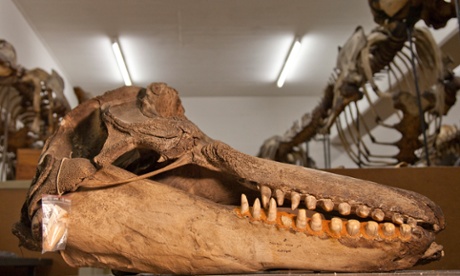
Name: The greedy orca
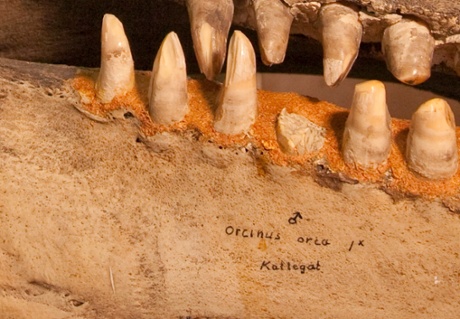
Species: Orcinus orca
Dates: ?-1861
Claim to fame: Jules Verne mentioned it in 20,000 Leagues Under the Sea
Where now: Natural History Museum of Denmark, Copenhagen
The killer whale’s stomach was vast. But even seasoned whale anatomist Daniel Friedrich Eschricht was surprised by what he found inside. No sooner had he cut through the thick intestinal wall, than out slithered five or six dead seals, some large, some small, their fleshy bodies intertwined.
This was just the start. It seemed to Eschricht that each emerging corpse “would disclose several new ones more deeply concealed”. Some of these were fresh, most were half-digested, others in pieces. The appearance of what looked like coins caused considerable excitement amongst the crowd of onlookers assembled on the beach, until Eschricht identified them as “the epiphyses of the vertebral bodies of young common porpoises”.
In order to make sense of what was what, Eschricht laid out the macerated remains on the ground. In total, there were 27 large mammals: 13 common porpoises and 14 seals. The killer whale’s intestine stretched to 54 metres, more than eight times the length of the animal itself. At the end of a day of epic flensing, “having spent so many hours in the immediate neighbourhood of the putrid carcass”, Eschricht was relieved to spend a few days enjoying “the rare hospitality” of the wealthy local landowner Ernst Benzon.
It had been Benzon who had found the orca floating on the Kattegat (the sea area between the Jutlandic peninsula and Sweden) a few days earlier. He had towed it from his “pleasure yacht” onto a beach near Randers and quickly dispatched a telegram to Eschricht.
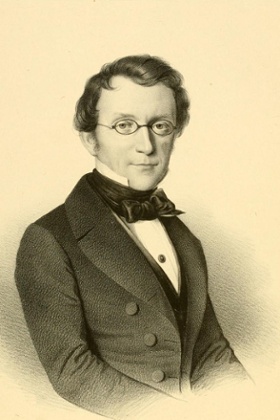
“I could not but accept such a kind invitation,” wrote Eschricht in a paper he published on killer whales just before his death in 1862. The specimen might prove to be “a valuable acquisition to the museums of the university, as well as to science in general.” Once Eschricht’s assistant had cleaned up the 6.5m skeleton, Eschricht had it shipped by steamer to Copenhagen and added to the university’s collection.
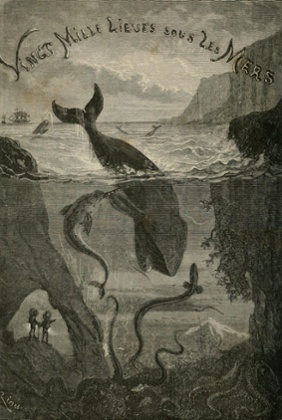
Over in Paris, it seems that French novelist Jules Verne got wind of the greedy orca and was sufficiently impressed to give it a mention in Twenty Thousand Leagues Under the Sea. The fictional submarine – the Nautilus – is crossing the Sargasso Sea, when marine biologist Pierre Aronnax sees killer whales “hunting in packs like wolves” and describes their appetite as “voracious”. By way of evidence, he cites “a professor in Copenhagen, who extracted thirteen porpoises and fifteen seals from the stomach of a killer whale.” Verne, it seems, added an extra seal for good measure, probably counting the dried seal skin that Eschricht found trapped in the greedy orca’s mouth as an extra animal.
The skeleton of the greedy killer whale is still at the Zoological Museum in Copenhagen, though it’s not in the public galleries. “But we are in the process of building a new museum, and within it a fantastic whale hall, where this orca probably will be put on display,” says Abdi Hedayat, a conservator at the Danish Museum of Natural History.
This will not be for several years. But I will be visiting.
Tale ends
If there is a zoological specimen with a great story that you would like to see profiled, please contact Henry Nicholls @WayOfThePanda.