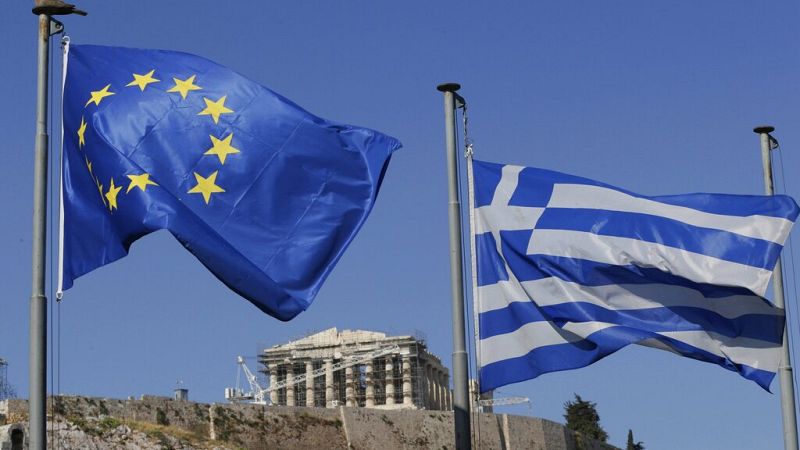
Greece completed an early repayment of €5.3bn in loans from its first eurozone bailout programme this week.
The settlement of the debt, originally scheduled to mature after 2031 or even into the 2040s, marks a positive step in Greece’s decades-long effort to stabilise its public finances.
Coordinated by the European Commission, the payment is a strong indication that the country is relying less on crisis-era debt and lowering the burden of future interest payments.
The Greek Loan Facility (GLF) was the first emergency rescue mechanism ever created inside the euro area at a time when a permanent eurozone bailout system did not exist.
It was established before the creation of the European Stability Mechanism and alongside other adjustment programmes during the eurozone sovereign debt crisis.
Greece lost access to financial markets in 2010 and the loan facility prevented the country from defaulting immediately, limiting risk to other EU members.
Local outlets report that retiring this debt ahead of schedule will save around €1.6bn in interest payments through to 2041. By directly lowering future budgetary charges, the debt-to-GDP ratio is expected to drop below 120% by 2029.
This is particularly significant for a country that carries the highest public debt ratio per GDP in the euro area.
A Greek financial tragedy in three acts
Between late 2009 and 2018, Greece suffered a severe sovereign debt crisis triggered by years of fiscal mismanagement, large deficits, and weak economic competitiveness.
The crisis necessitated three international bailouts from the EU and International Monetary Fund, accompanied by severe austerity measures and painful structural reforms.
Greece’s bailout unfolded in phases, first through an emergency state rescue of bilateral euro area loans via the GLF and the IMF in 2010–2012. Then, a restructuring phase was launched from 2012 that imposed losses on private investors and shifted debt onto public institutions. Finally, a third phase in the form of a stabilisation programme under the European Stability Mechanism (ESM) was set up, ending in 2018.
The GLF is no longer active as a lending facility, but its remaining loans are still being repaid even today. Private businesses are affected indirectly through the effect on borrowing costs, investor confidence, and credit ratings.
By around 2023, Greece had restored investment-grade credit ratings from major agencies, reflecting improved fiscal performance and institutional stability. In turn, this has helped to push down borrowing costs.
Greek 10-year bond yields have at times fallen below those of larger economies such as Italy and France, a striking reversal from the crisis era when markets priced Greek debt as a high-risk “junk” asset.
Is repaying early a smart move?
In 2023, Prime Minister Kyriakos Mitsotakis pledged that Greece would make an early debt repayment of €5.3bn in the coming years.
As of June 2025, the country's total public debt stood at around €403.2bn, or roughly 151% of gross domestic product. This figure represents the combined value of all outstanding government obligations.
Greece asked its eurozone lenders for permission to pay back part of its old bailout loans early. After the ESM and EFSF agreed and announced a waiver for the procedure earlier in December, the government used money it had already set aside in a special savings account to make the payment, rather than borrowing new funds.
“Greece continues to make significant progress in strengthening its economy. This additional early repayment of the GLF loan sends another positive signal to financial markets, improves Greece’s debt structure and reflects the country’s improving fiscal position," Pierre Gramenia, ESM managing director and EFSF CEO said at the time.
Critics of the early repayment argue that while it may improve Greece’s debt profile on paper, it comes at the expense of domestic liquidity at a time when households and businesses continue to face cost-of-living pressures.
Opposition parties say the funds used for accelerated debt repayments could instead be channelled into public investment, wage support, or targeted relief measures, generating a more immediate boost to incomes and economic activity.